Sunday, November 15, 2026
Home Blog Page 1696

Leaving our comfort zone

0

The results of what we do depends on the combination of three factors, i.e. Knowledge, Skills and Motivation. If any of the three are not measuring up to the task at hand, the result of our work will be less than good. And as long as we don’t change the way we see and do things, we will continue getting the same results. So let us get out of our comfort zone. When my children were younger, I bought them some educative computer games called “Me and my world”. The children could choose to let a young fellow go around and discover his world. Clicking on items that were passed on the way would open information on history, nature, mathematics etc. The children really liked it and could spend hours working by themselves discovering more and more as they played along. It is the title of the game that always intrigued me. “Me and my world.” As if you are alone with no others around. That is what I often think when I observe people around me, going their way. It could be on the street, in the traffic, in the office, anywhere. They are in their own world, not observing what is going on around them, strictly concentrating on their own activities, whatever they do. They don’t only take any notice of others; they actually don’t seem to care about them. In fact they seem to think that only themselves matter, not others, as if we don’t live in a so called interdependent world. They think: “Me first, then you.” I observe it in the traffic, in the bank, in the shop etc. Waiting and allowing others to go their turn doesn’t come to their mind. In the process they offend others or worse, they create obstacles for everybody else, including themselves, to move on. We experience this in traffic every day, when drivers overtake left, right and centre while there is a jam further down the road. While doing so they offend everybody else waiting in line and on top of that block oncoming traffic, increasing the jam. Instead of helping the situation they make it worse. Maybe their offensive behaviour will help them move on, but for how long and at what cost? They are in their own world, not realising that with a little more patience, respect, some assistance, giving some space to others, they will actually make a positive difference and help not only themselves but others too. This applies in every walk of life, not only traffic. It applies to the workplace and in the business as well. We are not alone and while getting out of our own small world, seeing the bigger picture, realising that we depend on one another will help a long way in achieving results. As long as we don’t see beyond our own little world, we will continue getting the results we always used to get, not necessarily the best.     

So it is important to open our eyes, see beyond our immediate environment, look around, observe, widen our vision and learn to see thing differently, try to see things through the eyes of another person.

When we stick to the way we see things we will continue doing things in the same way, getting the same results all the time. For example: If we see competition as a threat to our business, we will be defensive. We will not talk to others doing a similar business, but instead keep information to ourselves. We may even go to the extent of frustrating, discouraging and boycotting them. As a result we will remain isolated in the sector, not learn from others, not get essential information, face similar hostile competition in return and so on.

What would happen if we would turn this example around? We would not see competition as a threat but instead as an opportunity, a healthy factor in the free market, a stimulus to produce better quality and provide better services, an opportunity to join hands and face common issues together. Now we would do things differently as well. We would not deal with competition as a threat but as a welcome development. We would try to always be a step ahead, assuring our place in the market. We would make sure our quality stands out and that our services our focused on the clients needs. We would be creative in our marketing strategies. We would welcome meeting people in the same industry and discuss how to tackle common problems, join hands and form an association for the better of the sector. And if you really have a passion for your business you would not worry about competition at all. You would always try to find ways to improve and to develop new designs, new products, new ways of doing things. By the time the competition is trying to copy what you are successful in, you will already have moved on to a next level. Those who copy are always a step behind and usually don’t reach the same quality. Customers will keep coming back to you to see what new products or designs you have on offer. Admitted, it requires you to be in your toes and never sit back, but that is why you are in business in the first place.          

I would like to leave you this week with the following assignment. Choose an issue in your business that you know needs some improvement. Than try to work out how you see it, how you are dealing with it and what the results have been so far. Having worked this out, now try to turn things around. Try and see the issue from a different perspective and think of ways to deal with the issue from this new perspective, how you could do things differently from now on. And finally try and imagine the results you would get, when you would do things differently.

My suggestion: don’t stick to the ways you have always seen and done things. Open your world and your horizon. See things differently. Don’t stay in your comfort zone. You may get better results indeed.

Ton Haverkort

Enhancing social protection for migrant workers in the EHoA – its challenges and strategies

0

The migration patterns in the East and Horn of Africa (EHoA), a region including 18 countries, are profoundly influenced by challenges ranging from armed conflicts, political instability to environmental degradation, climate change, and scarce economic opportunities. This geographic expanse serves as a source, transit, and destination for migrants, recording 7.7 million international migrants as of 2020. Groups on the move are diverse: migrant workers, asylum seekers, and refugees but they often follow similar pathways, in which the eastern route leads to Yemen and the Gulf, the southern route heads towards South Africa, and the northern passage towards the Maghreb region and Europe.

Migrant workers from the EHoA region often find themselves predominantly in low-skilled employment in destination countries due to several hurdles, including unrecognised qualifications and skills, limited access to quality education and vocational training, as well as limited proficiency in the local languages prior to departure that meets the needs and requirement of destination countries. For those with irregular status, challenges are even more pronounced. Legal restrictions often limit them to options to work in informal sectors where they are vulnerable to exploitation that they are often too fearful to report due to the potential repercussions such as deportation. In addition, employers in these sectors may leverage the migrants’ lack of legal status to offer low wages and substandard working conditions without adequate legal protections.

Despite their contributions to the labour markets in their destination countries, migrant workers often cannot participate in social protection systems of their host countries because of legal barriers that prevent them from making contributions to for example pension systems or for health insurance. Often times they cannot continue ‘take with them’ social protection benefits which they were receiving in the country of origin because there are no legal and administrative arrangements between country of origin and the country of destination for social protection benefits portability. This exposes them to various forms of vulnerabilities during their working life, for example working when they are sick as they cannot afford to lose income, to pay for medication or health care or they can become disabled due to work injury and cannot get compensation. The impact of the lack of the exclusion from legal coverage and participation in social insurance systems has impact in their old age too- they have no income. Also, the complex and time-consuming application processes for social protection benefits in cases when legislation is inclusive of migrant workers may discourage them from seeking the assistance they require legally. Migrant workers may have acquired rights in the country of origin, but these rights do not migrate with them to the host country because countries do not have agreements on portability of social protection benefits. Thus, social protection legislation, policies and services that increase awareness of migrant workers about their rights to social protection and support them to access rights in the host country and the country of origin are crucial in addressing these vulnerabilities.

Social protection includes access to health care and income security, particularly in relation to old age, unemployment, sickness, disability, work injury, maternity or loss of a main income earner, as well as for families with children ensuring a foothold that guards against poverty and social exclusion. Access to social protection for all, including migrant workers and their families, is among the priorities of the United Nations (UN) 2030 Agenda for SDG. However, substantial gaps in coverage exist worldwide. According to the International Labour Organization (ILO) , only 47 per cent of the global population are effectively covered by at least one social protection benefit, while 4.1 billion people (53 per cent) obtain no income security at all from their national social protection system.

For migrant workers, the limitations in accessing social protection are compounded by legal and practical barriers. These include restrictions based on their nationality or status, short durations of employment, limited awareness of rights and entitlements, and the complexities involved in the transfer of social security benefits across borders. These issues are recognised in international frameworks, such as the 2018 Global Compact for Safe, Orderly and Regular Migration, which emphasises the importance of ensuring social protection for migrant workers.

The framework argues the imperative of extending social protection to migrant workers. Such measures not only safeguard their rights but also enhances their well-being by providing access to essential services, such as healthcare and education, irrespective of their nationality or migration status. Hence, addressing the unique challenges faced by migrant workers, particularly those in low-skilled and informal sectors, requires the implementation of comprehensive strategies and measures that remove the barriers migrant workers face in accessing social protection

Countries of origin and destination are encouraged to ratify and implement relevant ILO conventions and recommendations; develop national policies that include social protection floors for all, including migrant workers; address the discrimination inherent in existing laws and ensuring compliance with social security laws; enforce social security agreements that coordinate social security systems enable portability of rights across borders; and raise awareness among migrant workers about their rights and entitlements is crucial for empowering them to advocate for themselves effectively. Bilateral Labour Agreements (BLAs) and should also incorporate social security provisions to extend social protection to migrant workers and their families. Social Security Agreements (SSA) are specific tools that focused on access to social protection and portability of benefits.

Comprehensive legislative and administrative frameworks that take into account diversity and complexity of statuses of nationals and non-nationals and inclusive social protection policies based on principles of non- discrimination and equality of treatment uphold the dignity and rights of migrant workers. These measures further contribute to the broader goals of reducing poverty and inequality, as outlined in the UN 2030 Agenda for Sustainable Development, protecting migrant workers and realizing a more equitable and sustainable global society. 

Yonas Berhané is Communications Officer, Better Regional Migration Management (BRMM) Programme at ILO

CANEX SHORTS: Afreximbank announces Short Film Competition & Screenings

0

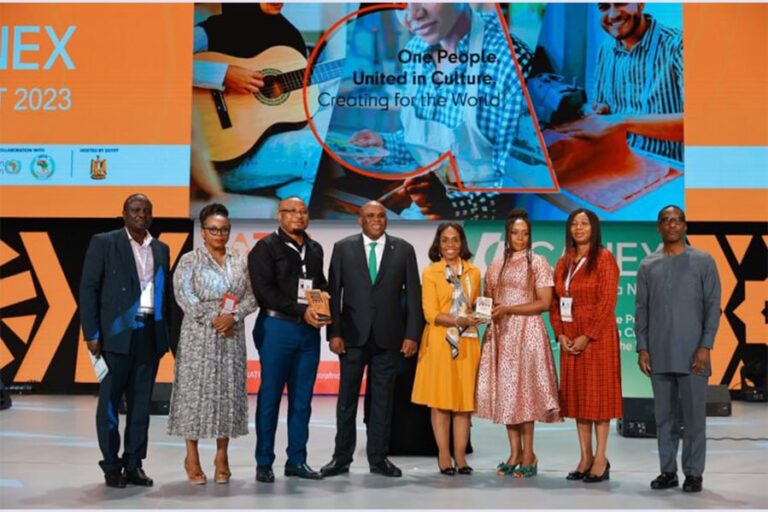
African Export Import Bank (Afreximbank), through its Creative Africa Nexus (CANEX) programme announced the second edition of the vibrant short film competition and screening initiative, CANEX Shorts.

CANEX Shorts is a competition designed to recognize and celebrate the talents of young filmmakers. Winners will receive acknowledgment for their outstanding work and will also have the opportunity to attend and be featured at CANEX WKND 2024, which will be held in Algiers, Algeria, from October 16 to 19, 2024. Additionally, they will also have a chance to connect with potential investors  and other partners at what has now become the largest gathering of creatives on the continent.

Filmmakers between the ages of 18 and 35 are welcome to submit their films, not exceeding 5 minutes, via Filmfreeway, to be considered for selection. A selection of films, curated by the selection committee, will be sent to the jury who will then select a short list of 9 films that will be screened during CANEX WKND 2024.

The theme of the second edition of CANEX WKND is ‘One People, United in Culture, Creating for the World.’ Attendees will include creatives, policy makers, financial institutions, business and political leaders, development partners, thought leaders and the most powerful and respected names in the Creative and Cultural Industries from across the continent and the diaspora.

This event will provide a unique platform for facilitating business, investment, collaboration, partnerships and inspiration amongst creatives across the value chain of diverse creative and cultural industry sectors from film, music, and fashion to culinary arts, sports, and visual arts amongst others.

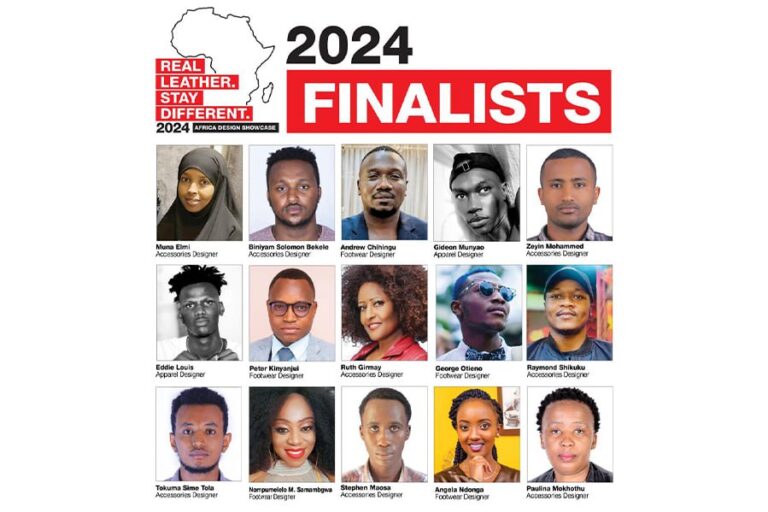
15 Finalists of the Real Leather. Stay Different. Africa Talent Leather Design Showcase, 2024

0

The Real Leather. Stay Different. Africa Talent Leather Design Showcase 2024 proudly unveils the 15 finalists of this year’s competition. This prestigious event, an initiative of the Leather and Hide Council of America (LHCA) and the African Leather and Leather Products Institute, celebrates the best of Africa’s leather industry. The competition is coordinated in Africa by the Center for Business Innovation and Training (CBIT).

Following an overwhelming number of exceptional entries, our esteemed judges undertook a rigorous review process to select designs that exemplify Individuality, Conceptualisation, Relevance, Sustainability and Commerciality. The mission of this campaign is to fostering sustainable fashion practices, honouring Africa’s leather design, and elevating its designers to a global scale. It promotes the use of natural materials, advocates for slow fashion, and supports the growth of sustainable design across the continent. This is part of the international Real Leather. Stay Different. campaign which has reached an audience of 100s of millions of designers across the world.

“This year, we saw an overwhelming number of entries, an indication that Africa is rising and its creative talents are being recognised globally. The passion and ingenuity displayed by these designers showcase the boundless potential of Africa’s leather industry.” says Beatrice Mwasi, Managing Director of CBIT

These designers will now embark on a journey to bring their creative visions to life, transforming concepts into reality. The judges will select the best in each category, and later pick the most commendable designer. Don’t forget to participate in the ‘People’s Choice Award’ where the public will vote for their favorite designer, one that resonates with them, and support their incredible work.

The RLSD Africa Talent Leather Design Showcase, 2024 encourages followers to stay engaged with exclusive behind-the-scenes content and join the conversation on social media. The event celebrates the boundless creativity, innovation, and craftsmanship of Africa’s designers, honoring the versatility, beauty, and sustainability of leather use.

Winners in each category—Accessories, Apparel, and Footwear—will be announced at the culmination of this exciting journey in Ethiopia, highlighting the exceptional talent and ground-breaking designs that define the future of leather fashion in Africa.