Thursday, April 2, 2026
Home Blog Page 1734

GEAPP Launches Climate Africa Warsha to Advance Renewable Energy Reporting

0

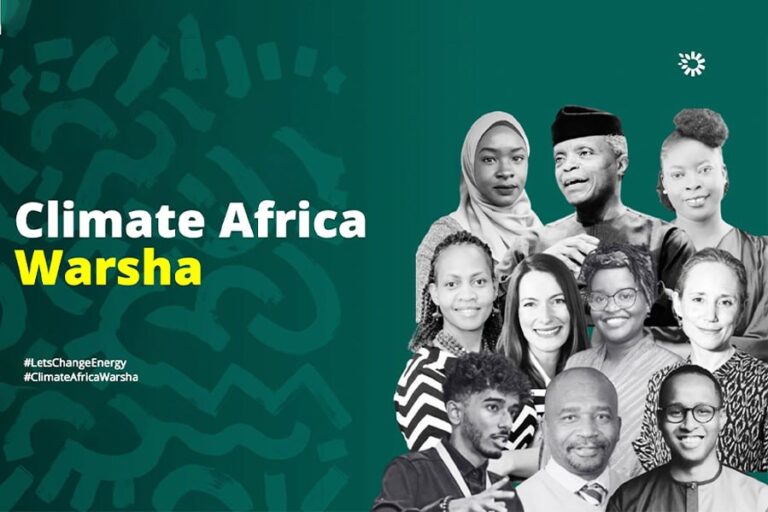
The Global Energy Alliance for People and Planet (GEAPP) and its alliance partners hosted the inaugural Climate Africa Warsha on World Press Freedom Day. The “Warsha” which means ‘workshop’ in Swahili creates a platform where journalists can connect with key renewable energy stakeholders, equipping them with the insights and skills required to elevate their reporting on the climate crisis, and energy access and transition solutions.

Africa faces profound impacts from climate change, but this story remains underrepresented in the media. Limited climate desks and a shortage of trained climate journalists result in inadequate coverage, leaving the public less informed about crucial climate issues and solutions. The inaugural warsha attracted nearly 100 participants from over 20 countries who commended the programme’s focus on practical skills development and its emphasis on building a collaborative network in the climate and energy space. Recognising the importance of continuous learning and engagement, the Climate Africa Warsha will be conducted at least twice annually, ensuring sustained momentum and keeping the journalist community updated with the latest developments and best practices in climate reporting.

The State of the Climate in Africa 2022 report shows that the rate of temperature increase in Africa has accelerated in recent decades, with weather- and climate-related hazards becoming more severe. And yet financing for energy access and transition as well as climate adaptation is focused in high-income countries. Developing economies receive only 13% of green energy financing and 6% of all solar PV and wind energy infrastructure deployed globally in 2021 went to the world’s 81 energy poor countries. Hundreds of millions of people still lack access to affordable, reliable electricity, which is critical to resilience in the face of climate change.

According to The State of the Climate in Africa 2022 report, more than 110 million people on the continent were directly affected by weather, climate and water-related hazards in 2022, causing more than US$ 8.5 billion in economic damages. There were a reported 5 000 fatalities, of which 48% were associated with drought and 43% were associated with flooding, according to the Emergency Event Database.  Yet this critical narrative often remains underrepresented in the media. Limited climate desks and a shortage of trained climate journalists result in inadequate coverage, leaving the public less informed about crucial climate issues and solutions.

According to a September 2023 Report by Internews, the biggest obstacles to effective climate change reporting in East Africa include insufficient coverage, generic stories with a global perspective rather than local focus, a lack of access to climate experts and a lack of training and specialisation in climate and environment reporting amongst journalists and newsrooms.

97% of respondents were interested in training on identifying and reporting climate misinformation.  The most curious finding, however, suggests that two-thirds of the journalists surveyed in East Africa feel the need to include climate change sceptics or deniers to provide “balance” in their reporting, which can lead to the amplification of false or misleading information.

The inaugural event aligned with the theme for this year’s World Press Freedom Day theme “A Press for the Planet: Journalism in the Face of the Environmental Crisis,” and featured expert insights from former Vice-President of Nigeria and GEAPP Global Advisor H.E. Prof Yemi Osinbajo and Adenike Oladosu, a prominent climate justice activist among others. The event also featured practical skills sessions, and valuable networking opportunities. Participants also engaged in discussions on crucial topics like Africa’s role in achieving global renewable energy and energy efficiency targets, including the COP 28 target to triple the world’s installed renewable energy generation capacity to at least 11,000 GW by 2030, given its abundant renewable energy resources, such as solar, wind, hydro, biomass, and geothermal, that can meet its current and future energy demand.

According to Africa Energy Outlook 2022, achieving Africa’s energy and climate goals means more than doubling energy investment this decadeThis would take it over USD 190 billion each year from 2026 to 2030, with two-thirds going to clean energy. The share of energy investment in Africa’s GDP rises to 6.1% in the 2026-30 period, slightly above the average for emerging markets and developing economies. But Africa’s energy investment in that period is still only around 5% of the global total in the IEA’s Net Zero Emissions by 2050 Scenario. 

“GEAPP was created to address the defining twin challenges of our time—ending energy poverty and tackling the climate crisis through a just transition to renewable energy in emerging markets. We believe the media has a critical role to play in shaping public discourse on climate change and informing decision-making and policy formulation in Africa’s energy transition journey. The Climate Africa Warsha is a crucial platform for exchange between the media and other industry stakeholders, empowering journalists to effectively report on these critical issues and ultimately contributing to a more sustainable future for Africa,” said H.E. Professor Yemi Osinbajo, former Vice-President of Nigeria and Global Advisor to GEAPP.

“As journalists and communications specialists, we need to appreciate the real issues. We are not just the monitors but also the catalysts of change”, added H.E. Prof. Osinbajo.

John Allan Namu, a Kenyan award-winning investigative journalist and CEO of Africa Uncensored underscored the media’s role in creating awareness on the climate financing pledges. “Journalists need to report on why the pledges haven’t worked in the past. When nations walk out of discussions and walk away from pledges, the impact is felt. It’s not all about mentioning signatories but talking about the impact of this at a granular, community and national level”, said Namu.

Participants commended the programme’s focus on practical skills development and its emphasis on building a collaborative network in the climate and energy space. According to a survey conducted at the end of the event, 62% of respondents indicated that the topic was of high relevance. On the suitability of the panel discussion format, 90% of respondents found the format suitable for discussing complex topics related to renewable energy and climate change in Africa, while 10% were neutral, indicating room for improvement but not dissatisfaction.

“The Climate Africa Warsha provided invaluable insights and sharpened my skills in reporting on complex climate issues,” said Mark Misori, a journalist from Scholar Media Africa. “I am confident that this programme will empower journalists like myself to play a more significant role in Africa’s climate narrative.”

Phoebe Sullivan, Energy Officer at Power Africa, expressed her enthusiasm for the initiative, saying, “At Power Africa, we recognize the pivotal role of the media in shaping public opinion and policy towards sustainable energy solutions. The Climate Africa Warsha provides a valuable platform for journalists to deepen their understanding of renewable energy and climate change, ultimately driving progress towards a greener future.”

Ultimately, a well-informed media sector acting as a champion for sustainable practices and renewable energy adoption is expected to give the climate action movement a significant boost.

Adenike Oladosu, a prominent climate justice activist, emphasized the importance of media engagement in the fight against climate change, stating, “Climate journalists and the Civil society play complementary roles in raising awareness, driving change, and shaping public discourse on climate change and the transition to clean energy. By empowering the two groups with the tools and knowledge needed to cover environmental issues effectively, we can inspire action and mobilise communities towards sustainable solutions.”

Freight forwarders vies to host largest annual global logistics event

0

The Ethiopian Freight Forwarders and Shipping Agents Association (EFFSAA), a lobby organization for logistics, has made two attempts to secure the hosting rights for the International Federation of Freight Agencies (FIATA) World Congress. This prestigious event brings together over a thousand logistics stakeholders from around the globe.

As a member of FIATA, the Ethiopian association submitted a bid to host the 2025 competition, which was ultimately won by Vietnam. However, Ethiopia’s security condition, linked to the conflict in the northern region, played a role in the nation not being chosen as the organizer for the next congress in 2022, during the evaluation of bids.

Dawit Woubishet, the president of EFFSAA, presented Ethiopia’s proposal at the 2024 FIATA HQ Meeting Extended Board session held in Geneva two weeks ago. This session gathered more than 250 stakeholders from 60 countries to assess the state of the logistics industry. The proposal was reviewed by the Extended Board, which also included the Czech Republic as a finalist to host the 2027 congress.

Due to regional instability in the Middle East, Israel was ruled out as a nominee to host the 2027 event, leaving Brazil as the remaining contender, which later withdrew its bid.

Dawit stated, “If we have sponsors, which we have already secured some huge potentials and sustainable security situation, hopefully we will be chosen to host the event.” He expressed the expectation of government support, as hosting such an event would be beneficial for promoting the country’s tourism potential.

Dawit emphasized that Addis Ababa, the capital city of Ethiopia, is an ideal location for hosting international events due to its significant tourist attractions.

The burgeoning African Continental Free Trade Area is considered an important factor in bringing the forthcoming convention to Africa, as FIATA has only held three congresses on the continent during its 100-year existence.

The host for the 2027 FIATA World Congress will be announced in September at the 61st FIATA World Congress (2024) to be held in Panama City, Panama.

The annual FIATA World Congress offers discussions on industry trends and challenges, insights from prominent industry figures, solutions, and networking opportunities with participants from various global logistics sectors. Over a thousand people from the logistics, transportation, and freight sectors attend the event each year, along with observers from other businesses and institutional guests.

The 2025 and 2026 congresses are scheduled to take place in Hanoi, Vietnam, and Milan, Italy, respectively. Italy, being one of the founding members of FIATA, will celebrate the organization’s 100th centennial in 2026.

If Addis Ababa is chosen to host the event, it will become the third African nation to do so, following South Africa and Egypt.

FIATA is home to 109 national associations and represents over 5,500 individual members from 150 countries around the world, collectively representing more than 40,000 shipping and logistics companies.

EMC commemorates World Press Freedom Day with focus on journalism, environmental crisis

0

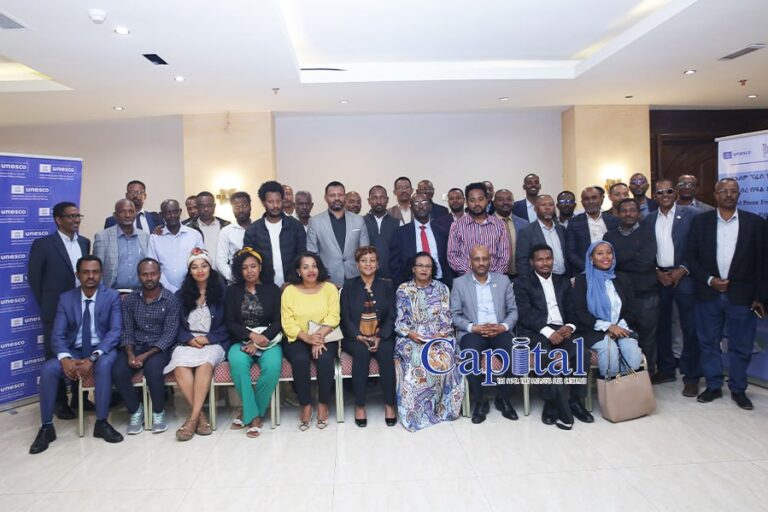
The World Press Freedom Day celebration took place on Friday, May 10, under the theme “Journalism in the Face of the Environmental Crisis,” organized by the Ethiopian Media Council (EMC). 

Teguest Yilma, Chairperson of the EMC General Assembly, highlighted the importance of media and journalists in addressing global environmental concerns during this year’s Press Freedom Day.

Teguest emphasized that the environmental crisis is a global issue that affects people’s lives worldwide, not confined to a single location. Ethiopia, as a country impacted by this crisis, is determined to combat it by utilizing various strategies, and the media plays a crucial role in amplifying and strengthening the country’s efforts.

In her statement, Teguest called upon relevant government agencies to ensure the protection of journalists, allowing them to carry out their work without fear of harm.

Henok Seyoum highlights the difficulties faced by journalists while covering environmental concerns during a panel discussion. 

He said that one of the causes of the nation’s social, economic, and political instability is environmental issues.  

Participants in the meeting, including an Environment Protection Authority representative, urged the media to increase their efforts in covering environmental and climate-related stories.

Although the EMC leadership expressed concern, they also noted that one of the main obstacles to increasing Ethiopian media coverage of the problem is lack of funding.

Invited guests and dignitaries including the French ambassador, Rémi Maréchaux, attended the event.

Rita Bissoonauth, who heads UNESCO’s delegation in Ethiopia, emphasized the importance of protecting the environment.  

Safeguarding journalists is vital for maintaining press freedom and enabling them to fulfill their responsibilities effectively.

The World Press Freedom Day celebration focused on acknowledging the role of journalism in addressing the environmental crisis and emphasized the need for collaboration between media and government agencies to tackle this global challenge.

EIH, Toppan Gravity to transform security printing industry

0

Ethiopian Investment Holdings (EIH), a recently established sovereign wealth fund (SWF) that has teamed up with a dominant global security printing firm, is making its first greenfield investment. By 2026, the initiative aims to transform the security printing industry.

The facility called Toppan Gravity Ethiopia (TGE), established by Toppan Gravity, EIH, Berhanena Selam Printing Enterprise, and Education Materials Production and Distribution Enterprise, both of which are under EIH, will be equipped with cutting-edge technology and stringent security measures to produce high-quality passports, ID cards, and banking cards, setting new standards for security and integrity.

Kalkidan Arega, CEO of TGE, amplifies the strategic partnership between Toppan Gravity and Ethiopian companies as a collective commitment to revolutionize the security printing sector, not only within Ethiopia but across the African continent.

Ahmed Shide, Minister of Finance and Board Member of EIH, underscores the transformative potential of the security printing facility.

Abdurehman Eid Tahir, CEO of EIH, highlights the project as a successful Public-Private Partnership (PPP), demonstrating EIH’s commitment to collaborative ventures that address critical gaps in the economy. “The project’s contribution to knowledge transfer and skills development empowers future generations of Ethiopians,” he emphasized. Abdurehman acknowledges the project as EIH’s inaugural greenfield investment, symbolizing the SWF’s commitment to innovation and strategic growth.

Selamawit Dawit, Director General of Immigration and Citizenship Services, emphasizes the critical role passports play in national security and international relations. She highlights ongoing efforts to enhance services and underscores the significance of the groundbreaking ceremony and factory project in advancing Ethiopia’s capacity to produce passports domestically.

The facility, to be constructed as part of this venture, will specialize in manufacturing security printings. Equipped with advanced technology and stringent quality control measures, the facility is poised to exceed industry standards and cater to the evolving needs of the market, according to the statement of TGE.

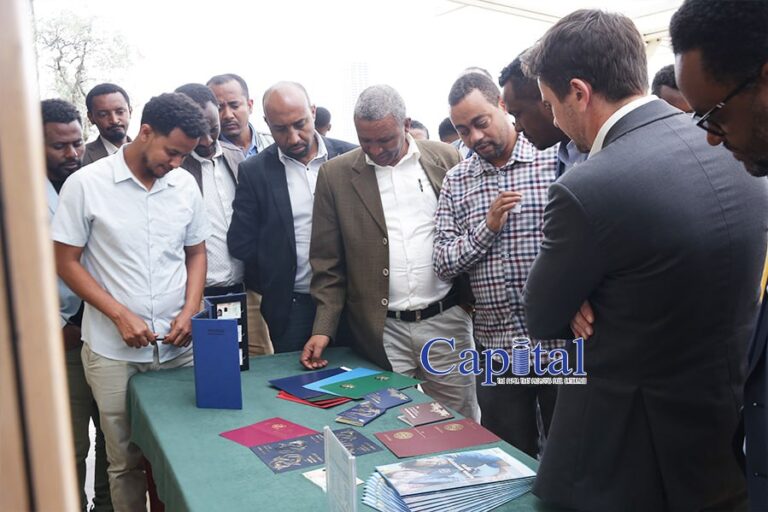
The groundbreaking ceremony included the unveiling of the new Ethiopian E-Passport, showcasing its security features, cover page, and distinctive characteristics setting it apart from its predecessor.

With the launch of the manufacturing plant that will consume USD 55 million in Bole Lemi Industry Park, the Toppan Group plans to harness its technologies and solutions to establish capabilities for the provision of a full range of government ID solutions in the African market, with a view to producing IDs and passports for neighboring countries in the future. The government of Ethiopia, meanwhile, will ensure operational design aligned with local needs by establishing rules and regulations for passports and IDs.

Toppan Gravity is a subsidiary of Toppan Next, serving as the international development arm of the Toppan Group in the security domain. Being part of the most prestigious conglomerate in the industry with decades of experience and multiple well-known references, Toppan Gravity benefits from the Toppan Group’s strong market position and extensive expertise.

As a global solutions provider primarily focused on the payment and identity industries, Toppan Gravity aims to develop the next generation of virtual and physical security solutions.

The Toppan Group’s security business traces its roots back to the security printing that was core to its operations at the time of its founding in 1900. Backed by this extensive track record, the Toppan Group has provided government IDs for more than 40 countries.

Regarding the Ethiopian investment, the Toppan Group holds a 51 percent stake in the company via Toppan Gravity’s UAE-based subsidiary Gravity Group Ind. L.L.C and one other company, while the Ethiopian government holds a 49% stake through the national printing press and the two other enterprises.