Wednesday, May 13, 2026
Home Blog Page 1739

United Nations Mission in South Sudan (UNMISS) Facilitates Integrated Mission with State Authorities to Boro Medina

0

Some 70 kilometers from South Sudan’s international border with its northern neighbour, Sudan, Boro Medina in Raja County is the first major stop for thousands of refugees and returnees crossing into Western Bahr El Ghazal state since the start of the Sudan conflict.

With the nearest authorized camp for refugees hundreds of kilometers away in Northern Bahr El Ghazal state, many fleeing the Sudan crisis have had no option than to stay in Boro Medina, resulting in an exponential increase in the population of the small town.

“Our population has more than tripled and life is unbearable, particularly for those arriving from Sudan with nothing,” revealed Joseph Romano Abderhaman, administrator of the area. “There are no goods in the market, our small harvest has been exhausted,” he added.

Currently more than 5,000 asylum seekers and a little above 7,000 returnees are competing with host populations over limited livelihood resources.

This situation is exacerbated by poor road access: It takes six hours to reach the county headquarters and at least two days from the state capital during the dry season, hindering support by state authorities and humanitarian interventions.

In the backdrop of increasing protection of civilians’ concerns, the United Nations Mission in South Sudan (UNMISS) has increased its presence in this border area and is facilitating state authorities to reach Boro Medina.

A recent joint mission to the area was met with a warm welcome and also narrations about food shortages, lack of essential drugs, education, shelter and more.

“We are greatly assured by the visit of the Minister for Local Government and Law Enforcement  and his delegation,” declared Ali Mohamed Sadi, a traditional leader of the area. “My request to is for authorities to look into the plight of pregnant women who, for lack of ambulance services, cannot be transferred to the hospital in Raja to receive adequate medical attention,” he said.

The moment was opportune and the local police director made the most of it to share challenges faced in protecting civilians.

“The population of Boro Medina has become too big for the few police officers deployed here,” revealed Lieutenant Colonel Malwol Kawo. “We cannot provide adequate protection to the town when there are issues, and our work is made more difficult by the lack of transportation. We will appreciate if UNMISS can enhance the capacity of local police through training,” he added.

These messages, of course, were not falling on deaf ears.

“Protection of civilians is a priority for UNMISS, and our UN Police officers who part of this mission have noted the need to assist the local polices,” informed Norbert Niyodusenga, UNMISS Protection of Civilians Advisor in Wau.

“In addition to our regular visits to monitor the situation along this border area, we have been advocating for quick responses from humanitarian partners. We have assisted them in the transportation of much needed supplies,” he stated.

The UN’s support is appreciated by the state Commission for Relief and Rehabilitation.

“We express our gratitude to UNMISS for enabling us to come and see what is happening in the remote areas of our state,” said Basham Musa Ayaga, chairperson of the Commission. “This is the kind of collaboration we cherish, and we hope to continuously work with UNMISS to serve the people of South Sudan,” he assured.

Hundreds of refugees and returnees continue to arrive in Boro Medina daily, even as UNMISS intensifies patrols along the border crossings.

Distributed by APO Group on behalf of United Nations Mission in South Sudan (UNMISS).
Discover the Pulse of Lagos with Lagos Post Online

0

As the heartbeat of Nigeria, Lagos boasts a dynamic blend of culture, commerce, and innovation. Now, staying informed about the latest news, events, and developments in this vibrant city has never been easier, thanks to Lagos Post Online (www.LagosPostng.com).

Established in October 2011 as a personal blog – bankoledamilare.blogspot.com before converting to a full news website on June 30th, 2014 as Lagos Post Onlinehttps://www.LagosPostng.com/.  

Lagos Post Online (www.LagosPostng.com) is your premier destination for insightful news coverage, engaging features, and timely updates on everything happening in and around Lagos. Whether you’re interested in politics, business, entertainment, sports, or lifestyle, we’ve got you covered.

Our team of seasoned journalists and contributors work tirelessly to bring you accurate, reliable, and comprehensive news stories that matter to Lagosians and beyond. From breaking news alerts to in-depth investigative reports, we deliver the information you need to stay informed and empowered.

But Lagos Post Online is more than just a news website. We’re a community hub where Lagosians can connect, share ideas, and engage in meaningful discussions about the issues shaping our city and our lives. Through our interactive platform, readers can voice their opinions, contribute their perspectives, and join the conversation on important topics affecting our community.

In addition to our news coverage, Lagos Post Online also features a diverse range of content, including lifestyle articles, entertainment reviews, business insights, and much more. Whether you’re looking for the latest trends in fashion and culture or tips for navigating the bustling streets of Lagos, you’ll find it all right here.

Join us as we explore the pulse of Lagos and celebrate the vibrant spirit of our city. Visit Lagos Post Online today at https://www.LagosPostng.com/] and discover the latest news, features, and insights shaping life in Lagos.

Distributed by APO Group on behalf of Lagos Post Online.

For media inquiries, please contact:
Damilare Bankole
Managing Editor
Lagos Post Online
Email: lagospostng@gmail.com
M/W: +2348025837037

About Us:
https://apo-opa.co/4auJO19

U.S. Ambassador urges dialogue in Ethiopia

0

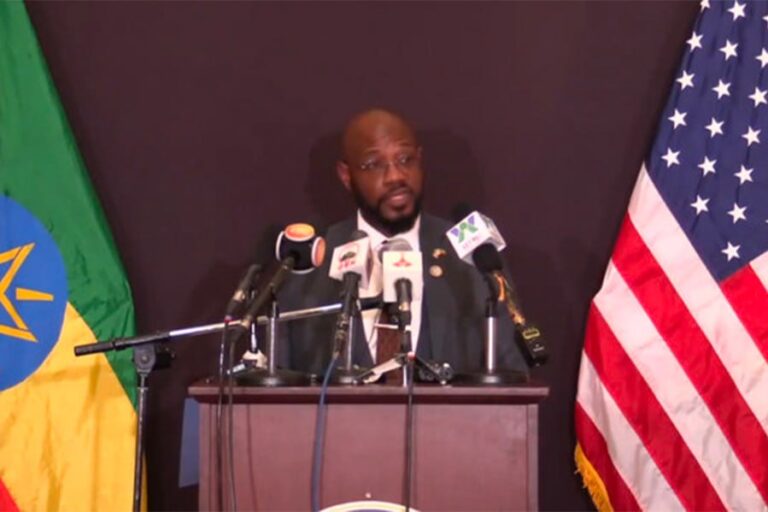
In a speech dubbed as a “major policy speech” held at the Yemen Community School, American Gibbi Center in Addis Ababa, the United States Ambassador to Ethiopia, Ervin Massinga, delivered a speech emphasizing the importance of human rights and dialogue in the country. The speech, which took place on May 15, 2024, addressed the historical significance of the venue and called for a renewed commitment to safeguarding human dignity and promoting peace in Ethiopia.

Ambassador Massinga began by acknowledging the American Gibbi Center’s role as a school for Yemeni children over the years and expressed gratitude to Dr. Abdurahman, the leader of the local Yemeni community, for their stewardship of the building. He also recognized British Historian Ian Campbell, who played a pivotal role in publishing the account of Cornelius Van Engert during the Addis Ababa Massacre.

The Ambassador highlighted the tragic events of the Yekatit 12 Massacre, which occurred 87 years ago outside the gates of the building. He commended the courageous actions of U.S. Chargé d’Affaires Cornelius Van Engert, who sheltered nearly 750 Ethiopians behind the walls of the American Legation, saving them from certain death. Ambassador Massinga expressed deep respect for Van Engert’s commitment to the human right to life, dignity, and respect.

He then turned his attention to the present, underscoring the ongoing challenges faced by Ethiopia in terms of human rights violations and the need for dialogue. The Ambassador called on all actors in the country to learn from the lessons of Yekatit 12 and emphasized that, even in times of war or conflict, human rights and the safety of civilians should never be forgotten or compromised.

Addressing different groups within Ethiopia, Ambassador Massinga urged the Oromia Liberation Army (OLA) to continue efforts for peace through dialogue, encouraging them not to give up. He appealed to the Amhara fighters, known as the Fano, to seek resolution through dialogue rather than violence, emphasizing that innocent civilians were suffering as a result of the ongoing conflicts. He also called on the Tigray People’s Liberation Front (TPLF) to engage in an inclusive and orderly process to address outstanding issues without resorting to force.

The Ambassador stressed the importance of a comprehensive political dialogue and transitional justice process to address the human rights abuses and conflicts plaguing Ethiopia. He encouraged the government to focus on peace and the protection of human rights, suggesting that the release of key political figures and the establishment of a temporary nationwide ceasefire could be steps towards reconciliation.

Ambassador Massinga acknowledged that all armed actors were contributing to human suffering and displacement, urging an immediate end to the targeting of schools, health facilities, and water infrastructure. He called for unrestricted humanitarian access and emphasized that a resolution to the conflict could only be achieved through dialogue, rather than a protracted military confrontation.

Highlighting the challenges faced by democracies worldwide, the Ambassador emphasized the importance of transparency, inclusivity, and genuine national dialogue in Ethiopia. He acknowledged the United States’ own historical struggles and ongoing efforts to rectify past mistakes, urging Ethiopia to pursue a similar path of healing and justice.

Africa-Paris Declaration on Energy Transition, Climate Justice and Energy Poverty

0

African civil society, human rights groups, environmental groups, governments and the private sector stand firm in their commitment to align Africa’s efforts in combating energy poverty and fostering industrialization, all while advocating for a just energy transition and ensuring climate justice. This steadfast commitment was underscored by the conclusion of the Invest in African Energy forum held in Paris on May 15.

Throughout the forum, key stakeholders from across the continent and beyond convened to address the pressing energy challenges facing Africa. Taking place in Paris – the city where the Paris Climate Agreement was signed in 2016 – discussions centered on strategies to attract investment, promote sustainable energy development and drive economic growth while prioritizing environmental responsibility, African civil society, human rights groups, environmental groups, governments and the private sector recognize the critical importance of addressing energy poverty, which continues to impede socio-economic progress in many African nations. By fostering an environment conducive to investment and innovation, we Africans aim to unlock the continent’s vast energy potential and empower communities with access to reliable, affordable energy sources.

The Paris Declaration calls for fruitful discussions and collaborations, highlighting the shared commitment of African nations, global investors and industry leaders to drive sustainable energy development across the continent.

Moving forward, we remain dedicated to championing Africa’s energy agenda, advocating for policies that balance economic growth with environmental stewardship, and empowering African nations to realize their energy potential while advancing climate goals.

We recognize Africa’s sovereign right to develop its energy resources – which include north of 125 billion barrels of oil and 620 trillion cubic feet of natural gas – in a balanced and sustainable manner. Ramping up energy investment, deploying continuous finance and advancing energy projects represent Africa’s core priorities, as 600 million Africans lack access to reliable power and 900 million Africans lack access to clean cooking fuels. Projects like the TotalEnergies-led Mozambique LNG development and the East African Crude Oil Pipeline seek to maximize Africa’s resources for the benefit of local communities. In West Africa, developments such as Perenco’s Cap Lopez LNG Terminal and associated LPG facility, the Nigeria-Morocco Gas Pipeline and the Eni-led Congo LNG project will catalyze long-term economic growth and energy resilience, with natural gas, LNG and LPG set to play a critical role in the continent’s energy poverty reduction strategy. The Southern African region is only just starting to realize the full potential of its oil and gas resources, with recent discoveries made in Zimbabwe’s Cabora Bassa Basin by Invictus Energy and Namibia’s prolific Orange Basin by Shell, TotalEnergies and Galp. Namibia is also home to the development of sub-Saharan Africa’s largest green hydrogen project led by Hyphen Hydrogen Energy, while Mauritania is pioneering green hydrogen through Chariot’s Project Nour and CWP Global’s AMAN Project, coupled with expanded gas development from the bp-operated Greater Tortue Ahmeyim LNG project.

Despite Africa’s unmet energy requirements, global energy lending has only tightened, as major European and other Western banks exit the fossil fuels industry in Africa, while financing fossil fuels in Western countries. These institutions have not been equitable when it comes to facilitating adequate energy and climate finance for African countries, where local populations are disproportionately affected by both climate risks and restrictions on fossil fuel development. Europe has made repeated calls for natural gas and green finance, yet there is a considerable blockage on energy finance for African countries. This chokehold continues to inhibit Africa’s industrial growth and the establishment of critical gas-driven industries like power, petrochemicals, fertilizers and mining, keeping the continent at a developmental lag.

We Africans deplore the continuous polarization of the energy dialogue in Western countries and call on the demonization of African oil and gas to stop. We urge free market solutions to Africa, and not a continuous push for aid so that Africans pledge to leave their resources in the ground. More aid is not the answer. Investment is key. From Cape to Cairo, from Nairobi to Dakar, we stand united toward meeting our shared obligations to fight climate change, noting that wealthy nations need to decarbonize and Africa needs to industrialize.

It is the position of African civil society, human rights groups, environmental groups, governments and the private sector that African countries must diversify available pools of capital and create financial instruments outside of traditional institutions – tapping into private equity and non-conventional bonds – to fund new exploration and energy initiatives. Moreover, African countries must put in place attractive regulatory and fiscal terms, thereby creating an enabling environment and removing all barriers to investment, such as incohesive regulation, excessive red tape or nationalistic policies. With competitive terms and incentives in place – followed by the integration of ESG principles and capacity building requirements – African energy projects will be able to compete effectively for global capital and work toward making energy poverty history across the continent.

Distributed by APO Group on behalf of Energy Capital&Power.
