Wednesday, May 13, 2026
Home Blog Page 1742

Plastic waste crisis: Addis generates over 80,000 tons annually

0

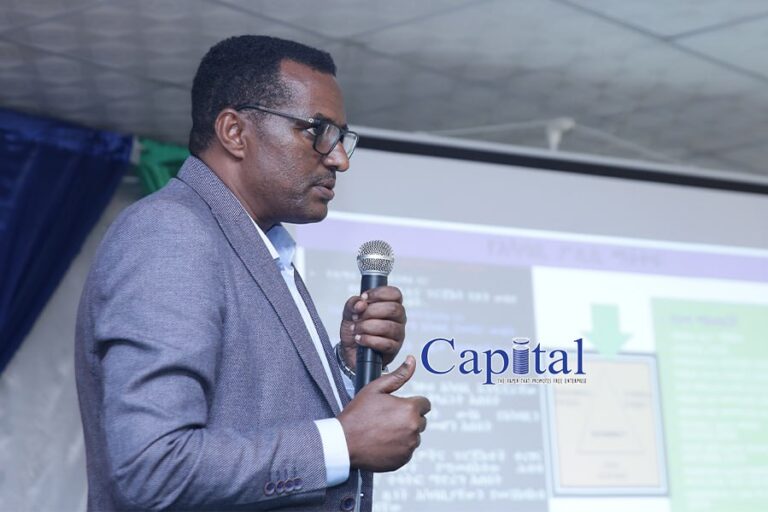
Addis Ababa is grappling with a severe plastic waste problem as more than 80,000 tons of plastic waste are generated each year, according to the Addis Ababa City Administration Environmental Protection Authority (AAEPA) shockingly, plastic constitutes approximately 13% of the city’s total waste output, highlighting the urgent need for action.

Recognizing the pressing issue of plastic pollution, AAEPA recently convened discussions with various stakeholders involved in the production, distribution, and consumption of plastic products.

Participants included plastic factories engaged in plastic reproduction, supermarkets utilizing plastic packaging, bread producers, distributors, as well as garden and paper container establishments.

Dida Driba, the General Manager of AAEPA, emphasized the detrimental impact of plastic pollution on public health, the environment, and water resources. Plastic pollution has emerged as a significant concern in Addis Ababa, with far-reaching consequences.

To address this critical problem, it is imperative to ensure that plastic manufacturing processes in the capital city do not contribute to environmental pollution. In the discussions, the Authority outlined specific measures that should be implemented to mitigate plastic pollution.

These measures include enforcing a minimum thickness requirement of 0.03 micrometers for plastic products to prevent their easy degradation, implementing substantial taxes on plastic products, and exploring alternative non-plastic options.

The consumption of plastic in the country has surged dramatically in recent years. Between 2007 and 2022, plastic consumption escalated from a mere 43,000 tons to a staggering 224,000 tons annually.

Additionally, per capita plastic consumption has grown at an alarming rate of 13% annually. Although approximately 40,000 tons of plastic waste is recycled each year, it represents only half of the total plastic waste generated.

Companies operating within the plastic industry were urged to adopt a comprehensive approach that encompasses both plastic and non-plastic alternatives.

The emphasis was placed on establishing systems that would enable these companies to transition from plastic products to non-plastic substitutes, reducing the overall harm caused by plastic pollution.

It is essential for organizations to actively create an environment conducive to converting the plastic products they sell into alternative non-plastic options. By doing so, they can contribute significantly to reducing the adverse effects of plastic pollution on the city and its inhabitants.

The Authority aims to spearhead efforts to tackle the plastic waste crisis by promoting sustainable practices, raising awareness among citizens, and fostering collaborations between various stakeholders. However, the challenge of plastic pollution in Addis Ababa necessitates collective action and the commitment of the entire community to effect meaningful change.
Ethiopian Airlines unveils renovated, expanded Terminal 1 at Bole International Airport

0

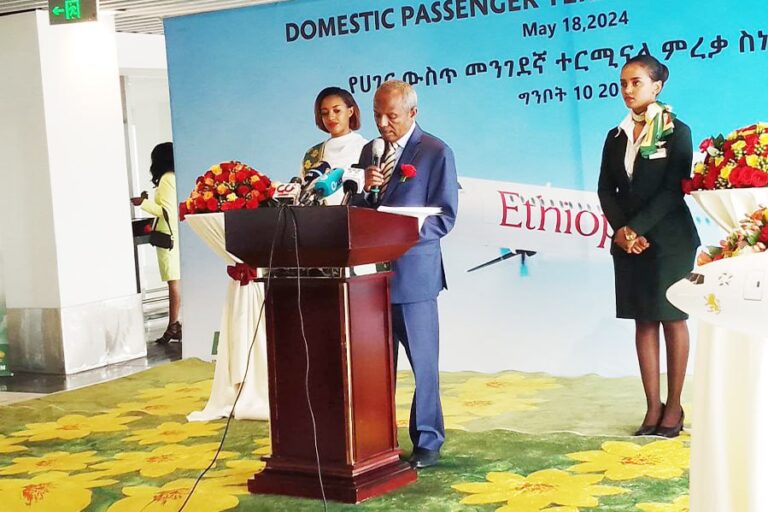
The renovation and extension of Bole International Airport’s historic passenger terminal (terminal 1) was officially opened by Ethiopian Airlines Group. The facility, which currently handles all domestic services, has undergone extensive modernization and remodeling.

Ethiopian Airlines Group CEO, Mesfin Tasew, stated that the facility, which has been in operation for several decades, required significant renovations to be compatible with contemporary services. In addition to Ethiopian Airlines’ plan to modernize domestic service, an increase in handling capacity was also necessary due to the growth of the Airlines’ services and the nation’s tourist sector.

The building has been expanded and renovated to occupy 25,750 square meters, more than doubling its previous size. The CEO claims that the facility now includes 10 bus boarding gates, 22 check-in counters, 16 self-check-in kiosks, a premium lounge, four contact gates capable of accommodating large aircrafts, and four baggage claim carousels. Additionally, several offices and stores are housed in the terminal, which is currently connected to terminal 2, which handles international flights.

The project was handled by the Chinese contractor CCCC and costs USD 50 million.

Ethiopian Airlines, which is also responsible for managing airports all over the country, is working to expand and modernize local terminals throughout the nation. For example, Gode and Jinka airports have recently undergone expansion and renovation under its management. 

Ethiopia’s foreign debt servicing exceeds healthcare spending

0

IMF discussion progressing

A quarter of government revenue goes toward paying off foreign debt, yet debt servicing exceeds healthcare spending by a factor of two. The International Monetary Fund revealed that there have been significant advancements in the ongoing discussions with Ethiopia.

The Ethiopian government’s external debt payments were less than 5% of government revenue on average between 2002 and 2012 but climbed to more than 10% starting in 2015 and reached 18% by 2019, according to a recent analysis that examined the continent’s debt.

According to the Christian Aid estimate, the government’s foreign debt obligations would represent 25 percent of its earnings this year and 25.3 percent in 2023. The report emphasized that Ethiopia is in arrears on its bilateral and private foreign debt and that the projections for 2024 reflect the nonpayment of scheduled installments.

Ethiopia received more foreign loans in 2009 as a result of the global financial crisis and the decline in interest rates. Between 2014 and 2018, Western private lenders, Chinese entities, and multilateral organizations made particularly big loans.

Ethiopia owes a USD 1 billion bond with an interest rate of more than 6.6% that is subject to English law among the obligations payable to non-Chinese private lenders.

Debt Justice has discovered that Franklin Advisors, BlackRock, and Capital Group are the three biggest known holders of Ethiopian bonds.

Ten bondholders, Franklin Advisors, BlackRock, Capital Group, Eaton Vance, Wellington Management Company, ABN, UBS, Vontobel, Newton Investment Management, and Azimut Capital Management, own USD 304 million of the bond’s $1 billion total, according to the most recent Debt Justice report.

Five US firms, two each from the UK and Switzerland, and one from Italy comprise the declared holders.

A further USD 3.1 billion is owing to other non-Chinese private lenders, according to the Christian Aid report published this month. Of these, USD 1.2 billion is owed to US financiers, USD 470 million to Switzerland, USD 360 million to Italy, USD 310 million to Japan, and USD 260 million to UK institutions.

It is recalled that Ethiopia submitted an application to be included in the G20’s debt service suspension program at the onset of the Covid epidemic.

However, only some of Ethiopia’s payments to Chinese entities were suspended in 2020 and 2021, and none to Western private lenders and multilateral institutions, other than payments due to the IMF during 2020 and 2021 being canceled. Ethiopia submitted an application in February 2021 for the G20’s Common Framework for Debt Treatments, which aims to bring debt down to a manageable level. It continued, however, to make full payments to all other creditors, including bondholders and Western banks, with the exception of those with state debtors where suspension agreements were already in effect. “There was no onus on creditors to act because they were continuing to be paid, so no progress took place on Ethiopia’s debt relief negotiations,” the report said.

In August 2023, Ethiopia reached a new agreement to suspend debt payments to China that was followed by a similar agreement with the Paris Club group of Western governments in November 2023. In December 2023, Ethiopia defaulted on its USD 1 billion foreign currency bond.

Ethiopia’s external debt servicing ratio is 219 percent for hospital spending and 95 percent for school spending, according to data by Christian Aid. The report ‘Between Aid and Debt’ states that the debt service for all African nations in 2023 was estimated to be USD 85 billion, and by 2024, it would rise to USD 104 billion. The entire amount of foreign debt serviced to private creditors in 2023 was estimated to be 39 billion; by 2024, it will rise to 47 billion.

“This report highlights the depth of a crisis that is beyond debt. It is a development and human crisis when the government opts to service a creditor rather than its citizens. The findings are clear: governments are working for creditors and not people. This must change if Africa is to be a rule-maker,” said Jason Rosario Braganza, Executive Director of AFRODAD.

The report shines a light on the debt crisis across Africa, showcasing five African countries: Kenya, Nigeria, Ethiopia, Zambia, and Malawi.

In related development, during her most recent press conference, Julie Kozack, the IMF’s head of communications, stated that the IMF and the Ethiopian government are still virtually discussing Ethiopia’s request for assistance.

In order to discuss the government’s request for IMF support for their program, the IMF mission traveled to Addis Ababa from March 19 to April 2. As she noted, “discussions then continued during our Spring Meetings, which were held here in Washington in April, and have been continuing virtually since then.”

“We have made substantial progress towards establishing how the IMF can support the authority’s economic program, and we will continue to work closely with the authorities in these virtual discussions,” she added.

Liberia: Foreign Minister Beysolow Nyanti Attends Ivoirian-Liberian Cooperation Commission Meeting in Cote D’Ivoire

0

In an effort to strengthen the relations of fraternity, friendship, and cooperation between the Republic of Cote d’Ivoire and the Republic of Liberia, the seventh session of the joint Ivoirian-Liberian cooperation commission was held on May 16 and 17, 2024, in Abidjan. The Ivorian delegation was led by His Excellency Mr. Leon Kacou Adom, Minister of Foreign Affairs, African Integration, and Ivoirians abroad, and the Republic of Cote d’Ivoire. The Liberian delegation was led by Her Excellency Madam Sara Beysolow Nyanti, Minister of Foreign Affairs of the Republic of Liberia. During her stay in Cote d’Ivoire, H.E. Madam Sara Beysolow Nyanti was received in audience by His Excellency Mr. Alassane Ouattara, President of the Republic of Cote d’Ivoire, to whom she transmitted a message of friendship and thanks from His Excellency Joseph Nyuma Boakai Sr., President of the Republic of Liberia, for the fraternal and warm welcome extended to him, as well as to his delegation on the occasion of his working and friendship visit to Cote d’Ivoire on March 7 and 8, 2024.

On the sidelines of the work of the seventh session of the Ivoirian-Liberian joint commission, H.E. Madam Sara Beysolow Nyanti had a productive meeting with her Ivoirian counterpart, H.E. Kaou Adom, during which they discussed bilateral, sub-regional, and international issues.

At the bilateral level, the two Ministers hailed the good quality of the relations of friendship and cooperation between Cote d’Ivoire and Liberia and reaffirmed their shared desire to work toward reinforcing them for the well-being of their peoples. In particular, the two heads of delegation reiterated their commitment to carry out, without delay, the actions required to revitalize the Mano River Union (M.R.U), in order to reinforce economic integration, in accordance with the instructions given by their two Heads of State, on the occasion of the official visit of the Liberian President on March 7, 2024. In this regard, they committed their respective delegations to identifying new areas of cooperation, as well as actions and projects to be carried out in sectors of common interest and encouraged the private sector communities from both countries to carry out prospecting missions, in order to tap into the opportunities offered by each country.

The two Ministers expressed their interest in developing Ivoirian-Liberian cooperation in the areas of Diplomacy, Security, Education, Technical Education, and Vocational Training, infrastructure, Agriculture, Trade, Youth Development, production, Transport, and Marketing of Energy as well as Cross-Border Cooperation. Furthermore, the two ministers commended the high esteem and deep mutual respect that their Excellencies Alassane Ouattara, President of the Republic of Cote d’Ivoire, and Joseph Nyuma Boakai Sr., President of the Republic of Liberia, share towards each other. At the sub-regional level, the two Heads of delegation expressed their concerns about the recurrence of terrorist attacks, particularly in Burkina Faso, Mali, and Niger. They strongly condemned these acts of violence, which undermine all development efforts and plunge populations into distress and trauma.

At the international level, the Ivoirian and Liberian heads of delegation discussed the crisis situations around the world and called on the decision-making bodies of the United Nations (UN) to take urgent measures aimed at bringing these crises to a peaceful and definitive resolution.

At the end of the work of the seventh session of the Ivoirian-Liberian joint commission, the two Ministers signed six (6) cooperation agreements in the above-mentioned areas and welcomed, through this act, the dynamism of cooperation between the two countries.They also recommended the effective implementation of the various decisions and recommendations after this seventh session. The Ministers hailed the warm and friendly climate which prevailed during the work of this session. They agreed to hold the eighth session of the Ivoirian-Liberian Joint commission in Liberia, on a date to be agreed upon through diplomatic channels.

Distributed by APO Group on behalf of Ministry of Foreign Affairs of Liberia.