Thursday, April 2, 2026
Home Blog Page 1784

Name: Solomon Amera

0

Education: Diploma

Company Name: Solo Printing & Advertising

Title: Owner

Founded in: 2006 E.C

What it does: Printing & Signage works

Headquarters: Addis Ababa

Startup capital: 50,000 birr

Current capital: 2,500,000 birr

Number of Employees: 7

Reason for Starting the business: I love creative works

Biggest perk of ownership: Not being dependent on anyone

Biggest strength: Providing a good quality product

Biggest challenge: Finance

Plan: To build the biggest company

First Career: Employee in a photo printing shop

Most interested in meeting: Business influencers

Most admired person: Mihiret Debebe

Stress reducer: Focusing on the other things that I received from God

Favorite book: “Yemidrebedaw Eregna”

Favorite pastime: Helping others

Favorite destination: Malta

Favorite automobile: Mercedes Benz

INEPTITUDE IS COSTLY

0

It is only when things start to go decidedly wrong, citizens begin to ask pertinent questions about their predicaments. In good times important issues relevant to their (citizens) general wellbeing tend to be relegated to the back burner, so to speak. To be sure, most of the global citizenry is without much of a foresight about the bigger pictures of collective existence. The average sheeple doesn’t seem to have the penchant for insightful observation, be it about the past nor the present. Hence, the sheeple is destined to regard many eventual encounters as complete surprises. It is only those competently engaged that can potentially forecast (relatively accurately) the outlines of pending developments. It is because of this failure, mostly on the account of the incompetency of the power that be, repetitive social chaos continue to haunt collective humanity!
In this regard, the inability to see/foresee the demise of the prevailing world order is bound to have serious ramifications. Recognized or not, the current world system, which has been around for about half a millennium has entered its final disintegrating/bifurcation phase. Outcomes will not be pleasant, however much the global status quo pushes its regular numbing palliative narratives. To alleviate some of the major problems associated with the impending collapse, collective humanity must take firm stand against tendencies to bring back or preserve remnants of the old system. Humanity should thrive to institute a global regime that is more egalitarian, more democratic and more resiliently sustainable. Neglecting such a comprehensively economic, social and ethical agenda will open space for more of the same, like the rigidly hierarchical, hence polarizing social reality of the past, continuous past to be more precise. To this end, we must, from the outset, dispel many of the common misconceptions that pervade all cultures and societies. For instance, we should insist that institutions of orientations or more precisely, ‘institutions of indoctrination’ must change their ways. It should be very clear that passing the advertised road signs (credential-ism) doesn’t make one an enlightened person. What it does is make her an educated person, educated to serve the system and not to challenge it!
The main purpose of mass education in the modern world system is to massively produce functionaries to serve man-made capital, directly or indirectly! These days, even the so-called pure scientific researchers are effectively directed to serve the interests of monopoly capital. Recent findings indicate many (about half) of the research publications are neither here nor there! Plenty of them are conducted with a view to find something that can be readily converted into profit. It might come as surprise to many a sheeple, but (these days) scientific efforts are not necessarily geared to help deepen knowledge! Those research directions without much potential to make money can hardly secure funding/grants, even that of taxpayer’s. Open inquiries with potential to interrogate/disprove some of the false claims of paid scientists (scientists on the pay) at the service of profiteers, are visibly discouraged! So given such a scenario one would be naïve to expect enlightened discourse (on all and sundry) within the realm of establishment institutions, wherever they might be! Many of the obvious problems of countries stem from such inabilities to foresee new developments (while discarding old ones) that would inevitably impact their short/long term strategies.
Moreover, incompetence, because it lacks confidence, congregates and swiftly sets up a united front against enlightening knowledge it deems beyond its conceptual grasp. This is how ineptitude managed to run bureaucracies roughshod, all over the world, for ages. For political survival, ineptitude has to make sure excellence is consistently undermined so that it can shine supreme and reign unchallenged! Psychopathic politicos and their affiliated private operators do not thrive because they are confidently competent; no, no, no, they thrive because they are parasites, unashamedly taking undeserved advantages of the hard work of compassionate souls, who unselfishly and persistently try to serve society as a whole. The born incompetents operate without much analysis and foresight. If anything, their proven capacity is to make conditions worse than they were/are. Don’t get us wrong; we have nothing against proven idiots who want to flaunt their wares, after all, the whole charade can be quite entertaining. Just look at Ethiopia’s parasitic elites that are good for nothing, except impostering and grand corruptions! Be that as it may, problems start when these clowns, adorned with phony credentials (compliment of cash or the system’s need to have useful idiots, etc.) are enabled to run our collective lives, directly/indirectly. That is when the sheeple draws the line, but these dimwits, as expected, are failing to recognize the boiling wrath!
Africa’s leadership (not only political), to a large extent, belongs to this mediocre genre. No wonder our continent wallows in a frighteningly fantastic ignorance!

Sub-Saharan Africa faces challenging external conditions, according to UNCTAD Report

0

Lower Economic Growth and Trade Disruptions in 2024 to Impact Development

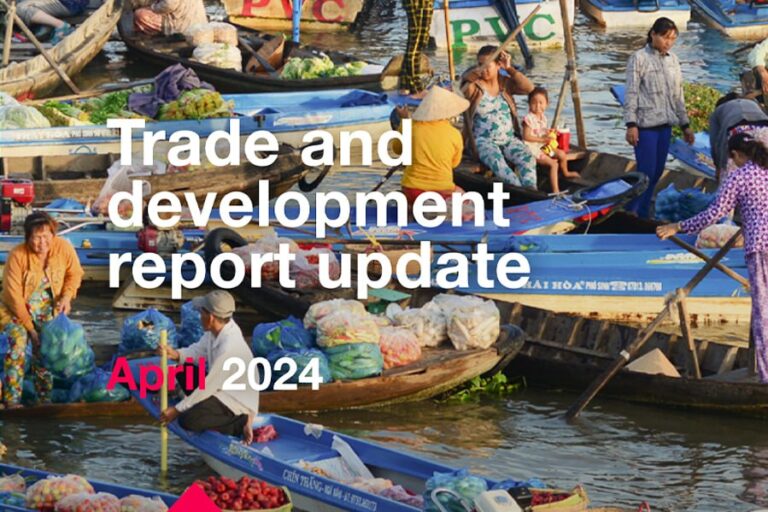
Sub-Saharan Africa, a region with immense potential for economic growth and development, is grappling with adverse country-specific situations compounded by challenging external conditions, as highlighted in the latest Trade and Development Report Update released by the United Nations Conference on Trade and Development (UNCTAD).

The report underscores the difficulties faced by countries in Sub-Saharan Africa, including South Africa, as they strive to navigate through a complex economic landscape. Despite efforts to stimulate growth and attract investment, the region continues to confront various hurdles that impede its progress.

The external environment poses significant challenges to Sub-Saharan Africa’s economic prospects. Global trade disruptions, lingering impacts of the COVID-19 pandemic, and uncertainties in international markets have hampered the region’s ability to fully recover and realize its growth potential. These factors have resulted in a contraction of merchandise trade in 2023, further complicating the region’s economic landscape.

Moreover, Sub-Saharan Africa has experienced significant net outflows and costly market access in terms of sovereign debt. Developing countries in the region have faced substantial challenges in managing their debt burdens, draining valuable public resources. The report emphasizes the need for innovative and sustainable solutions to address these debt-related issues and ensure long-term economic stability.

Despite these challenges, the report also acknowledges that certain countries within Sub-Saharan Africa have demonstrated resilience and achieved positive growth. These countries have implemented robust economic policies, attracted foreign investment, and harnessed their natural resources effectively, contributing to the region’s overall progress.

However, it is crucial for Sub-Saharan African countries to address the underlying issues that hinder sustained growth. The report emphasizes the importance of structural reforms, diversification of economies, investment in infrastructure, and fostering an enabling business environment to stimulate private sector growth. Additionally, promoting regional integration and enhancing intra-African trade can unlock new opportunities for economic expansion and resilience.

The UNCTAD report recognizes the efforts made by governments and stakeholders in Sub-Saharan Africa to overcome these challenges. It calls for continued commitment and collaboration among policymakers, businesses, and international partners to support the region’s development agenda.

As Sub-Saharan Africa navigates through these formidable obstacles, there is a growing recognition that inclusive and sustainable growth is crucial for addressing poverty, reducing inequalities, and achieving the Sustainable Development Goals. By implementing strategic measures and fostering a conducive environment for investment and innovation, Sub-Saharan Africa can unlock its immense potential and embark on a path of sustainable and inclusive development.

The UNCTAD report serves as a valuable resource for policymakers, economists, and stakeholders in Sub-Saharan Africa, providing insights and recommendations that can guide efforts to overcome current challenges and build a prosperous future for the region.

WHO warns of impending NCD crisis in Africa by 2030

0

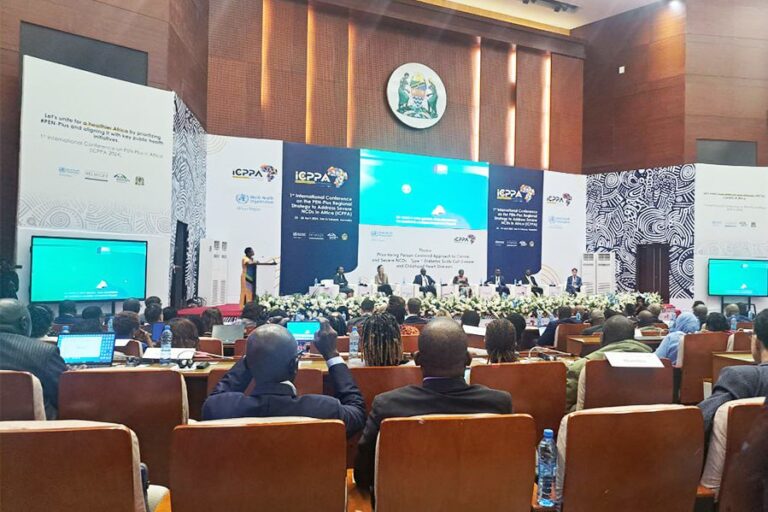
The World Health Organization (WHO) has sounded the alarm, predicting that Non-communicable Diseases (NCDs) will emerge as the leading cause of mortality in Africa by 2030 if immediate measures are not taken by member states. Dr. Matshidiso Moeti, WHO Regional Director for Africa, issued this warning virtually at the inaugural International Conference on PEN-Plus in Africa (ICPPA 2024) in Dar es Salaam, Tanzania, which commenced on April 23 and concludes on April 25.

The primary objective of the ICPPA 2024 is to address the escalating burden of NCDs across Africa. The conference, jointly hosted by the WHO Regional Office for Africa, Helmsley Charitable Trust, and the United Republic of Tanzania, brings together experts and stakeholders to devise strategies for combating severe NCDs prevalent on the continent.

In addressing the urgent need to tackle the NCD crisis, Dr. Impouma Benido, Director, Communicable and Noncommunicable Cluster at WHO emphasized the pressing challenges faced globally and in Africa.

“In many African regions, inadequate healthcare infrastructure and limited access hinder early detection and consistent treatment of NCDs. Financial limitations, shortage of healthcare professionals, and inadequate medical facilities pose significant hurdles to effective NCD management. Factors such as poverty, education, and employment greatly influence NCD risk and management, necessitating collaborative efforts across sectors. And Weak regulatory frameworks, insufficient funding, and poor governance contribute to fragmented efforts in combating NCDs,” he outlined the problems.

In response to these challenges, Dr. Benido said the pivotal role of technology in overcoming barriers to NCD management. “Telemedicine and Mobile Health (mHealth): These tools facilitate virtual consultations, remote monitoring, and health education, extending healthcare access to remote areas. Data Analytics and Artificial Intelligence (AI): These technologies enhance disease surveillance, trend identification, and personalized treatment. Electronic Health Records (EHRs): EHRs enable seamless information sharing among healthcare providers, improving care coordination and reducing errors. And Health Apps and Wearables: These tools engage patients in self-monitoring and promote adherence to treatment and healthy behaviors.”

Moreover, Dr. Benido underscored the crucial role of government policies in alleviating the NCD burden: Policies that limit access to tobacco, alcohol, and sugary foods, including taxation, have proven effective in reducing NCD risk factors. Awareness-raising initiatives on NCD prevention and healthier lifestyles are essential. Ensuring access to basic healthcare services, including NCD treatment, through UHC bridges equity gaps, and Strengthening primary care systems allows for early detection and consistent management of NCDs.

Dr. Benido highlighted success stories in combating NCDs, including WHO-supported initiatives in Ethiopia, Ghana, and Rwanda. These programs have decentralized NCD care, trained community health workers, and improved access to essential services, setting a precedent for effective NCD management in Africa.

As the ICPPA 2024 progresses, stakeholders are urged to collaborate and prioritize NCD prevention and management to avert the looming crisis and secure a healthier future for Africa.