Saturday, May 9, 2026
Home Blog Page 1838

Foreign employment agencies facing licensing delays

0

More than 100 foreign employment agencies have applied for business licenses, yet they have voiced complaints about not receiving qualification licenses, with reasons for the delay remaining unclear.

Ethiopia has entered into agreements with various foreign governments to safeguard the rights and obligations of its citizens working abroad. Despite this, numerous organizations have lodged grievances with the authorities, alleging repeated attempts to obtain qualifications through the Ministry of Labor and Skills (MoLS) for legal licensing to operate as foreign employment and employer liaison agencies.

According to the complainants, applicants were required to fulfill the criteria outlined in the Act, which mandated obtaining a license for overseas employment and engaging with employers. Despite persistent requests over the past three months, the government has not provided a satisfactory response to address their concerns.

Foreign nationals granted work permits in authorized fields and organizations necessitated the establishment of a stringent monitoring system under the Minister’s jurisdiction. However, agencies claim to be facilitating illegal migration to foreign countries, including Addis Ababa, bypassing the regulatory process.

Although the trade and licensing of foreign employment and labor liaison agencies were officially prohibited since September, agencies holding prior permits claim to have met all qualification criteria outlined by the ministry. These criteria include possessing a lease agreement for a 40 square meter office space and a starting capital of 1 million ETB. Additionally, any employer must secure a new work permit for foreign nationals employed under the Minister’s authority.

While applicants have undergone the necessary procedures to operate within the sector, they have incurred substantial losses due to delays in qualification certification. Efforts to contact Tekle tesfu, head of the licensing desk at the ministry overseeing foreign employment agencies, have been unsuccessful, despite tesfu being directly involved in addressing the issue.

Irrigation Ministry highlights contractors’ inadequate capability

0

The Ministry of Irrigation and Lowland (MoIL) has revealed that contractors’ inadequate capability is having an impact on the way projects are carried out. It is considering altering the trajectory of furrow irrigation.

Aysha Mohammed, the Minister of MoIL, acknowledged the concerns expressed by lawmakers about the poor performance of projects completed within the allotted time in the nine-month performance report for the 2023/24 budget year in parliament. She stated that the majority of the issues raised by parliamentarians and the Standing Committee on Water, Irrigation, and Lowland Development Affairs are legitimate and should be addressed by the ministry, as well as other pertinent government agencies.

Regarding her report and in response to members’ concerns, she stated that the nation does not have a large enough pool of players to manage irrigation projects. She said that there aren’t enough local contractors in the industry to execute projects on schedule and that their capacity is insufficient. State-owned contractors have contracts, according to Aysha, “and we have also considered including new players in the sector.” She highlighted the extremely low interest in managing projects.

She went on to say, “We don’t want to give more projects to public enterprises since concerns about project execution performance have been raised regarding them.” She expressed her dissatisfaction that the ministry has not received enough bidders and that there is a lack of enthusiasm in taking on projects. She said, “We are extending an invitation to global developers to collaborate on irrigation infrastructure developments.”

Regarding modernization and technology-based initiatives, the minister stated that the majority of irrigation development projects are now supported by furrow irrigation systems, with the exception of relatively few sugar projects. There are improvements that need to be made to enhance this system. The proposal for cost sharing states, “The formation of an irrigation fund is another area that will be an instrument to mobilize resources for the implementation of technology-based irrigation.” Aysha says that the next strategy pertaining to agriculture and rural development will incorporate these innovative methods. Their design work takes into account the fact that the next infrastructures should be supported by modern technologies.

She said that a project program to modernize and restore irrigation infrastructure is being developed with the World Bank to enhance both current and future irrigation infrastructure. “While the cost would be very high, existing projects will also be reviewed in the new scheme,” she stated.

Members of parliament and the standing committee that oversees the industry voiced their concerns throughout the session regarding the extremely subpar performance of projects managed by MoIL. The chair of the standing committee for water, irrigation, and lowland development affairs, Fetiya Ahmed, stated that the ministry is unable to implement all of the recommendations made by the standing committee.

She said that when it comes to supporting the population in the lowland region, there is also a lack of collaboration with other partners. She suggested that in order to address the issues MoIL confronts, the government should become involved.

MoIL has identified a number of challenges that impact the progress of certain projects, including inadequate funding, security concerns, rising costs, inadequate project management by contractors, and several other difficulties.

40% of Ethiopia’s population lacks documentation

0

Yodahe Arayaselasie, the CEO of the National ID Program, has revealed a startling statistic: 40 percent of Ethiopia’s population lacks proper documentation. Being undocumented means exclusion from the formal economy, as these individuals lack the necessary identification data to access banking and SIM card services.

In response to this issue, a recent agreement has been brokered to facilitate the registration of these undocumented individuals through digital technology. In collaboration with 32 banks across the country, approximately 31 million birr has been pooled to acquire 6,000 digital registration kits at a total cost of 1 billion birr, aimed at bridging the gap for the undocumented community.

Abie Sano, the president of the Ethiopian Bankers Association (EBA), revealed that an international open tender was conducted for the procurement of the Biometric Registration kit materials. Out of five digital ID suppliers, Lamino Engineering PLC emerged victorious.

Under the agreement, Lamino will provide the registration materials, benefiting 40 million citizens through 11,000 bank branches nationwide in the first phase. This initiative is set to span five years, allowing 32 banks to procure 6,000 registration materials at a cost exceeding 1 billion birr.

The National Bank and the National Identification Office mandated all Ethiopian banks to implement the National ID program in fiscal year 2024, requiring financial institutions to enroll customers in the digital ID system.

Currently, over 4.6 million citizens have registered for the National Digital ID, and the recent agreement between the Banks Association and Lamino is expected to expedite the digital ID registration process significantly.

Ethiopia, Djibouti establish technical committee to review port use agreements

0

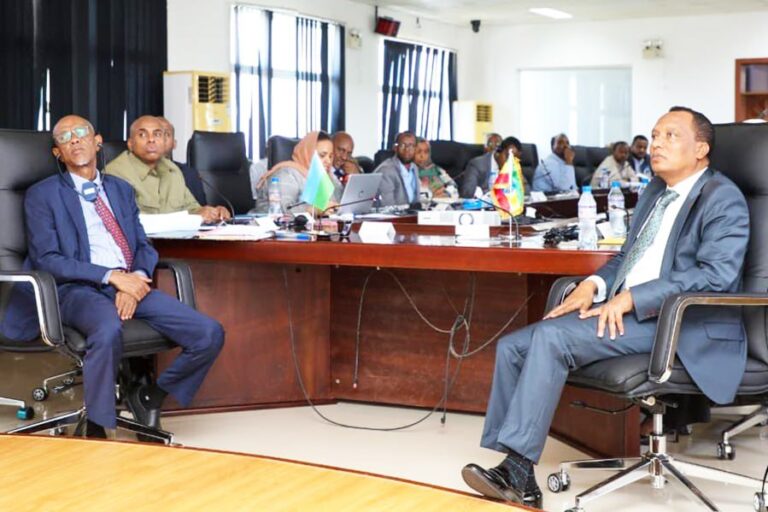
A technical committee was established by Ethiopia and Djibouti to examine agreements pertaining to port use that were signed twenty years ago. During the most recent meeting between the chief logistics delegations of the two countries, the multimodal issue was high on the agenda.

The two sides reviewed a range of topics during the most recent Ethio-Djibouti Joint Ministerial Commission (JMC) meeting, which took place in Djibouti a week ago.

The results of the agreements made at the 16th Joint Ministerial Meeting, which took place in Addis Ababa in October of last year, were also assessed by the delegation headed by Alemu Sime, Minister of Logistics and Transport on the Ethiopian side.

The logistics sector, in which the two countries cooperate, is one of the primary subjects that will be discussed during the ministerial conference, according to sources who spoke with Capital a week ago.

Prior to the joint meeting, experts predicted that modernization and the entry of new companies into the logistics industry would be among the issues brought up.

The government is putting many measures into place as part of its aim to modernize the logistics sector over the next ten years, and one of those is permitting competition in some of the key business sectors within the sector.

Sector pundits stated that at the most recent meeting, the two sides formed a committee to review the long-standing agreements that the two countries had signed on various occasions.

The Djiboutian side was led by Hassan Humad Ibrahim, Minister of Infrastructure and Equipment. According to sources, there have been a number of dynamic developments in the logistics industry in the past several years that call for improvements.

They stated that the committee will assess the ‘Ethio-Djibouti Utilization of Port of Djibouti and Services to Cargo in Transit Agreement,’ which was signed in April 2002 between the two countries, in accordance with the JMC agreement.

Additionally, it assesses the customs protocols that have been signed on various occasions. The most significant agreement reached by the JMC at its most recent meeting was to update the multimodal agreement that the two countries had inked.

Sector experts noted that, prior to the government’s recent opening of the industry to competition, Ethiopian Shipping and Logistics (ESL) was thought to be the only operator in the field when the multimodal agreement was inked in 2006.

Based on it, ESL, the state-owned vessel operators, and three other multimodal operators were approved by the Ministry of Transport and Logistics (MoTL), marking a key milestone.

In compliance with the ruling, Tikur Abay Transport, Panafric Global, and Cosmos Multimodal Operation have decided to engage in the multimodal market as non-vessel operating common carriers (NVOCC).According to sources, the multimodal issue was a highly anticipated element on the agenda for the most recent JMC meeting because the Djiboutian side expressed concern over the recent developments in Ethiopia.

The Djibouti Ports and Free Zones Authority (DPFZA) revealed that NVOCCs are not permitted to operate as multimodal operators in Djibouti, which concerns newly selected companies looking to involve themselves in the business, even though the MoTL had approved the new operators to start the process of setting up their business.

The notice letter, signed by Aboubaker Omar Hadi, Chairman of DPFZA, was copied to Djibouti Customs, the Association of Forwarders of Djibouti, the Association of Shipping Agents, and Djibouti Port Community Systems.

It stated that a bill of lading (BL) issued by NVOCCs is not acknowledged within Djibouti Ports and Corridors because of their legal status.

Furthermore, the letter explained that NVOCCs are unable to ensure that supply chain expenses throughout the corridor will be fully paid, which presents problems with responsibility, traceability, and security.

It added that the only officially recognized documentation for goods transport activities in Djibouti’s ports, free zones, and corridors is the BL provided by multimodal transport operators, specifically shipping firms, in compliance with our legislation and standards.

“Therefore, it is imperative for all entities involved in maritime transport and logistics activities to adhere to these guidelines in order to avoid any operational disruption in Djibouti’s ports, free zones, and corridors,” the letter further disclosed.

According to the bilateral agreement negotiated between the two countries in 2006, ESL is operating in Djibouti as an NVOCC; nevertheless, the most recent decision made by the Djiboutian authorities has become an obstacle for the new firms.

Experts in the area said they expected the two countries to work out a diplomatic solution to end the issue smoothly.

“If the Djiboutian stance is not reversed, the new multimodal players would not be able to utilize their license,” an industry analyst told Capital.

At the JMC, topics such as the two countries’ political, economic, infrastructural, and logistical cooperation are frequently discussed.

Djibouti, which has well-developed port facilities and infrastructure networks connecting with Ethiopia, is the nearest facility for the central parts of Ethiopia.

According to sources, the midterm meeting set agenda items for the forthcoming bilateral conference, which is expected to be headed by the senior diplomats of the two nations and take place in Djibouti in July 2024.

Alemu headed the Ethiopian team, which also included Aynalem Nigusie, the Minister of Revenue, Debele Kabeta, Commissioner of the Customs Commission, Abdulber of Ethiopian Maritime Affairs (EMA), and Berisso Amallo, CEO of ESL.

Capital’s attempt to obtain further information from EMA was unsuccessful.