Saturday, April 4, 2026
Home Blog Page 1844

Liberia: President Boakai Provides Perspectives on Governance Issues in a British Broadcasting Corporation (BBC) Interview as He Promises Swift Dismissal of Corrupt Officials

0

President Joseph Nyuma Boakai, Sr., was recently interviewed by the British Broadcasting Corporation (BBC) where he shed light on various governance issues including corruption, food security, impunity, drug abuse, and the future of Liberia’s youth. 

He emphasized the need for a change in the perception of government as a place for self-elevation and personal enrichment, rather than a place of service and accountability. He vowed that he would dismiss any official of government caught in acts of abuse of public resources, as he views corruption as the root cause of Liberia’s problems. 

President Boakai said he believes that Liberia is not a poor country but on the contrary, the country is well endowed, and that people must understand their responsibility to the state and people to change the narrative about Liberia being a poor and corrupt country. 

The President intimated that he is selective when it comes to appointing people in government, as he is determined to fight corruption to the core. He pointed to his long years of public service without any stain of corruption to serve as a reminder for people coming to Government. 

Regarding agriculture, President Boakai re-echoed his conviction that Liberia has the potential to feed the world if its endowments are managed well. 

He said that Liberia’s soil and land are fertile to produce rice, the country’s staple, and his comments do not amount to a quick-fix solution to food insecurity but rather an accentuation that the country has the resources to do a lot more if corruption is curbed. 

On the issue of war crimes court, President Boakai stated that he believes that those who bear the greatest responsibility for crimes must account for their actions and admit their wrongs as a way of ending impunity and promoting reconciliation.

Distributed by APO Group on behalf of Republic of Liberia: Executive Mansion.
European Peace Facility: Council adopts an assistance measure to support the Armed Forces of Côte d’Ivoire

0

The Council today adopted an assistance measure worth €15 million under the European Peace Facility to support the Armed Forces of Côte d’Ivoire.

This support will strengthen the operational capabilities of the Ivoirian Armed Forces to secure areas close to land borders and to counter non-state armed groups, which are destabilising the country and the whole West Africa region.

Through the proposed assistance, the EU will provide equipment not designed to deliver lethal force in order to upgrade the Intelligence, surveillance and reconnaissance’s capabilities of the Air Forces of Côte d’Ivoire through the acquisition of communication and data transmission equipment and unmanned aerial systems. It will also strengthen the logistics and security of military units deployed in the northern areas of Côte d’Ivoire through the provision of multi-purpose vehicles and personal protective equipment.

The delivery of the equipment will be accompanied by relevant tactical and on-the-job training, as relevant, to ensure the full effectiveness of the support and draw the maximum benefit from it.

Distributed by APO Group on behalf of Council of the European Union.

Solargoda Industries ventures into Ethiopian solar energy sector

0

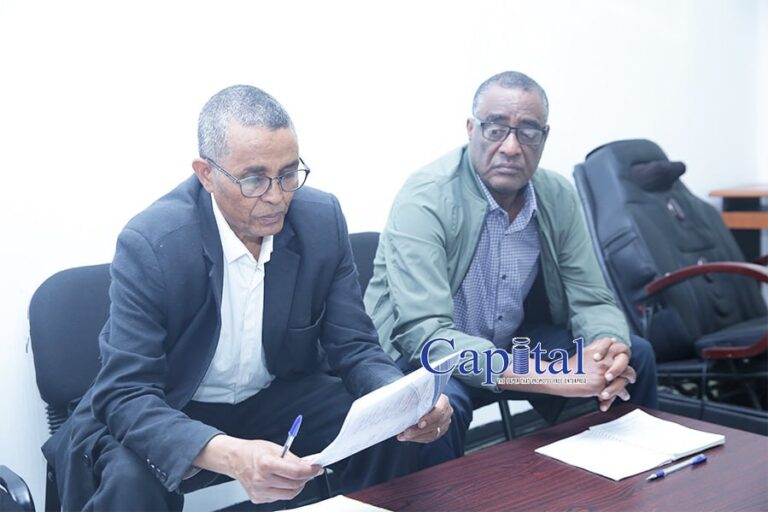
In a significant step towards self-reliance in energy, Solargoda Industries S.C., the first Ethiopian company to manufacture solar panels from locally sourced silica sand, has announced its entry into the solar energy market. The company aims to construct a factory funded through share sales, which began recently with contributions from eight local investors.

Mekonon Hagos (PhD), Chairperson of Solargoda Industries, shared with Capital that the company will utilize high-purity silica sand mined from the Goda area in the eastern zone of the Tigray region, which has been researched to be 98.6 percent pure. This local sourcing strategy not only cuts down on the foreign currency spent on raw materials but also aligns with the company’s mission to address the nation’s energy shortages and potentially export to neighboring countries.

By producing solar panels domestically, Solargoda Industries intends to reduce costs associated with importing and assembling foreign-made panels. The strategic use of local silica sand, a critical component in solar panel production due to its role in converting sunlight to electricity, is poised to transform the sector.

The Ethiopian energy market relies heavily on imports for silica sand, sourcing mainly from Italy, India, and China, despite the presence of local raw materials. Currently, Ethiopia has about eight solar panel installation companies and vast potential for renewable energy generation, with the capacity to produce over 60,000 megawatts from hydroelectric, wind, solar, and geothermal sources.

The Ethiopian government (GOE) has ambitious plans to expand the country’s power generation capacity from the current 5,200MW to 17,000MW over the next decade. However, with ongoing economic development and population growth, the demand for electricity is projected to continue outstripping supply.

Solargoda’s initiative to raise 10 billion birr capital for solar panel production within five years could play a crucial role in meeting these energy needs. This venture not only supports Ethiopia’s energy sector but also signifies a pivotal move towards sustainable development by harnessing local resources for renewable energy production.

Seminar organised by the Association of Southeast Asian Nations (ASEAN) Committee in Cairo and the Egyptian Council for Foreign Affairs (ECFA)

0

On 24 April 2024, the ASEAN Committee in Cairo together with the Egyptian Council for Foreign Affairs (ECFA) organised a seminar at Tahrir Diplomatic Club in Cairo. The seminar aimed to promote better understanding and strengthen relations between ASEAN and Egypt. It covers wide-ranging topics from politics, trade, investment, society and culture as well as regional issues of mutual interest. There were high-level representatives from various sectors as speakers, including former Egyptian Minister of Foreign Affairs, Assistant Minister of Foreign Affairs of Egypt for Asian Affairs, Assistant Minister of Foreign Affairs of Egypt for Cultural Relations, Executives from the Ministry of Trade and Industry, General Authority for Investment and Free Zones, and Suez Canal Economic Zone. There were over 50 attendants from academia and business sectors.

On this occasion, Mr. Thanabordee Joothong, Chargé d’Affaires a.i. spoke on the topic of “Sustainability in ASEAN” and underscored the importance of ASEAN Centres as a way forward for cooperation, including the ASEAN Centre for Sustainable Development Studies and Dialogue (ACSDSD) in Thailand.

Distributed by APO Group on behalf of Royal Thai Embassy, Cairo, Egypt.
