Thursday, May 7, 2026
Home Blog Page 1883

The Track of Capitalism

0

One of the simple dictionary meanings of capitalism is an economy based on private enterprise. It is also possible to simply define capitalism as the use of markets not planning to allocate economic resources. Based on factual evidences, capitalism is widely regarded as the economic system of the west. Before the collapse of the Berlin Wall and the subsequent disintegration of the Soviet Union in the early 1990s, the Eastern world was highly considered as the “socialist economic block”.

The great majority of the world for long considered the American capitalism as the best, if not perfect, capitalism among the capitalist west. The American capitalism perceived as an economic system which reward best the one who is entrepreneurial, innovative and working hard. In the capitalist Europe, the story is also similar.

The recent economic crisis which devastated the United States and Europe has long lost its breaking news status. What is news then is the measures they are taking and its impact. The United States and Europe, though both are capitalists, they took different strategic measures to mitigate the multi-faceted impacts of the crisis and to lubricate the long stacked wheels of their respective economies.

To this effect, the United States picked an expansionist approach and pumped hundreds of billions of dollars in order to stimulate its contracted economy while Europe adopted a squeezing approach and took a long list of austerity measures.

The United States in its expansionist approach and economic stimulus measures bailed out a number of its giant business empires in which the world for long believed them as too-big-to fall and cut or limited the huge compensation pay schemes of the CEOs. Europe on the contrary in its very many austerity measures, in addition to social security and other public benefits, drastically and significantly cut both the work force and their salary.

Two years after taking its expansionist measures, the United States start picking its harvest. The contracted economy very slowly but steadily start moving forward and managed to create hundreds of thousands, if not millions, of more new jobs. Europe on the other hand is still very busy in its austerity measures tightening the people’s belt beyond its limit. By doing so what Europe is currently witnessing is not the fast increase of its terribly contracted economy, rather the number of angry people filled the streets in protest of their government’s austerity measures and committing suicide.

Evaluating their respective corrective measures, some economic analysts start comparing the capitalism in the United States and European Union particularly the much crisis affected euro zone area. With the euro zone up against the ropes, all signs are that the U.S. economy and economic model reign supreme. Sure it is. But the United States has its problems too, including a severe bout of long-term unemployment.

Remember all the talk much amplified by the mainstream media that Chief Executive Officer (CEO) talent is so rarefied that its price can only be measured in double-digit millions per annum? That audacious proposition, trumpeted confidently from media towers in New York City and London, used to be a core tenet of the United States -UK consensus on the global economy.

The evidence, meanwhile, is undeniable that plenty of that presumably extraordinary talent is imbued with many shortcomings. CEOs aren’t so superhuman after all. From launching failed corporate strategies, egregious errors of proper oversight, gross infidelities with staff, pumping up resumes in the style of blustery 19-year olds who really do not yet know better, the C-suite increasingly seems like a comedy of human failings.

On mid June 2012, Jamie Dimon, Chairman and Chief Executive of JP Morgan Bank has apologised for the bank’s losses of two billion dollar on high risk trades. He said the losses occurred because traders were poorly managed and did not understand what they were doing.  Following his announcement of the obscene amount of lose, what followed was the outrageous comments of shareholders and financial analyst in which wiggling their fingers towards the CEO and asked him what the hell he was doing and where the hell he has been while the company made such a huge lose.

To be sure, CEOs are put under great pressure. But these are tough times for most people working in large corporations. The difference is that certain “talent” has been indoctrinated since the days of business school that they are something special and, unlike the rest of the corporate workforce, certainly deserve something very special: namely, exorbitant compensation.

But on this front, the U.S.-UK alliance is finally cracking. Just as is the case in the field of banking, the “old country” is no longer prepared to toe the American line either on the uniqueness of the financial sector or the extraordinariness of executive talent. A long time in the making, there is finally solid pressure on restricting top executive pay in London. That is long overdue, all the more so as the political cultures of both countries, Britain and the United States, traditionally pride themselves of being such exemplary democracies.

Wherever their special democratic character can be found, it certainly is not in the corporate world. U.S. CEOs often reign supreme in a near-autocratic manner, imbued with multiple titles from Chairman to Chief Executive to President and all-encompassing powers. No separation of powers here whatsoever.

How about annual shareholder meetings? You must be kidding. As David Rivera in his book entitled “A history of the new world order” humorously stated that they are about as significant as rubber-stamp sessions in Soviet-style parliaments. Often lasting less than an hour, they are merely a perfunctory exercise so that the corporate secretary can tick off a box. “Annual meeting?” Done. Check. Any real debate at shareholder meetings about items that are essential to the future vitality of capitalism in democratic societies are, as much as possible, prevented. A vote about levels of executive pay? Motion denied. Not debated here.

As David Rivera further noted, the prevailing mindset is this: “You, Mr. or Mrs. Shareholder, give us your capital and we then set our pay. You ought to be grateful that I serve thee as chief executive. It’s your privilege, not mine.” And they call that “shareholder capitalism?” Shareholder Hostage Taking would be more appropriate.

Naom Chomsky, the noted American economic and social critic well explained, it’s no better when one looks at the role of boards of directors. Ever since the days of Enron, it’s been clear that these are important bodies that can and should prevent bad things from happening. But in the United States and Britain, they are still largely “friends and family” affairs, meaning they are packed with like-minded cronies, if not in fact the CEO’s own friends. The biggest battle over capitalism in the age of global democracy, quite irrespective of all the Occupy Movements, isn’t even over preventing disasters like the meltdown of Enron. Rather, it concerns a proper weighting of the competing interests at stake between corporations and society at large.

If corporations largely act in a vacuum, if there is no real control over them from society’s perspective, then things can become truly unhinged such as in the case of exorbitant executive pay. Reading most news reports about U.S. corporations in the newspapers one will find that it’s almost always about reducing staff size, reorganizing the corporate structure and the like. Optimizing corporate strategy for the future, working with employees to make the most of existing or future business opportunities? Such things happen all too rarely in the largely top-down American corporate model. With the media largely complicit since they are dependent as they are on corporate advertising dollars, corporations see any advances from society on issues such as executive pay and corporate strategy as untoward attempts to soil the heavenly domains of The Corporation.

Yet, the results are clear enough. The U.S. model of corporations, put in a global context, is better only in what it delivers to the insiders at the very top of the corporate hierarchy. For them, the corporate till is for the looting, provided the board has approved it. Compare that, for example, to large German corporations. Historically, Germany hasn’t been known as a bastion of democracy. And yet today it is and nowhere more so than in its boardrooms. In Germany, these august bodies are half filled with representatives of the workforce.

Little wonder then that they cast a much closer eye on corporate pay. In fact, the mere presence of company workers and unions representatives in the boardroom does much to prevent the more egregious, self-serving propositions from ever seeing the light of day which top executives, left to their own devices, might come up with. Whatever the “it” is, they realize it would never pass even the most basic smell test with the unions.

Nor does oversight in Europe end at the boardroom. Moves to reign in the C-suite are taking on steam in the European Parliament, which has increasingly become a reform engine for a more accountable capitalism globally. Just this month, the EU’s top financial services regulator, Commissioner Michel Barnier, launched initiatives to curb “morally indefensible” pay and to reduce the disparity between executive and ordinary work pay in Europe’s financial institutions.

The United States has not yet caught up with or caught on to these efforts. The very self-absorbed and self-referential debate or, worse, the lack of any true debate that has become the hallmark of U.S. corporations has done much to weaken the case for capitalism in democratic societies. If the practice of corporate power constantly exhibits core traits of the feudalist era, as it does in the U.S. case, rather than pursuing a more open, democratic and enlightened model, then it goes to show that the rot currently afflicting many developed economies has a lot to do with other nations still following, even aping, many elements of the autocratic U.S. model.

The relevance of society at large in that model is about as significant as the role of finance was, at least until recently, in the made-in-America macroeconomic models that is, not at all. Both excel by their absence. In short, it is high time to push the U.S. corporate model from the pedestal on which it still stands. To a large degree, its elevated status is no longer a function of actual performance and what it delivers in a larger societal context, but just a result of the benefits it offers to the insiders at the top of the corporate pyramid.
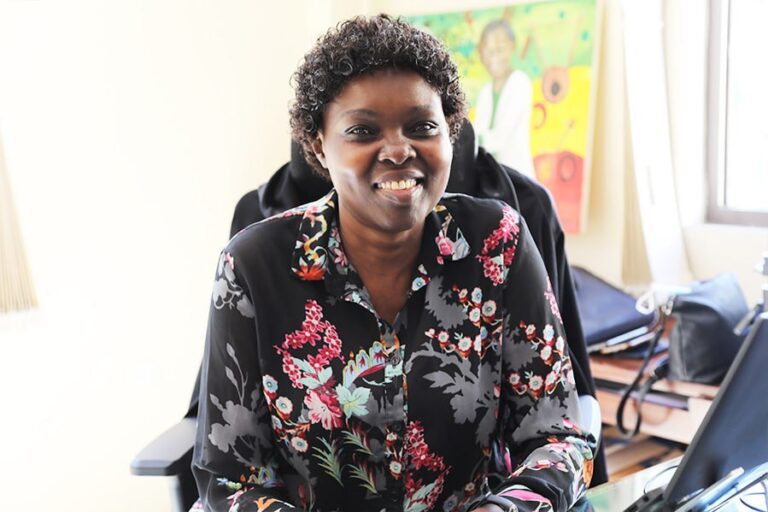
ChildFund’s humanitarian aid and development efforts amid challenges

0

With over three decades of experience in senior management roles within the development and humanitarian sector, Lilly A. Omondi serves as the Country Director of ChildFund Ethiopia. Her extensive background includes significant positions at organizations like Save the Children and Plan International, highlighting her dedication to making a positive impact in the field. As a strategic change manager, Lilly is deeply committed to improving the lives of children, particularly during climate crises and humanitarian disasters. In this interview with Capital, Lilly shares insights into ChildFund’s vital role in Ethiopia, navigating challenges, and achieving impactful outcomes despite obstacles. Excerpts;

Capital: What is the main function of the childfund in Ethiopia?

Lilly A. Omondi: ChildFund is an international organization that is child-focused. We do both development and humanitarian work across Asia, Africa, and the Americas. In Ethiopia, ChildFund has been working here since 1971, and our aim is to support children who have been affected by various vulnerabilities to grow up healthy, educated, skilled, and safe, no matter where they are. Child Fund works in various regions in Ethiopia. We work in Addis Ababa, in Amhara, in Tigray, in Oromia, in central and in southern Ethiopia.

We work with children who are living in the most difficult situation. And our hope is to ensure that these children grow up safely in the environments that they find themselves in. Although the work of Child Fund has been impacted by the conflict happening in various parts of the country, this has not stopped our work. Instead, it has increased the amount of work we do because we want to work and support those children who are caught in humanitarian crises. 

Our humanitarian work has expanded in Northern Amhara and in Tigray and will continue to expand our humanitarian work wherever it takes us. Because we know that children who are in these communities suffer much more greatly when there is conflict. We also know that due to lack of peace, some of the wonderful work that we’ve been doing in development have all been eroded. 

You find that schools that had been constructed have since been demolished. And we need to re-inhabitate these schools. So children still need access to education. And for that reason, no matter what the circumstances are, we will continue to work in the areas where we have children who need our support. Indeed, we need peace, and therefore we work with the triple nexus. We do the humanitarian work, as well as the development work and the peace. Work as well, ensuring that communities where we work can coexist peacefully and continue to do the work that they do best.

Capital: What is the performance of Childfund in the completed financial year?

Lilly: Child’s funds’ performance over the current completed financial year has been good. All the work that we had planned to do, we achieved them. And we actually raised in the funds that we had planned to raise, which was $4 million, we were able to reach our target of $3.7 million, which is a good indication of the work that was done able to do. We also were able to remit a majority of our funds to our local partners. Our four million dollars were disbursed to local partners and I think this is what we’ll call an achievement within the financial year. We were able to reach 4.3 million children in terms of the work that we wanted to implement directly with the children and so this is an achievement of the financial year.

Capital: How many institutions are you working with? What kind of support is provided?

Lilly: We work with very many institutions, including the University of Addis Ababa, University of RC. We are also having an MOU right now with the Mekelle University. We also work with government offices. We work with various governments at the world level and also at the federal level. We work with the Ministry of Women and Social Affairs. We also work with the Ministry of Education. And we are in all the clusters that relate to the work with we do, that is the protection cluster, education cluster, health cluster, and wash cluster. We also work with the UN organizations and we participate in forums that they call.

Capital: What are the biggest challenges of humanitarian organizations in Ethiopia?

Lilly: Our biggest challenge in the humanitarian work that we do is access. Access is sometimes very difficult to the places where we need to be at the time we need to be there. But also the drop in the amount of resources that is available to support the communities is also a major challenge because we know of the crisis going on in the Middle East, the crisis going on in Europe, in Ukraine and Russia. These are all taking away some of the priorities of our donors, and therefore we are getting less funding over the years. And this means that we have less money to reach to the communities here in Ethiopia.

Capital: How many projects have you implemented so far? How much money was spent on it?

Lilly: ChildFund works with partners and currently we’re working with close to 17 partners across the country. Each of our partners support us in reaching the 7 million children that we aim to reach as according to our strategic plan for 2026. Our partners and us, we work together to reach these children using different programs. 

In Life Stage 1, we’re working with families, building capacity of families, encouraging VSL groups, village savings and loans associations, group savings, self-help groups, and we’re supporting early childhood care centers. We’re supporting schools in Life Stage 2. We’re supporting clubs in those schools, environmental clubs, and child parliaments. We’re supporting libraries in school, wash facilities in school, we are supporting reading and computer labs in schools.

In life stage three, we are supporting income generating activities amongst the youth, we are supporting youth in their various activities. And so overall, every year we do a number of programs and we spend approximately $10 million every year on programming that we do. We also do humanitarian support and with humanitarian support, we are providing food, NFIs, we are providing cash because of the various needs that are there. We also provide support on mental health, psychosocial support. And so we the number of projects that we do are quite diverse and there are quite a lot because we work through partners and we also do implement directly, but a majority of our work is done through local partners.

Capital: How accessible Childfund is in education, health and social issues?

Lilly: Child’s Fund’s programming approach follows a life stage approach. This life stage approach is divided into three stages. Children aged from zero to five fall under the life stage one approach. In the life stage one approach, our focus is to work with parents and caregivers to ensure that their children have a good start in life. This ensures that children are healthy.

That their parents have income to be able to support their children to receive nutritious food. We also look at the health of their children, access to health facilities, providing support to the various facilities in the rural communities and even in the urban centers to ensure children have got access to adequate and quality health. Our life stage two are from children aged between six through to 14. And these children are supposed to be in primary education. We also work on early childhood education, children aged from three through to five. And these children, we prepare them through the early childhood care centers for them to be able to prepare for primary. Life Stage Two is basically primary education, supporting the schools, both in the rural and in the urban centers, where we work with our local partners.

To be able to ensure that the children in those schools have access to quality education, supporting various teachers on child-centered teaching methodology, equipping laboratories, equipping reading centers, equipping libraries, and preparing menstrual hygiene rooms for girls to be able to complete their education, primary education as well. So Further to that, we provide support in our Life Stage 3 to young people. Life Stage 3 starts from the ages of 15 through to 24. At this life stage, we have children who are in secondary school, in university, and also children who have dropped out of school because of their performance in the academic sphere. So in this, we encourage them to participate, as volunteers in their communities to prepare for employment, to prepare for entrepreneurship, to join tertiary education. So we support our TV centers and we also support the young people to form groups, provide them with starting up kids, train them on various skill sets that can help them be social agents that work well within their communities.

And also support their communities. So we’re talking about working with volunteers, community young volunteers, to be able to empower their communities, to understand issues around climate change, to understand issues about sexual reproductive health rights, and also to get engaged in businesses. This can be poultry farming, animal fattening. Other small businesses of selling, buying and selling of grains and other non-farm produce as well. Supporting young people to be able to be more sustainable and to be able to access funds for them to become better adults in the future and be able to run their homes in the future.

Capital: Finally, how many people are intended to be accessible in this year, and what is the future plan?

Lilly: This year our target was to reach 4.5 million. As I’m speaking to you, as at the close of June, we had reached 4.3 million. It’s our hope that we’ll actually reach at the close of June, this year June, we’ll probably have reached 5.5 million children.

 And our plan is to reach our 7 million children. With the same quality of services that we offer and to expand our partner’s base, working with and empowering local partners, but also local communities to be able to do high quality and effective program delivery. Cause that’s why our niche is empowering the local NGOs to be able to deliver high quality programming and also to be able to be part of the solution to some of the crises we see in the communities where we work. 

Iran Foreign Minister meets Central Africas Minister for Small and Medium-sized Enterprises

0

Iranian Foreign Minister Hossein Amirabdollahian met and held talks with Ngate Robard, the Central African Minister for Small and Medium-sized Enterprises

During the meeting Amirabdollahian said the all-out expansion and promotion of ties with the African Continent is among priorities of the Islamic Republic of Iran’s foreign policy.

The top Iranian diplomat emphasized that the Islamic Republic of Iran is ready to expand mutual ties with Central Africa to meets its needs in various fields particularly in agricultural, scientific, technologic and educational spheres.

Ngate Robard, in turn, said attending the second Iran-Africa Summit hosted by the Islamic Republic of Iran, and also the Iran Expo 2024 in Tehran, was of great significance.

Praising Iran for its warm hospitality, the Central African minister applauded Iran’s progress and achievements in different scientific, technological and industrial fields.

Distributed by APO Group on behalf of Ministry of Foreign Affairs – Islamic Republic of Iran.

Finland: Foreign Minister Valtonen to attend Nordic-African Foreign Ministers’ Meeting in Copenhagen

0

The previous NAFM meeting was held in Algeria in October 2023 and the one before that in Helsinki in June 2022. More than 20 foreign ministers have registered for the meeting. Annual meetings of Nordic and African foreign ministers have been held since 2001. The themes to be discussed range from peace and security to trade and investment and multilateral cooperation. This year’s meeting will focus on issues related to trade and investment. Foreign Minister Valtonen will also have bilateral discussions with African foreign ministers during the NAFM.

“African countries have crucial political and economic importance in the current geopolitical situation. It is important for us to intensify our partnership with African countries at all levels. We are focusing on trade and investments as well on political dialogue,” says Foreign Minister Valtonen.

In addition to the official meeting agenda, Denmark will organise a youth panel, and a Finnish youth delegate will be among the panellists. The first NAFM youth panel was held at the 2022 Helsinki meeting on Finland’s initiative. This is the first time that the countries’ delegations will be accompanied by representatives of the business community. The Finland Chamber of Commerce and the Confederation of Finnish Industries will be represented in the Finnish delegation.

Distributed by APO Group on behalf of Ministry of Foreign Affairs of Finland.
