Wednesday, May 6, 2026
Home Blog Page 1896

Economic Report highlights Africa’s path to inclusive and resilient future

0

The recently released Economic Report on Africa 2024 sheds light on the continent’s progress towards achieving inclusivity and resilience in the face of economic, social, and climate challenges. The report, published by the Economic Commission for Africa (ECA), emphasizes the importance of investing in a just and sustainable transition for Africa’s long-term development.

Africa has demonstrated remarkable resilience in the face of significant headwinds, with the report highlighting the continent’s ability to weather economic storms. Despite the challenges, investment and trade have emerged as crucial pillars for sustainable development in Africa, driving economic growth and fostering regional integration.

One of the key imperatives for Africa is to address the persistent issues of poverty and structural unemployment. The report stresses the need for comprehensive policies to combat these challenges effectively. By creating an enabling environment and implementing targeted interventions, Africa can turn the tide and uplift its citizens, ensuring that no one is left behind.

The report further underscores the urgency of transitioning towards a just and sustainable future. Africa cannot afford to remain on the sidelines of the global sustainability transition. The continent must align its priorities with global resource and carbon constraints, while also considering its unique circumstances and development needs.

To achieve a just and sustainable transition, the report identifies key dimensions that require attention. These include leveraging the global sustainability transition to leapfrog development, addressing energy poverty through the just energy transition, managing critical minerals to avoid the “resource curse,” fostering multilevel and collaborative governance, harnessing frontier technology, and establishing international partnerships.

Strategic investment opportunities are highlighted as critical drivers of Africa’s inclusive and resilient future. The African Continental Free Trade Area (AfCFTA) is identified as a transformative mechanism that can attract more and better investment to the continent. By advancing strategic investment opportunities, Africa can unlock its full economic potential and accelerate sustainable development.

Financing remains a significant challenge in implementing a just and sustainable transition in Africa. The report emphasizes the wide funding gap that exists and the need to enhance existing climate finance mechanisms while advocating for reforms in the global financial architecture. Mobilizing adequate resources and ensuring their efficient allocation are crucial steps towards realizing Africa’s development goals.

The Economic Report on Africa 2024 serves as a comprehensive guide for policymakers, governments, and stakeholders to shape policies and strategies that promote inclusivity and resilience. It calls for concerted efforts and collaborative action to create a future where Africa thrives sustainably, leaving no one behind.

As Africa navigates the path towards a just and sustainable transition, the report serves as a roadmap, providing valuable insights and recommendations to unlock Africa’s potential and build a prosperous and resilient continent for generations to come.
United Arab Emirates Participates in the Second BRICS Sherpa Meeting

0

His Excellency Saeed Mubarak Al-Hajeri, Assistant Minister for Economic and Trade Affairs at the Ministry of Foreign Affairs, and the UAE’s Sherpa of BRICS, participated in the second Sherpa meeting of the BRICS group which was held in Moscow, Russia. 

The meeting highlighted ways of reinforcing the integration of new members into the group.

On the sidelines of the meeting, the UAE delegation held several bilateral discussions with representatives from the Russian Federation, India, Ethiopia, China, Brazil, and South Africa. The meetings explored bilateral ties and prospects of cooperation within the BRICS framework. 

Notably, the UAE received an invitation to join BRICS in August 2023, and has officially joined the group as a full member at the start of this year, along with the Arab Republic of Egypt, the Islamic Republic of Iran, and the Federal Democratic Republic of Ethiopia. The BRICS group include Brazil, Russia, India, China, and South Africa, as its original members.

Distributed by APO Group on behalf of United Arab Emirates Ministry of Foreign Affairs&International Cooperation.

Ethiopian Airlines CEO criticizes suppliers over price gouging

0

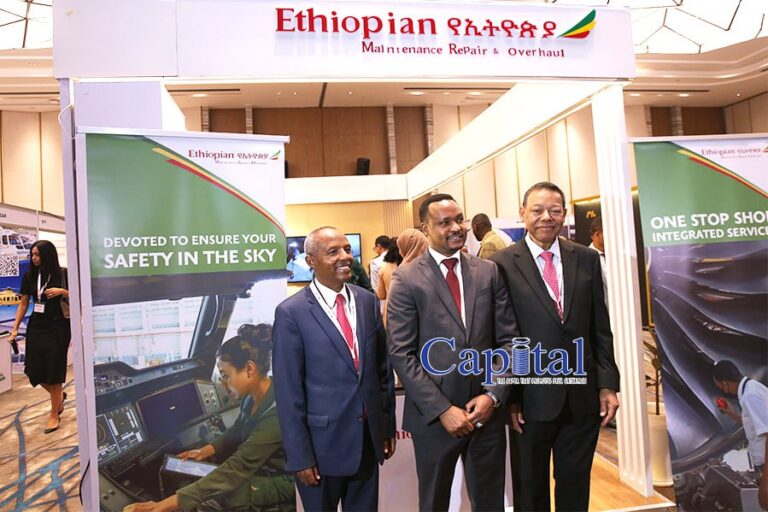
Ethiopian Airlines has expressed its dissatisfaction with certain component suppliers who have significantly increased the prices of their products, leading to the grounding of some aircraft.

Mesfin Tasew, the Group CEO, stated that the aviation industry has been affected by the rising market prices during the MRO Africa 2024 and African Aviation Training Conference and Exhibition, which were hosted by African Aviation Services Limited in partnership with Ethiopian Airlines Group at the Ethiopian Skylight Hotel this week.

Experts have also expressed their displeasure with suppliers who are taking advantage of the business trend and abusing their dominant position in the industry.

The Group CEO emphasized that the shortage of replacement parts in the aviation sector is putting significant strain on all airlines, including Ethiopian Airlines. “We have grounded a few of our aircraft due to issues with the supply chain.”

During a one-on-one meeting at the event hosted by Nick Fadugba, CEO of African Aviation Services Limited, Mesfin stated, “The problem we are facing today is that we don’t get spare parts when we need them. We want our suppliers to actively work on improving their supply chain and provide innovative solutions. When we order parts, we expect them to be shipped out as quickly as possible.”

Mesfin continued by explaining that due to the lack of equipment, some components that are sent to MROs are not fixed promptly.

He highlighted the significant increase in parts prices and expressed his dissatisfaction with suppliers who are charging inflated prices that do not align with the market.

As the CEO of one of the top MROs in the continent, servicing airlines in Africa and the Middle East, the Group CEO stated, “We believe that some suppliers are taking advantage of the parts shortage to unfairly increase prices.”

He further added, “The prices for certain parts have not just doubled, but in some cases, they have tripled compared to what we used to pay a year or two ago.”

Mesfin expressed his disappointment with the unethical business practices of a few suppliers, noting that not all suppliers behave in this manner.

He emphasized that given the current state of global inflation, price increases are expected, but the company expects fair prices.

Industry analysts, including Fadugba, share the Group CEO’s opinion that parts suppliers are exploiting their dominant position in the business and engaging in abusive practices.

“While the majority of suppliers, possibly up to 95 percent, support us in this situation, I can provide evidence that certain suppliers are charging us three times the recommended amount. Is this fair?” Mesfin complained during the continental MRO event.

In an interview with Capital a few weeks ago, the Group CEO mentioned that during the COVID pandemic, several companies that manufacture aircraft spare parts closed their facilities and laid off employees, making it more challenging to produce and supply the necessary spare parts to the industry.

“We are employing various strategies to manage this situation, including making special agreements with suppliers to receive preferential treatment. However, even after doing this, some of our aircraft remain grounded due to the parts shortage,” he added.

Ethio Telecom aims to improve accessibility to digital ID targets

0

Ethio Telecom, the state-owned telecom provider, has recently announced the official launch of national digital ID registration in 29 cities, including Addis Ababa.

The plan is to distribute this digital ID to 90 million citizens nationwide by 2028. Ethio Telecom will register an average of 1 million citizens per month, making it accessible to 32 million citizens, which fulfills 36% of the national plan.

Frehiwot Tamru, CEO of Ethio Telecom, highlighted that the purpose of this initiative is to provide new products and services to citizens, enhance customer service, facilitate e-commerce transactions, promote job creation, offer small loans without collateral to increase financial inclusion, and improve credit transactions. He emphasized that this will also raise citizens’ credit scores and update their lifestyles through digital services, ultimately streamlining businesses.

During the official launch ceremony, Frehiwot Tamru pointed out that the service centers, franchise centers, and agents located throughout the country, along with the large data center, cloud service, and digital infrastructure that have been developed, will create an enabling environment for digital identification.

This program aims to benefit the undocumented sections of the community by providing them with access to the service through their respective providers, thus simplifying the tedious process.