Saturday, April 11, 2026
Home Blog Page 2012

International Red Cross and Red Crescent Movement urges support for conflict victims: ‘We cannot let Sudan become another forgotten crisis’

0

One year of conflict in Sudan is taking a devastating human toll. Over 8 million people have been displaced, and tens of thousands have been killed or wounded. The acute shortages of essential resources such as food, water and fuel, along with a seriously degraded healthcare system, are just some of the terrible consequences of the fighting.

The Sudanese Red Crescent Society (SRCS) is at the forefront of the Red Cross and Red Crescent (RCRC) Movement’s efforts to ensure that Sudanese civilians receive the humanitarian protection and assistance they desperately need.

“We have mobilized 4,000 volunteers from across the country to provide first aid and help evacuate the wounded. Our staff and volunteers distribute food and essential items, provide psychological support, and search for the missing,” says Aida Al-Sayed Abdullah, Secretary-General of the SRCS. “We urge the international community to increase their support to help us meet the urgent needs of the communities trapped in the conflict. We cannot let Sudan become another forgotten crisis.”

The International Committee of the Red Cross (ICRC), the International Federation of Red Cross and Red Crescent Societies (IFRC), and nine participating national societies (Danish Red Cross, German Red Cross, Netherlands Red Cross, Norwegian Red Cross, Qatar Red Crescent, Spanish Red Cross, Swedish Red Cross, Swiss Red Cross, and Turkish Red Crescent) have been supporting and working alongside SRCS to protect and support people affected by the ongoing conflict and natural disasters across the country.

SRCS, with its partners, has been pivotal in delivering essential medical aid to hospitals, offering relief to displaced people and their host communities, and reuniting families separated by turmoil—facilitating crucial phone conversations among separated family members. Through its key access across the country, SRCS has been able to provide the most needed support to thousands affected.

Beyond immediate assistance, the Red Cross and Red Crescent Movement contribution to the response extends to financial and material support to SRCS, alongside providing technical advice and strengthening capacity- building.

The IFRC launched a Federation-wide Emergency Appeal seeking 60 million Swiss Francs to support the SRCS business continuity as well as to scale up its life-saving humanitarian response in the country. The IFRC has also launched a Regional Population Movement seeking 42 million Swiss Francs to support humanitarian responses and activities of the National Societies in the neighboring countries of Egypt, Chad, South Sudan, Central African Republic (CAR), Ethiopia and Libya. 

The Red Cross and Red Crescent Movement calls on all state and non-state armed carriers involved in the conflict to follow their obligations under international humanitarian law, which is designed to protect ordinary people and those who can no longer fight. When homes, hospitals, and schools are damaged, and people who are not part of the fight are hurt, it not only causes immediate harm but also makes it much harder for communities to heal and come together after the conflict.

The Red Cross and Red Crescent Movement is committed to providing protection and life-saving relief to the people suffering the horrors of the ongoing conflict. It urges, however, that more funding is needed to sustain the SRCS operations in the year ahead.

Distributed by APO Group on behalf of International Federation of Red Cross and Red Crescent Societies (IFRC).
Kenya: We are Supporting the Manufacturing Sector to Boost Exports, President Ruto

0

The government is rolling out incentives to attract investors to the manufacturing sector, President William Ruto has said.

The President said the goal is to grow the country’s manufacturing sector to an ambitious 20 per cent of our GDP by 2030.

He pointed out that strategic investment in manufacturing will increase exports, create employment opportunities, boost economic activity using local resources and generate attractive returns for investors.

President Ruto said it is, therefore, unreasonable to provide duty and levy exemptions to importers of goods that can be produced locally.

“We shall focus our policies and strategy on encouraging increased local production, in line with the Bottom Up Economic Transformation Agenda,” he added.

The President said Kenya must take advantage of the opportunities provided by the Africa Continental Free Trade Area Agreement, which has created a vast market for the country’s exports.

“We want to create ecosystems and avenues for us to target the export market. We want Kenya to move away from being a super market for other countries to being a manufacturer of our own goods for export,” he said.

President Ruto spoke during the commissioning of Cemtech Limited Clinker Plant in Sebit, West Pokot County.

West Pokot and Uasin Gishu Governors Simon Kachapin and Jonathan Bii, Cabinet Secretaries Rebecca Miano, Kipchumba Murkomen and Salim Mvurya, MPs and MCAs were present.

The President said the KSh45 billion plant will create hundreds of jobs and expand opportunities for entrepreneurs in the region.

“West Pokot County is about to experience an economic resurgence associated with the new factory, including higher wages, consumption and increased revenue,” he said.

He said local manufacturing of clinker and steel has saved the country foreign exchange to the tune of $500 million a year.

Distributed by APO Group on behalf of President of the Republic of Kenya.

Innovative regulatory loopholes propel pioneering startup growth

0

In a groundbreaking move to spur the growth of startups, the government introduced a set of innovative incentives. Speaking at the Adwa Memorial on Thursday, April 4, Prime Minister Abiy highlighted the government’s commitment to fostering an environment conducive to the development of startups.

Recognizing the unique needs of startups for experimentation and flexibility, the Prime Minister announced the government’s decision to create regulatory “sandboxes.” This concept allows startups to test and develop their ideas without the constraints of standard regulatory frameworks. “Companies with novel and creative ideas typically require more space for experimentation than is available under standard regulation and control systems,” said Abiy, emphasizing the government’s open stance towards new business ideas and its readiness to provide the necessary room for their growth until a comprehensive understanding and regulation system is in place.

The initiative includes the formation of a national steering committee, chaired by the Deputy Prime Minister, dedicated to nurturing innovative ideas and supporting the sector through policy enhancements. This move signals the government’s recognition of the changing business landscape in Ethiopia, where fintech businesses and business process outsourcing (BPO) industries, such as call centers and coding, are experiencing rapid growth due to the rising costs in more established nations.

Highlighting the evolution of the startup ecosystem in Ethiopia, the Prime Minister noted a significant increase in the number of startups—from around 50 five years ago to over 900 today, spanning across various sectors. This remarkable growth underscores the vast potential within the Ethiopian startup landscape and the government’s role in unlocking it.

In addition to regulatory flexibilities, Muferihat Kamil, the Minister of Labor and Skills, unveiled new programs aimed at easing the path for entrepreneurs. These include simplifications in business registration, office leases, and liquidation audits, alongside a single window solution for licensing. These measures are designed to streamline the operational hurdles that startups often face, making it easier to do business in Ethiopia.

The government’s bold steps towards creating a nurturing environment for startups mark a pivotal chapter in Ethiopia’s economic development. By recognizing the importance of innovation and providing a supportive framework for startups, Ethiopia is setting a precedent for how governments can actively contribute to the flourishing of the digital economy and innovation-driven entrepreneurship.

ESX raises 1.51 billion birr capital

0

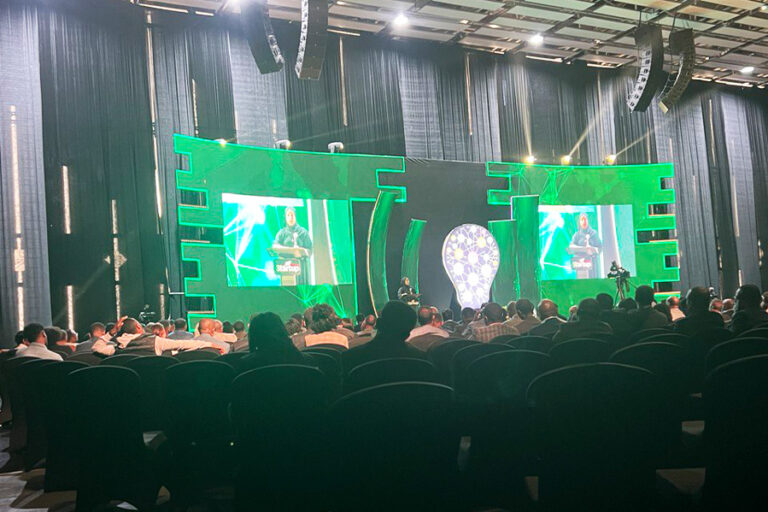
The Ethiopian Securities Exchange (ESX) announced a remarkable achievement, raising 1.51 billion Birr in capital, surpassing all expectations. This accomplishment highlights the high level of confidence exhibited by investors in both the exchange and Ethiopia’s capital markets, emphasizing their long-term prospects.

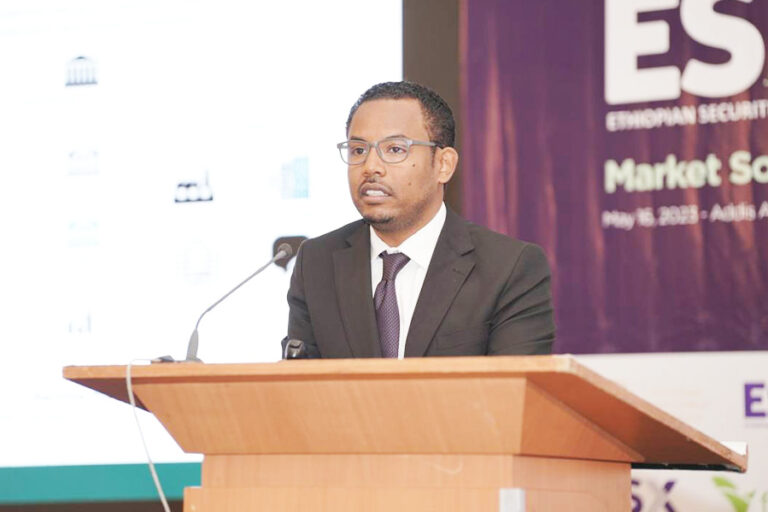
Tilahun Esmael, the Chief Executive Officer of ESX, expressed his excitement earlier today, revealing that the capital raised exceeded the initial target by an impressive 240 percent. The oversubscribed offering attracted participation from 48 investors across a range of sectors, comprising both domestic and foreign entities.

The Ethiopian Securities Exchange initiated its capital-raising endeavors in November 2023. Meticulously orchestrated road-shows were conducted in Addis Ababa, Nairobi, and London to garner interest and support. The CEO emphasized that the enthusiastic response received underscores the confidence and anticipation surrounding ESX’s pivotal role in advancing Ethiopia’s financial sector development and overall economic transformation.

The investor base is diverse and includes prominent foreign strategic investors such as FSD Africa, the Trade and Development Bank Group (TDB), and the Nigerian Exchange Group (NGX). Additionally, 16 domestic commercial banks, 12 insurance companies, and 17 other domestic investors have joined the venture. Tilahun disclosed that the public sector holds a 25 percent share, with participation from Ethiopian Investment Holdings and its subsidiaries, Ethio telecom, and the Commercial Bank of Ethiopia.

Expressing delight at the overwhelming response, the CEO stated, “We are thrilled to have exceeded all our expectations in terms of capital and excited by the overwhelming confidence shown by investors in the long-term prospects of both ESX and Ethiopia’s capital markets more broadly.”

In addition to the successful capital raise, Tilahun announced other significant milestones achieved by ESX. This includes the release of its draft Exchange Rulebook for public consultation and the completion of the technical evaluation to select its technology provider. These developments mark significant progress towards fully operationalizing ESX’s trading activities.

ESX has planned issuer and investor education programs in the coming months leading up to its official launch. As the first securities exchange in Ethiopia, ESX aims to drive economic growth, promote financial inclusion, and generate wealth for all Ethiopians. It will provide a platform for companies to raise capital, facilitate investment opportunities, and uphold transparency and corporate governance standards. The achievements of ESX signal a promising future for Ethiopia’s capital markets and its overall economic landscape.
