Wednesday, November 11, 2026
Home Blog Page 2137

Airbus reports 9% increase in sales despite challenges

0

The European multinational aircraft company Airbus SE reported a 9% increase in sales for the first quarter of this year, despite a number of obstacles. In its statement covering financial results for the first quarter (Q1) ended 31 March 2024, Airbus stated that geopolitical and supply chain tensions continue.

“We delivered first-quarter 2024 results against the backdrop of an operating environment that shows no sign of improvement. In that context, we delivered 142 commercial aircraft,” said Airbus CEO Guillaume Faury. “We started 2024 with solid order intake across our businesses. The strong momentum on widebody aircraft underpins our decision to increase the production rate for the A350 to 12 aircraft a month in 2028. Our ramp-up plans are continuing, supported by investments in our production system while relying on our core pillars of safety, quality, integrity, compliance, and security.”

According to the report sent to Capital, gross commercial aircraft orders totaled 170 (Q1 2023: 156 aircraft) with the same number of net orders due to no cancellations (Q1 2023 net orders: 142 aircraft). The order backlog amounted to 8,626 commercial aircraft at the end of March 2024. Airbus Helicopters registered 63 net orders (Q1 2023: 39 units), mainly in the light and medium segments. Airbus Defence and Space’s order intake by value was 2 billion euros (Q1 2023: 2.5 billion euros).

Consolidated revenues increased 9 percent year-on-year to 12.8 billion euros from 11.8 billion euros in Q1 2023. A total of 142 commercial aircraft were delivered, an increase from 127 aircraft in the same period last year. According to the quarterly report, revenues generated by Airbus’ commercial aircraft activities increased 13 percent, mainly reflecting the higher number of deliveries. Airbus Helicopters’ deliveries totaled 50 units, a decrease compared with the preceding year’s same period of 71 units.

“Its revenues decreased 9 percent, reflecting the lower volume of deliveries, partially offset by services,” it added. According to the report, revenues at Airbus Defence and Space increased 4 percent mainly driven by the Air Power business, partly offset by a less favorable phasing in Space Systems.

It stated that consolidated earnings before interest and taxes (EBIT) Adjusted – an alternative performance measure and key indicator capturing the underlying business margin by excluding material charges or profits caused by movements in provisions related to programs, restructuring, or foreign exchange impacts as well as capital gains/losses from the disposal and acquisition of businesses – was 577 million euros (Q1 2023: 773 million euros).

“It includes the planned impact linked to the increased Airbus Employee Share Ownership Plan, which saw record participation among employees, and resulted in a year-on-year expense increase of slightly above 0.1 billion euros,” it added. EBIT Adjusted related to Airbus’ commercial aircraft activities decreased to 507 million euros from 580 million euros of last year’s same period, “with the positive impact from higher deliveries being offset by a slightly less favorable hedge rate as well as investments for preparing the future.”

The A220 ramp-up continues towards a monthly production rate of 14 aircraft in 2026, with a focus on the program’s industrial maturity and financial performance. On the A320 Family program, the Company is making progress towards the rate of 75 aircraft per month in 2026. Entry-into-service of the A321XLR continues to be expected in Q3 2024. On widebody aircraft, the Company has decided to increase the production rate for the A350 to 12 aircraft a month in 2028 and continues to target rate 4 for the A330 in 2024.

Airbus Helicopters’ EBIT Adjusted decreased to 71 million euros from 156 million euros in Q1 2023, reflecting a particularly strong first quarter in 2023 and reflecting the lower deliveries. EBIT Adjusted at Airbus Defence and Space decreased to -9 million euros (Q1 2023: 36 million euros), mainly reflecting the lower volume and profitability of Space Systems, notably linked to the Estimates at Completion updates performed in the second half of 2023.


Foreign employment agencies facing licensing delays

0

More than 100 foreign employment agencies have applied for business licenses, yet they have voiced complaints about not receiving qualification licenses, with reasons for the delay remaining unclear.

Ethiopia has entered into agreements with various foreign governments to safeguard the rights and obligations of its citizens working abroad. Despite this, numerous organizations have lodged grievances with the authorities, alleging repeated attempts to obtain qualifications through the Ministry of Labor and Skills (MoLS) for legal licensing to operate as foreign employment and employer liaison agencies.

According to the complainants, applicants were required to fulfill the criteria outlined in the Act, which mandated obtaining a license for overseas employment and engaging with employers. Despite persistent requests over the past three months, the government has not provided a satisfactory response to address their concerns.

Foreign nationals granted work permits in authorized fields and organizations necessitated the establishment of a stringent monitoring system under the Minister’s jurisdiction. However, agencies claim to be facilitating illegal migration to foreign countries, including Addis Ababa, bypassing the regulatory process.

Although the trade and licensing of foreign employment and labor liaison agencies were officially prohibited since September, agencies holding prior permits claim to have met all qualification criteria outlined by the ministry. These criteria include possessing a lease agreement for a 40 square meter office space and a starting capital of 1 million ETB. Additionally, any employer must secure a new work permit for foreign nationals employed under the Minister’s authority.

While applicants have undergone the necessary procedures to operate within the sector, they have incurred substantial losses due to delays in qualification certification. Efforts to contact Tekle tesfu, head of the licensing desk at the ministry overseeing foreign employment agencies, have been unsuccessful, despite tesfu being directly involved in addressing the issue.

Irrigation Ministry highlights contractors’ inadequate capability

0

The Ministry of Irrigation and Lowland (MoIL) has revealed that contractors’ inadequate capability is having an impact on the way projects are carried out. It is considering altering the trajectory of furrow irrigation.

Aysha Mohammed, the Minister of MoIL, acknowledged the concerns expressed by lawmakers about the poor performance of projects completed within the allotted time in the nine-month performance report for the 2023/24 budget year in parliament. She stated that the majority of the issues raised by parliamentarians and the Standing Committee on Water, Irrigation, and Lowland Development Affairs are legitimate and should be addressed by the ministry, as well as other pertinent government agencies.

Regarding her report and in response to members’ concerns, she stated that the nation does not have a large enough pool of players to manage irrigation projects. She said that there aren’t enough local contractors in the industry to execute projects on schedule and that their capacity is insufficient. State-owned contractors have contracts, according to Aysha, “and we have also considered including new players in the sector.” She highlighted the extremely low interest in managing projects.

She went on to say, “We don’t want to give more projects to public enterprises since concerns about project execution performance have been raised regarding them.” She expressed her dissatisfaction that the ministry has not received enough bidders and that there is a lack of enthusiasm in taking on projects. She said, “We are extending an invitation to global developers to collaborate on irrigation infrastructure developments.”

Regarding modernization and technology-based initiatives, the minister stated that the majority of irrigation development projects are now supported by furrow irrigation systems, with the exception of relatively few sugar projects. There are improvements that need to be made to enhance this system. The proposal for cost sharing states, “The formation of an irrigation fund is another area that will be an instrument to mobilize resources for the implementation of technology-based irrigation.” Aysha says that the next strategy pertaining to agriculture and rural development will incorporate these innovative methods. Their design work takes into account the fact that the next infrastructures should be supported by modern technologies.

She said that a project program to modernize and restore irrigation infrastructure is being developed with the World Bank to enhance both current and future irrigation infrastructure. “While the cost would be very high, existing projects will also be reviewed in the new scheme,” she stated.

Members of parliament and the standing committee that oversees the industry voiced their concerns throughout the session regarding the extremely subpar performance of projects managed by MoIL. The chair of the standing committee for water, irrigation, and lowland development affairs, Fetiya Ahmed, stated that the ministry is unable to implement all of the recommendations made by the standing committee.

She said that when it comes to supporting the population in the lowland region, there is also a lack of collaboration with other partners. She suggested that in order to address the issues MoIL confronts, the government should become involved.

MoIL has identified a number of challenges that impact the progress of certain projects, including inadequate funding, security concerns, rising costs, inadequate project management by contractors, and several other difficulties.

40% of Ethiopia’s population lacks documentation

0

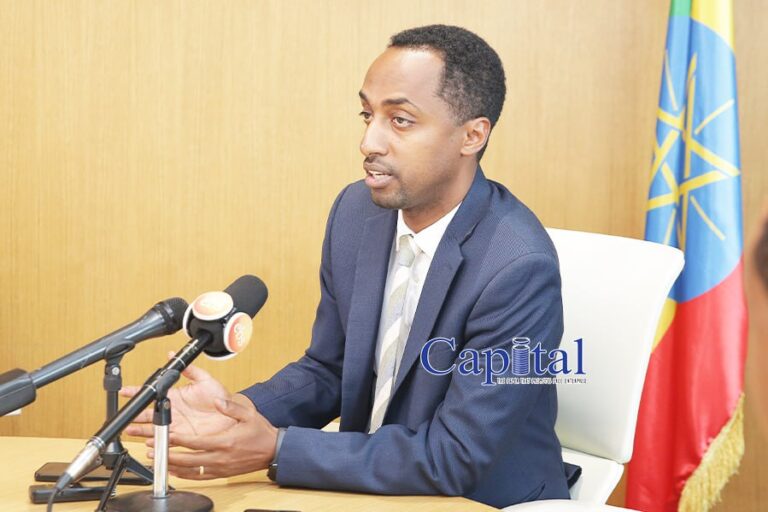
Yodahe Arayaselasie, the CEO of the National ID Program, has revealed a startling statistic: 40 percent of Ethiopia’s population lacks proper documentation. Being undocumented means exclusion from the formal economy, as these individuals lack the necessary identification data to access banking and SIM card services.

In response to this issue, a recent agreement has been brokered to facilitate the registration of these undocumented individuals through digital technology. In collaboration with 32 banks across the country, approximately 31 million birr has been pooled to acquire 6,000 digital registration kits at a total cost of 1 billion birr, aimed at bridging the gap for the undocumented community.

Abie Sano, the president of the Ethiopian Bankers Association (EBA), revealed that an international open tender was conducted for the procurement of the Biometric Registration kit materials. Out of five digital ID suppliers, Lamino Engineering PLC emerged victorious.

Under the agreement, Lamino will provide the registration materials, benefiting 40 million citizens through 11,000 bank branches nationwide in the first phase. This initiative is set to span five years, allowing 32 banks to procure 6,000 registration materials at a cost exceeding 1 billion birr.

The National Bank and the National Identification Office mandated all Ethiopian banks to implement the National ID program in fiscal year 2024, requiring financial institutions to enroll customers in the digital ID system.

Currently, over 4.6 million citizens have registered for the National Digital ID, and the recent agreement between the Banks Association and Lamino is expected to expedite the digital ID registration process significantly.