Sunday, May 10, 2026
Home Blog Page 2157

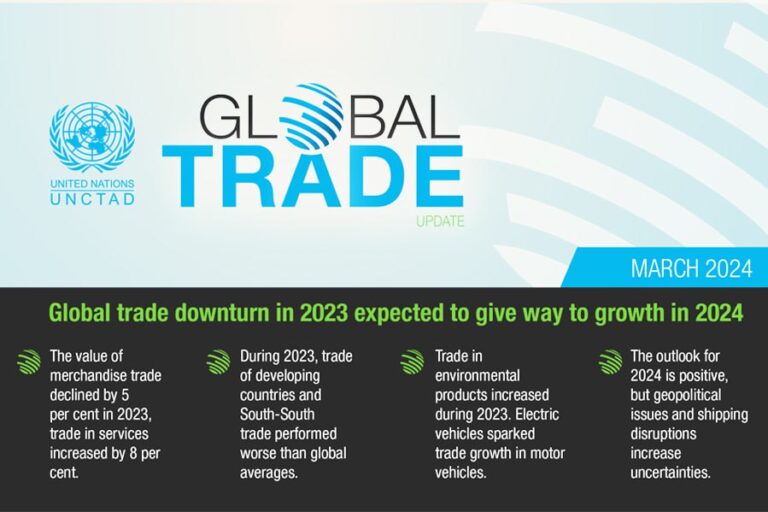
Africa poised for trade growth amid global recovery

0

Africa, a continent that has faced numerous challenges in recent years, is now positioning itself for trade growth as the global economy shows signs of recovery. Despite the global trade downturn in 2023, Africa’s trade prospects for 2024 are increasingly optimistic, offering new opportunities for economic development and regional integration.

According to the latest Global Trade Update by the United Nations Conference on Trade and Development (UNCTAD), Africa experienced a decline in merchandise trade in line with global trends. However, the continent’s trade in services remained resilient, offering a glimmer of hope amidst the challenging economic climate.

In 2023, Africa’s trade performance was affected by reduced demand from developed nations and trade weaknesses within the East Asian and Latin American regions. Lower commodity prices further contributed to the decline in the value of international trade. However, Africa’s services sector, particularly tourism and travel-related services, rebounded strongly with an impressive growth rate of almost 40 percent.

As the global economy recovers, Africa is expected to capitalize on emerging opportunities. Projections for 2024 indicate a reversal of the downward trends, with moderating global inflation and improving economic growth forecasts. One key driver of trade growth in Africa is the rising demand for environmental goods, such as renewable energy products and electric vehicles. This presents an opportunity for African countries to leverage their natural resources and invest in sustainable industries.

However, challenges and uncertainties persist. Geopolitical tensions, rising shipping costs, and high levels of debt in many countries continue to pose risks to global trade, including Africa’s trade prospects. Additionally, ongoing volatility in commodity prices and disruptions in shipping routes, such as those related to the Red Sea and Suez Canal, may impede the smooth flow of goods and increase costs.

To harness the potential for trade growth, African nations must focus on strengthening regional integration and improving trade facilitation measures. Enhancing infrastructure, streamlining customs procedures, and investing in digital technologies are crucial steps to reduce trade barriers and boost intra-African trade.

Furthermore, African countries need to diversify their economies and enhance competitiveness in key sectors. This includes developing value-added industries, promoting innovation and technological advancements, and investing in human capital development. By doing so, African nations can attract investment, foster entrepreneurship, and create employment opportunities, ultimately driving sustainable economic growth.

Several African economies have already shown signs of resilience and growth. In 2023, countries like Nigeria, South Africa, and Kenya demonstrated positive export growth rates, signaling their potential as key players in Africa’s trade landscape. Moreover, regional initiatives such as the African Continental Free Trade Area (AfCFTA) provide a platform for deeper economic integration and expanded market access within the continent.

As Africa positions itself for trade growth in 2024 and beyond, collaboration among governments, businesses, and international partners will be crucial. By fostering an enabling environment for trade, promoting regional cooperation, and embracing sustainable practices, Africa can emerge as a vibrant and dynamic player in the global trade arena.

Africa’s trade outlook for 2024 holds promise amid the global recovery. With a focus on diversification, regional integration, and sustainable development, African nations can seize the opportunities presented by rising global demand for environmental goods and services. By leveraging their resources, investing in infrastructure, and fostering innovation, Africa is poised to contribute significantly to global trade and secure a brighter economic future.
Uganda: Funding gaps crippling provision of Information, Communication, Technology (ICT) services – Minister

0

Funding gaps in the Ministry of Information, Communication, Technology and National Guidance are crippling the ministry’s capacity to ICT provide the required services to Ugandans.

The Minister for ICT, Hon. Chris Byromunsi, said that ICT and National guidance was born out of a merger yet the Ministry of Finance has completely ignored the communications and national guidance aspect.

Dr. Baryomunsi was appearing before the Committee on ICT and National Guidance, chaired by Hon. Eng. Moses Magogo, on Friday 22 March, 2024.

He expressed concern on how the communication budget for the Ministry has not been considered for a long time, leaving officers and commissioners with no resources for their work. 

“Where we are going, we need to revitalize the communications function and national guidance bit because we need to inform the country about government functions and yet finance is not giving any money,” he said.

“Officers and commissioners have no facilitation yet they are crucial both centrally and at the local government level to provide ICT services,” he added.

The Permanent Secretary Ministry of ICT, Ms. Aminah Zawedde, reiterated the need for more funding and highlighted that under the development of local ICT services, the Ministry required Shs13.5 billion, yet only Shs11.3 billion was provided. 

She decried the glaring gap in resource allocation in the Ministry, questioning how only a fraction of the monies required by the Ministry is availed, consequently increasing the challenges of acquiring infrastructure such as computers for schools, digital skilling, taking services online, creating awareness in cybercrimes, creation of employment opportunities among others.

She said that the next intervention to upgrade the Parish Development Model (PDM) system where the ministry requires Shs5.5 billion but only Shs4 billion has been released could stagnate the implementation of key PDM projects.

“If we do not automate these systems before project implementation, then we shall miss out on transparency and accountability yet this digitisation is key for successes of the model,” she explained.

She appealed to the committee to support the ministry to address the current funding gap that is amounting to a total of Shs38.7 billion.

Hon. Noah Musa (Ind., Koboko North) tasked the Ministry of Finance to clarify why it was not availing funds to ICT since no prior explanation had been given.

The Chairperson, Hon. Magogo guided that for the ICT ministry to give Ugandans a comprehensive ICT solution, there was need for a holistic approach to develop the aspects of hardware, software and people ware.

Distributed by APO Group on behalf of Parliament of the Republic of Uganda.

Lycée Guébré-Mariam marks 75th anniversary with dignitaries and former students

0

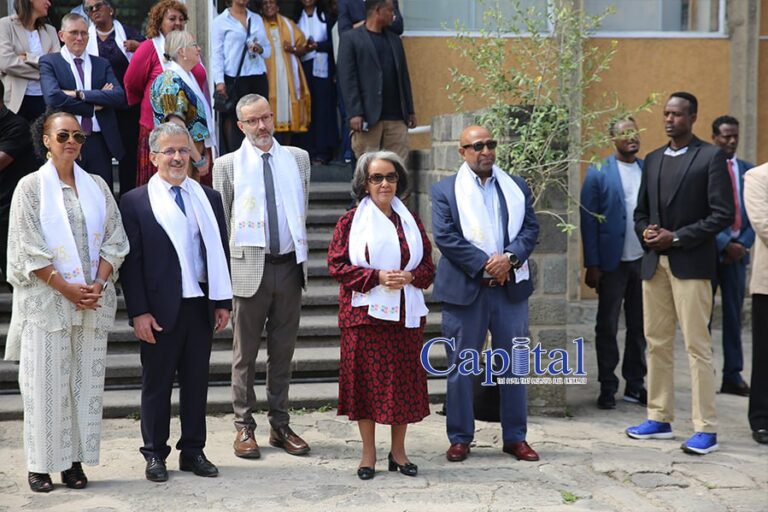
Lycée Guébré-Mariam, one of Ethiopia’s French international schools, celebrated a significant milestone on Saturday as it commemorated its 75th year of establishment. The grand event witnessed the presence of distinguished guests, including President Sahlework Zewdie, Minister of Education Berhanu Nega, and French Ambassador to Ethiopia Rémi Maréchaux.

Founded in 1947, Lycée Guébré-Mariam has been an emblem of excellence in education, serving as a beacon of multiculturalism and academic prowess in Ethiopia. The school’s integration into the Mission laïque française in its inaugural year marked a pivotal moment in its history, cementing its commitment to delivering quality French education in the heart of Addis Ababa.

The 75th-anniversary celebration was a momentous occasion, steeped in nostalgia and reverence for the institution’s rich heritage. Former students of Lycée Guébré-Mariam, who have gone on to make significant contributions in various fields, were honored during the ceremony, showcasing the school’s enduring legacy of shaping future leaders and trailblazers.

President Sahlework Zewdie, in her address to the gathering, lauded the school’s role in nurturing generations of students and fostering cultural exchange between Ethiopia and France. She emphasized the importance of education as a cornerstone of national development and commended Lycée Guébré-Mariam for its unwavering commitment to academic excellence.

Minister of Education Berhanu Nega echoed similar sentiments, emphasizing the government’s dedication to supporting educational institutions that promote international cooperation and cultural diversity. He reaffirmed the ministry’s commitment to providing quality education for all Ethiopians, regardless of background or nationality.

French Ambassador Rémi Maréchaux expressed his pride in Lycée Guébré-Mariam’s contribution to strengthening Franco-Ethiopian ties and fostering a deeper understanding of French language and culture in Ethiopia.

Addressing the digital ID gap among IDP’s

0

An estimated 4.4 million individuals are displaced within various regions of Ethiopia, particularly in areas like Amhara, Oromia, Tigray, Afar, and Benshangul Gumuz. However , approximately 8,000 individuals from this displaced population received a pilot Digital ID.

To mitigate this issue, a pilot initiative in collaboration with humanitarian organizations has been launched to register and provide identification to these vulnerable populations. Despite this effort, the number of displaced individuals who have received digital IDs remains relatively low.

Gebrela Abraham, Policy Advisor of the National ID program, highlighted the ongoing efforts, stating that around 8,000 displaced individuals in West Wolega have been successfully registered and provided with IDs. However, she acknowledged that more work needs to be done to address the broader issue of providing digital IDs to internally displaced persons (IDPs) across the country.

Since the nationwide introduction of the national identification program, approximately 3.8 million people have been registered. Registration centers are operational at nine banks and 69 branches in Addis Ababa, as well as at revenue offices and document registration and verification services throughout Ethiopia.

Efforts are underway in collaboration with UNICEF and WFP to trial the creation of digital identity cards, known as “Fayda” cards, equipped with a unique 12-digit identification number for displaced populations. Biometric technology is being utilized to enhance the accuracy and security of the identification process.

In addition to addressing the needs of IDPs, the Ethiopian government, in partnership with UNHCR, is extending digital identification services to refugees and asylum seekers in the country. This initiative aims to ensure that all individuals, regardless of their displacement status, have access to essential services and support.

However, challenges persist, as many refugees and returnees displaced by drought and conflict struggle to obtain the necessary identification documents to access basic services. It is crucial that identification systems are effectively utilized to verify individuals’ identities and facilitate their access to vital services.

The comprehensive digital identification program, supported by a $350 million investment from the World Bank, is expected to enroll 90 million people by 2028. Through continued collaboration and innovation, Ethiopia seeks to bridge the digital ID gap and provide equitable access to essential services for all its citizens, including those displaced within its borders.