Sunday, May 10, 2026
Home Blog Page 2159

Civilians and Organized Forces Form Joint Working Group to Protect Civilians in Bangasu

0

Addressing the impact of insecurity on the lives and livelihoods of local communities remains a priority for residents of Bangasu in Yambio County.

To improve the relationship between uniformed personnel and civilians, seventeen representatives of organized forces and the local community, including refugees and returnees, have formed an early warning working group hoped to better protect civilians and their property.

This group was established after the United Nations Mission in South Sudan (UNMISS) organized a two-day workshop to raise awareness about protection matters, the revitalized peace agreement, and the UNMISS mandate.

Miamangawai Luize, a youth leader in the area, was happy about learning more about his community’s role in peacebuilding and debunking misinformation.

“I have also gained knowledge about the process leading up to the upcoming December 2024 and related protection issues,” he said.

Luiza Mina, a refugee attending the workshop, was delighted to hear about how she can contribute to the safety of her host community.

“This is the first training I attend and now I will educate my fellow refugees on how to work to keep everyone safe,” she said. 

Tahiru Ibrahim, an UNMISS representative, said that the UN Peacekeeping mission is planning to replicate this activity across Western Equatoria.

“I think this kind of protection groups will help the authorities receive early security alerts that will help them act to deter violence and curb crimes,” he averred.

Distributed by APO Group on behalf of United Nations Mission in South Sudan (UNMISS).

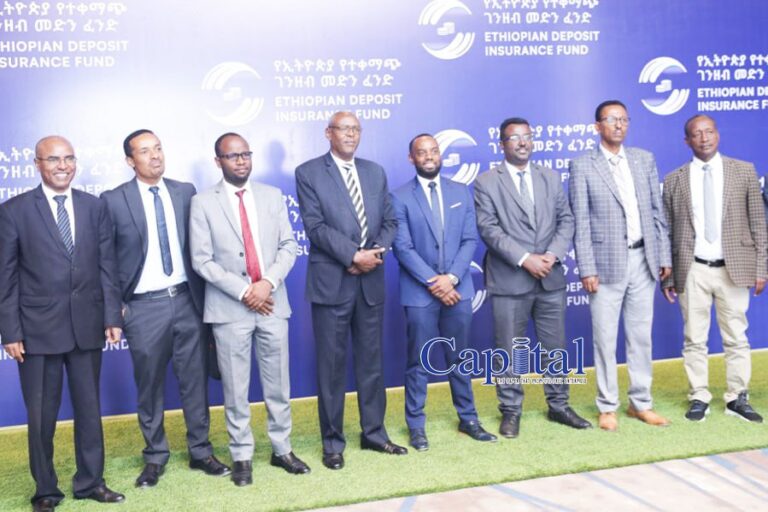
EDIF records 2.8 billion birr collection in six months

0

The Ethiopian Deposit Insurance Fund (EDIF) has announced that it successfully collected 2.8 billion birr from its member commercial banks and small financial institutions over the past six months.

Desalegn Ambaw, CEO of EDIF, revealed that out of 80 member institutions, including 31 commercial banks and 49 small financial institutions, the fund has amassed the significant sum of 2.8 billion birr. He further explained that financial institutions have the option to make payments in two installments, with an initial 50 percent of the required capital of 0.4 percent already paid. The remaining balance will be completed within a two-year timeframe.

The government initially allocated 200 million birr for establishing the fund, with an additional 50 million birr designated for operational purposes thus far. Operating with ambitious targets, EDIF aims to collect a total of 6 billion birr within the fiscal year.

The purpose of the fund is to provide security and assurance to depositors who entrust their savings to commercial banks or small financial institutions. Under this system, depositors are guaranteed compensation in the event of bank or microfinance institution failures, ensuring their financial security.

Furthermore, every depositor in any financial institution, with deposits of up to 100,000 birr, is covered by this insurance scheme. A portion of the collected funds, amounting to 1.5 billion birr, has been invested in government treasury bonds, while the remaining 100 million birr has been deposited into the Mudarabah investment account of the Commercial Bank of Ethiopia in accordance with Sharia principles.

With this initiative, Ethiopia joins the ranks of 147 other countries worldwide that have established deposit insurance funds to safeguard depositor interests and bolster financial stability.

United States Educational and Cultural Exchanges Drive Inclusive Economic Growth

0

U.S. Assistant Secretary of State for Educational and Cultural Affairs Lee Satterfield traveled March 19-21 to Lagos and Abuja, where she highlighted a broad range of U.S. public diplomacy programs that help to expand access to education and economic opportunities in the creative industries.

U.S. Educational And Cultural Exchanges Drive Inclusive Economic Growth Assistant Secretary Satterfield’s trip comes on the heels of the recent visit to Nigeria by U.S. Secretary of State Antony Blinken and underscores the United States’ strong commitment to strengthening people-to-people connections with Nigeria that drive innovation, foster knowledge exchange, and unlock opportunities for shared economic prosperity.   

In Lagos, Assistant Secretary Satterfield delivered remarks at the University of Lagos on the importance of cultural diplomacy in Africa and announced three new exchange programs for the creative industries. These new initiatives include: the Africa Creative TV initiative for writers and producers in the film and TV industries; the American Music Mentorship Program, which is in partnership with the Recording Academy/GRAMMYs; and the film-focused, one-year Community College Initiative, which will take participants through the script to the screen process.

She also witnessed the MOU signing ceremony for the establishment of a Window on America at the University of Lagos –– the 26th American Space in Nigeria –– which will serve as a gateway to a wealth of resources; information about U.S. government sponsored exchange opportunities; guidance on how to study in the United States; access to eLibraryUSA, a platform for academic research; career mentorship; and professional development workshops.

In addition to visiting the American Corner Lekki, Assistant Secretary Satterfield participated in a tech and innovation showcase featuring six innovative solutions developed by alumni of U.S. government exchange programs. She also met with leading figures in Nigeria’s film and music industries and discussed harnessing the potential of these industries to drive economic growth, job creation, youth opportunities, and cultural exchange while strengthening bilateral ties between the U.S. and Nigeria.

At the National Museum in Lagos, Assistant Secretary Satterfield launched Nigeria’s first Cultural Property Agreement Implementation Grant, which demonstrates the U.S. government’s commitment to working with Nigeria to protect, honor, and preserve its cultural heritage. Through this grant, museum professionals from the Metropolitan Museum of Art in New York will work with their counterparts at the National Museum Lagos to digitize and improve access to Nigeria’s cultural heritage and raise awareness about the importance of cultural preservation.

In Abuja, Assistant Secretary Satterfield met with Minister of Education Professor Tahir Mamman and the Minister of Art, Culture, and Creative Economy, Hannatu Musawa and discussed a variety of issues ranging from the U.S.-Nigeria partnership on cultural diplomacy, including in film, to expanding access to educational and professional opportunities for women and girls in science, technology, education, and mathematics (STEM).

The Assistant Secretary also engaged with beneficiaries of the U.S. Embassy Abuja Opportunity Funds Program, which helps high achieving but economically disadvantaged students secure admission and scholarships to American colleges and universities. She urged the students to make the most of their opportunity to get a top-notch education in the United States while gaining first-hand experience of American life and culture.

While in Abuja, Assistant Secretary Satterfield delivered keynote remarks at the Women’s International Film Festival Nigeria and participated in a moderated panel discussion where she highlighted the important role of an inclusive and sustainable creative ecosystem in advancing economic growth and strengthening bilateral people-to-people ties.

“The deep partnership between the United States and Nigeria goes well beyond just our governments ––in fact, at the heart of our relationship is our people,” Assistant Secretary Satterfield said during her visit.   

Assistant Secretary Satterfield’s visit highlights the commitment the Biden-Harris Administration made at the 2022 US-Africa Leaders’ Summit to deepen ties with Africa in support of inclusive economic growth and shared prosperity. Since the 2022 US-Africa Leaders’ Summit, 20 high-level U.S. government officials have visited Nigeria.

Distributed by APO Group on behalf of U.S. Embassy and Consulate in Nigeria.

Sierra Leone Records Progress in Human Capital Development – But Requires Sustained Investments to Drive Economic Growth and Reduce Poverty

0

Sierra Leone has made commendable strides in improving human capital development with the government demonstrating a strong commitment to enhancing the well-being and productivity of its population through significant investments in health and education, according to a new World Bank report launched today in Freetown. The report also highlights the prioritization of social protection interventions like cash transfers to extremely vulnerable groups as a notable intervention aimed at reducing poverty and building human capital.

The Sierra Leone Human Capital Review: Maximizing Human Potential for Resilience and Inclusive Development, provides critical insights into the country’s efforts to foster human capital development and economic growth. The report examines the current state of health, education, and social protection systems in the country and offers recommendations to enhance the effectiveness of human capital investments.

“The future socio-economic stability and prosperity of Sierra Leone is intrinsically linked to the well-being of its people,” said Abdu Muwonge, World Bank Country Manager for Sierra Leone“This report provides a roadmap for the government and its partners to strengthen human capital, which is essential for Sierra Leone to achieve its full economic potential and improve the livelihoods of its citizens.”

‘Human Capital Development’ is the first Policy Cluster in the Government of Sierra Leone’s Medium-term National Development Plan (MTNDP) 2019–2023 with increased financing of inputs in key human development sectors such as health and education. The new MTNDP (2024-2030) also prioritizes human capital development among its five key pillars, with food security as the main flagship. This increased commitment towards social sectors has resulted in improvements in health and education outcomes. For example, maternal and under-5 mortality rates, adult survival rates, as well as expected years of schooling have all improved since 2005. The Free Quality Education, launched in 2018, helped to reduce barriers to accessing education with the Education Sector Plan (2022–2026) laying out the core priorities and presenting a road map to achieving the country’s education goals. There have also been improvements in social protection coverage – the flagship social protection initiative, ‘Ep Fet Po’ cash transfer program, financed through the World Bank-supported Social Safety Net (SSN) Project, provides direct financial support to the most vulnerable populations, thereby contributing to the development of a more resilient and capable workforce.

However, Sierra Leone still faces challenges related to low human development outcomes, high poverty rates, and limited access to basic services, the report notes. The country ranks 151 out of 157 countries on the Human Capital Index (HCI). The HCI value is lower than the region’s average, indicating significant challenges in human capital development. The report highlights that only around two-thirds of today’s 15-year-olds can be expected to survive to the age of 60, and about one-quarter of the country’s children are stunted due to chronic malnutrition. Additionally, the HCI measure predicts that a child born today in Sierra Leone can be expected to be only 35% as productive when he or she grows up as the child could have been if he or she had enjoyed complete education and full health.

“The government of Sierra Leone has demonstrated a strong commitment to human capital. This report makes the case that one of the best investments a country can make is investing in its people,” said Ali Ansari, World Bank Senior Economist and one of the lead authors of the report. “A healthy, educated and skilled population is the cornerstone of Sierra Leone’s journey towards a resilient, prosperous and inclusive future.”

As policy priorities over the short to medium-term, the report emphasizes the need to: (i) prioritize investments in high-impact interventions for foundational learning, health, youth skills and employability; (ii) improve workforce management; (iii) prioritize investments in ensuring a minimum social protection floor for Sierra Leone; (iv) strengthen governance and implementation capacity; and (v) improve national and local level coordination in human capital development. The report also identifies several cross-cutting areas that should be prioritized, including: (i) building resilient and adaptive human development systems; (ii) improving food security; (iii) leveraging technology to enhance service delivery; and (iv) targeting human capital interventions to vulnerable groups, especially adolescent girls, women, youth and the poorest.

The Sierra Leone Human Capital Review is part of the World Bank’s broader commitment to supporting countries in their efforts to build strong human capital as a foundation for inclusive growth. This is in line with WBG’s vision of creating a world free of poverty on a livable planet. The report’s findings will serve as a valuable resource for policymakers, development partners, and stakeholders working towards a prosperous future for Sierra Leone.

Distributed by APO Group on behalf of The World Bank Group.