Asians have many links between them. The religion of Buddha, for example, spread across Asia both by land and by sea, as did Islam in a later wave. The language of a seafaring tribe of traders, the Melayu, has spread across the vast Indonesian archipelago and the peninsula of West Malaysia, even entering the southern provinces of today’s Thailand. History books well documented the fact that a multitude of Chinese have settled overseas in Asia, as influential and often wealthy minorities across Southeast Asia, and as majorities in Singapore and Taiwan.
But despite the many links, there has been no one Asia. The region has no single, strong and enduring history of unity and accepted commonality, whether in polity, culture, language or religion. In the post-World War II world, the enduring common reference for Asians has been the United States. Numerous studies indicated that like spokes joined to a central hub, Asians have been more closely connected to the United States than to each other, a disunited Asia that has been dominated by America.
Simon Tay, Chairman of Singapore Institute of International Affairs stated that there is now an emerging trend away from this and toward Asia coming together on its own, without America. But the region has no good record in going it alone. The antecedents of Asian regionalism that do exist have been brief and contested, and do not set a happy precedent.
According to Simon Tay, one period was in the 15th century, when the Ming Empire of China ruled the waves and, in the pre-colonial period, extracted an acceptance of suzerainty from most of the kingdoms in the region. It remains debated how exactly to conceive of the relations between these tributary states and China as the Middle Kingdom.
In his book entitled “Asia Alone: The Dangerous Post-Crisis Divide from America,” Simon Tay explains that the voyages of Admiral Zheng He were an early version of “shock and awe,” with the Chinese armada filling the horizon and passing through the Straits of Malacca in a procession that, as recorded, lasted the whole day. This left other kingdoms with little doubt that they should acknowledge the greater might of the Middle Kingdom.
The Chinese sphere expanded so far that what is commonly called the South China Sea washes all the way past the Philippines and near the equator, lapping the shores of Southeast Asian states far from the Chinese capital. While China did not impose an empire or single polity on the other kingdoms, it successfully insisted that all pay tribute to the central kingdom.
According to Simon Tay’s book, the second period when Asia was one was under the Japanese co-prosperity sphere. From the 1930s, the Japanese expanded into the Korean Peninsula and present-day Taiwan, and even made inroads into Manchuria on the Chinese mainland. During World War II, the Japanese swept through the mainland and Southeast Asia. In the Philippines, they drove out the Americans.
Sanjeev Sanyal, Deutsche Bank’s Global Strategist in Singapore stated that in Singapore, the Japanese captured what the British had proclaimed to be their fortress east of the Suez, accepting the greatest surrender of soldiers in the history of the British Empire. Japanese conduct during that war and their treatment of civilians can be and is still hotly debated, and it limits the prospects of the Asian community. But one by-product of the Japanese victories over Western powers was that it allowed, indeed forced, Asians to see through the veneer of Western supremacy. Independence movements were spurred by World War II.
The idea of Asian unity also surfaced repeatedly in the early 20th century in opposition to Western colonialism. Bill Emmott, the former editor of The Economist argued that the idea was voiced by Japanese intellectuals, including Kakuzo Okakura, who asserted “Asia is one” in his 1904 book, The Ideals of the East. This seems somewhat ironic.
Japan was never colonized, and while they learned to fear, admire and challenge Western imperialism, the Japanese modernized on Western terms and by the same logic of imperialism. A pan-Asian ideal is also there in the writings of the Indian Nobel laureate poet Rabindranath Tagore.
But it was very much a spiritual and cultural idea, rejecting nationalism and therefore the prevailing politics of the time. The Chinese reformer Sun Yat-sen promoted pan-Asianism in a more practical way, urging the region as a whole to fight off Western domination and take up the cause of “the oppressed Asiatic peoples.”
Simon Tay argued that these views gained ground in the independence movements that followed World War II. Pan-Asianism as well as the sense of solidarity between Asian and African nations was strong in this period of anti-colonial struggle. But despite the hopes of South-South cooperation, these sentiments did not last long in the face of distance and the preoccupation of each country with its own national development.
Only with the Asian crisis in 1997-98 did the idea of an East Asian community gain traction. By this time, while there was an echo of pan-Asianism, there was nothing left in anti-colonialism or rejection of the United States. Instead of ideology, the present coming together of Asians is driven by economic logic. This economic pan-Asianism is premised on a shared growth across the region. But it has grown from pain and crisis.
As 2024 starts, the good news is that there haven’t been any notable requests by a low-income country for comprehensive debt relief since Ghana’s, more than a year ago. Despite this, vulnerabilities remain, with high debt servicing costs a growing challenge for low-income countries.
Financing pressures due to relatively high interest payments and the pace at which low-income countries need to repay debt are straining budgets. That prevents these countries from spending more on essential services or the critical investment needed to attract business, create jobs, improve prosperity, and build climate resilience.
One important metric is the share of revenues the government collects from its population through taxes and other fees that goes to pay its foreign creditors. While the scale of the burden differs greatly across countries, it’s generally about two and a half times higher than a decade earlier. This means for a typical low-income borrower the share has risen to about 14 percent, from about 6 percent, and as much as 25 percent, from about 9 percent in some economies. This is one of the key indicators used in the framework for assessing debt sustainability that signals a country might be at risk of needing financial support from the IMF or of missing a debt payment.
Low-income countries also have significant debt repayments falling due in the next two years. They need to refinance about $60 billion of external debt each year, about three times the average in the decade through 2020. But with many competing demands for financing, including from advanced and emerging market economies that are also trying to adapt to climate change, there’s a significant risk of a liquidity crunch—failure to raise sufficient financing at an affordable cost. That could in turn lead to a destabilizing debt crisis.
To address this financing challenge, we must understand why it’s happening and what affected countries and the broader international community can do to help.
Exacerbating liquidity squeeze
One factor was higher government borrowing and deficits to mitigate the impact of the pandemic and other external economic shocks. This has increased the level of debt and consequently the cost of servicing it. It’s encouraging that this trend is reversing as countries bring primary deficits back in line with pre-pandemic levels.
In addition, central banks have significantly raised borrowing costs to tame inflation. That makes it costlier for governments to raise new debt or refinance existing debt. While central banks may be done raising rates, it is not clear when they will start to cut, and this uncertainty may be reflected in volatile financial market conditions.
Low-income countries have also increasingly borrowed from the private sector—with about one third of financing coming from private creditors in the last decade compared with about one fifth in the previous decade. This reflected a slowdown in financing from multilateral development banks (MDBs) in the earlier part of the decade and through official development assistance (ODA) agencies over 2020-22 compared to borrowing needs. This shift has increased both financing costs and vulnerability to global financial shocks.
Avoiding a costly debt crisis
Building resilience in the face of these trends requires countries to act. Some countries have made progress— for instance, Angola,The Gambia,Nigeria, and Zambia have taken steps to implement significant energy subsidy reforms to create space for development spending.
But many are lagging behind, especially in efforts to increase revenues, such as broadening the tax base, reducing tax exemptions, and increasing the efficiency of tax administration. For instance, the typical Sub-Saharan African country raised only 13 percent of gross domestic product in revenues in 2022, compared with 18 percent in other emerging economies and developing countries and 27 percent in advanced economies.
And those with high debt vulnerabilities can’t afford to wait. Policy reforms are needed to boost growth and capture more revenue from that growth, for instance, through tax reforms. This will directly improve countries’ key debt metrics and ensure they can avoid a costly debt crisis.
However, reforms take time to deliver results, so countries should also proactively work on mobilizing funding at lower costs, in particular grants. For some, this might mean turning to the IMF for help. This is indeed one of our key roles—helping countries bridge a financing gap while working with them to strengthen their policy frameworks. Other partners, particularly MDBs or providers of ODA, may also be willing to extend financing, especially to support reforms that help address global challenges such as climate.
And official creditors face their own limitations. Efforts to ensure the IMF has sufficient resources to meet our members’ needs, together with efforts to scale-up MDB support, are critical. In the same vein, efforts to protect ODA budgets will ensure the least fortunate have the opportunity to participate more fully in the global economy.
More systemic solutions needed?
It is not yet clear whether country-driven actions and scaled-up multilateral financial support will be sufficient to address these challenges, but some analysts have begun questioning whether a more systemic approach to reprofiling or refinancing debt is needed. Low-income countries can already seek debt relief through the Group of Twenty’s Common Framework, including to reduce their immediate debt servicing burden. To date the Common Framework has only been used to help countries reduce the level of debt (with the exception of the debt standstill agreed for Ethiopia). But it was also intended to provide more temporary liquidity relief. However, to be effective in that role would require greater predictability and speed. There has been progress—the agreement on a debt treatment by official creditors for Ghana took less than half the time it took for Chad two years earlier—but continued engagement on technical issues, including through the Global Sovereign Debt Roundtable (established last year by the IMF, World Bank and G20), is important.
Overall, the funding squeeze facing low-income countries must be closely monitored. A scenario where sufficient low-cost funding materializes is possible, but there are also scenarios where more ambitious reforms, stronger international cooperation, and faster improvements in the global debt restructuring architecture may be necessary to help them emerge stronger and more resilient.
Chuku Chuku, Neil Shenai and Madi Sarsenbayev contributed to this post.
Dr. Franck Halimi a distinguished Electrophysiologist specializes in the management of cardiac rhythm disorders in Paris and at the Private Hospital of Parly 2, Le Chesnay. As a former intern at the Hospital of Paris and a Clinical Chief at the University, he early on dedicated himself to Rhythmology.
He furthered his training with a Master’s degree in Sciences and several stays in the United States in renowned departments. With 20 years of clinical practice, he actively participates in the activities of Scientific Societies, including the French Society of Cardiology, the European Heart Rhythm Association, and the National College of French Cardiologists.
He engages in research projects, with numerous publications to his credit, particularly in the field of atrial fibrillation, and is involved in teaching and training young Rhythmologists as part of the Inter-University Diploma in Rhythmology-Cardiac Stimulation.
His professional work leads him to give numerous conferences in France and at international congresses, and he is regularly called upon for the peer review of scientific articles.
Dr Franck Halimi has dedicated is professional skills in the treatment of cardiac arrhythmias. He is well experienced in AF ablation therapies. ESC member, member of the French Society of Cardiology and of the French National College of Cardiology.
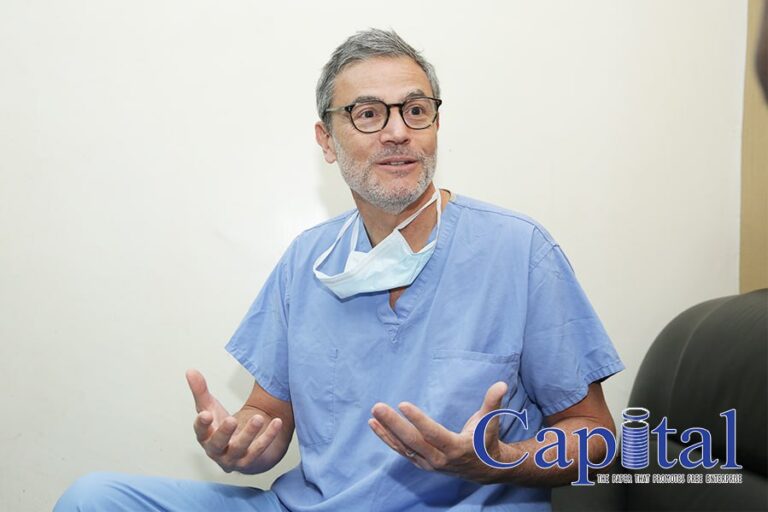
Recently he visited Addis Ababa for his fourth mission, at the Cardiac Center Ethiopia and St. Peter Hospital/St. Paul Hospitals that marked a significant achievement. This year, he successfully implanted 16 pacemakers and conducted 7 conventional catheter ablations. Notably, he performed ablations on two left-sided accessory pathways through transseptal approaches with his colleagues from Ethiopia.
Capital caught up with him in the midst of a surgery to talk about his impactful mission. Excerpts;
Capital: What inspired your decision to provide free treatment? And what is the financial cost associated with it?
Dr. Franck Halimi: I have close relatives here in Ethiopia, which has always motivated me to contribute something meaningful. I felt a personal commitment to share my knowledge after working for many years in Paris. When I had the opportunity to meet the people here, I asked if I could volunteer and be of service. Since then, I’ve been connected with them and decided to dedicate one week of my life every year to give back and share what I’ve learned. It brings me happiness.
I’ve been fortunate in my professional life in France, gaining valuable experience and having access to various treatments. When I come to Ethiopia, where I’ve been visiting for about seven or eight years, it’s a way for me to give back. My wife was born in Ethiopia, and although she is French, her mother is Habesha, and they still live here in Addis. So, it’s a joy for us to come here and contribute. My motivation stems from a commitment to the people, knowing that I’m making a positive impact. Seeing the smiles on their faces and receiving gratitude from the families whose lives we’ve saved is more than enough reward for me. I don’t seek anything beyond that.
As for the financial aspect, for example, just in terms of pacemakers and leads, I brought over 5 million birr worth of materials. It’s probably even more when considering the catheter. However, everything is donated for free, and I don’t receive any payment. I do this solely out of a sense of commitment. In fact, I even pay for my own plane ticket.
Capital: How many years have you been working in this field, and what is the focus of your treatment?
Dr. Halimi: I have been working as an electro-physiologist for over 25 years in Paris, France. I work at a hospital and have a private practice. Additionally, I invest a lot of time in education, working with students and engaging in publications. As an arrhythmologist and senior electrophysiologist, I specialize in treating arrhythmias. This involves performing a lot of electrophysiology procedures, such as ablation. When I started doing ablations about 30 years ago, it was not as advanced as it is today. We didn’t have all the equipment and knowledge we have now. However, with the advancements in technology, performing these procedures has become much easier. Electrophysiology is now one of the most popular fields in cardiology in France.
Four years ago, I had the opportunity to join the team at Black Lion, CCC (Cardiac Central Ethiopia), and I embarked on my first mission. Since then, I have been coming every Christmas to spend a week with my friends here, bringing donated materials from the industry, and striving to save lives. It may not be much, but it’s what we can do.
Capital: Could you explain what electrophysiology entails?
Dr. Halimi: Electrophysiology has two main aspects. The first is pacing, which involves implanting pacemakers and defibrillators. In Ethiopia, many people suffer from cardiac diseases, and some of them have extremely low heart rates, like 20, 25, or 30 beats per minute, putting their lives at risk. These individuals are on waiting lists, coming from various parts of the country.
By implanting pacemakers, we can stimulate and restore the conduction system between the atrium and the ventricle, ultimately saving their lives. The second aspect of electrophysiology is diagnosing and treating tachycardia by inserting catheters into the heart. Until last year, no catheter ablations had been performed in Ethiopia. I was the first to conduct such an ablation, bringing the necessary materials, including donated pacemakers, which were provided by the industry free of charge. I volunteered for this mission and arrived with the pacemakers.
This is my fourth mission in Ethiopia, working at the Cardiac Center Ethiopia in Black Lion Hospital and St. Peter Hospital. Just two days ago, we implanted pacemakers, and yesterday we started performing ablations. We have completed two cases already today. The most recent one was quite challenging. It involved a young female student with arrhythmia originating from the left side of the atrium. We had to access the left atrium through a transseptal puncture, which presented its own difficulties. However, we managed to perform the procedure successfully, and the patient is recovering well.
Capital: How long have you been coming to Ethiopia, and how many patients have you treated?
Dr. Halimi: Over the course of four years, I have implanted approximately 50 pacemakers. All of these pacemakers were provided free of charge as donations from the industry. In France, I approach the industry and inform them about my involvement in volunteering in Ethiopia. They show great support for the project and provide pacemakers, leads, and catheters. Regarding electrophysiology, I have treated around 10 patients thus far. Last year, I performed the first-ever electrophysiology case in the country. I must emphasize that the equipment here is excellent. If other volunteers are interested, they can come to this facility, bring some materials if possible, and effectively treat and save patients’ lives. It is feasible, safe, and achievable. I also want to highlight that the healthcare professionals at Black Lion Hospital and St. Peter Hospital are true heroes. They work tirelessly, giving their best despite the limitations in accessing new technologies and supplies. Nonetheless, they are highly skilled physicians.
Capital: Have you provided free treatment in any other African countries besides Ethiopia? If so, which countries?
Dr. Halimi: In the past, I have worked in North Africa, and I have also been to La Reunion in France. However, currently, I am exclusively focusing on Ethiopia. I have a special attachment to this country because, as I said, my wife was born in Addis, which creates a personal connection for me. I have a deep appreciation for the Ethiopian people, and I try to give back by sharing my knowledge and capabilities.
Capital: What were the challenges you faced when you first came to Ethiopia, and how did you overcome them?
Dr. Halimi: Working in a different country with different settings, in an unfamiliar cath lab (catheterization laboratory), and with people I didn’t know posed significant challenges. Additionally, there was a responsibility on my part to provide safe treatment to the patients. It was definitely a bit daunting, especially when performing complex procedures like the transseptal approach for ablation. I needed to have confidence in my abilities while also ensuring patient safety. It was a delicate balance. However, I believe in my strength and determination to overcome these challenges.
Capital: What are your plans for the future?
Dr. Halimi: First, I aim to continue saving lives by bringing materials and conducting electrophysiology procedures. However, it’s not enough. I want to use social media platforms like LinkedIn to encourage other electrophysiologists to come to Ethiopia and contribute their skills. I want to say, “It’s your turn, you can work safely here, come and make a difference.” There is already an Australian team that started coming regularly after learning about my work in electrophysiology. They realized it was feasible. So, I will share the connections and information for those who wish to volunteer.
Secondly, I plan to return to Ethiopia in the future. And most importantly, my primary objective is to train local healthcare professionals. I want to find a committed fellow, a young cardiologist, preferably, and offer them the opportunity to receive training in the United States or France. Once they acquire the necessary skills and knowledge, they can return to Ethiopia to lead and operate the cath lab. They can also provide training to other students. I will always be there to support and assist them, particularly with challenging cases. My ultimate goal is to empower Ethiopian healthcare professionals to independently carry out these procedures. That would be the best outcome, and I will continue to support them whenever needed.
Capital: What is the purpose of training Ethiopians in these new medical procedures?
Dr. Halimi: The primary purpose is to address the significant lack of access to certain medical procedures in Ethiopia. Previously, there was a shortage of pacemakers, and electrophysiology procedures were not performed in the country. By training Ethiopians in these procedures, my aim is to save lives through pacing and bring the knowledge of electrophysiology to Ethiopia. This way, local healthcare professionals can continue providing quality care and expand the range of treatments available to patients.
Capital: How do you select the individuals who receive treatment? Is it a critical process or random?
Dr. Halimi: I do not personally select the patients. The Cardiac Center Ethiopia and St. Peter’s, where I work, are public centers. They have waiting lists for procedures such as pacemakers. Patients from all over the country are referred to these centers by cardiologists. There is no selection based on ethnicity or geographical location. It is a transparent process based on medical need and urgency. In fact, some patients travel long distances, even taking flights from places like Tigray, which is around 800 kilometers away, to receive treatment. The process is free of corruption, and there are no charges for the patients.