Saturday, May 9, 2026
Home Blog Page 2210

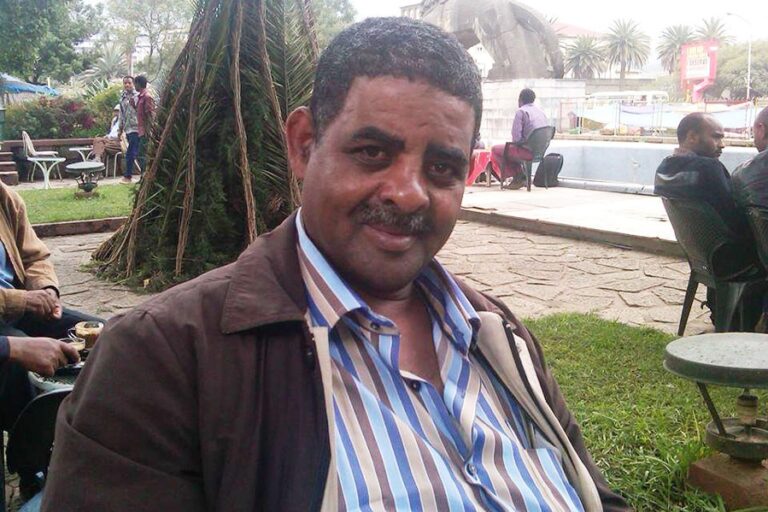
Journalist Genene Mekuria’s sudden death leaves many in shock

0

Ethiopian sport media has been into a shocking treatment following the sudden death of renowned yet controversial journalist Genene Mekuria. The news of his sudden death which occurred on Tuesday 24th January 2024 has left many in a state of shock and immense sadness.

More than three decades in Ethiopian Media, Genene popularly known “Libro” had been famous for the weekly sport’s newspaper Libro before switching to Radio later a presenter of “Tekur Engeda” television talk show. Genene’s thirty plus years in media and his three books were considered by many as readymade stories including his claim to play at Electric FC in mid-eighties. His ideal thinking of “Ball Possession” tactical play was also a major controversial issue among Ethiopian Football fans.  

According to unofficial sources the 61 year-old Genene had been hospitalized for diabetes followed by amputations yet the news was kept hidden from the public for nearly a year. The widely circulating rumors have raised numerous questions among the public regarding the circumstances of his death. 

With the unexpected death news of John Short’s passing, numerous questions have been raised about the cause of his death. As of now, there is no clear answer, as neither the family nor close acquaintances have provided any specific details. This silence has only compounded the speculation and curiosity surrounding his sudden departure. 

Genene Mekuria’s funeral took place on Thursday at Holy Trinity Cathedral and survived by his wife W/O Aster and two childrens Naod and Elom. 

President Salva Kiir will not allow any threat to Ethiopia

0

By: Abraham Nega

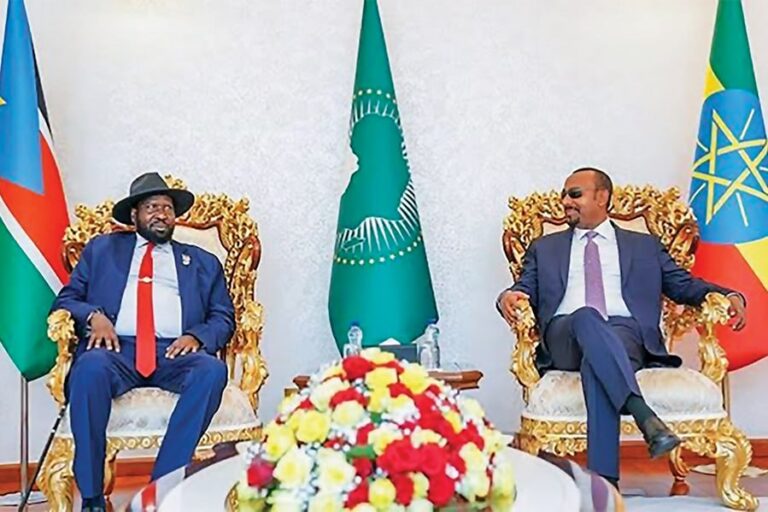
H.E Salva Kiir Mayardit President the Republic of South Sudan and the chairperson of East African Community bloc (EAC) says Juba will not collaborate with any threat to Addis Ababa.

The relation between Ethiopia and South Sudan is like a very old marriage with no possibilities of divorce. It is like all old marriages with no possibility of breaking, sometimes it may has ups and downs but their relation is very solid.

There has to be very significant move in the flow of trade and investment between Ethiopia and South Sudan. Cooperation on development and Peace & Security between Ethiopia and South Sudan is not a zero sum gain but depends in win-win agreement.

Foreign diplomatic relations are well established with both nations sharing a comprehensive strategic partnership since both are members of IGAD and AU.

South Sudan treating its neighbors equally, no matter what policy, rank or status, with genuine respect and regards. Education is Ethiopia’s largest service in terms of scholarship to South Sudan Students. South Sudan and Ethiopia has a cooperation framework on military and security arrangements.

Juba and Addis Ababa continue to build robust people-to-people links between their institutions through regular personnel training and cultural exchanges such as short specialist courses and longer-term positions.

Ethiopia has supported the independence and Liberation of Africa. Mandela has been trained in Ethiopia; Zimbabwe was supported by Ethiopia in its fight against Rhodesia. Said, Kiir.

President Salva, said, on the issue of South Sudan independence Emperor Haileselassie and Mengistu Hailemariam were as solid as Meles Zenawi was. Ethiopia’s commitment to South Sudan has not varied with governments. You could have Emperor Haileselassie, You could have Mengistu Hailemariam, you could have Meles Zenawi and Abiy Ahmed and a different government it doesn’t matter. What governments rules Ethiopia it bounds to the same course or policy, President Kiir, said.

I am the witness that irrespective of what government rules, Ethiopia has always been committed to South Sudan’s peace and security as well as development, added, Kiir.

Adaleana and the Mute: A timeless tale of freedom and acceptance

0

In the captivating book “Adaleana and the Mute,” author Quentin L. B. Smith takes readers on a remarkable journey into the life of Princess Adaleana during her teenage years. Set against the backdrop of a grand customary celebration, the story explores themes of courage, personal discovery, and the power of forging connections with those who are different from us.

As the people of the northern and southern kingdoms eagerly anticipate the forthcoming celebration, Princess Adaleana finds herself devoid of excitement. However, amidst the preparations, a mute young man emerges, determined to carve out his own path in life, even if it means facing perilous dangers. Together, Adaleana and the Mute embark on a daring quest for freedom and acceptance, defying societal expectations and challenging the status quo.

Adaleana’s journey transcends the boundaries of her royal status and leads her to navigate the intricate web of relationships between her people and the inhabitants of the forest that separates the two kingdoms. The forest dwellers are ruled by a pseudo king, Lord of Us, who craves recognition as a great ruler. Adaleana, driven by a desire to bridge the gap between the two realms, confronts a harsh reality and faces the difficult choice between doing what is right and conforming to societal norms.

In an era when many teenagers struggle to fit into societal norms, “Adaleana and the Mute” offers a timeless reminder that the most profound relationships can be forged with those who are unlike ourselves. The story celebrates diversity and underscores the importance of embracing individuality, even in the face of adversity. It highlights the triumph of resilience and self-discovery, as well as the courage required to embrace one’s unique qualities in order to become the best version of oneself.

Quentin L. B. Smith, the author of “Adaleana and the Mute,” hails from the small town of Tifton, GA. After relocating to Orlando, Florida, at a young age, Quentin attended Evans and West Orange High School, where he gained recognition as both an athlete and a passionate basketball player. Scholarships allowed him to pursue higher education at Manatee State College in Bradenton-Sarasota, FL, and later at Lander University in Greenwood, SC.

However, Quentin’s athletic aspirations were interrupted by a devastating event, plunging him into a world of conflict and isolation. In the midst of this challenging period, he discovered solace in crafting characters and storylines, using his creative abilities as an escape and a source of hope. Believing this talent to be a genuine gift from God, Quentin has written and developed over seven scripts, including the short dramedy “Squatters,” which received honorable recognition at the IndieFest. “Adaleana and the Mute” emerged from this tumultuous era and was initially conceived as a screenplay before being transformed into a book, with the ultimate goal of bringing it to life on the big screen as an animated feature.

“Adaleana and the Mute” is a captivating tale that explores the transformative power of friendship, courage, and embracing one’s unique qualities. Through the journey of Princess Adaleana and the Mute, readers are reminded of the importance of breaking free from societal expectations and forging connections with individuals who may be different from us. Quentin L. B. Smith’s personal journey as an author adds depth and authenticity to the story, making it a remarkable and inspiring read for audiences of all ages.

About Smog and more

0

The word smog was formed early during the last century in London from the smoky fog that covered that city because of industrial air pollution, more especially from large amounts of coal burning.

Smog is a problem in many cities around the world and is harming human health. Senior citizens, children and people with heart and lung conditions like bronchitis and asthma are especially susceptible. Smog can inflame the airways, decrease the lungs’ working capacity and cause shortness of breath, pain when inhaling deeply, wheezing, and coughing. It can cause eye and nose irritation and it dries out the protective membranes of the nose and throat and interferes with the body’s ability to fight infection, increasing susceptibility to illness. If any of these symptoms are familiar in your surroundings, they could be related to smog or air pollution. Think again.

Worldwide air pollution is responsible for large numbers of deaths and cases of respiratory disease. Gases such as carbon dioxide, which contribute to global warming, are gaining recognition as major pollutants.

While major stationary sources like factories are often identified with air pollution, the greatest source of emissions is mobile, mainly automobiles. This is no different in Addis Abeba as there are hardly any factories in the city centre as compared to the ever-increasing numbers of cars, although we see many electric cars driving around town now adays as well. Anyway, meals are cooked in many homes by burning wood sending vast amounts of domestic smoke into the air. Cars, buses, and trucks with diesel engines seem the worst polluters as they spit out huge amounts of black exhaust right into the face of pedestrians walking along the road. It is not only a lack of modern exhaust filters; it is also a lack of maintenance, while many cars are assembled at sea level and not tuned to the altitude of Addis Abeba where the oxygen/fuel mixture is negatively affected by the thinner air.

I came across a news item of a few years ago about another city, affected by smog. This is what it said:

“More than 1,600 people have been taken to hospitals as pollution in the capital reaches critical levels, health officials have said. Hospitals have reported increased cases of heart attacks and breathing problems, while many residents are complaining of fatigue and headaches. Public offices and schools have been closed in an attempt to reduce traffic and clear the city’s blanket of smog. Authorities have warned of thousands of casualties if pollution levels persist. There is no wind or rain, and the dirty air is trapped on top of the city by the mountains surrounding it. The health ministry said the extent of deaths and casualties from pollution were “not less” than those in a recent plane crash, which killed more than 100 people. However, there is no official confirmation of any smog-related deaths. From Monday, cars will only be allowed into the city centre on alternate days, depending on whether their number plates start with odd or even numbers. Authorities have blamed the severe smog on emissions from cars. It is estimated that up to 5,000 people die every year from air pollution in the city.”

Admittedly, the smog in Addis Abeba and beyond may not have reached such serious levels yet and the numbers of cars and polluting industries are still far less than in other cities around the world, but we are moving in that direction. And continuing in that direction without taking measures will one day result in a situation as described above.

Imagine the effect such a situation has on the economy, which we are desperately trying to boost. Many workers will be less effective while health related costs will become a burden for society. Meanwhile we will continue to contribute to global warming while we should find ways to reduce emissions and thus reduce global warming, which is believed to be a major cause for climate change of which we increasingly see the effects regionally and locally. More frequent and serious periods of drought, followed by floods are situations that do not contribute to economic growth, do they?
Talking about our environment, smog is not the only result of pollution in the city. There are other obvious signs of pollution, which negatively affect the environment we live and work in. Surely, the way we deal with domestic and industrial waste is an issue here. And while there are some initiatives in collecting domestic waste, this doesn’t go much further than taking it out of sight to a dump somewhere else in the neighbourhood where it lies rotting and stinking away several days before taken to the city waste dump. The health hazards are obvious.

I could go on, but I guess I made my point. Pollution negatively affects our health and economic growth. Something needs to be done about it, in terms of legislation, yes but probably more so by investors, industrial sectors and individuals becoming aware of their contributions to it and developing a consciousness to change our attitude towards the environment we live and work in.

Ton Haverkort