

Dagne Daba Agricultural Products Exporter, who massively engage in agricultural development, announce that they are embarking on the development of sunflower seeds that will be supplied to farmers in the harvest season from the beginning of the upcoming year.
The agriprenuer and owner of the farm, who currently supplies fruits and vegetables for local and regional markets, stated that the business venture has expanded to Gurage Zone, SNNP besides its farm in Bilate of the same region of Wolayta zone.
Dagne whilst explaining why he was undertaking this new venture explained that it was his goal to cultivate sunflower with the aim of substituting the import edible oil from the ingredients, within the coming two years.
Currently, edible pressers are imported crude for their production, while the volume of finished sunflower and other edible oil product is mostly imported from different sources since the local production has significant gap to fill the demand.
Experts over the years have pointed out for government to step in with regards to allocation of ample resources for local agricultural development to substitute the input and finished edible oil import.
According to Dagne, who boasts a track record of accomplishments on fruit production like banana, avocado and papaya, the country must move forward to feed itself by sourcing locally produced inputs.
“We are targeting to provide high quality sunflower seeds for farmers who can be potential suppliers for oil pressers,” he said, adding, “like the wheat campaign we can attain a success on the oil sector and save the foreign currency that is allocated to import the basic commodity.”
Currently at its adjacent farms at Bilate and Abaya areas, the farm is cultivating 150 hectares of sunflower that will be expanded to 2,000 hectare in the coming rainy season with the supply chain being prepared to deliver the seeds to the farmers.
At the moment, the products produced from DagneDaba Farm are supplied to Somaliland and Djibouti markets besides different destination in the Ethiopian market.
“We have papaya, banana, sweet potato, avocado, orange that we are supplying for market. Currently Etfruit, which is responsible for the supply of agricultural products at reasonable rates, is distributing our banana at market friendly costs which are lesser than the market. Similarly our banana has the major market share in the market,” he said.
“We are supplying the product with lesser price points but the government should equally play its part in structuring the market stability,” he said, adding, “if we shall have a market place at cites we shall provide basic commodities at cheaper prices that can mitigate the inflation.”
He also claimed that the farm is not supported by financial firms, “we are not getting any bank loan for our investment and we hope for government to also solve this since we are producing seeds for farmers.”
He underlined that if sufficient finances were made available, more potential investors would be lured easily to invest on the agriculture sector.
Recently, DagneDaba Farm took 2,000 hectares of land in Gibe Basin, Enemore Woreda, Gurage Zone, while it has also already proposed an expansion of 8,000 hectare at the same location.
The farm owner said that there is enormous water resource from three rivers at the area, “We are now going to construct a water system to leverage the resource to practice our agricultural activity.”
To realize the development, the farm has undertaken site clearing and constructed a 12 km access road that will provide service for the farm and community in the area.
“At the current stage it is difficult to estimate the cost at the new farm in Gurage but when the total 10,000 hectare is developed it needs over three billion birr,” Dagne added.
Regarding export business the company has so far been shipping its fruits and vegetable for regional market, while the company claims that its product is fit for the standard to European and other strict markets.
The challenge to expand the export as cited stems from lack of refer container and refer trucks to which the government promised to solve the issue.
“The National Bank of Ethiopia has promised to facilitate foreign currency to buy 50 refer containers and 50 refer trucks, but the government by itself should facilitate the logistics materials to expand the export,” the farm owner added.
In the past season, DagneDaba Farm supplied seeds that have been distributed to farmers, “For the upcoming faming activity, our maize seeds that were produced in the past rainy season may cover 30 percent of the total maize farming in the country.”
Local problems, local solutions: Agriprenuer eyes to bridge gap in edible oils
UNECA report reveals hope of growth for Africa’s GDP
Africa’s GDP will expand by 3.9 percent in 2023, up from 3.6 percent in 2022 according to projections made by the United Nations Economic Commission for Africa (UNECA).
While presenting a report on recent economic and social developments in Africa Wednesday at the 55th session of the Commission, UNECA’s Macroeconomics and Governance Division Director Adam Elhiraika said Africa’s GDP growth declined from 4.6 percent in 2021 to 3.6 percent in 2022 but is expected to rebound to 3.9 percent in 2023.
“The slowdown in the global economy, high prices fuelled by the Ukrainian conflict, climate change and worsening international economic and financial conditions significantly impacted Africa’s growth in 2022,” said Elhiraika, adding that the 3.9 percent growth forecast for 2023 is mainly driven by growth in the continent’s east, north and west Africa sub-regions.

In the developing world, Africa was the fastest growing region after East and South Asia (4.5 percent), followed by South-Eastern Europe (3.2 percent), and Latin America (2.1 percent).
According to the report Africa’s growth in 2022 was driven by the growth in the sub regions of East, North, and West Africa. East Africa’s development was predicted to peak at 5.1% in 2022 and settle at that level in 2023. Central Africa’s growth was predicted to rise to 3.4% in 2022, driven by rising oil prices and robust domestic production. West Africa’s growth is expected to rise slightly from 3.6 in 2022 to 3.8 in 2023, but Nigeria’s real GDP growth is predicted to decelerate due to the continued weakness of the oil sector.
According to the report, net export and private consumption are expected to be the key drivers of the growth in to 2023. However the tightening of global monetary policies is expected to weigh on investments on the continent. Regarding the structure of African economies, they continue to be driven by the services sector, followed by the industrial and agriculture sectors, with an estimated average contribution of 56.2 per cent, 29.0 per cent and 19.3 per cent, respectively.
It is indicated that African Governments are facing limited fiscal space due to soaring inflation and rising interest rates. Fiscal deficits have been exacerbated by up to 0.2 percentage points, reaching -5.0% in 2022. In North Africa, fiscal deficits widened from -5.7% in 2021 to -6.1% in 2022, while in Southern Africa the fiscal deficit improved from -4.7% to -3.4%. Oil exporting countries benefited from elevated energy prices, with fiscal deficits reaching -4.6% in 2022 before an expected decrease to -4.3% in 2023.
Africa’s debt-to-GDP ratio is projected to remain high due to increased public spending and declining revenues due to exogenous shocks.
Fiscal deficits and debt levels are projected to improve in 2023, but they remain relatively higher or at par with pre-pandemic levels in most countries except in Central and Southern Africa which has had significant improvements.
Fiscal space remains constrained despite narrowing economic deficits, making it harder for most countries to invest in major sectors to ensure resilience from shocks, said the director, adding that rising borrowing costs and debt service burdens pose a significant challenge going forward and that Africa’s debt-to-GDP ratio is estimated to reach 61.9 percent in 2023.

Elhiraika added that currency depreciation has been more pronounced in countries with flexible exchange rate regimes and in commodity-exporting countries.
Countries with fixed exchange rates, especially those within the Economic and Monetary Community of Central Africa and West African Economic and Monetary Union experienced an average depreciation of 10 percent against the U.S. dollar in 2022.
“Rising costs of funding in United States dollars pose a big risk not only to existing debt burdens but also to prospects for mobilizing resources to finance sustainable development projects. African countries should develop their domestic financial markets with sound and effective regulatory frameworks in order to lay a good foundation for the resilience of the overall financial system and to make monetary policies more effective,” stated the report.
Global economic activities slowed in 2022. The main decline is driven by the conflict between Russia and Ukraine, and Covid-19. The conflict erupted just as the Africa economies were recovering from the adverse effect of the pandemic. Owing to a slowdown in the global economy, a rise in prices fuelled by the Ukrainian conflict, climate change and worsening international economic and financial conditions, growth in Africa has been negatively affected.
Oromia region lifts wheat price cap
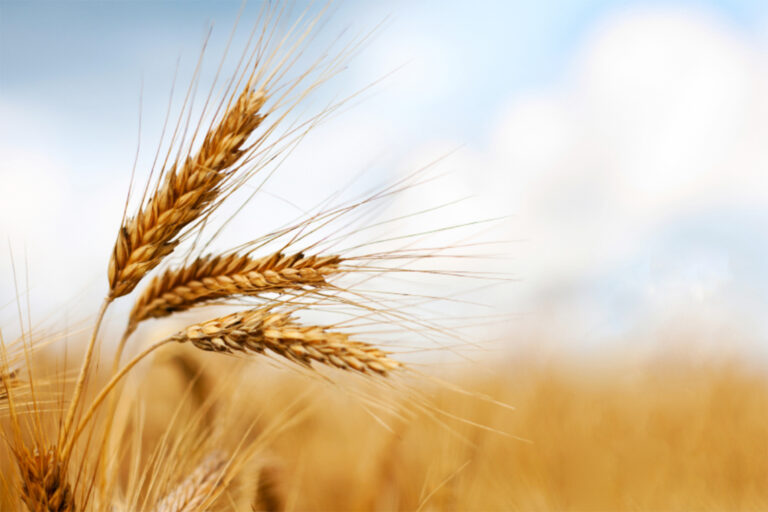
Oromia Region removes price caps that oblige farmers to sell a quintal of wheat for 3, 200 birr only for unions. Smuggling of agricultural products, notably wheat and Teff to neighboring countries has created shortage in the market, state officials from the Ministry of Trade with the same sentiments being echoed by regional trade bureaus.
The government recently issued a new directive that obliged farmers to hand over to Unions a quintal of wheat at 3, 200 birr with the aim to accelerate the export and local supply with the Unions selling to factories at 3,381 birr to flow supply. However, the directive has not had a smooth sailing.
Farmers who decline to obey the directive seem to hide yields and have been forced to engage in smuggling.
According to Tesfaye Gesho, Deputy Head of Oromia Trade Bureau, after assessing the situation, the region has now removed the price and local check points so that anyone who is legal can move and accelerate the trade in tandem with unions for the supply to the market.
Scarcity of basic grain including that of wheat and teff in the market has in recent weeks pushed food costs beyond the reach of many.
On a press conference held on Thursday March 16, 2023, after discussing with regional trade bureaus on the matter, the trade ministry indicated that the situation was linked partly, to economic sabotage; “Illegal traders and brokers are worsening the situation,” stated the ministry.
Blockage of checkpoints leading to the capital Addis Ababa and the existence of merchants who are attempting to manipulate prices artificially by withholding cereals (including teff) instead of making them available to buyers were also cited as a contributing factor to the shortage.
“Free movement is also a challenge that traders are facing,” stated Ibrahim Mohamed, Head of Amhara Regional Trade Bureau, showing additional challenges in conjunction to trade sabotage despite there being enough production.
Also as indicated, there are illegal traders and exporters who smuggle the cultivated wheat every year across borders. A huge amount of agricultural commodities have been smuggled through Moyale to Kenya and others which is now becoming difficult to control with the need of attention required.
Both the regional trade bureaus and the ministry indicated that there is enough production, underlining, “Things will get better soon” and as indicated on the press briefing, both the federal and regional governments are working to create a direct market linkage between farmers and consumers with regional states set to provide finance to cooperatives as a revolving fund.
A month ago, a quintal of Teff was anywhere between 5500-6000 birr. Now it is selling for 9500 birr at a price difference of 2500 to 3500 birr. As many traders indicate, instability, increased price of fertilizer and transportation has played a huge role in the price hike.
In similar headlines, the Central Statistics Service announced that the price increase recorded on crops has continued for consecutive months with most of the grains increase peaking in February.
On its monthly inflation report, the service indicated that in the stated months, although the country’s overall inflation had decreased slightly compared to the same month of last year, most of the cereals such as teff, wheat, barley and sorghum, meat, milk, cheese and eggs showed a slight increase.
The February 2023 General inflation currently stands at 32.0 percent while the country level food inflation soared to 36.2 percent with Non-food inflation rates standing at 31.5 percent.
Northern Africa OTF 2023
Accelerating Digital Operations Transformation Towards Business Success
Northern Africa OTF 2023 was successfully held by Huawei in Barcelona, encircling the theme of ‘Accelerating Digital Operations Transformation Towards Business Success’. More than 120 executives from delegates of government and regulator, operators and industrial organizations, analysts and KOLs in the region had in-depth exchanges on the successful business practices, digital operations experiences, innovative business, digital organization and talent transformation and global vision of Northern Africa digital transformation development.
Bill Tang, president of Huawei Global Technical Service said in the opening speech entitled ” Together, Lighting Up The Digital Future ” that currently, with the challenges of the telecommunication industry market and growth opportunities within the next 10 years, digital transformation is becoming a must, “Think Big, Start Small, Move Fast”, Huawei will continuously increase digital investment, through co-creations on the combination of consulting service and digital solutions, empowering carriers on “Three Upgrades”, deepen the transformation, unleash sustainable value, and light up the future.
 Aaron Boasman-Patel, VP of TM Forum said in his keynote speech, more than 30 billion connections is forecasted by 2025. Digital transformation in the face of future and 5G, carrier’s top priority should be improving customer experience-oriented autonomous operations and realize business value through Value Operation Framework. Digital Transformation is critical to unlock $700 billion of new growth.
In the Fintech field, with the rising wave of Fintech sector in Africa, Said Aragaw, CMO of ethio telecom shared that Fintech continues to revolutionize African market towards digitized financial inclusion. ethio telecom is a great example of how unbanked segment of society was made part main stream. 29 million users in 18 months is an achievement to be proud of.
One of leading digital transformation carriers in the region, Omar Abutalag, CEO of Almadar Aljadid shared their successful transformation practices and experiences in digital operation enabling business growth and digital service BSS evolution.
Finally, Benjamin Hou, President of Huawei Northern Africa Carrier Business, emphasized that digital transformation is not only a goal, but also a method. Transformation should originate from the key problems encountered by enterprises in the process of development. Huawei is committed to working with regional partners to achieve digital transformation and business success.
