

The Federal High Court gives a final verdict on the eight year long litigation battle between the Liquidity Supervision Commission of Holland Car plc and defendants that include the founder of the company.
The trustees who were assigned by the court to manage the liquidation of Holland Car plc, a pioneer car assembly in Ethiopia, filed its civil charges in December 2014 on six individuals and companies on the claim that the defendants have to return the property of Holland Car plc which mostly include different model of vehicles and heavy duty trucks.
The individuals that have been charged by the trustee were Tadesse Tessema, founder, head and shareholder of Holland Car plc, Solomon Tariku, General Manager of Cassiopeia Car plc, and Kebede Mekonnen, who finally was excluded from the charge.
Cassiopeia Car plc, of whom Tadesse is a major shareholder; Zemen Bank and TK International plc were the companies cited in the lawsuit.
In the charge, the plaintiff filed claims citing that the stated individuals and companies have to return the property including partly assembled cars and parts of Holland Cars to the original owner.
The plaintiff also filed for the court to give a verdict on first, second and third defendants; Tadesse Tessema, Cassiopeia Car plc and Solomon Tariku as the ones responsible for the bankruptcy of the car assembly and a follow-up of transfer of properties owned by the pair.
The charge was also filed on the fifth and sixth defendants, Zemen Bank, which is the financier of the car assembly, and Tk International plc, the office leaser of Holland Car, to return the property of the bankrupted company.
However, after almost eight years of hearing, Lideta Division 3 Trade and Investment Bench of the Federal High Court, has now given a final judgment in favor of the defendants.
In its verdict, the Bench elaborated that the argument between the two sides and stated that the claim and justification coming from the plaintiff did not have relevant points; while some of the properties that its claims have already been transferred to the liquidating company while some of the properties have been sold by the trustee through auction to mitigate the liability of the company.
It added that the first defendant’s effort to keep the car assembly from bankruptcy was highly acceptable, while the second and third defendants were cited to not being responsible for the company’s downfall. In its verdict, the court added that the second defendant, Tadesse, the major shareholder, made available its property as collateral for the loan that pumped financial flows for Holland Car rather than contributing to its bankruptcy.
As a result, the trial that was held on November 21 saw the defendants being set free by the court from allegations of bankrupting Holland Car plc.
Holland Car, which is the first private car assembly in the country, was established in 2005 through a joint venture between Tadesse Tessema and Trento Engineering, a Dutch company, with an initial capital of 11 million birr, equally contributed by both shareholders to supply assembled vehicles to local and export markets. The company had 250 employees. During the ten years it was active in business, Holland Car was known for its Abay, Tekeze, Naomi and Awash automobile brands.Holland Car was closed down in November 2011 after it filed for bankruptcy due to lack of finance.
Court delivers final verdict on the Holland Car’s saga
Rotary Club of Addis Ababa Bole donates 6.8 million birr worth of diagnostic, treatment equipment to Afar Region
Rotary Ethiopia’s Rotary Club of Addis Ababa Bole donates birr 6.8 million worth of diagnostic and treatment equipment to the Kalwaan Hospital in Kalwaan Afar Regional State.
Rotary Ethiopia’s Club of Addis Ababa Bole in collaboration with the Rotary Club of Tilt in Belgium together with other clubs in the country, supported by a grant from the Rotary Foundation of Rotary International, in cooperation with the Federal Ministry of Health, Bureau of Health of the Afar Regional Government and the Afar Pastoralist Development Association donated to the Kalwaan Hospital in Gulina – Afar, thirty three types, (and more than fifty items) of modern medical diagnostic and treatment equipment and professional working tools imported from China at a total cost of more than 6.8 million birr.
The list and specifications of the equipment were drawn from the Afar Bureau of health and included; High Frequency X-ray Machines, both static and mobile types, colour-dopplers, ECG Machines, anesthetic machines, digital ultra sound machines, oxygen concentrators, and many other items essentially needed by a modern hospital.
The donations are said to furnish the Kalwaan hospital to not only fill its critical gap after the devastation of the war, but to also elevate the status of the health center by several more steps following its modern diagnostic and treatment outfits upgrade.
Apart from the donation, the project includes installation and commissioning of the equipment at the hospital including training of technical personnel on the application and routine maintenance of the equipment; which will be given by a qualified and highly experienced biomedical engineer assigned by the Saint Peter Referral Hospital in Addis Ababa.
Since its first establishment in the country some 67 years ago, Rotary has participated in health efforts that took millions in direct investment. In the fight against polio, which is now nearly eradicated from the face of the earth, Rotary has funded more than USD38 million for Ethiopians through the ministry of health and has similarly done so through other bilateral and multilateral partnerships since the campaign to eradicate Polio started in 1985.
Bunna registers top-tier performance as it hallmarks 10 years of insurance
Bunna Insurance surpasses its own set projections for the 2021/22 fiscal year registering 17 percent higher growths in written premiums from general insurance and three folds more in the set target for life business insurance.
From its full report that was availed a week ago, the insurer which ushered in its 10th anniversary has registered massive success and shows no signs of stopping in its remarkable trend any time soon.
According to the annual report presented at the general assembly, the insurer accrued 467 million birr in premiums from the general insurance business which is 40 percent higher when compared to the preceding year and 17 percent higher from its own target for the year.
Bunna had projected to write 400 million birr in premiums from the general class of business, but as the year went on it galloped past its projections.
Similarly, the company has attained magnificent success from the long term or life insurance class of business, which is by and large poorly performed in the industry.
In the year that closed June 30, 2022, Bunna had projected to write three million birr from the long term insurance, while in reality it attained about 11.4 million birr which is an almost 280 percent higher growth when compared to its projection.
In the 2021/22 financial year, the insurer compensated its customers for claims of close to 175 million birr. The insurer expected to pay 164 million of the stated amount but actually paid more than six percent of the target to its customers.
Similarly, the outstanding claims of the company were stretched by 39 percent from its estimation to reach 92.3 million birr. This made the actual gross claim incurred to be 199 million birr, which is six percent higher of the expectation that the company set at the beginning of the year.
The best performance that the company attained in the year allowed the insurer to secure almost 11 percent higher underwriting surplus of its projection.
According to the annual report presented to shareholders, the underwriting surplus stood at 64.6 million birr, while the target was 58.2 million birr.
Bunna has also been engage on other source of incomes like lease and time deposit interest income, which contributed additional finance for the insurer as it earned 53.4 million birr.
During the reporting period, the company registered almost a quarter higher gross profits compared with the 2020/21 financial year.
The report indicated that in the 2021/22 financial year, Bunna Insurance amassed 45.1 million birr in gross profit that is 43.5 million birr from general insurance class of business and the remainder in long term insurance.
The profit for the year increased by seven percent compared with the target set at 42.1 million birr and 24.5 percent from the preceding year’s performance that was 36 million birr.
The profit after tax for the year stood at 44.8 million birr, while the earning per share was 20.1 percent of 100 birr par value from 19.2 percent from the previous year.
As of June 30, the company assets stood at close to 1.1 billion birr and its paid up capital has reached 198 million birr.
US Company – Osirius Group wins latest sugar bid
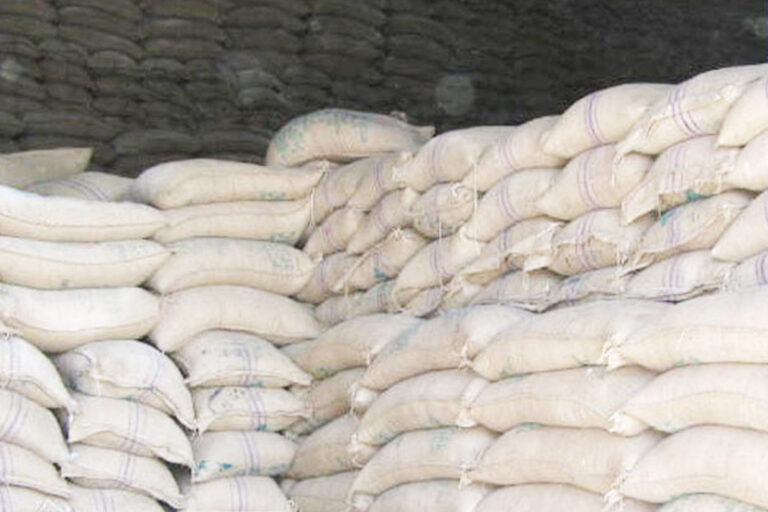
A USA based company receives a nod from the Ethiopian Sugar Industry Group to supply 200,000 metric tons of sugar, in the latest restricted bid.
From Capital’s reporting in recent weeks, the latest restricted bid that was opened on November 8 sees Osirius Group winning the bid over Agrocorp International and ED and F MAN who also produced technical and financial document for the bid.
The recent restricted bid was re-floated following the failure of the South African company, Millhouse International, which was awarded the bid to supply 200,000 metric tons of sugar, but fell short due to failure in coming up with a performance bond.
In the recent bidding, Osirius offered a highly competitive rate for the supply of the sweat, while the offer put in by Agrocorp was a bid higher for the supply of the strategic commodity on payment at sight whereas the offer of ED and F MAN was noted to be incomparable with the rate that the US firm tabled.
About two weeks ago, the Sugar Group called for the three companies to extend their price validity date for additional seven days of up to November 29 besides the original ten days that was mentioned on the bid documents.
As per the information Capital obtained from reliable sources, both ED and F MAN and Osirius accepted the extension.
According to the information heard this week, the Group has awarded the US based company to supply the commodity as per the schedule that the two sides agree upon.
In the bid documents, the Group expressed its desire for the commodity to be transported up to Djibouti through eight shipments at 25,000 metric tons each. However it has been stated that the first batch was expected to reach on the third week of November and the last one at the end of January 2023. However, there will be some adjustments on the arrival as experts opine.
On the FOB price offer, Osirius stated that it will supply the commodity on letter of credit (LC) at sight USD 545 per ton, USD 522 on 12 months differed LC and 18 months differed LC that means the payment will be settled in a year and half time. The bid winner cited that the loading port will be at Brazil.
The Singaporean company, Agrocorp, which is the company that won the last sugar bid which was opened more than a year ago, gave its offer on LC at sight and differed LC for 12 months. Based on that it offered USD 549.95 for payment at sight and 608.75 for 12 months differed LC.
ED and F Man- a British commodity firm, which is not a fresh face to Ethiopian markets offered USD 850, USD 900 and USD 1,100 per ton for payment at sight, 12 months and 18 differed LC respectively.
As per the information Capital secured, the Group has accepted the 12 months differed LC that Osirius offered to supply the sugar.
The offer that the company submitted for 12 months differed LC was lower by USD 23 than its offer for payment at sight. “Due to that the Group selected the 12 months differed LC,” the sector experts said.
“If the company maintains commitment to its words, the sugar shortage will be easily solved. However, if it disappears like Millhouse, then the Group must reassess its international bidding scheme,” experts added.
The awarded company is expected to come up with its performance bond by this coming week.
In the 2021/22 budget year, the Group had floated an international bid, but was unable to buy the commodity in the year.
