Thursday, April 2, 2026
Home Blog Page 2514

Anbessa

0

As I was going over some of the “Doing Business in Ethiopia” articles, I came across Anbessa, based on a wonderful example of world class sportsmanship. I’d like to share it with the reader again as there is much we can learn from it in terms of leadership.

I want to take the reader back to the 10,000-meter men’s final during the 2004 Olympic Games in Athens. I referred to it a few times before in this column, but I want to go a bit deeper into it as I believe there are a few lessons we can learn from it.
The Ethiopian team for this race consisted of Haile Gebre Selassie, Kenenisa Bekele and Sileshi Sihine. Four years earlier, in Sydney, Haile treated us to a nail-biting final, beating Kenyan Paul Tergat, only just on the finish line, while Kenenisa in the following years broke the World Records for both the 5,000 and 10,000 meters. Expectations for this race were high and the Ethiopian team certainly rose to the occasion. The three stayed close together for two third of the race and it was in the 19th minute, after 7,200 metres and with 7 laps to go, that Haile could not keep up the pace anymore of Kenenisa and Sileshi. As the gap between them grew wider, Kenenisa and Sileshi noticed that their hero and role model for years, trailed behind. They looked around several times to see where Haile was and decided to slow down a bit to allow him to catch up. And catch up he did; the crowd went wild. With now still 4 laps to go, Kenenisa and Sileshi stepped up the pace again as the race entered its final stage. Haile had to let go and Kenenisa and Sileshi outran their Eritrean and Ugandan rivals, almost sprinting to the finish line. Gold and a new Olympic record for Kenenisa and Silver for Sileshi were their rewards. Haile crossed the finish line in 5th place. The same night Teddy Afro wrote a song called “Anbessa”, expressing in words and tune, the demonstration of respect and love of Kenenisa and Sileshi for Haile, never witnessed before in the track & field arena. This was truly touching to witness.
So, what is it that we can learn from this, if anything?
In the first place, that it is important to always look around us and see if others that we are close to, can still follow our pace. This is an important principle to follow for anybody who is in a leadership position, whether in the business, the family, in church, at school or indeed in the Government. We need to check always if there is anybody or if there are groups of people that fall behind, that cannot keep up with the pace set by the frontrunners. There are many reasons why some or even many cannot keep up, like for example illness, weakness, poverty, lack of access to resources and services or the lack of opportunity, just to name a few.
The second lesson we can draw from this is that recognising reasons why others remain behind, gives us now the opportunity to do something about it. We can slow down, provide support, help somebody, encourage them, empower somebody, provide opportunities, and show the way. Indeed, Ethiopia enjoys a steep economic growth, but who can keep up with the pace and who is remaining behind? What then can be done to close the gap?
Thirdly, Haile finished 5th and although not fast enough for a medal, that was still a very remarkable result. He still indeed outpaced most of the runners that started the race. But the gap between him and the frontrunners grew wider. We see the same thing happen in economics in general and doing business in particular. While we are trying our best and grow our business and economy at a respectable rate, as long as others go faster, a gap will grow and become bigger as we progress. This is especially apparent in ITC. Internet capacity and speed are growing globally by the day and in most cases faster than we can keep up with here. In other words, the digital divide keeps getting wider and wider. We should not be satisfied with the apparent speed of our development but instead aim to catch up with the frontrunners, lest we keep falling behind.
Fourthly, as the runners crossed the finish line one by one, the three Ethiopian team members quickly found each other and celebrated the victory together. Holding the Ethiopian flag together, they enjoyed the cheers from the crowd and displayed a true team spirit to the world. Even though Haile did not win a medal this time, his contribution to the team was priceless, as the three of them set the pace of the race for 18 laps or 7200 meters. Recognising the contribution of all team members is so important if the team is indeed to accomplish such remarkable achievement.
Finally, Haile had been the world champion on the 5,000 and 10,000 meters for a number of years and now the time had come for others to take over. Haile allowed this to happen happily and with pride. In fact, he himself pushed Kenenisa and Sileshi to the limit and made them succeed. He truly groomed them to take over. As we all play a leadership role in our work, at home and in whatever position we hold, it should be all our desire and aim to groom the younger talents around us and help them grow and succeed and be ready to take over from us. Only then, whatever we achieved, will be sustained. We can all be the lion that Teddy Afro sang about. Anbessa!

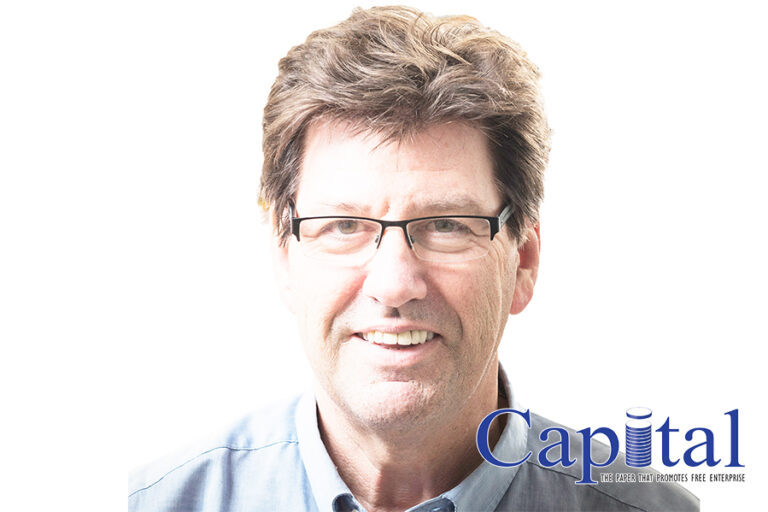
Ton Haverkort
ton.haverkort@gmail.com

The COP of No Return

0

The human cost of climate change is making headlines almost daily. In a world of rising geopolitical tensions and daunting economic challenges, how can we seize the opportunity the upcoming UN Climate Change Conference offers to inspire an approach to mitigation and adaptation that is based on trust, justice, and equity?

Some fear that this year’s United Nations Climate Change Conference – to be held here on November 6-18 – will be an unintended casualty of the geopolitical tensions and economic challenges the world is facing. I believe the opposite: COP27 represents a unique and timely opportunity for the world to come together, recognize our common interests, and restore multilateral cooperation.
The human cost of climate change is making headlines almost daily. Global warming is no longer a distant or theoretical threat, but an immediate material one – a phenomenon that affects each of us, our families, and our neighbors. No society has been left unscathed by more frequent and intense droughts, wildfires, storms, and floods. Millions of people are already battling for survival. And that is with temperatures having risen by just 1.1° Celsius, relative to pre-industrial levels. As the Intergovernmental Panel on Climate Change has made clear, every additional tenth of a degree makes matters worse. Yet the changes needed to avert catastrophe are not being made, at least not fast enough, and the developing world is increasingly frustrated with rich countries’ refusal to pay their fair share for a crisis for which they bear overwhelming responsibility. But there is reason for hope. In my discussions with delegations around the world, I see their determination to make COP27 a success. Already, societies are starting to act. Climate adaptation and new forms of collaboration are gaining traction, and investment in climate tech is booming. This includes new carbon-removal technologies, electric transport solutions, and renewable energies. As a result, clean-energy prices continue to fall: almost two-thirds of renewable power added in G20 countries in 2021 cost less than the cheapest coal-fired options. My country, Egypt, is on track to produce 42% of its energy from renewable resources by 2035. At the same time, civil society is devising mechanisms for holding companies and governments to account, guarding against greenwashing, and ensuring a just transition. There is a new focus on restoring nature. More ambition, scale, and speed are needed, and the rules remain unclear or contested. But a process is underway, and there is no going back. Even in countries that might seem to be wavering in their commitments – say, by investing in fossil-fuel infrastructure – officials insist that stopgap measures necessitated by immediate challenges should not be mistaken for long-term strategies. No one doubts the greener road ahead. The question for those of us who will participate in COP27 is straightforward: How can we seize the opportunity the conference offers to create a sense of common endeavor, prevent backsliding, and inspire an approach based on science, trust, justice, and equity? At its heart, climate action is a bargain. Developing countries have agreed in good faith to help tackle a crisis they did not cause, on the understanding that support particularly financial support would be provided to complement their own efforts, which are often limited due to their scarce resources and competing development needs. Developed countries must uphold their end of that bargain, by supporting both mitigation and adaptation, thus fulfilling their envisaged responsibilities in the Paris agreement. On the mitigation front, we must move from rhetoric to action in cutting our greenhouse-gas emissions and removing carbon from our atmosphere. All countries must embrace more ambitious Nationally Determined Contributions, and then translate those pledges into programs. We must act now to ensure appropriate resources are available to developing countries to unlock their potential. At the same time, we must craft a transformative adaptation agenda, so that communities especially in climate-vulnerable regions can protect themselves from the effects that are already unavoidable. The bill for this agenda must be divided fairly. To date, a disproportionate share of climate finance has been directed toward mitigation, leaving developing countries largely to fend for themselves in financing adaptation investment. But even the finance provided for mitigation is far from sufficient and has not been delivered with the appropriate instruments. In 2009, developed countries pledged to provide $100 billion annually for climate action in the developing world by 2020. This is only a small portion of the more than $5.8 trillion that is needed (up until 2030), according to the UN Framework Convention on Climate Change’s Standing Committee on Finance. And yet this amount has not been delivered. We need an increase in the scale of finance pledges especially for adaptation at COP27, compared to those made at COP26 in Glasgow. Developed countries must also honor the pledge they made last year to double adaptation finance by 2025, and they should provide the assurances needed for the Green Climate Fund’s new replenishment. And the time has come to address the loss and damage suffered by countries that did not cause the climate crisis. This remains contentious, but I believe that we can approach it constructively, guided by the priorities of developing countries, for the benefit of all. A just transition must account for the needs of various regions. For example, African countries are committed in principle to adopting renewable energy and refraining from exploiting their fossil-fuel resources. But 600 million people in Africa 43% of the continent’s population currently lack electricity, and around 900 million don’t have access to clean cooking fuels. The climate-action bargain demands that this be addressed, and the continent’s broader development needs be met, in sustainable ways.
All of these imperatives must be pursued together, with a carefully designed package of actions, rather than through piecemeal measures. They are the pillars of a just transition. If one is missing, the entire edifice collapses. Ahead of the 2015 COP in Paris, few believed that an agreement would be reached. Yet delegates from all over the world came together, and through skill and perseverance, reached a groundbreaking deal. In 2022, we face even higher hurdles, so we must work even harder to clear them. If we do, we will usher in a new age of clean energy, innovation exchange, food and water security, and greater climate justice. As daunting as this challenge is, we have no choice but to confront it. We must negotiate with one another, because there can be no negotiating with the climate.

Sameh Shoukry is COP27 President-Designate and Egyptian Minister of Foreign Affairs.

New streaming platform ignites local music

Sewasew global an Ethiopian music streaming platform which aims to bring fans closer to artists through unique experiences and the highest sound quality build by 2f capital gets into the streaming market.

(Photo: Anteneh Aklilu)

The operation kick started as of Sunday October 9, 2022 following an official ceremony held at SheratonAddis hotel with the presence of government officials and artists.
The platform will connect both artists and audiences and will bring together stakeholders in the music industry including musicians, composers, poet and producers who will get the right payment for their work. So far more than 60 artists have signed to work with Sewasew.

(Photo: Anteneh Aklilu)

The platform is said to minimize audiences’ hassle in getting Ethiopian music since it will provide unlimited access to good Ethiopian music, anywhere, anytime.
Furthermore, it will help Ethiopian music to be competitive in the art world by promoting Ethiopian music to the rest of the world.
“Audiences have several options to explore the Ethiopian music industry now. Join our platform and listen to new and featured Amharic songs. We are available offline, through the Sewasew’s offline feature which provides an offline access to the Ethiopian songs on your playlist when you are in your office, outdoors, or on the go, we got you covered,” read the marketing sketch of the streaming platform.

Ethiopia’s Top-Notch Neurological Care Center

0
(Photo: Anteneh Aklilu)

On the 1st of October, 2022, Ethiopia inaugurated the first stroke treatment center courtesy of the Axon Stroke and Spine Center (ASSC).
The center which is noted to be a healthcare game-changer for East Africa was born out of the vision and strong commitment of Dr. Wondwossen Gebreamanuel Tekle whose passion was to bring back advanced stroke care to Ethiopia.
His vision has now become a reality through ASSC – a partnership between Ethiostrokecare PLLC (American-based company founded by Dr. Wondwossen for the purpose of supporting stroke care in Ethiopia) and Samaritan Surgical Center (state-of-the-art and experienced surgical specialty center in Addis Ababa).
In Ethiopia, stroke incidences being the number one killer of Ethiopians between the age of 50–69 years, and the number one cause of long-term disability worldwide; Capital’s Metasebia Teshome reached out to the centers founding neurologists and president of the Ethiopia Stroke Initiative, Dr. Wondwossen, for insights on neurological care;


Capital: Tell us about yourself?

Dr. Wondwossen Gebreamanuel: I am an alumnus of the Addis Ababa University School of medicine having graduated there about 22 years back. Following my undergraduate degree, I headed abroad to the US and specialized in neurology from the George Washington University. Whilst, I was there, I did two different subspecialties, that is, on stroke neuron critical care and neuron interventional surgery. To also widen my horizons in the field, I also did my clinical research at Harvard University. Over the course of the last decade, I have been working as a senior consultant at south Texas. In addition to giving medical treatment and services, I have also been conducting researches on issues related to strokes.

Capital: There has always been a low awareness on the concept of strokes. Can you give us some insights on the same?

Dr. Wondwossen Gebreamanuel: A stroke is a sudden loss of brain function caused by an interruption in the supply of blood to the brain. From the reported cases, 85 percent of stroke diseases across the world occur due to blockage in the brain’s blood supply while the other 15 percent occur when a blood vessel ruptures.
A ruptured blood vessel or cerebral thrombosis may cause the stroke, which can occur in varying degrees of severity from temporary paralysis and slurred speech to permanent brain damage and death.

Capital: What led you to name your practice ‘Axon’? Give us a brief explanation of the services you provide?

Dr. Wondwossen Gebreamanuel: The center’s name is derived from a part of the human nerve called Axon.
With regards to services that we render, the Axon Stroke and Spine Center provides treatments for every kind of neurological, cerebrovascular diseases and spinal diseases and other related ailments related to the nerve. Axon was established by a partnership between Ethiostrokecare PLLC, which I and my colleagues founded in the US alongside the Samaritan Surgical Center, here in Addis.
Our center was inaugurated on the first of October, 2022 becoming Ethiopia’s first comprehensive stroke center that incorporates state-of-the-art and most advanced artificial intelligence which enables biplane Cath lab suite which is the first in sub-Saharan Africa.
The center also offers the best services through its neurosurgical theatres, neurologic intensive care unit, new rehabilitation center, new stroke/neuro/trauma emergency department, CT scanner, and much more. Axon Stroke and Spine Center is located at Samaritan surgical center which is connected to the American Medical Center.

Capital: Strokes are almost becoming the new epidemic in our country as is the trend in most third world countries which now collectively carry two thirds of the global stroke burden and similarly death rates are also increasing, why do you think that is?

Dr. Wondwossen Gebreamanuel: This is mainly due to the absence of effective preventive services, and total absence of acute treatment to reverse the initial damage from strokes and post-acute neuro-rehabilitation to decrease long-term disability.
A significant number of the admitted stroke patients have poor treatment outcomes in which the case-fatality rates are relatively high. Substance abuse and having not received medication for stroke are the significant predictors for poor treatment outcome. That is why we have opened our stroke center, to create more convenience and exceptionally seamless flow of services for patients at the three institutions.

Capital: What makes your service special form other stroke centers in the city?

Dr. Wondwossen Gebreamanuel: We have tried to bring all the latest medical equipment to our country, coupled with extensive experience on the ailments of strokes, diabetes and obesity which stem from our years of work in the US.
We are also currently providing acute medical treatment with intravenous thrombolysis as well as neurointerventional mechanical thrombectomy in the biplane Cath lab suite. We will be performing minimally invasive brain surgeries by accessing and opening clogged brain arteries with catheters and other devices which are first advanced through the arm or leg and then navigated inside to the brain without having to open the skull.
The center also boasts of a neurological ICU which is equipped with advanced cerebral and hemodynamic monitors, latest diagnostic software and CT scanner, portable wireless ultrasound, X-ray, a centralized oxygen supply system, etc, which are well suited for acutely ill neurologic patients. Besides strokes, the center has numerous neurological procedures including radiofrequency ablation for spinal pain and other pain disorders, using one of the most advanced radiofrequency generator machines as the first machine in Ethiopia.

Capital: What kind of benefits does the center have on the economy?

Dr. Wondwossen Gebreamanuel: Usually stroke patients in our country travel abroad to get treatment, one of the main reasons for this is because there is a lack of stroke treatment institutions in our country. Axon will now fill this gap not only in our country but also across the region as a result being a health tourism destination from neighboring countries in the process. This will help to minimize the overall forex that goes abroad for treatment and will lead to increase in forex flows as it will attract patients from neighboring countries.

Capital: Does your center offer trainings besides providing treatments to patients?

(Photo: Anteneh Aklilu)

Dr. Wondwossen Gebreamanuel: Yes. We are only two Ethiopians who are highly specialized in neurology and my team and I want the clinical team involved in the care of stroke patients to be highly equipped so as to save lots of lives.
To this end, as a teaching facility, Axon Stroke and Spine Center is collaborating with Addis Ababa University College of health sciences in training neurosurgeons and neurologists to become sub-specialists in stroke and neurointerventional surgery. The center will also provide telemedicine-based services where physicians will see patients without physically being present at the center.

Capital: What should be done to prevent strokes?

Dr. Wondwossen Gebreamanuel: A stroke interrupts blood flow to an area of the brain. Strokes can be fatal, but the risk can be reduced. More than 80% of strokes can be prevented. You can take action to lower your risk of stroke. The F.A.S.T test is an easy way to remember the most common signs of stroke.
Face: Check their face. Has their mouth drooped? Arms: Can they lift both arms? Speech: Is their speech slurred? Do they understand you? Time is critical. If you see any of these signs you have to go to a health institution straight away.
There can be other signs too: Your face, arm or leg can be numb, clumsy, weak, or paralyzed. This can be on one or both sides of your body feeling dizzy, losing balance, or falling over for no reason. Similarly, losing your vision might be signs too and this can be in one or both eyes.
In order to prevent stokes, one should aim to be active for 30 minutes most days. You need to increase your heart rate, feel a little warm and get a bit out of breath. You also need to do activities that build muscle strength. The key to eating well is to enjoy a variety of nutritious foods from each of the five food groups. Moreover, there should be a need for better awareness of the risk factors associated with high blood pressure, especially in regions with a high burden of stroke, including Ethiopia. Efforts should be focused on the primary prevention of non-communicable disease and stroke in my opinion.

Capital: What are the factors that are increasing the number of patients in Ethiopia?

Dr. Wondwossen Gebreamanuel: Urbanization and changes in lifestyle in the developing world will remain atop in raising the burden of stokes. Many stroke risk factors are lifestyle related, so everyone has the power to reduce their risk of having a stroke.
Not doing enough physical activity is the second biggest risk factor to strokes. It can lead to high blood pressure, diabetes and cholesterol. It can also lead to being overweight. These things increase your risk of having a stroke.
Eating unhealthy foods can lead to high blood pressure and cholesterol. It can also lead to being overweight. These things increase your risk of stroke.
Being overweight can lead to high blood pressure and type 2 diabetes. These things can increase your risk of stroke.
