Tuesday, May 26, 2026
Home Blog Page 2517

THE END IS NIGH

0

The global order is in visible disarray. Besides the on-going pandemic/plandemic, there is also a structural collapse taking place behind the scene. This collapse permeates all aspects of life: the economy, social, health, culture, etc. According to a number of critics of modern societies, both past and present, complex societies are prone to collapse. The major reasons are obvious to the inquisitive. Complex societies need myriad inputs to function smoothly. These inputs are obtained direct from nature as well as from derived concoctions. For instance; complex societies need cheap energy and there are many things required to have useable energy broadly available to society at large. Amongst which, we can mention engineering knowhow, finance, transport, power lines, pipe lines, etc.!
The above inputs are mostly of material nature. There are also institutional infrastructures that must be in place to have a viable society, let alone a complex one. The amalgam of the material as well as the institutional, comprise the lion share of what is now called the ‘technosphere’ (Dmitry Orlov). The technosphere puts its ever-increasing dynamic demand on complex societies. Not many complex societies are in a position to curtail these demands. When a problem arises within a complex system, it is usually a compounded (more complex) initiative that is proposed as a cure. To abandon the underlying cause that is creating the problem in the first plac,e has become an unthinkable proposition in late modernity. The natural limit of the planet is already breached, thanks to the shortsightedness of the walking ape (humans)! Nonetheless, these various limits, natural or otherwise, are not to be considered, particularly if the demand comes from the technosphere. Unthinking minions with their infantile logic (infinite growth on a finite entity/planet) are exasperating the already grave situation. It seems the logic of our global ruling elites mimics that of the folkloric donkey. ‘Once I am gone, I don’t care if the grass grows’ (Amharic proverb)!
Once again, almost all critical thinkers, largely basing their analysis on the second law of thermodynamics, which stipulates that the state of disorder always increases with time. Or put another way; order, whatever kind (physical or institutional) requires continuous energy inputs to maintain it, i.e., to preserve the status quo). When this law is applied to complex human societies, the prediction is obvious; all complex societies will ultimately collapse (Ilya Prigogine, et al.)! Taking his cue from the collapse of the USSR, Dmitry Orlov, a Russian born US engineer, has enumerated five critical stages of societal collapse. Orlov has argued the US/Empire has entered the accelerating phase of collapse. The first stage of collapse is financial collapse, to be followed by commercial collapse. The third is political collapse and then comes social collapse. It is what he calls cultural collapse that is the closure of the collapsing processes. Given this line of analysis: are we witnessing financial collapse in the US/Empire? Well, when the US Treasury bonds, the most liquid in the world, have difficulties garnering real demand from buyers, one cannot help but ask; is this it? We do not include the central banks as bona fide buyers of government bonds (FED/EU/BOJ/BOE. etc.,), since they constitute aspects of governments’ monetary operations.
Is commercial collapse on the horizon? Does the ongoing US-Chinese trade altercation count as one more precursor of thing to come? Is the current obsession with identity politics, Political Correctness (PC) or the Woke culture, along with the vicious maneuvering of electoral politics by the Deep State (with attendant consequences) indicate a coming political and social collapse?
Cultural collapse is something that has been holding the human collective together since time immemorial. This is the primordial level of existence where mutual benefits based on relatively peaceful coexistence, was paramount. It was mostly based on familial affiliation and tribal affinity. When this is lost, everything that is ‘human’ is lost. It seems the above five stages of collapse should not necessarily be chronological. They can happen concurrently, or might even occur out of step. Moreover, collapse doesn’t need to be catastrophic, it can take place gradually. For example, it took centuries before the Roman Empire completely disintegrated. The first stage was the breakup or the bifurcation (Immanuel Wallerstein) into the Western and Eastern Roman
Empire. The former collapsed in 456 AD, while the Eastern Roman Empire, basing itself in Constantinople/Byzantine, modern day Istanbul, kept on going for another millennium. It finally fell under the Ottoman Empire in 1453 AD.
Gradual collapse, if it can be orchestrated, might well be better, since it can indicate potential future courses to contemplate about.

This editorial was first published in June 2020
Boeing and Africa

0

Randy Heisey, Boeing’s Managing Director, Commercial Marketing Middle East & Africa, Russia & Central Asia, lead the Boeing Commercial Airplanes team responsible for identifying and developing business opportunities; and executing marketing strategies to demonstrate the fit and value proposition of Boeing commercial airplanes.
He lead the team of analysts responsible for identifying and developing business opportunities; and executing marketing strategies to demonstrate the fit and value proposition of Boeing airplanes and services with airlines in the Asia Pacific region.
Randy Heisey participated at the African Airlines Association’s (AFRAA) 54th Annual General Assembly and Summit hosted by Air Senegal and held from 11th to 13th December 2022 at the Centre International de Conférences Abdou Diouf (CICAD) in Dakar.
This year’s AGA was being hosted by Air Senegal under the theme, “Acing the Roadmap to Sustainable African Aviation.”
Randy Heisey talked to Capital about Boeing’s strategy and future business venture in Africa. Excerpts;


Capital: How is Boeing’s market share in Africa?

Randy Heisey: Boeing’s history in Africa dates back over 75 years. Since the introduction of the jet airplane, Boeing aircraft have formed the backbone of the continent’s commercial fleet. We have more than 60 airline customers operating around 500 Boeing airplanes throughout Africa, and Boeing represents nearly 70% of the airplane market across the continent. Boeing is committed to further strengthening its role and to continue supporting the development of the continent’s aviation sector. We don’t only sell aircraft; we are deeply invested in working with our key stakeholders in Africa to help overcome certain structural challenges in order to maximize their growth.

Capital: After the ET accident of the Boeing 737 MAX, how is market in Africa affected?

Randy Heisey: We will always remember those whose lives were lost on Lion Air Flight 610 and Ethiopian Airlines Flight 302. Since the accidents, Boeing has made significant changes as a company, and to the design of the 737 MAX, to ensure that accidents like those never happen again. Those changes benefit our partners in Africa and the rest of the world. Safety is fundamental to the success of our industry, and the industry takes steps after every accident and incident to further improve safety for the flying public. Over the past 50 years, this journey of continuous improvement has made commercial aviation the world’s safest form of transportation. We continue to work with regulators and our customers to ensure the continued safe return of the 737 MAX to service worldwide. Since December 2020, nearly 190 out of 195 countries have approved a return to service. More than 40 operators have more than 600 737 MAX in revenue service. Since the FAA’s ungrounding in Nov. 2020, airlines have safely flown more than 500,000 revenue flights, totaling more than 1.2 million flight hours with schedule reliability above 99 percent.

Capital: Sustainable Aviation Fuel is the future, how is Boeing helping African Airlines in realizing this?

Randy Heisey: We have a multi-pronged approach to ensuring SAF reaches its full potential in Africa: Boeing is a partner with the Roundtable on Sustainable Biomaterials (RSB), on their Fuelling the Sustainable Bioeconomy program. The program aims to help the aviation industry play a leading role in tackling the threat of climate change, creating jobs, stimulating economic growth, developing rural livelihoods and protecting the environment, with key support from WWF South Africa and WWF Brazil. Some examples include:
In Ethiopia in 2021, launching a roadmap aimed at exploring and advancing Ethiopia’s capacity to produce feedstock for use as Sustainable Aviation Fuel (SAF).
Boeing is also working with Ethiopian Airlines to develop course material focused on aviation sustainability for the Ethiopian Aviation Academy in in Addis Ababa to achieve their goal of being the leading aviation hub in Africa.
In South Africa, we partnered with RSB on a SAF feasibility study. The program aims to support the development of the local SAF industry, with focus on the sugarcane sector.

Capital: What expectations do you have from the AFRAA AGA?

Randy Heisey: We are keen to engage with our partners and other stakeholders to help ensure commercial aviation continues to be a driver of socioeconomic development in Africa and that the continent and its people can seize the opportunities presented by the post-Covid-19 environment. We are also glad to see progress towards open skies and the Single Africa Air Transport Market (SAATM), which would reduce the cost of the movement of goods and people and help unleash growth.

Ethiopia tactfully services debt despite financial stretches

0

The share of public sector domestic debt continues to be at its lowest as the outstanding volume of debt shows sharp jump in the past few years after successful replacement of other instruments at the beginning of the economic reform period.
According to the quarterly debt bulletin issued by Ministry of Finance (MoF), in the first quarter of the fiscal year the country settled a positive foreign debt service against the disbursement.
The quarterly Public Sector Debt Statistical Bulletin developed by Debt Management Directorate of MoF, highlighted that the net issuance of direct advance (DA) for the first quarter of the 2022/23 fiscal year was 60 billion birr which cumulates the total outstanding DA that is taken from the National Bank of Ethiopia to 219.5 billion birr as of September 30, 2022 up from 159.5 billion birr of June 30, 2022.
In the first quarter of the past fiscal year, the government borrowed 30 billion birr from the central bank which resulted in the first quarter figures to go twice as high.
A new boundary has been crossed, one that has not been seen in recent years as the DA passed the 200 billion birr line. Since the reformist government come to power, one of the major moves undertaken was the reform of government expenditure and its source of finance.
For instance, in the middle of the 2019/20 budget year the treasury bills (Tbills) propelled the market which attracted more buyers providing an opportunity for the government to use the finance stemming from Tbills as opposed NBE’s DA.
Last year despite the money obtained from Tbills being huge, the government was forced to take more DA to fill the demand in finance for rehabilitation and support that arose from the conflict in the northern part of the country.
In spite of the DA growing swiftly over the years, in the past few years its share fromthe total public sector domestic debt has been lower particularly when compared with the experience before 2019.
In the past, the share of DA was about a quarter from the total domestic debt but it has reduced in the past few years since the government replaced it by other instruments including Tbills.
However the DA has expanded to 13.8 percent of the total public sector domestic debt at the end of September from 10.4 percent in the end of the past fiscal year and 7.1 percent in the 2020/21 fiscal year.
In the past years however, the central government has been strongly controlling itself from taking finance from the central bank and has shifted to the finance amassed from alternative instruments like treasury bills but pushing factors like reconstruction and aid has forced it to take the DA.
Experts argued that one of the reasons for the expansion of the DA was the lowest flows of external loans and the expansion of the budget deficit.
During his Budget Speech in June, Ahmed Shide, Minister of Finance (MoF), told parliament that from the proposed 786.6 billion birr budget for the 2022/23 budget year, the gap was 231.4 billion birr or over 29 percent of the proposed budget which was to be covered by domestic and external sources.
The Finance Minister said that the budget deficit was 3.4 percent of the GDP, “The budget deficit has shown some increment in contrast to the preceding periods. The gap has widened due to the need for coverage in crucial areas in the budget year.”
According to Ahmed the major portion, 224.5 billion birr of the budget deficit will be covered by local sources whereas the remaining 6.9 billion birr will be sourced from foreign creditors.
The total domestic debt as of September 30, 2022, was 1.59 trillion birr (USD 30.2 billion), up from 1.53 trillion (USD 29.4 billion) as of June 30, 2022. Forty two percent of the total public domestic debt is notably held by state owned enterprises, with the remainder falling to the central government.
The total public sector debt (domestic plus external) stood at USD 57.1 billion as of September 30, 2022, down from USD 57.3 billion of June 30, 2022.
According to the Finance Ministry’s document the nominal public sector debt (domestic and external) as a percentage of GDP as of September 30, 2022, was approximately 50.1 percent, with nominal external debt making up about 23.6 percent of that percentage.
The present value of external debt as a percentage of GDP was around 17 percent, while the present value of total public sector debt as a percentage of GDP was around 43.6 percent.
“Both of these figures are significantly below the low-income country debt sustainability thresholds of 40 percent for external debt and 55 percent for total public sector debt for the medium debt carrying capacity countries,” it said.
By the reporting period, domestic debt made the majority (52.9 percent) of the public sector’s total debt, with approximately 47.1 percent coming from external debt.
As of September 30, 2022, the public sector’s total external debt was USD 26.89 billion, down from USD 27.9 billion as of June 30. Between the two periods, there was a sharp decline in the total amount of external debt.
“One of the main reasons for the decline is the variation was the exchange rate of the US dollar against other currencies, i.e. a stronger dollar caused a rippling decrease in the stock of external debt in terms of USD,which is down by about USD 1billion or 3.7 percent from June 30, 2022,” the MoF bulletin stated.
As of the stated period, the stock of external debt has decreased by approximately USD 2.6 billion, or about 9 percent, compared to June 30, 2021.
Another reason why the debt stock fell this quarter was a negative net flow of USD 250.95 million because of total principal payments of USD 441.08 million and disbursements made during the period of USD 190.12 million, where principal payment was greater than new disbursements made during the period.
Disbursement (inflow) minus principal payments minus interest payments yielded a net resource transfer of negative USD 383.36 million. In the reporting period, the country serviced USD 573.5 million that includes principal, interest and commission.
Ethiopia has managed the highest ever debt service in the past fiscal year compared with the previous three years.
As of September 2022 the country outstanding external debt has dropped by 8.8 percent compared with the fiscal year that closed in June 2021.
At June 2021, the country’s outstanding external debt stood close to USD 29.5 billion which thinned out to about USD 26.9 billion on September 30, 2022.

Trade Ministry steps in to regulate stiff cement market

0

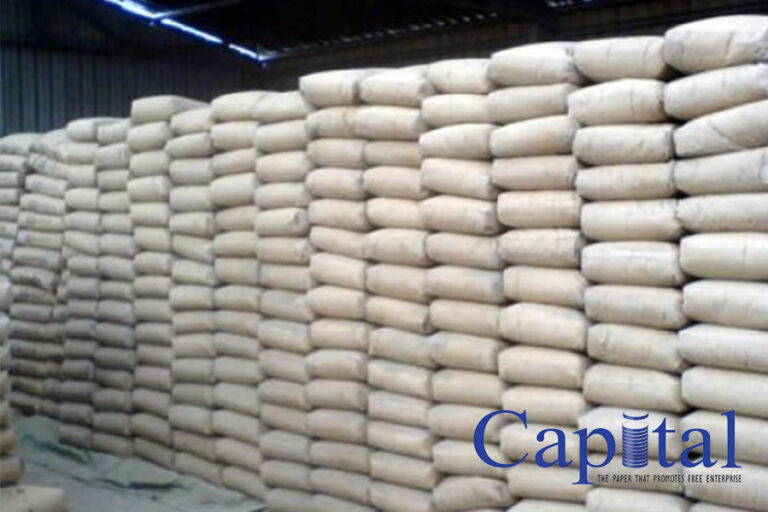
Ministry of Trade and Regional Integration (MoTRI) announces that it will regulate cement factory gate prices every six months until demand and supply levels.
In a press conference held on Thursday December 22, 2022 Teshale Belhu, State Minister of the Ministry of Trade and Regional Integration (MoTRI), said that the Cement Marketing and Distribution Directive 908/2014 which allows the government to regulate the cement market has been revoked out with a new regulation emplaced.
“The former directive was approved to cope with illegal trading and to fill the gap on demand and supply. However, instead of stabilizing the market it has aggravated the problem, increasing illegal traders in the process,” explained the State Minister.
In the former directive the government has been trying to regulate the price of cement through measures such as setting fixed prices, limiting the volumes that individuals can buy and asking producers to cut distributors out of the supply chain.
In the former regulation, factories were supposed to sell to distributors which were selected by regional and city administrations. Through this, mega government projects and bid developers were said to have got priority in cement consumption.
The price of one quintal of cement was not more than 700 birr but now that narrative has shifted to over 2000 birr in the black market.
“Government will decrease its interaction in the cement market,” stated Teshale highlighting that the Ministry will monitor distributors to ensure that the transaction is completed in a valid way with receipts. However, the ministry will not set market price points.
To be effective as of December 22, 2022, the ministry has issued a new factory gate price. The price revision which is said to have been distributed to the factories has brought the price of one quintal of cement from 750 birr to 795 birr and looks to stay the same for the coming six month, according to the State Minister.
In the past two years, shortage of cement hit the market hard as factories production went down. Meanwhile, the government disclosed that it has taken several measures regarding cement distribution and its high price points. However things on ground seem different. It has been well noted that factories are working under production for reasons that stem from security, shortage of raw material as well as foreign currency.
According to the ministry, through there are about 11 cement factories, only three were properly in production mode. In the 2020/21 (2013 Ethiopian fiscal year) the total cement production in the country was 6.1 million quintals which dropped to 4.1 million quintals in 2021/22. The country’s production capacity is around 12Mt/yr.
Quite recently, even retailers in the city, contractors and builders shed light on heavy concerns to access cement even at twice its rate.
Contractors who are involved in different sized projects alarmed that they are engaged on building the backbone of the economy yet they face the hurdle of accessing cement.
In light of the cement despair, cement top guns, Dangote Cement disclosed that its sales from the Mugher plant rose by 1.8% year-on-year to 1.7Mt in the first nine months of 2022 and that the unit was running at full capacity in the third quarter. It reckoned that it held a 42% market share during this period, out of a total market of around 4.2Mt. Previously, it said that the total market for the whole year was 7Mt in 2021.
