

Learning poverty has increased by a third in low- and middle-income countries, with an estimated 70 percent of 10-year-olds unable to understand a simple written text, a new report reveals.
This report comes at the back of the tenth high-level ministerial forum on Innovation Africa held in Lusaka, Zambia that focuses on major education projects, skills development and the upsurge in investments leveraging technology for education in Africa.
According to the new report published by the World Bank and its partners like UNESCO and UNICEF, the estimated rate was at 57 percent before the pandemic, but now the learning crisis has deepened. This generation of students now risks losing USD 21 trillion in potential lifetime earnings in present value, or the equivalent of 17 percent of today’s global GDP, up from the USD 17 trillion estimated in 2021.
This report titled, ‘The State of Global Learning Poverty: 2022 Update’, also tasks countries on the need to concentrate their efforts on the most cost-effective approaches to tackle learning poverty.
It states that these interventions must be implemented as part of a national learning recovery program that can also serve as a springboard for building more effective, equitable, and resilient education systems.
Benjamin Piper, Director of Global Education, Bill and Melinda Gates Foundation was quoted as saying, “We have solutions that can work at scale and in government systems. Committing to substantial learning recovery programs is a start, but the composition of those programs matter: measure learning outcomes, but also invest in improving instruction through structured pedagogy.”
In Africa, based on these suggestions, there are bright glimmers of hope for effective scalable education transformation as seen in some nations like the Liberia Education Advancement Program.
NewGlobe is one of the most widely talked about technical partners in education, supporting multiple state and national Governments in Africa to improve learning outcomes through system transformation.
All programs supported by NewGlobe empower every teacher with digital tools to deliver expertly planned lessons based on the local national curriculum.
This holistic learning methodology was the subject of a 2-year study led by 2019 Nobel Prize winning Professor Michael Kremer.
Hundreds of ministers and officials came across the continent attended the summit including delegations from Ethiopia, Uganda, Rwanda and South Africa.
High-level delegations along with counterparts from at least 24 other African countries engaged with other stakeholders on topics key to the education agenda of the summit.
Among the topics covered at Innovation Africa was digital transformation across Africa’s education sector, teacher training, digital strategies for school leaders, technology innovation and solutions for improving school connectivity, curriculum reforms.
The focus on education in this year’s event is pivotal to the learning poverty crisis currently faced in Africa and beyond.
The Innovation Africa summit education rich agenda provides an opportunity for African countries to fulfill this call to action, which is key as the learning poverty has become even more pronounced in post pandemic Africa.
Learning poverty becomes more pronounced, reports signal

PM appoints seven finance gurus to lead ECMA
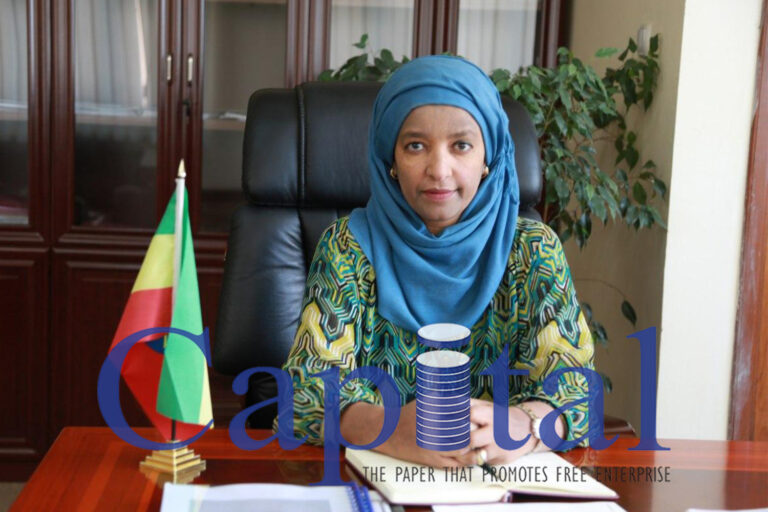
The Ethiopian Capital Market Authority (ECMA) receives shrewd finance experts to steer the regulatory body in the capacity of director general and board of director roles including that of accounting and audit guru, Hikmet Abdella, who makes her mark as the first and only female member of the board.
As per the letter issued on December 1, Prime Minister Abiy Ahmed has appointed seven board members chaired by Yinager Dessie, Governor of the National Bank of Ethiopia (NBE), who is also one of the two permanent ex-officio members of ECMA’s board as per the capital market proclamation that was ratified in July 2021.
According to the proclamation article 8.3 the PM has powers to assign a chairperson among the appointed members.
Based on that, Yinager has now become the founding Chairperson of the newly formed regulatory body, ECMA.
ECMA is responsible in controlling the stock market activities including the Ethiopian Securities Exchange (ESE), a share company that will be formed by the government and the private sector including foreign investors.
The other permanent ex-officio member is the Accounting and Audit Board of Ethiopia Director General, Hikmet Abdella, who has vast experience in the leadership of prominent audit and accounting in the financial sector.
Hikmet’s new assignment makes her the first female board member for the capital market’s regulatory entity.

According to the proclamation, the Director General of the Authority will be part of the seven board members at ECMA, but will however not be a voting member.
As one of the latest appointments regarding the regulatory body, Abiy has assigned Brook Taye, Senior Advisor at the Ministry of Finance, to be the founding Director General of ECMA.
Brook, who has a massive professional experience in the western world including the secondary market, is one of the young bloods who joined the PM’s crucial economic reform agenda which took off about four years ago.
Before coming to Ethiopia, Brook served as an Investment Fund Manager for the US based private equity fund A&A Capital Inc., and as a treasurer at Three Goats Organization, and Regulatory Analyst and Economist at Windels Marx Lane & Mittendorf, LLP.
Brook graduated from SOAS University of London with a law degree, and has three master’s degrees from different prominent European higher education institute including the University of Paul Cezanne Aix, Marcel, on law and economics.
He obtained his PhD in 2016 from Ecole Polytechnique, a university based in Paris, with a defense of “Visiting the contribution of high-growth entrepreneurial firms (HGEFS) to new employment: the case of Ethiopia.”
The other four board members stem from the private financial sector such as that of Wondimagegnehu Negara, CEO of Ethiopia Commodity Exchange and former President of the Cooperative Bank of Oromia.
Well known macro economist, Eyob Tesfaye who now works at UN Capital Development Fund, is also now a board member of the ECMA. Eyob who once regulated public financial institutions is also working as a board member of the state owned financial giant, Commercial Bank of Ethiopia.
Tesfaye Hailemichael, Senior Vice President, Cerberus Capital Management, who has a sea of experience in the secondary markets, has also been assigned by the PM as one of the seven founding board directors for ECMA.
Tesfaye rich experience stem from his work as; Board Chairman, Board Member, Chief Executive Officer, Chief Operating Officer, Chief Financial Officer, Treasurer and Corporate Secretary for several companies. Tesfaye has also served as a member of the Capital Markets Development Consultative Group at NBE.
Abate Abebe, Professor at Addis Ababa University is also the man mentioned as the other board member in the letter issued by the PM on Thursday, which was sent to the NBE governor and copied to all assigned board members.
The formation of the capital market is one of the government’s reform agenda which was introduced a few years ago. It is also expected to be an alternative source of finance besides the traditional financial institutions.
With the ECMA taking shape, the realization of the formation of the ESE is said to be expected soon.
Court delivers final verdict on the Holland Car’s saga
The Federal High Court gives a final verdict on the eight year long litigation battle between the Liquidity Supervision Commission of Holland Car plc and defendants that include the founder of the company.
The trustees who were assigned by the court to manage the liquidation of Holland Car plc, a pioneer car assembly in Ethiopia, filed its civil charges in December 2014 on six individuals and companies on the claim that the defendants have to return the property of Holland Car plc which mostly include different model of vehicles and heavy duty trucks.
The individuals that have been charged by the trustee were Tadesse Tessema, founder, head and shareholder of Holland Car plc, Solomon Tariku, General Manager of Cassiopeia Car plc, and Kebede Mekonnen, who finally was excluded from the charge.
Cassiopeia Car plc, of whom Tadesse is a major shareholder; Zemen Bank and TK International plc were the companies cited in the lawsuit.
In the charge, the plaintiff filed claims citing that the stated individuals and companies have to return the property including partly assembled cars and parts of Holland Cars to the original owner.
The plaintiff also filed for the court to give a verdict on first, second and third defendants; Tadesse Tessema, Cassiopeia Car plc and Solomon Tariku as the ones responsible for the bankruptcy of the car assembly and a follow-up of transfer of properties owned by the pair.
The charge was also filed on the fifth and sixth defendants, Zemen Bank, which is the financier of the car assembly, and Tk International plc, the office leaser of Holland Car, to return the property of the bankrupted company.
However, after almost eight years of hearing, Lideta Division 3 Trade and Investment Bench of the Federal High Court, has now given a final judgment in favor of the defendants.
In its verdict, the Bench elaborated that the argument between the two sides and stated that the claim and justification coming from the plaintiff did not have relevant points; while some of the properties that its claims have already been transferred to the liquidating company while some of the properties have been sold by the trustee through auction to mitigate the liability of the company.
It added that the first defendant’s effort to keep the car assembly from bankruptcy was highly acceptable, while the second and third defendants were cited to not being responsible for the company’s downfall. In its verdict, the court added that the second defendant, Tadesse, the major shareholder, made available its property as collateral for the loan that pumped financial flows for Holland Car rather than contributing to its bankruptcy.
As a result, the trial that was held on November 21 saw the defendants being set free by the court from allegations of bankrupting Holland Car plc.
Holland Car, which is the first private car assembly in the country, was established in 2005 through a joint venture between Tadesse Tessema and Trento Engineering, a Dutch company, with an initial capital of 11 million birr, equally contributed by both shareholders to supply assembled vehicles to local and export markets. The company had 250 employees. During the ten years it was active in business, Holland Car was known for its Abay, Tekeze, Naomi and Awash automobile brands.Holland Car was closed down in November 2011 after it filed for bankruptcy due to lack of finance.
Rotary Club of Addis Ababa Bole donates 6.8 million birr worth of diagnostic, treatment equipment to Afar Region
Rotary Ethiopia’s Rotary Club of Addis Ababa Bole donates birr 6.8 million worth of diagnostic and treatment equipment to the Kalwaan Hospital in Kalwaan Afar Regional State.
Rotary Ethiopia’s Club of Addis Ababa Bole in collaboration with the Rotary Club of Tilt in Belgium together with other clubs in the country, supported by a grant from the Rotary Foundation of Rotary International, in cooperation with the Federal Ministry of Health, Bureau of Health of the Afar Regional Government and the Afar Pastoralist Development Association donated to the Kalwaan Hospital in Gulina – Afar, thirty three types, (and more than fifty items) of modern medical diagnostic and treatment equipment and professional working tools imported from China at a total cost of more than 6.8 million birr.
The list and specifications of the equipment were drawn from the Afar Bureau of health and included; High Frequency X-ray Machines, both static and mobile types, colour-dopplers, ECG Machines, anesthetic machines, digital ultra sound machines, oxygen concentrators, and many other items essentially needed by a modern hospital.
The donations are said to furnish the Kalwaan hospital to not only fill its critical gap after the devastation of the war, but to also elevate the status of the health center by several more steps following its modern diagnostic and treatment outfits upgrade.
Apart from the donation, the project includes installation and commissioning of the equipment at the hospital including training of technical personnel on the application and routine maintenance of the equipment; which will be given by a qualified and highly experienced biomedical engineer assigned by the Saint Peter Referral Hospital in Addis Ababa.
Since its first establishment in the country some 67 years ago, Rotary has participated in health efforts that took millions in direct investment. In the fight against polio, which is now nearly eradicated from the face of the earth, Rotary has funded more than USD38 million for Ethiopians through the ministry of health and has similarly done so through other bilateral and multilateral partnerships since the campaign to eradicate Polio started in 1985.
