

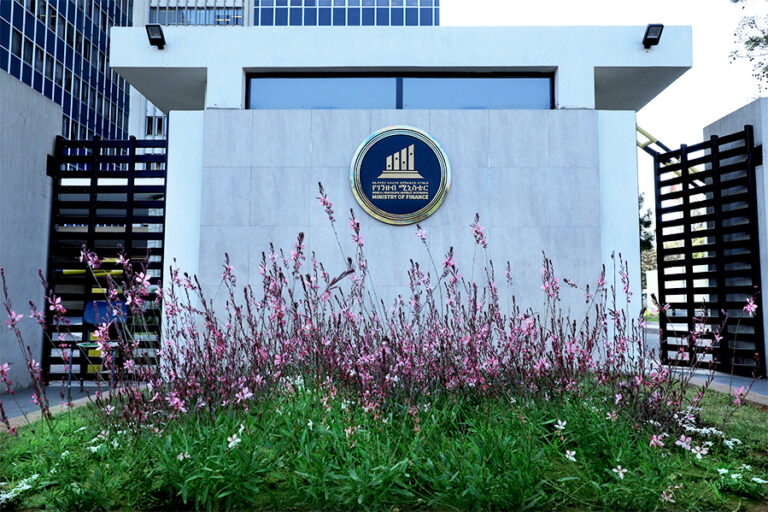
The Ethiopian Bankers Association (EBA) raise concerns following the latest move by the Ministry of Finance (MoF) which orders public institutions to expel their accounts from private financial firms. Financial experts warn this will cause quakes in the sector.
Recently MoF wrote a letter to public institutions to close their accounts at private banks and repatriate their resources to the coffer at public banks which would be in the Commercial Bank of Ethiopia (CBE), which has so far been assigned by the government financial arm, central bank, to manage public money on its behalf.
Sources told Capital that during its meeting held on Friday, April 15, EBA which includes presidents from private and public banks, had in-depth discussions about the issue and agreed to file its concerns to the relevant government body.
Some described the decision of the government as astonishing with respect to the banking industry and added that they’re afraid that it may erode the confidence of the public.
After Friday’s meeting, a senior banker that Capital asked for comments about the decision generally said that the government has continued through with its socialist ideology as before.
“The main reason to continue on this poor economic growth is the attitude. The government is saying that the private sector is the economic engine for Ethiopia but financial institutions are the heart of the engine. I believe that the government does not totally understand the role of the private sector which will end up creating a paradigm shift for the economy if it does not get proper attention and support from the government,” he expresses his anger, adding, “proper liberalization is a must.”
He said that banks by default are public property rather than a few individuals or groups, “the major stakeholder of the financial industry is not shareholders, clients, staffs or the community but the government first. We pay income tax every year to the government.”
Some other bankers that Capital interviewed about the issue said that the government may have a right to select a financial firm for the budget management but it passed a swift decision that might break the private sector and public’s trust in private banks.
However, some argued that all banks including public banks have similar licenses for a similar business, “but the government is issuing different directives for the private banks and public banks, which raise eyebrows on the right to operate in the country equally.”
MoF’s move causes uproar amongst bankers
Establishing enduring people’s leadership
The modern world system, which has been around for over half a millennium is collapsing in front of our eyes, but its demise still needs to be managed carefully, if we want to avoid catastrophic wars. The final collapse is expected to be unprecedented, given the scope of the system’s reign and the number of people that have been fully incorporated in it. Unlike before, the management of the impending collapse requires the active participation of ordinary people across the globe. To this end, the sheeple’s leadership must be qualitatively enhanced and forged to the fore. The nation-states and their main governance structure, namely; the legislative, executive and judiciary will not be adequate in the coming years, as the states are the very ones that are prone to waging wars!
Where are the loci of the sheeple’s leadership (not the elites) and how is it to be leveraged in the effort to bring about a more egalitarian, a more democratic, a more peaceful and a more sustainable societal existence to collective humanity? From the outset, one should realize dominant interests have always undermined the sheeple’s initiative to build its own capacity, particularly in interrogating as well as managing the modern world system. Since the anchoring economic regime of the prevailing world order is capitalism, its nemesis, labor or people, had to be subdued in all their activities; economic, political, cultural, moral, etc. As situations deteriorate, such institutionalized discrimination of the sheeple (by dominant capital), spearheaded by entrenched interests, is being challenged openly. Generalized unease, protracted rebellion (wars, etc.) and disillusion about the delusional economic foundations, particularly its lunatic assumption of non-stop growth in a finite planet, are increasing across the globe. This, on its own, can be regarded as another manifestation of the creeping breakdown of the modern world system! Late modernity served by its devoutly subservient elites has become out rightly anti-life and obviously this cannot continue any longer! Let’s revisit the achievements of traditional people’s associations that facilitated progressive popular participation in the world.
The modern world system has managed to achieve some solid emancipatory projects. For instance, voting right that was once the privilege of male property owners was ultimately succeeded by universal suffrage. Labor or organized labor to be more precise, which is the core of all industrial economies, also managed to share some of the surplus with capital. Progressively, democratic dispensations became strong enough to challenge some of the excessively destabilizing policies of entrenched interests, though not always successfully. People’s associations are generally and naturally unwieldy, unfocused even undirected, but their main thrust; that of ‘sustaining life no matter what’, differentiates them from the more powerful profit driven corporations/organizations that worship incessant accumulation without due regard to other aspects of existence. In some countries such people’s organizations are purposely weakened so that they cannot enlighten the sheeple as to the real workings of the dominant destructive system. When it comes to establishing meaningful peoples’ associations, the old socialists did make some impressive headway in the 20th century. Unfortunately, many of these people’s institutions were employed mostly as means of control and were quite effective at it, if we might add. Recent innovations in areas of popular participation, based on genuine democracy with a clear intent to empowering the sheeple in its quest to unravel the going-ons of the unsustainable system, are being experimented on in different places.
Let’s look at associations we have here in Ethiopia. The task at hand is how to augment them so that they will serve as countermeasures to the over dominant state institutions that have proved quite prone to capture by oligarchs and aspiring bourgeoisie (lumpen) from within the political leadership! Socialist Ethiopia has left us with the legacy of the ‘kebeles’, ‘peasant associations’, ‘youth association’, ‘women’s associations’, ‘trade union associations’, etc. Without a doubt, these institutions served as effective control mechanisms in those days. Nonetheless, we believe these people associations can be very useful to effect needed changes, if they are democratized enough. They might even become centers of emerging quality leadership that will have no unhealthy tie with dominant capital and its degenerate oligarchs. For instance, the ‘anti-corruption movement’ that was popularly initiated but was systemically frustrated by the operatives of capital and the state could have made its own impact along this line, to say nothing about the enhancement of good governance across the board. Since such people’s associations are closer to the crime scene and crave for accountability and transparency, they can be a potent force against intentional maladministration/corruption, etc.! Regular open discussions in these institutions (not always chaired by state operatives) on various pressing issues can help the politicos in power to form more relevant and need driven policies. By genuinely empowering these institutions the state can tap the immense energy of the sheeple, as well as solicit political support to its policies, existing or proposed. Many thorny issues can be successfully hammered out in these people’s organization if democratic principles are genuinely upheld!
When things start to sour between the politicos and the sheeple, means that might not be to the liking of many will be employed to convey dissatisfaction to the power that be, just like what we are witnessing in Ethiopia today. Peoples’ associations must be able to conduct peaceful protests/demonstrations, etc. legalistic obstacles notwithstanding! Such activities must be one of their prerogatives. When the heavy handedness of the state reaches a level that can be considered offensively suffocating (by the sheeple), direct actions, legal or otherwise, cannot be ruled out. For the sake of good governance, certain inalienable rights of citizens should not be considered as mere largess of the state! States all over the world should be reminded about the limit to their blunt preponderance, rather frequently, as prescribed by the old revolutionary/statesman.
Dalol shareholders feel hoodwinked by their prime investor
Shareholders of Dalol Oil, one of the pioneers in local oil dealings, claim that a major share of the company was unlawfully taken by a foreign company. Shareholders argue that the incoming of the new company is suspicious and against Ethiopia’s business laws.
According to the claim that shareholders shared with Capital, the company called Gulf Prime Investment Plc has become the major shareholder without their knowledge.
The claim of the shareholders indicated that to elevate the financial constraints of the oil dealer, the board of directors of Dalol approved floating of un-sold shares to interested buyers.
Based on that, Gulf Prime, a company based in Dubai, UAE and oil and lubricant suppliers of Dalol have bought the said shares taking 22,348 shares worth 22.348 million birr.
As per the decision of the board, the company was invited to take the shares, at least in the settlement of two installments in a year’s time.
The board had also passed a decision that the payment should be conducted as per the country’s investment rules which means in foreign currency.
Besides that, the board directed Dalol’s CEO to handle the responsibility of verifying the required legal documents of the company and the process prior to the final endorsement of the general assembly.
However, shareholders expressed their concern that the company may not follow legal procedure to take the major share of the company as per the direction given by the former board. “I have a doubt that the company is registered as per the country’s trade laws,” one of the shareholders, who demands anonymity told Capital.
The board chaired by Tadesse Bekele, with the inclusion of a few members from the former board of directors was assigned in late 2021.
Shareholders argued that by now Gulf Prime should settle the total share amount, which is over 22 million birr, “but we have been informed by management of Dalol that the company so far settled nine million birr.”
They added that despite the share sales being supposed to be conducted in foreign currency, a confirmation on which currency was used was not cleared up.
They added that there is a conflict of interest between the local company and the new major shareholder; since Dalol is aligned with the new major shareholders who supply lubricants and oils, “we have also concerns regarding the supply, whether it is managed under competitive bidding manner or not,” shareholders described their confusion on the matter.
Sources said that if Gulf shall fully pay the whole amount of the shares offered, the company stands to take one-third of the stake at the company which makes it by default a quorum for the general assembly.
As per the information Capital obtained from the Ministry of Trade and Regional Integration, Gulf Prime Investment registered on August 24, 2020, at Kirkos Sub City with six million birr capital for engaging in the transport cargo trucks sector.
However, the company has also two licenses that were registered on the same date of February 21, 2020, but their status is canceled according to the data secured from the ministry’s ‘Business License Checker’ page.
The document indicated that one of the licenses registered involved the business of ‘import trade in petroleum and petroleum products and related products’ and the other license registration indicated the company’s involvement in Ethiopia is quoted as ‘wholesale trade in solid, liquid and gaseous fuels and related products’.
According to the country’s investment law a foreign company that would like to invest in Ethiopia should transfer at least USD 200,000 as initial investment capital.
“If a foreign company would like to invest jointly with local companies the initial amount that flows to the country shall be USD 150,000,” Daniel Getnet, legal advisor and foreign direct investment consultant said.
He told Capital that for the Gulf Prime case, the company should have at least channeled USD 500,000 to take a share worth over 22 million birr.
Experts said that the company’s license showed that the company’s capital was six million birr, which is about USD 117,000 at the current exchange rate which is far from the required initial investment amount for a joint venture or sole investment.
Biruk Girma, CEO of Dalol Oil, rejected Capital’s request for clarification, while he insisted that the board chair is the required body to answer the case. Capital’s effort to talk to the board chair was also unfruitful.
Getu Desta, who is stated as manager on the license of Gulf Prime, told Capital that Dalol is the right body to respond about the share ownership of Gulf.
Firms pump 369 mln birr into ads in the 1st quarter of 2022

According to a report released by Omni media Ethiopia, over 369.2 million birr is spent on advertisement in TV and Radio stations in the country. Of these advertisements the top ten companies in Ethiopia have paid more than 125 million birr to TV and radio stations within the past three months to push their advertisement.
Omni media monitors 35 TV and radio stations. In the past three months, these 35 stations spread 71665 spots getting 369.2 million birr in payment. TV stations take the majority share spotting 42,182 advertisements taking the chunk of 340.84 million birr while radio stations spot only 29483 advertisements getting 28.35 million birr.
Omni media from its engagement in digital marketing and media monitoring for the past three months reported that: banks, satellite TV providers, real estate companies, detergent manufacturers, telecom and soft drink producers were the most to advertise content in the top categories from January to March 2022.
Of these top ten companies, according to the report, Ethio telecom tops the list by advertising 2872 spots and paying 24.45 million birr in the three months. This figure is followed by DStv which pushed 4628 spots at a cost of 21.6 million birr while Cooperative Bank of Oromia slots in third with 1499 spots paying 15.8 million birr while Canal+ seats forth spreading 1412 advertisements paying 14.5 million birr. Another financial firm on the list is Awash Bank which pays 9.7 million birr for its 1492 advertisements for the last three months.
Commenting on the issue, the Managing Director of Omni media, Feruz Jemal stressed that even though the volume of advertisements is growing steadily, the income of stations is not as growing as much as it should. Covid and instability of the country were notable reasons for the slightly stagnating income growth.
Advertising and trade promotion is important in the Ethiopian market. Government-owned mass media outlets (radio, television, and newspapers) and privately-owned magazines, satellite television stations, newspapers, radio stations and billboards are the major means of advertising and most private media outlets run their business using their income from advertisement.
“All stakeholders should take fast actions similar to the growth of advertisements, for the sustainability of media,” recommended Feruz as he sensitized on market opportunity capitalization.
