

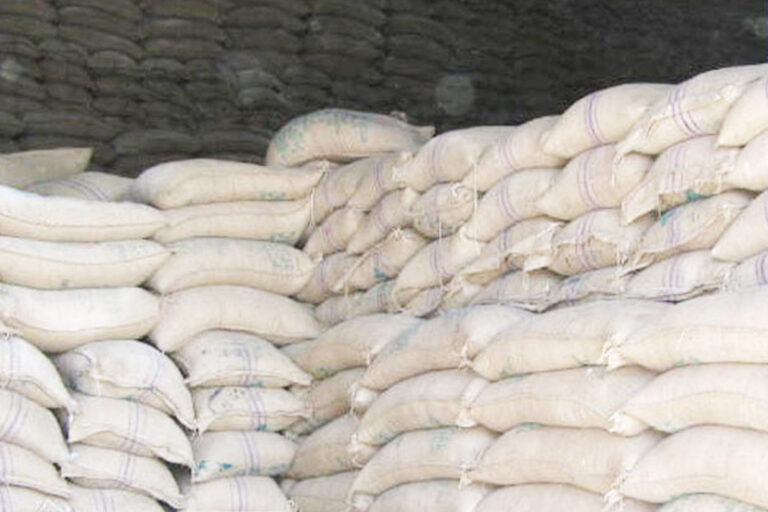
Ethiopian Sugar Corporation (ESC) says it has switched gears to handle the biding process to conclude swiftly rather than the usual trend. The new decision of India is stated as a threat for price hike, while on Friday, Ministry of Finance (MoF) gave its positive response for the process to procure the 200,000 metric tons of sugar.
The corporation said that on the latest bidding process of the sweet it has given a final proposal in few days.
Weyo Roba, CEO of ESC, said that on the latest process to buy the commodity the corporation has taken swift approaches to finalize the bidding process.
“We have learnt a lesson from the experience in the past that takes several periods to finalize the biding process after the opening date,” he said by reminding that it is one of the bottlenecks when concluding the purchase.
It is almost a year since the country imported sugar, while in the current budget year which will come to a close in the coming five weeks; the corporation has floated different auctions and even attempted to buy the sweet through short listed companies despite it not bearing fruit.
On the latest bid that proceeded by inviting shortlisted companies and opened on Thursday May 19, the corporation concluded its evaluation within few days and tabled its proposal for the final decision to the Ministry of Finance on Wednesday May 25 afternoon.
“The previous process took several days for technical evaluation and similarly for financial assessment of the bidder but now that shall be concluded within a day or even hours. But on the latest move we have open the technical on Thursday and the financial proposal on the next day, which is the result of the lesson we got from the past experience. We will follow a similar pace for the upcoming procurements at the corporation,” he told Capital.
Slower processes have been stated by experts to make the country not realize better opportunities to buy the product at lesser prices.
“I have observed that long evaluation processes and further demand to get a green light from the upper government bodies like MoF and even Macroeconomic Committee has forced the bid process to take longer periods and sometimes validation dates for price quotations face expiration,” experts said.
Weyo said that some government procurement processes are lengthy, “for instance for technical or financial evaluations it places days as a mandatory, while the technical is to be done within hours or a day,” he said.
For the latest procurement process, MoF has seen ESC’s proposal on Friday May 27 and has issued a support letter for the corporation to go ahead as per the process.
On the bid, the price quoted shall be valid for eight working days that means it will come to a close by tomorrow May 30.
The financial offer of Osirius Group, which is new for the sector, ED and F MAN, Agrocorp International and Sucden has been opened since they enabled to pass the technical process.
Osirius, which is a US company, disclosed to load the cargo from Brazil, offered CFR Djibouti USD 580, USD 608 and USD 900per ton for LC at sight, and the 12 month and 18 month differed LC payment respectively per ton with USD 3,000 of port visit.
The Singaporean company, Agrocorp offered CFR Djibouti USD 738.35 and USD 799.87 per ton for LC at sight and LC for 12 months respectively for Indian sugar.
ED and F MAN of the UK, which is also known in the Ethiopian market following its good track record like Agrocorp and Sucden, gave its offer for the three payment options as per the bid documents.
The company that mentioned India, Thailand or UAE as commodity origin offered USD 809 for at sight and 12 months payment modality and USD 899 for 18 months LC payment for CFR Djibouti.
Sucden which expressed its interest to supply 100,000 metric tons of the sweet also offered its rate on the three payment options. On its CFR Djibouti offer the French company has given USD 721.63, USD 1, 111.63 and 1, 511.63 for LC at sight, and the 12 month and 18 month differed LC payment respectively per ton.
Weyo appreciated the latest bidding process by describing that on the current process that held on the process of invitation the price is lesser than “that we have seen on the formal bidding process.”
Experts said that the offer of the new company, Osirius, is attractive and estimated that there is a possibility to get the latest award. But they recommended the government to be cautious since the company does not have known reputation in Ethiopia.
“If the country losses this bid process the consequence would be dire since the global market scenario has become volatile,” they said.
They reminded the latest move of India, the second biggest sugar exporting country behind Brazil, imposed restriction on the export of the commodity.
Experts said that the Indian decision will definitely affect the global price in the coming months.
Sugar Corporation speeds bidding process
Alcohol given tax exemption over education
The new investment incentive directive gives no tax exemption for education, training, printing industry and health services investments while on the contrary, it has given tax relief to alcohol related investments.
In its 8th ordinary summit, the Council of Ministers approved the new directive for investment incentives. The bill gives the Ministry of Finance (MoF) power to decide on incentive packages which was the mandate of the investment board.
The purpose of revising the incentive is said to encourage investors in accordance with the new investment proclamation approved in January 2020.
The directive authorized MoF to grant tax incentives to investments eligible under the regulation which entitles them to tax or give duty relief; and monitor on a regular basis the performance of each regulatory institution with respect to ensuring that tax incentives are used for designated purposes.
On the old incentive directive more than seven governmental offices had the power to decide; including the National Bank, main Department of Immigration and National Affairs, Ministry of Trade and Industry, Ministry of Foreign Affairs, Ethiopian Customs Commission, Ethiopian Investment Commission, Industrial Park Development Corporation, and regional administration on the incentive package under the Ethiopian investment board chaired by the Prime Minister on the 2012 incentive regulation.
Under the 2012 regulation, the investment board had been given authority to forward recommendations for approval to the Council of Ministers on incentive related amendments including granting new or additional incentives than what is provided under the regulation.
As experts suggest, the change to authorize MoF to decide on the package may create confusion since most of the investment related works are done by the Ethiopian Investment Commission, Ministry of Mines, Regional Governments and Addis Ababa and Dire Dawa City administrations Investment Organs, Ministry of Trade and Regional Integration, Ministry of Revenue and other Institutions who are mandated to regulate the implementation of tax incentives.
The new directive offers a comprehensive set of incentives on income tax and duty incentives granted to encourage investment in sectors eligible for incentives. Particularly for priority sectors, such as: Customs duty payment exemption on capital goods and construction materials, exporting investors located within industrial parks and industrial park developers.
Textile and Textile Products Industry, Leather and Leather Products Industry, Food Industry, Chemical and Chemical Products Industry are also areas which have obtained tax relief.
Under the beverage industry, manufacture of alcoholic beverages has got exemption from income tax for 1 to 2 years based on the investment area while manufacture of wines has got an exemption from income tax for 3 to 4 years. Likewise, manufacture of beer and/or beer malt has got 2 or 3 years of exemption.
Also according to the draft, in the health sector investment, only provision of tertiary specialized hospital service could have exemption from income tax for 2 year while exemption from income tax for 3 years is to be determined by a Directive of the Ministry, while new investments on provision of hospital service, provision of diagnostic service, provision of clinical service has no tax exemptions.
However the bill doesn’t give tax or duty exemption for investments such as hotel and tourism sectors, construction contracting and printing industry making it similar to the old directive. This is inclusive of information technology service and other services rendered using information technology as an enabler.
Investors eyeball Ethiopia’s mining sector
Investors are showing interest to get into the mining sector, emphasizes the ministry of mines on its nine month report to the House of Peoples Representative.
In the past nine months, the ministry has given 55 new licenses of which 39 of them are engaged on mining investigation while the other 16 investors are on production.
“Interests to engage in the mining industry are increasing from time to time,” said Takele Uma, Minister of Mines on his report, adding that the increasing investment on the sector could help to decrease the traditional mining production and increase benefit of the country from the sector.
Over the past nine months, the ministry has been focusing on boosting exports, replacing imports with domestic products and expanding job creation for citizens, according to the report. The minister indicates tangible results have been seen on natural resources of fertilizer, coal and steel.
Through the mining sector is expected to achieve Ethiopia’s prosperity it is known that the country did not benefit from mining resources due to its complex challenges.
As indicated on the report, instability in different parts of the country has been the biggest challenge of the sector. As the minister in his report indicated to minimize the effect the ministry is working with different stakeholders, as part of this a memorandum of understanding (MoU) has been signed with the Ministry of Defense, the Federal Police, the Information Security Agency and the Artificial Intelligence Agency to address security concerns in 14 different mines.
Beside the insecurity low performance of companies has also been set as a challenge for the performance. As indicated on the report based on the assessment, the ministry on the performance of mining companies has given a last warning for poly CGL to submit its finance and technical limitations until the end of the budget year. Similarly, Tulu Kapi has been requested to submit its financial reliability. In addition, the ministry has requested the house to support 3 companies in Afar region engaged in producing potash.
Regarding cement, lack of skill and management in factories has been set as challenges additional to other external factors in which only 58 percent of the production plan has been achieved which is 4.8 million tons from the planned 8.2 million tons.
The House stressed the need for significant change in Ethiopia’s mining sector and the need to intensify efforts to replace imported minerals with domestic products. The house stressed that the sale of mining, including gold, should comply with international trade standards and that the quality of the products should be maintained, the need to ensure that companies are operating in line with the requirements of continuous monitoring, development strategy and licensing and renewal of companies.
Over the past nine months, 6,947 kilograms of gold has been produced, 7,363 industry minerals, 79 tons of tantalum, and 2,000 tons of sodium has been exported.
Despite the Ministry of Mines plans of earning a total of 996 million USD from the sale of minerals and natural gas in the past nine months, only 458 million dollars or 46 percent of the target was achieved due to the slowdown in natural gas production.
Fishing better policy to upscale industry
The country fish production should at least triple to narrow the per capita consumption with regional standard.
Currently, the country has a potential to produce 94,000 tones of fish from major fish sources like lakes and dams, while the consumption per person is about half a kilogram which is far behind when compared with regional figures.
According to Hussein Abegaz, Fishery Development Directorate Director, to narrow the differential the country ought to up production by at least three times.
He said that market linkage and lack of modern production process is a challenge for the sector. He added that the fishing, processing and provision to the market need a proper streamlined chain which the country does not have, as of yet.
Hussein explained that in order to improve this, the fishery quality control regulation which is on its draft stage shall guide to serve as a solution for the sector development and marketing.
“Currently traders do not have processing centers like other countries. They are taking the processed fish meat from fishers, thus the process hinders the country from utilizing its resources properly,” he added.
Hussein told Capital that the sector receives little attention by government bodies particularly in regions, “at the central government level, there is a structure but it is not seen in the regions which is one of the challenges for the sector development.”
He said that if the country for instance targets to expand the per person consumption to be two kgs, the production shall also be upped “we have to produce at least 300,000 tons that shall be attained while the current potential is at 94,000 tons. Because the country has huge and suitable potential for the sector development; so to meet the demand we shall develop the fishery sector with new and modern schemes like aquaculture like how other countries did on the aim fill their demand.”
Experts said that expanding fishery is crucial for food sufficiency and diets that the country targets to attain besides job and economic contribution.
The production at natural water resources like lake potentials has reduced due to man made pressures, but the sector is promising due to the come up of new dams.
There are 200 species in the country of that 11 are exotic and 40 endemic.
Aschalew Lakew, Director of National Fisheries and Aquatic Life Research Center at Ethiopian Institute of Agricultural Research, said that of the total, six of the species are commercially important but it is not meaning that some others are not marketable. For instance in Gambella over 20 types of fishes are demanded by the consumer.
Ethiopia is producing 60,000 tons of fish every year, while the potential is 94,000 but this is not inclusive of the latest dams that are constructed for different purposes. In overview, the country has allocated at least 77 million birr for fish products import.
According to Hussein, up to 85 percent of the total production comes from the rift valley lakes and Lake Tana.
Aschalew, who is also a senior researcher, said that Ethiopia is suitable for fishery.
Researches indicated that the fish per capita consumption in Ethiopia is about 0.5 kg whereas the East African region is 9.9 kg.
Lack of coordination for the sector development including the development of new dam projects is stated as a problem for the sector’s poor development.
Formal rules and regulation in fishery, lack of experts, feeding, and technology and financing are also stated as a gap that are seen in the sector.
Vitalizing existing lakes, adequate dam development, and aquaculture development in different aspects including producing skilled labour and private sector intervention, and market chain and standard production have been designed in the ten year development plan.
Yared Mulat, Engineer at Ethiopian Construction Design and Supervision Works Corporation, said that the new water projects like dams should have included the fishery development in their design stage and actual developments.
