I have been out of the country for a while and one of the great things of going abroad is realising and appreciating what you have at home. Sometimes I visit countries, which have more traffic problems than we have here, where crime rates are high, where the climate is really oppressive, where people are not so hospitable or where the coffee is lousy. And so, it is great to come back to the land of 13 months of sunshine, the land of original coffee, where the smile is at home.
But visiting other countries also opens your eyes and makes you wonder why things don’t work the same way here, for example mobile and internet services, clinics, schools, traffic (again) and services in general. Reliable internet connections at home are more the rule in other countries. In most places you can buy a mobile telephone sim card on arrival and feel connected immediately. Clinics pay attention to the emergency patient first and send the bill later. Schools provide minimum standards of education and are accessible for all. In traffic people follow the rules instead of making up their own and services are customer oriented.
Admittedly, much has improved over the past years, but we have a long way to go. There is a lot of room for improvement in most areas of business and organization. A few observations:
The construction industry is still booming. Everywhere you go you see buildings rising. Architects are trying hard to introduce attractive designs, lifting the face of the city. What strikes me is that entering even new buildings, you wonder how some things already require maintenance. Windows don’t close properly, staircase handles are loose, toilets are already broken with the seat cover parked behind the toilet or next to the flusher. Getting things straight and aligned seems to be particularly hard. Rarely do I climb the stairs without almost tripping over the uneven spaces of the stairs. Attempts to decorate the building inside fail as paintings and pictures never hang straight. The paint used on the walls is hardly washable so after a matter of weeks, walls already look dirty, covered with finger marks. Some of the blame goes to the quality of tools and materials that the workers must struggle with. Most hand tools and materials like hammers, pliers, shovels, saws, spanners, nails, screws, screw drivers are of cheep, inferior quality. I have yet to find a stainless-steel self tapping screw which makes it easy to drive it home and doesn’t damage on the way. Often, I end up hammering a screw home because the head of the screw is damaged and can’t get it in or out with a screwdriver anymore. This is what the construction workers face every day, and we must respect them for finding a way to work with inferior materials after all.
People get excited when a new restaurant is opened. The place looks nice, it has an exciting menu, the waiters are well dressed and are attentive. Not for long though. It normally will take only a few months before services go down, items on the menu are not available, the dress of the waiters look scruffy, and the place doesn’t shine anymore. Clients have noticed and flock to the next new place in town.
The issue of time consciousness. I accept that the way people manage their time is for a part determined by their culture. Keeping time however is also a matter of respect for other people and for the job that needs to be done. Rarely do meetings begin on time, are appointments kept, and are deadlines met. Contract or not, the goods and services will be delivered late. Agenda or not, people will arrive late for their appointment. A meeting at 10 am? Perhaps it will start at 10.30, the earliest. These days I set the time of a meeting half an hour earlier than the time I really want to start. Sounds familiar?
Focus. I meet people that have a dozen or so things to deal with. They like to see themselves as multi-taskers. But multitasking is sometimes a sign for not being able to focus and concentrate on things that matter most. Instead of doing a few things right, many issues are left uncompleted or postponed. Saying no is a strength and demonstrates that someone is aware of her or his capacity. My advice: Don’t bite more that you can chew!
Repeating the same mistake. Have you noticed how for example the covers of manholes in the streets break after a short while? And how the sewage system gets blocked because the openings for run-off water are just too big, allowing all solid waste to enter the system? People use them to throw their waste, including empty plastic bottles, etc. We don’t really want the system to get blocked and overflow with black water. It is a health hazard and meets us with a very bad smell indeed. So why do we keep constructing the run-off water inlets the same way? If we keep doing things in the same way, we cannot expect any different results, can we?
I could go on and on of course and you will be able to add numerous other examples to the list. But why? When I ask why this is so, I often get an answer like: “Well, this is Ethiopia.” or “We are in Africa.” And my response is: “Yes, I know that, but why are we satisfied with only half the job done?” “Why do we accept such low standards?” Don’t we deserve more than this? If you are building your house, paying all that money, providing so much work to others, don’t you deserve more? Don’t you demand better services?
Why should mediocrity be good enough? I think we must make a choice here. Either we accept that mediocrity or less than that is good enough for us. Or we don’t accept this and strive for the best possible results. People who choose the latter option will get great results, both from their own work as well as from the standards they set and the way they inspire other people. People who choose for mediocrity live out the cultural software of ego, indulgence, scarcity, comparison, competitiveness and victimism. This is the quick-fix, short-cut approach to life. You see, as-long-as we go for the cheaper option and lower quality, we will not get the results we want. And in the end, it will cost us more to repair the damages that are done on the way. Remember: “Cheap is expensive”.
Ethiopian people are known to be proud of their identity, their culture, their history. But can we be proud of what we do today? Will our children be proud of what we have done? Will you continue to follow the road to mediocrity, or will you change direction and go for a better destination? The choice is yours.
Ton Haverkort
ton.haverkort@gmail.com


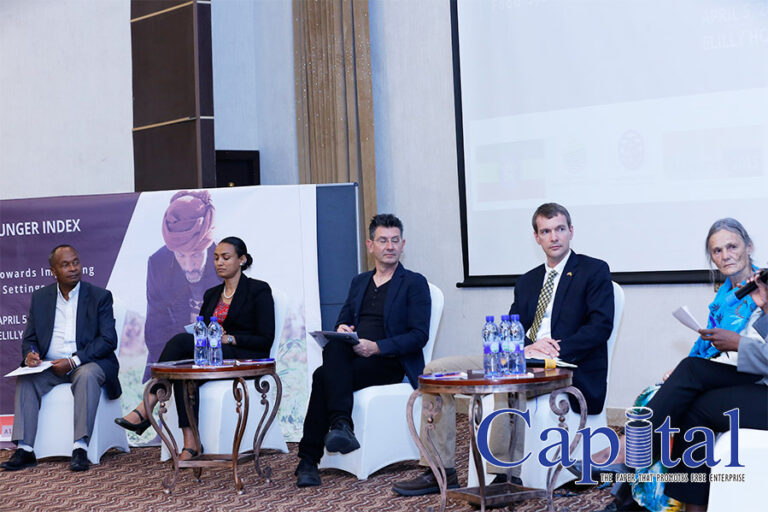
 Conflict, desert locust inversion, climate shocks such as flood and drought, Covid-19 impact, decline in budgetary support and the large nation trade deficit, driving high inflation and depreciation are key drivers of humanitarian needs. Also the current conflict between Russia and Ukraine further threatens the global and Ethiopian food insecurity with the disruption in the agriculture supply chain which about 25 percent Ethiopia’s wheat import comes from Ukraine in addition to the rising food price around the world.