

Shega.com, an E-commerce company announced that it has availed its platform in December 2021 with a variety of locally made and other fast moving consumer goods for its online customers. Following the recent cooking oil shortage for instance, Shega worked with wholesalers and distributors and availed Tena cooking oil a local brand with an attractive pricing and is available for anyone that orders through Shega android and iOS applications, the website www.shega.com and the customer service direct line 8500.
In the words of Chris Rumenda, the CEO of Shega, “When we launched Shega with the entire Kifiya Financial Technology team, we set out with the purpose of digitizing commerce in Ethiopia by selling Ethiopian products sourced from Micro Small and Medium Enterprises (MSMEs) and other manufacturers and distributors making Shega the leading online retail & market place in Ethiopia. With the platform coming into service in December 2021, its customers, major stakeholders, partner companies using Shega and with over 10,000 items listings we’ve been able to witness first-hand the technical talent and trade potential in Ethiopia.” He further added, “Technology has the opportunity to transform lives and economies across Ethiopia and Africa and we’re excited about Shega being a meaningful part of that transformation through making trade local, fair and transparent. So watch out for Shega in the coming few days with more variety, more local products and attractive prices”
E-commerce plays role in retailing to consumers
Golelchaa Baalii
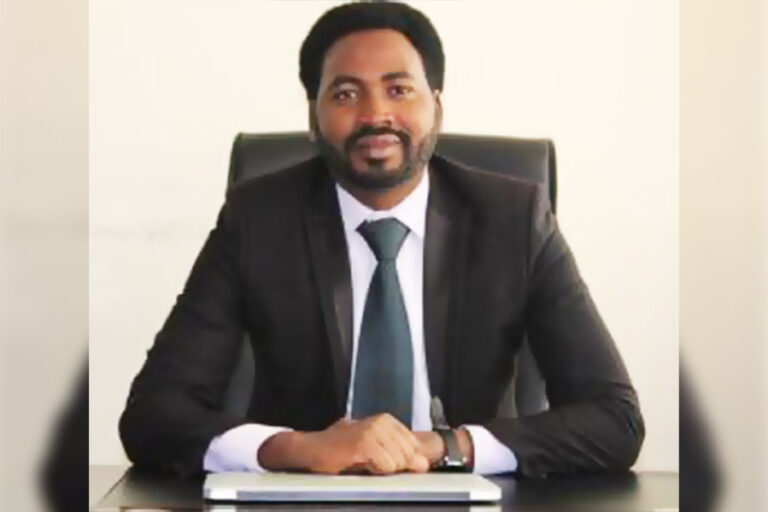
Name: Golelchaa Baalii
Education: Ph.D. candidate
Company name: Waliif Education share company
Title: Founder and General Manager
Founded in: 2016
What it does: Provides educational services from KG to university
HQ: Addis Ababa around Lideta
Number of employees: 500
Startup Capital: 400,000 birr
Current capital: Growing
Reasons for starting the business: To fill the gap in the education industry
Biggest perk of ownership: Helping others
Biggest strength: Commitment and transparency
Biggest challenging: Inflation
Plan: To be the best leader in the world
First career: Partnership director
Most interested in meeting: Barack Obama
Most admired person: Myles Monroe
Stress reducer: Swimming
Favourite past time: Working
Favourite book: Naked leader, David Taylor
Favourite destination: Amsterdam
Favourite automobile: Ford
The connoisseur Chef
It is often said that “Cooking is the best style of giving,” and for most cooks across the world, they do so not for the money, but for the passion and satisfaction on their customers’ faces.
Celebrity chef, Kai Chase once said, “If cooking is what you love, do it with great vigor, pride, and excellence. It pleases me when I see guests conversing, noshing, happy and satisfied. I savor all the flavors of life.”
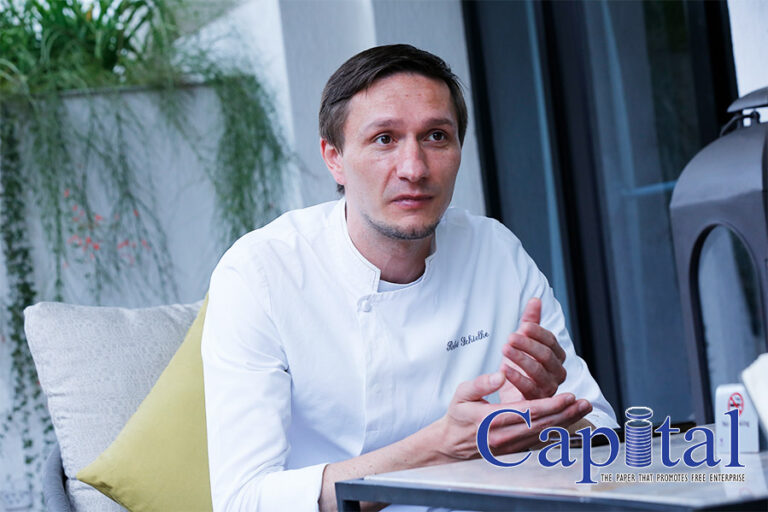
The same is true for Executive Sous Chef, Robert Schielke, whose experiences span two decades across several countries. Chef Robert, who has traveled various continents, has had an illustrious career starting out as a Commis de chef in Park Hyatt Zurich to becoming Hyatt Regency’s (Addis Ababa) Executive Sous Chef. Capital caught up with Chef Robert at Hyatt Regency for insights into his life experiences as a chef. Excerpts;
Capital: Tell us about yourself? How long have you been in the culinary arts space?
Chef Robert: I have been a chef for more than 20 years now. I joined the culinary arts industry of Ethiopia when we opened the first Hyatt in Addis Ababa. I began my journey in 2006 when I got hired in Switzerland. Since then, my journey propelled me to numerous countries such as Ukraine where I worked for six and half years after which I moved to Istanbul. My journey did not stop there, I moved to Muscat in Oman, and currently, I am based in Addis.
Capital: How has the chef-life been throughout the years?
Chef Robert: In my line of work, chefs get to travel the world and experience different cultures and cuisines. Of course, life experiences vary from country to country. Each and every country has its pros and cons but the beauty of being part of new cultural experiences balances it out.
It’s a big thrill, to get acquainted with new cultures for example in Ethiopia there is a great sense of brotherhood or family and lots and lots of deep culture and tradition. Where I am from, that is, Germany, we have a deep-rooted culture for caring for our family but the one in Ethiopia is higher and extends the same virtue even to the neighborhood which makes it an even better place to work in.
Capital: What led you to be passionate and have a career in culinary arts?
Chef Robert: When I was young, to be honest, I did not have the passion and zeal to become a chef. At the time it was everyone’s dream including myself to be a formula one driver, an astronaut and other amazing and fancy careers. When I grew up, I enrolled myself in culinary arts school and in my first year I did not like it that much since we had to stand for long hours. But when the second year came, the fire of being a chef started growing in me and so did the passion.
Making so many dishes out of one food such as potato and making great plate presentations really had me excited. The same goes for chocolates, for example, you can make a mousse out of it or even ice cream or chocolate decorations, and this sparked creativity in me, which still exists to date. Waking up every day to make amazing dishes and getting to be creative with food is a great joy.
Capital: In your opinion, what do you believe makes a great chef?
Chef Robert: To be a great chef and stand out from the rest, you should never compromise on quality. That means you should always have the right product and the right recipe in order to serve an exquisite dish. Of course, the chef must also be talented and also bring charisma to the dish. But the quality of the product is very crucial. The quality of your product will always distinguish you from the rest, and this is what I believe separates me from the rest as I always put quality first.
A good example of quality comes when you are preparing say, creams. You must be precise in order to have the desired consistency and if not prepared well it can also affect you when you’re preparing a mousse. Where you source your ingredients matters and, in our kitchen, we bring all our ingredients fresh and of the best standard and quality.
Capital: What is your evaluation of the development of the industry in Ethiopia?
Chef Robert: The industry in Ethiopia is fast developing with many creative chefs on the rise. Of course, there are famous chefs like chef Yohannes and chef Marcos who are masters of their crafts and often go the extra mile to come up with great dishes. The pastry shops over a couple of years are also becoming better and better which is great to see.
Capital: What are some of the challenges of being a chef in Ethiopia?
Chef Robert: The limitation of knowledge and experience and getting the right product and tools are some of the challenges. In pastry, it is absolutely crucial to have the right molds and cutters, and if they are not present in the kitchen, they present a huge challenge.
Capital: What are your plans for the future?
Chef Robert: Even though one cannot predict the outcome of the future, as long as I will be living in Ethiopia, I plan to give the opportunity to all the up-and-coming chefs by helping them harness their skills and talent in the kitchen. I hope to share my life experiences in the kitchen with others and get better and better in my craft.
Capital: Do you serve Ethiopian food in the Hyatt regency?
Chef Robert: Yes, we do serve Ethiopian food. We have at least one national dish in our main restaurant and we also provide Ethiopian cuisine in our room service. Similarly, when we host events and banquets, fifty percent of the food being served are Ethiopian dishes whilst the other half is international dishes.

Capital: What is the most challenging meal you have cooked and why is that?
Chef Robert: At this very moment, it is difficult to say that I have a challenging dish, since over time through experience everything becomes 99 percent easier. In my early days, however, I had a huge challenge when it came to making the mousse because of the elemental techniques involved
Capital: How can you describe the last 20 years of your experience?
Chef Robert: If I could have not left my country, I could not have been exposed to the great culture and traditions of other countries. For the past two decades, I have been able to meet amazing people, and experience culture, tradition, and cuisines.
Most people get to travel the world for just a few days, but for us, as chefs, we get to learn in detail the culture of the people in the countries we travel in. We get to learn their favorite food, how they prepare them and what they like and don’t like which makes it even better.
Capital: What is the best piece of advice you can give to Ethiopian chefs?
Chef Robert: My best advice is always to strive to have the best product and tools for your dish to be of high quality. A great meal tends to always sell itself. Secondly, it’s to broaden one’s culinary creativity by learning and bettering one’s craft through educational cooking sources such as YouTube and eBooks.
The cooking journey is always fun and full of creativity, and I encourage them to keep being creative.
Yatreda an Artistic Collective Using NFTs to Celebrate Ethiopian Legacies
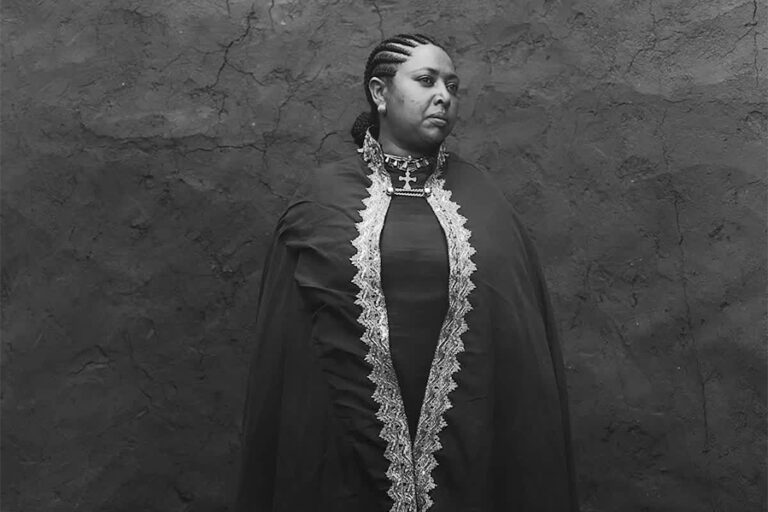
Yatreda is a family of artists that brings the history of Ethiopian kingdoms to life through stunning imagery. With storytelling at the base of their work, they use NFTs to preserve their history and culture for future generations.
Lets’ be honest while many of us are still struggling to fully understand cryptocurrency, crypto art, and Blockchain, other people are making fortunes and legacy art with it. And I can’t claim to know more than the bare minimum, which might just be enough to shed light on a few things.
Crypto art is digital art that is treated the same as physical art in that you can verify its authenticity and it typically comes with a license that allows the buyer to display the art digitally e.g. social media pages, digital marketplaces, game worlds, and virtual museums.
It can be sold through “non-fungible tokens,” or NFTs. Before I lose you there’s a ‘simple’ explanation for “non-fungible tokens,” or NFTs- they are unique units of data (or tokens) stored on Blockchain, which is a digital ledger. Kind of like money in a digital banking app or e-wallet. And just like how you can transfer that money digitally, NFTs can be sold, traded, and verified. The major thing to note is that NFTs can be associated with a particular digital or physical asset such as photos, videos, and audio. Which makes it so obscure- NFTs can be attached to anything from digital art to games, music, and even film.
The Yatreda Artist Collective
Yatreda is a family of artists resurrecting Ethiopia’s century-long legends through imagery. The collective’s name is a combination of two Amharic words: fence and debt. Growing up it was the nickname of the group’s leader Kiya Tadele. The other members include Roman Tadele, a doctor with a passion for painting and writing, Suzy Tadele, a future fashion designer who sews historical costumes by hand, and Tigist and Abiy, craftspeople who now build photo equipment and reflectors. The only non-family member in the group is photographer Joey Lawrence.
Kiya who was a model for many years always found herself drawn to everything happening around the camera more than what she had to do in front of it. In an interview with Edition, she recalls her blooming interest, “I always knew something was different within me because I felt more familiar with the photographer and lighting crew than with the other models.”
This sparked her interest in art rooted in culture, “My influences are not vast like someone who went and studied every art history. They are simple, drawn from the few talented artists who I assisted and shaped the world around me – African history, Ethiopian culture. I am influenced by artists whose work is international but maintains an unbreakable connection to our homeland, like Mulatu Astatke and Gigi Shibabaw.”
The collective’s art uses the latest technology like blockchain and NFTs, to “preserve and present something old… This mix of old and new is to suggest the timeline of our history doesn’t simply end; these stories are not finished. They belong to the past but also belong to us today – the art is about rediscovering our original selves once again.”
With NFTs, they can curate unobstructed cultural visions, create unique artistic experiences, and easily share their art with the world. And the collective did just that in 2021 when they released their first-ever NFT project, “Kingdoms of Ethiopia.” The portraits told a poignant story of past Ethiopian kings, kingdoms, and warriors.
Strong Hair
Yatreda’s latest NFT “Strong Hair” released in February this year, is a 100 motion portraits of different Ethiopian hairstyles (afros, shaved patterns, and unique braids from remote regions) that capture the diversity and power of African hair.
Regarding the series, Kiya told the publication, “This is a lot deeper than just hair. Our hair is a sculpture full of meaning… I want everyone to be proud of their strong African hair. My goal is not only to preserve what remains. It’s to help bring these styles back. Not just for Ethiopia, not just for Africa, but for the world.”
The NFT that took many months to complete shows hair as a vessel of culture and as an art form, but it also documents how hair can represent identity, singular expressions, and the phases of life.
In her explanation of the series, she stressed to Okay Africa how much the crypto world has impacted Yatreda’s work and why it is an empowering space for creators, “Without NFTs, none of this work has a real home. Why do I say this? Because if we simply uploaded it to YouTube or Instagram, maybe it would be appreciated with likes. Those likes benefit only large companies, who give very little back to the actual creators who are the soil of their platform.”
In its artwork and its innovative choices, the woman-led collective is showing that cultural artwork is valuable, copyright ownership is possible and innovation can advance artists who choose it- all while preserving living histories for future generations.
