

Following the second leg matches of the world cup qualifiers, Algerian and Egyptian football federations had referred their case to FIFA.
The Algerian Football Federation (FAF) said, the appeal it lodged with FIFA to request a replay against Cameroon will be heard on April 21. Following the second-leg fixture The Fennecs lost on March 29, the FAF regretted what it called “outrageous” refereeing decisions.
A FIFA verdict is also expected on April 21. If replay decisions are rare, many Algerian supporters are still hopeful their squad may have a chance to play in the 2022 Qatar World Cup.
However, the Algerian federation is not the only one awaiting a FIFA decision. Senegal may face sanctions after Egyptian Football Federation (EFF) filed a complaint against it for “violence” and “racism”. Photos published by the Egyptian Federation on social media showed broken windows of the bus carrying the Pharaohs, insulting banners against Mohamed Salah as well as Senegalese fans terraced making derogatory gestures to Egyptian players.
The Ghana-Nigeria fixture played on the same night, March 29, saw riot scenes. Super Eagles fans invaded the pitch of the Moshood Abiola Stadium, in Abuja. Ghana’s players had to run off the pitch and were blocked during “little over an hour”. It is eventually the Police who “escorted [them] to [their] hotel”. Nigeria could be sanctioned by football’s international governing body.
Cameroon and Senegal WC Qualification in question

Ethiopia hosts AFCON U-17 qualifiers while Tanzania to stage three tournaments

The council of East and Central African Football Associations (CECAFA) this week confirmed the countries that will host seven tournaments to be played in 2022.
CECAFA Executive Director, Auka Gecheo said after receiving bids last month, the Executive Committee met via zoom on Tuesday to evaluate the bids and make the final decision on the different hosts.
Ethiopia will host the AFCON U-17 qualifiers, while Sudan who have not hosted any CECAFA competition for a long time now will host the AFCON qualifiers.
Uganda will host the first tournament of the season, CECAFA Senior Women’s Championship slated for May 22- to June 5th. Uganda will also host the inaugural zonal qualifiers the CAF Pan African School Cup.
It should be noted that this is the second time Uganda will host the CECAFA Senior Women’s Championship, the first coming in 2016.
Uganda and Burundi who qualified for this year’s Africa Women Cup of Nations will use the regional tournament as a precursor for the continental showpiece.
Tanzania will host three tournaments including CAF Women’s champions League qualifiers, CECAFA U-23 Championship which also doubles as the AFCON U-23 qualifiers and the CECAFA Kagme Cup. The dates for the rest of the tournaments will be confirmed at a later date.
The Ministry of Finance (MoF) lifts conditions of the foreign currency amount and the source for the import of basic commodities through franco valuta scheme

In a letter issued on Friday April 8 and sent to Customs Commission MoF disclosed that it passed a decision that Ethiopians who live aboard and the diaspora can import basic commodities under franco valuta.
The new announcement is the replacement of the decision that it issued about a year ago. In April 2021 MoF allowed the diaspora and Ethiopians who live abroad can import consumer goods on franco valuta, while the National Bank of Ethiopia was assigned to confirm the source of the hard currency.
The previous announcement imposed a minimum smount of USD 250, 000 value of commodities as requirement for the import of the items.
However in the latest move the ministry has lifted such restrictions. Ahmed Shide, Minister of Finance told Capital that the government has decided to lift the minimum requirement for the import of the basic goods.
“Any one who lives abroad including the diaspora can import the stated commodities with any volume and value,” he explained.
Ahmed added that the new decision will be applicabe for at least six months, “we will review based on the circumstances but now we can say that it can be applied for the coming six months.”
Now reviewing the source of the foreign currency is not also a mandatory.
Edible oil, wheat, sugar, instant milk for infants, and rice are the commodities that can be imported through franco valuta.
Sugar procurement sent to 3rd party for approval
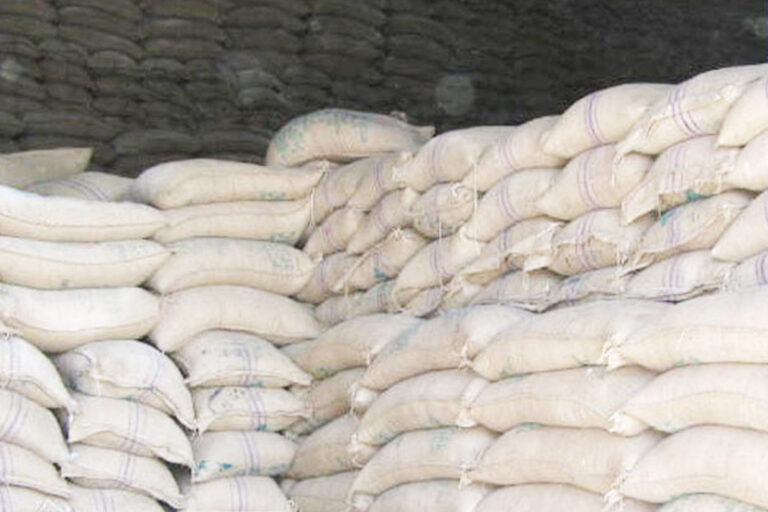
The Ethiopian Sugar Corporation (ESC) pushes the decision for the procurement of 200,000 metric tons of sugar to third parties for a reason it said clarity and insuring the benefit of end users.
It was recalled that after the failure of the international bid about two weeks ago the Corporation invited shortlisted international companies to submit their offer to supply of the sweet.
Sources said that about six prominent global companies in commodity supply; Al Khaleej Sugar, Wilmar Sugar, Agrocorp International, Sucden, and ED & F Man were invited to offer their price until March 21. The last two companies participated on the last failed bid.
However Capital was unable to get the list of finalists from the shortlisted companies, whom almost all submitted their offer, two companies have been included in the final stage.
According to ESC, it has concluded its evaluation and shared its result for the Ministry of Finance and Ministry Trade and Regional Integration to give their view on the process.
Weyo Roba, CEO of ESC, confirmed that the Corporation shared its conclusion for the two offices. He said that despite the ESC has a full mandate to decide on the procurement process, “we have shared the result for third parties for further clarity and to come at the same understanding about the process.”
He told Capital that the two ministries will evaluate the bid and will table it to the National Macro-Economic Committee for final consent.
“We decided to pass through this process for the sake of transparency and to see alternatives by higher level officials for the benefit of the country in general and to the end consumer in particular,” he added.
However experts argued that the long delayed process will affect the procurement process in this inflation hit world. They said that there is shortage of sufficient product in the country that makes it the corporation to sit on the bid.
Weyo responded to this saying that so far the country has ample sugar in storage. “Besides using the regular tender, the government will approach major producers for direct purchase for better price as an alternative, that is why we push the issue to higher government officials,” adding, “the consumer should not be harmed by inflated price that is observed in the global market.”
The country annually imports up to 350,000 metric tons of sugar to address the gap. ESC targeted to produce 413,000 metric tons in the current budget year.
ESC said that in the budget year the corporation planned to supply about 720,000 metric tons of sugar for consumption.
The sugar demand has been growing from time to time and it is estimated that the country’s annual sugar demand stands at 1.2 million metric tons. Thus the remaining gap is covered by other importers who have special permit from the government and those who have Franco-Valuta privileges.
