

On an evening of touted world record attempts at the Prefontaine Classic, none actually materialized, though Ethiopia’s Ejgayehu Taye turned in worthy efforts, clocking 14:12.98 for 5000m to go fifth on the all-time list.
The women’s 5000m produced, as expected, a blazing performance from an Ethiopian, but it was not world record-holder Letesenbet who proved strongest but her compatriot Ejegayehu, who powered away over the final two laps to clock a meeting record and world lead of 14:12.98, which puts her fifth on the world all-time list.
The touted world record attempt by Letesenbet appeared on track after she reached 3000m in 8:32.07, but it was clear when she hit 4000m in 11:24.38 that the 14:06.62 mark she ran in October 2020 was safe for another night.
Letesenbet’s pace fell well behind the pace lights on the penultimate lap and Ejegayehu blew by her, the world indoor 3000m bronze medalist taking two seconds off her PB when hitting the line in splendid isolation. Letesenbet finished a distant second in 14:24.59 with Eritrea’s Rahel Daniel third in a national record of 14:36.66.
Ejegayehu left Letesenbet to second place on opening night in Eugene
Azerbaijan celebrated Independence Day in Addis Ababa
Chargé d’Affaires a.i. of Azerbaijan Ruslan Nasibov made a statement, that says:
I am honored to welcome you today to the Celebration of the 28 May – Independence Day. On that day, 104 years ago Azerbaijan Democratic Republic was established, becoming the first parliamentary democracy in the Muslim world, the first country in the Muslim world and European continent that granted universal suffrage to women as early as in 1918.
Our rapid economic development after restoration of the state independence on October 18, 1991 helped us transform the country. In the last twenty years the level of poverty in the country dropped to less than 6 percent, economy grew more than three times, more than 260 billion USD have been invested into the country. With population reaching 10,2 million people, foreign currency reserves hit the mark of 53 billion USD, more than five-fold higher than our foreign debt. In terms of quality of infrastructure, Azerbaijan is ahead of some developed states. Many of you might have watched spectacular and dramatic Baku city races of Formula 1 Azerbaijan Grand Prix, next round of which is kicking off in a few days.


Using our geographical location we invest in building bridges between Asia and Europe. Despite being a landlocked country, Azerbaijan turned into one of the international transportation hubs. We have built diversified railroad network connecting us with our neighbors and seven international airports with five star Heydar Aliyev International Airport. One of them Fuzuli International Airport in the liberated territories was constructed from scratch and commissioned in just 8 months. Two more airports in the liberated territories are coming up. We continue re-shaping Eurasia’s transportation map.
Azerbaijan’s vast oil and gas reserves and its role in energy security is already known. We have also built multiple pipelines to transport our oil and gas to international markets. Among largest transnational energy transportation projects are Baku-Tbilisi-Jeyhan oil pipeline, Southern Gas Corridor, running from Azerbaijan through Georgia and Turkey to Europe up to Italy. Nowadays, relevance and importance of diversified energy supplies are drastically increasing from day-to-day. Azerbaijan has become an indispensable partner for Europe and a regional hub connecting countries and continents. Referring to a famous saying “all roads lead to Rome”, today we may say that before “all roads run through Azerbaijan”.


Bilateral relations between Azerbaijan and Ethiopia since the establishment of diplomatic relations in 1992 develop dynamically. We are friendly countries. Later this year we mark 30th anniversary of establishment of diplomatic relations between our two states. Embassy of Azerbaijan in Addis Ababa started functioning in the end of 2014. Our relations have a historical background dated back to medieval and continued through 20th century during the Soviet period when leaders and well-known cultural figures paid mutual visits. Azerbaijan’s universities became alma mater for almost 800 Ethiopians out of 8000 African students who received education in our country during the said period. Since 2000s Azerbaijan re-started extending scholarships to African countries and Ethiopia in particular.
We had a number of high-level visits before COVID-19 pandemic and will continue same pace in the post-pandemic period. We have strong potential to practically develop our bilaterals spanning from political, economic to social and humanitarian fields including crucial areas like public service delivery.
We look towards future with strong confidence, are ready for any geopolitical turbulence and will continue setting patterns for development and achievements in different fields.
Ye Azerbaijan ena Ye Ethiopia wedajinet Lezelalem Yinur


Every year the tobacco industry costs the world more than 8 million human lives
Every year the tobacco industry costs the world more than 8 million human lives, 600 million trees, 200,000 hectares of land, 22 billion tonnes of water and 84 million tonnes of CO2.
The majority of tobacco is grown in low-and-middle-income countries, where water and farmland are often desperately needed to produce food for the region. Instead, they are being used to grow deadly tobacco plants, while more and more land is being cleared of forests.
The WHO report “Tobacco: Poisoning our planet” highlights that the industry’s carbon footprint from production, processing and transporting tobacco is equivalent to one-fifth of the CO2 produced by the commercial airline industry each year, further contributing to global warming.
“Tobacco products are the most littered item on the planet, containing over 7,000 toxic chemicals, which leech into our environment when discarded. Roughly 4.5 trillion cigarette filters pollute our oceans, rivers, city sidewalks, parks, soil and beaches every year,” said Dr Ruediger Krech, Director of Health Promotion at WHO.
Products like cigarettes, smokeless tobacco and e-cigarettes also add to the build-up of plastic pollution. Cigarette filters contain microplastics and make up the second-highest form of plastic pollution worldwide.
Despite tobacco industry marketing, there is no evidence that filters have any proven health benefits. WHO calls on policy-makers to treat cigarette filters, as what they are, single use plastics, and consider banning cigarette filters to protect public health and the environment.
The costs of cleaning up littered tobacco products fall on taxpayers, rather than the industry creating the problem. Each year, this costs China roughly USD 2.6 billion and India roughly USD 766 million. The cost for Brazil and Germany come in at over USD 200 million.
Countries like France and Spain and cities like San Francisco, California in the USA have taken a stand. Following the Polluter Pays Principle, they have successfully implemented “extended producer responsibility legislation” which makes the tobacco industry responsible for clearing up the pollution it creates.
WHO urges countries and cities to follow this example, as well as give support to tobacco farmers to switch to sustainable crops, implement strong tobacco taxes (that could also include an environmental tax) and offer support services to help people quit tobacco.
Sugar Corporation speeds bidding process
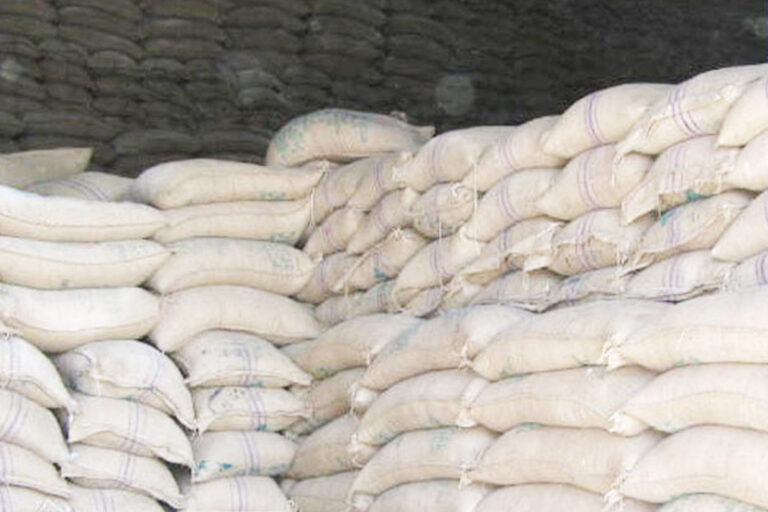
Ethiopian Sugar Corporation (ESC) says it has switched gears to handle the biding process to conclude swiftly rather than the usual trend. The new decision of India is stated as a threat for price hike, while on Friday, Ministry of Finance (MoF) gave its positive response for the process to procure the 200,000 metric tons of sugar.
The corporation said that on the latest bidding process of the sweet it has given a final proposal in few days.
Weyo Roba, CEO of ESC, said that on the latest process to buy the commodity the corporation has taken swift approaches to finalize the bidding process.
“We have learnt a lesson from the experience in the past that takes several periods to finalize the biding process after the opening date,” he said by reminding that it is one of the bottlenecks when concluding the purchase.
It is almost a year since the country imported sugar, while in the current budget year which will come to a close in the coming five weeks; the corporation has floated different auctions and even attempted to buy the sweet through short listed companies despite it not bearing fruit.
On the latest bid that proceeded by inviting shortlisted companies and opened on Thursday May 19, the corporation concluded its evaluation within few days and tabled its proposal for the final decision to the Ministry of Finance on Wednesday May 25 afternoon.
“The previous process took several days for technical evaluation and similarly for financial assessment of the bidder but now that shall be concluded within a day or even hours. But on the latest move we have open the technical on Thursday and the financial proposal on the next day, which is the result of the lesson we got from the past experience. We will follow a similar pace for the upcoming procurements at the corporation,” he told Capital.
Slower processes have been stated by experts to make the country not realize better opportunities to buy the product at lesser prices.
“I have observed that long evaluation processes and further demand to get a green light from the upper government bodies like MoF and even Macroeconomic Committee has forced the bid process to take longer periods and sometimes validation dates for price quotations face expiration,” experts said.
Weyo said that some government procurement processes are lengthy, “for instance for technical or financial evaluations it places days as a mandatory, while the technical is to be done within hours or a day,” he said.
For the latest procurement process, MoF has seen ESC’s proposal on Friday May 27 and has issued a support letter for the corporation to go ahead as per the process.
On the bid, the price quoted shall be valid for eight working days that means it will come to a close by tomorrow May 30.
The financial offer of Osirius Group, which is new for the sector, ED and F MAN, Agrocorp International and Sucden has been opened since they enabled to pass the technical process.
Osirius, which is a US company, disclosed to load the cargo from Brazil, offered CFR Djibouti USD 580, USD 608 and USD 900per ton for LC at sight, and the 12 month and 18 month differed LC payment respectively per ton with USD 3,000 of port visit.
The Singaporean company, Agrocorp offered CFR Djibouti USD 738.35 and USD 799.87 per ton for LC at sight and LC for 12 months respectively for Indian sugar.
ED and F MAN of the UK, which is also known in the Ethiopian market following its good track record like Agrocorp and Sucden, gave its offer for the three payment options as per the bid documents.
The company that mentioned India, Thailand or UAE as commodity origin offered USD 809 for at sight and 12 months payment modality and USD 899 for 18 months LC payment for CFR Djibouti.
Sucden which expressed its interest to supply 100,000 metric tons of the sweet also offered its rate on the three payment options. On its CFR Djibouti offer the French company has given USD 721.63, USD 1, 111.63 and 1, 511.63 for LC at sight, and the 12 month and 18 month differed LC payment respectively per ton.
Weyo appreciated the latest bidding process by describing that on the current process that held on the process of invitation the price is lesser than “that we have seen on the formal bidding process.”
Experts said that the offer of the new company, Osirius, is attractive and estimated that there is a possibility to get the latest award. But they recommended the government to be cautious since the company does not have known reputation in Ethiopia.
“If the country losses this bid process the consequence would be dire since the global market scenario has become volatile,” they said.
They reminded the latest move of India, the second biggest sugar exporting country behind Brazil, imposed restriction on the export of the commodity.
Experts said that the Indian decision will definitely affect the global price in the coming months.
