

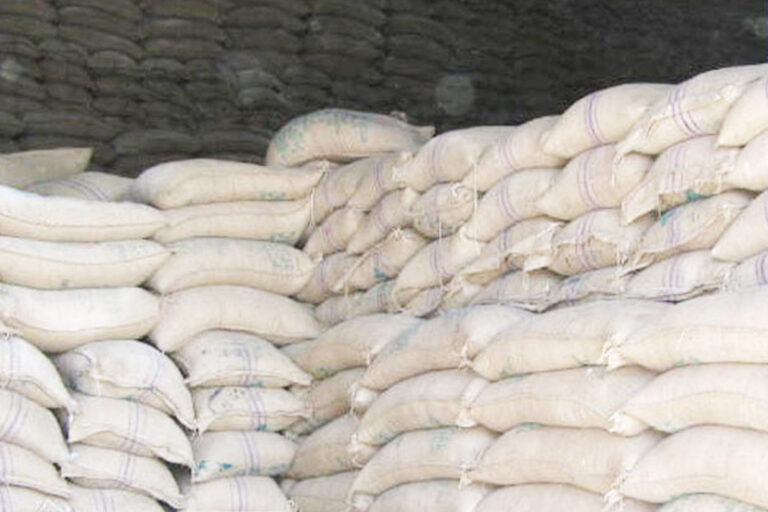
New faces on white cane sugar procurement dominate the Ethiopian Sugar Corporation (ESC) invitation to supply the sweet.
It is recalled that last week, the corporation invited global interested suppliers to submit their technical and financial proposal for the procurement of at least 200,000 metric tons of plantation white cane sugar.
On the technical opening on the morning of Thursday May 9, seven companies have submitted their proposal, while four of them are inexperienced for such or similar tenders in Ethiopia.
As per the information that Capital obtained, Husbandry International, Osirius Group, Murba Foreign Trade, Mill House International, ED and F MAN, Agrocorp International and Sucden have appeared with their documents.
However, Osirius Group and Murba Foreign Trade, who are US companies, in addition to Mill House International of South Africa and Husbandry International are the fresh face offering their bid in Ethiopia.
According to the information, Husbandry International and Murba Foreign Trade have been disqualified because of lack of bid security and manufacturer certification respectively.
Experts in the sector have however pushed for vigilance so as not to have a repeated case as that of the 600,000 ton wheat procurement. It is to be recalled that the wheat procurement failed to go through as a result of the awarded companies going missing for not having performance bonds.
In the current scenario, ED and F MAN, Agrocorp International and Sucden are well known for commodity tenders in Ethiopia. The Singapore based Agrocorp International was the company that won the last tender to supply 200,000 metric tons of sugar a year ago and supplied the first 100,000 metric tons, while the second batch was not transported owing to ESC not issuing the letter of credit (LC) as per the contract time.
The latest tender is targeted to supply the commodity on differed payment LC scheme that might be paid in a year or 18 months’ time that shall depend upon the contract agreement between the supplier and buyer, while the tender document has given optional price quotation LC at sight payment.
The latest tender has opened to suppliers to choose their shipment proceed.
A day after the opening of the technical document, on Friday May 20 afternoon the financial document of four companies were opened, having passed the technical part.
New potential suppliers, Osirius Group of USA, disclosed to load the cargo from Brazil, offered CFR Djibouti USD 580, USD 608 and USD 900 per ton for LC at sight, and the 12 month and 18 month differed LC payment respectively per ton with USD 3,000 of port visit. Although, as required per the tender document the company didn’t mention the FOB and freight rate on its financial offer.
Agrocorp offered FOB USD 618.35 and USD 679.86 for LC at sight and LC for 12 months respectively in addition to USD 120 fright rate. On its offer for CFR Djibouti the Singaporean company that stated the commodity origin as India put USD 738.35 and USD 799.87 for LC at sight and LC for 12 months respectively in addition to USD 120 fright rate.
ED and F MAN of the UK, which is also known in the Ethiopian market following its good track record like Agrocorp and Sucden, gave its offer for the three payment options. On the LC at sight and LC for 12 months it offered USD 710 with USD 99 for freight whilst for LC for 18 months it offered USD 800 with similar freight rate.
The company that mentioned India, Thailand or UAE as commodity origin offered USD 809 for at sight and 12 months payment modality and USD 899 for 18 months LC payment. The fright price was the same as mentioned on FOB.
Sucden which expressed its interest to supply 100,000 metric tons of the sweat also offered its rate on the three payment options. The French company offered FOB USD 621.63 per ton for the supply of sugar in the payment modality LC at sight. Regarding LC for 12 months and LC for 18 months the company offered FOB USD 1, 011.63 and USD 1, 411.63.
On its CFR Djibouti offer it has given USD 721.63, USD 1, 111.63 and 1, 511.63 for LC at sight, and the 12 month and 18 month differed LC payment respectively per ton. Sucden’s freight cost is USD 100 and the origin would be India, Thailand or UAE.
All the three companies have offered USD 20,000 in port visit expense.
Mixed bag of companies’ line up to supply white cane sugar
INEPTITUDE IS COSTLY
It is only when things start to go decidedly wrong, citizens begin to ask pertinent questions about their predicaments. In good times important issues relevant to their (citizens) general wellbeing tend to be relegated to the back burner, so to speak. To be sure, most of the global citizenry is without much of a foresight about the bigger pictures of collective existence. The average sheeple doesn’t seem to have the penchant for insightful observation, be it about the past nor the present. Hence, the sheeple is destined to regard many eventual encounters as complete surprises. It is only those competently engaged that can potentially forecast (relatively accurately) the outlines of pending developments. It is because of this failure, mostly on the account of the incompetency of the power that be, repetitive social chaos continue to haunt collective humanity!
In this regard, the inability to see/foresee the demise of the prevailing world order is bound to have serious ramifications. Recognized or not, the current world system, which has been around for about half a millennium has entered its final disintegrating/bifurcation phase. Outcomes will not be pleasant, however much the global status quo pushes its regular numbing palliative narratives. To alleviate some of the major problems associated with the impending collapse, collective humanity must take firm stand against tendencies to bring back or preserve remnants of the old system. Humanity should thrive to institute a global regime that is more egalitarian, more democratic and more resiliently sustainable. Neglecting such a comprehensively economic, social and ethical agenda will open space for more of the same, like the rigidly hierarchical, hence polarizing social reality of the past, continuous past to be more precise. To this end, we must, from the outset, dispel many of the common misconceptions that pervade all cultures and societies. For instance, we should insist that institutions of orientations or more precisely, ‘institutions of indoctrination’ must change their ways. It should be very clear that passing the advertised road signs (credential-ism) doesn’t make one an enlightened person. What it does is make her an educated person, educated to serve the system and not to challenge it!
The main purpose of mass education in the modern world system is to massively produce functionaries to serve man-made capital, directly or indirectly! These days, even the so-called pure scientific researchers are effectively directed to serve the interests of monopoly capital. Recent findings indicate many (about half) of the research publications are neither here nor there! Plenty of them are conducted with a view to find something that can be readily converted into profit. It might come as surprise to many a sheeple, but (these days) scientific efforts are not necessarily geared to help deepen knowledge! Those research directions without much potential to make money can hardly secure funding/grants, even that of taxpayer’s. Open inquiries with potential to interrogate/disprove some of the false claims of paid scientists (scientists on the pay) at the service of profiteers, are visibly discouraged! So given such a scenario one would be naïve to expect enlightened discourse (on all and sundry) within the realm of establishment institutions, wherever they might be! Many of the obvious problems of countries stem from such inabilities to foresee new developments (while discarding old ones) that would inevitably impact their short/long term strategies.
Moreover, incompetence, because it lacks confidence, congregates and swiftly sets up a united front against enlightening knowledge it deems beyond its conceptual grasp. This is how ineptitude managed to run bureaucracies roughshod, all over the world, for ages. For political survival, ineptitude has to make sure excellence is consistently undermined so that it can shine supreme and reign unchallenged! Psychopathic politicos and their affiliated private operators do not thrive because they are confidently competent; no, no, no, they thrive because they are parasites, unashamedly taking undeserved advantages of the hard work of compassionate souls, who unselfishly and persistently try to serve society as a whole. The born incompetents operate without much analysis and foresight. If anything, their proven capacity is to make conditions worse than they were/are. Don’t get us wrong; we have nothing against proven idiots who want to flaunt their wares, after all, the whole charade can be quite entertaining. Just look at Ethiopia’s parasitic elites that are good for nothing, except impostering and grand corruptions! Be that as it may, problems start when these clowns, adorned with phony credentials (compliment of cash or the system’s need to have useful idiots, etc.) are enabled to run our collective lives, directly/indirectly. That is when the sheeple draws the line, but these dimwits, as expected, are failing to recognize the boiling wrath!
Africa’s leadership (not only political), to a large extent, belongs to this mediocre genre. No wonder our continent wallows in a frighteningly fantastic ignorance!
Implementing human rights recommendations proves vital ahead of EU ministerial meeting
European Union special representative for human rights calls on Ethiopia to fully implement the recommendations of the human right reports.
EU special representative for the horn of Africa, Eamon Gilmore, has paid a three-day visit to Ethiopia starting from May 16-18. During his visit, the special representative met with high government officials including president Sahile-work Zewde and Deputy Prime Minister Demeke Mekonen.
During the press conference on May 18, the EU special representative said that currently there are three main issues that need to be addressed as the EU member state prep for a ministerial meeting which will be held in June to decide on the Union’s financial and overall re-engagement with Ethiopia.
The first issue that requires attention is noted to be the humanitarian situation in the country. “There have been difficulties in getting humanitarian assistance,” said Eamon with the difficulties cited to be from issues in administration, permits, and related to humanitarian routes. The national dialogue and human rights as well as the issue of accountability are also said to be the other two main issues.
“We have been shocked by the reports from the course of the past year and a half or more, which have emerged of very serious human rights violations and violations of international humanitarian law,” said Eamon Gilmore adding, “we’re keen to see follow up on those reports and accountability for the perpetrators of the human rights violations, which have occurred irrespective of when they occurred, where they are, or who they are.”
“We’ve seen here on extrajudicial killings, involving serious sexual violence and gender based violence during the course of the conflict,” Eamon said whilst highlighting the plight that the people of the country have gone through as victims of human rights violations.
The representative asserts that even though the joint investigation by the Ethiopian Human Rights Commission (EHRC) and the Office of the United Nations High Commissioner for Human Rights (OHCHR) is supported by the Union, it is also keen to see more follow-ups done on the report.
“The issue is implementations of recommendations which the 27 foreign ministers will ask in the June meeting,” underlined Eamon as he explained that the members States will decide on the Union’s financial and overall re-engagement with Ethiopia, adding, “we want to contribute on the humanitarian efforts hence our main concern is to move a side the obstacles.”
The special representative will also represent its report of the visit on next meeting of the Human Rights Dialogue, which will take place in Brussels in early December.
Ethiopia edges closer to the stock exchange
Ethiopia prepares to launch its own stock market exchange within two years time.
On Wednesday May 18, 2022 Ethiopian Investment Holdings /EIH/, Ministry of Finance and Financial Sector Deepening Africa /FSD Africa/ signed an agreement to establish the Ethiopian Security Exchange /ESX/, stock exchange in Ethiopia.
Through the corporation FSD Africa will fund technical support legal advice, and the costs associated with getting the exchange operational.
As Mark Napier, CEO of FSD Africa informs Capital, it will take 18 months to two years to launch the stock exchange. “We are now in the process and preparations for the launching, and the government wants an intermediary but there are things and steps we need to go through in order to launch the exchange,” explained Mark highlighting that the process will take about two years for the exchange to come to fruition.
The exchange is designed to provide a fundraising platform for small and medium-size enterprises. Furthermore, the exchange will also offer a platform for the privatization of Ethiopia’s state-owned enterprises.
It is indicated that ESX will serve as a key market institution that will provide Ethiopian entrepreneurs and businesses with access to long term finance.
As the owner and manager of state-owned companies, EIH is said to serve as the wind underneath ESX’s wings by floating minority shares of selected companies under its management.
At least fifty companies, including banks and insurance companies, are expected to list at the launch of the exchange.
“This will bring about opportunity for young entrepreneurs skilled professionals and most importantly to drive our citizens in developing a robust business with access to capital and source of funds and national digital payments strategy,” said Ahmed Shide, Minister of Finance.
Following the agreement signed between the two government bodies and FSD Africa on Thursday May 19, 2022, FSD Africa has launched its representative FSD Ethiopia.
FSD Ethiopia is now launched as a development agency that aims to support the development of accessible, inclusive, and sustainable financial markets for economic growth and development. FSD Ethiopia takes a market systems approach to promoting systemic change in Ethiopia’s financial sector. Funded by FCDO and the Bill & Melinda Gates Foundation, FSD Ethiopia is a market facilitator, providing technical assistance, grants, networks, research, and insights to market actors in both public and private sector domains.
The organization’s role is to identify the underlying causes of financial system failures and provide technical and financial resources to market actors to address these constraints to help build a functional and effective sector that generates economic gains for a wide cross-section of Ethiopian individuals and businesses. The body’s vision is to contribute to a thriving financial system that delivers real value to the economy and the people of Ethiopia.
Financial Sector Deepening Africa (FSD Africa) was created in 2012 and is a 35 million pound financial sector development program based in Nairobi and funded by the UK Government’s Department for International Development.
FSD Africa is a market facilitator that applies a combination of resources, expertise, and research to address financial market failures. It has the mandate to work across sub-Saharan Africa on issues that relate to both ‘financial inclusion’ and ‘finance for growth.’
FSD Africa is also a regional platform. It fosters collaboration, best practice transfer, economies of scale, and coherence between development agencies, donors, financial institutions,
Ethiopia began the process in 2020 by introducing a proclamation through the parliament where the national bank was a regulatory body. Apart from the Addis Ababa Share Dealing Group which was operating during the Derg regime, Ethiopia has not managed to establish a capital market till now.
