

World number one tennis player Novak Djokovic has had his visa to enter Australia dramatically revoked on his arrival in Melbourne, amid a huge backlash over a vaccine exemption.
Djokovic was held in the airport for several hours before border officials announced he had not met entry rules.
He was then taken to a government detention hotel. A court will decide on his deportation on Monday.
The row is around an exemption he said he had to play in the Australian Open.
Tournament organisers said the Serbian player, who has said he is opposed to vaccination, had been granted medical exemption by two independent medical panels organised by Tennis Australia and Victoria state, and denied he had been given special treatment.
The decision infuriated many in a country that has seen a surge in Covid-19 cases, and where over 90% of those over 16 are fully vaccinated. People have also had to endure some of the world’s strictest restrictions and some still cannot travel between states or internationally.
On Wednesday, border officials said the 34-year-old had “failed to provide appropriate evidence” for entry after arriving from Dubai. He is now being held at a hotel in the Melbourne suburb of Carlton which is used for immigration detention.
“Non-citizens who do not hold a valid visa on entry or who have had their visa cancelled will be detained and removed from Australia,” the Australian Border Force (ABF) said in a statement.
Djokovic’s team challenged ABF’s decision, and a hearing at the Federal Circuit and Family Court of Australia has been scheduled for Monday.
Australia’s Prime Minister Scott Morrison denied Djokovic was being singled out and said no-one was above the country’s rules. But he added that Djokovic’s stance on vaccination had drawn attention.
“When you get people making public statements – of what they say they have, and what they are going to do, and what their claims are – well they draw significant attention to themselves,” Mr Morrison told reporters.
Though Djokovic’s reason for an exemption has not been disclosed, Mr Morrison said contracting Covid-19 in the past six months was not among federal criteria for one.
The saga prompted Serbian President Aleksandar Vucic to say Djokovic was a victim of “harassment” and that “the whole of Serbia” supported him. Mr Morrison denied the visa cancellation was because of “any particular position in relation to Serbia”, describing the nation as “a good friend of Australia”.
Outside the hotel where Djokovic was being held, supporters of the tennis player expressed anger at his treatment. “It’s an international scandal and the world is watching,” a Serbian woman, identified only as Jelena, told the BBC.
The player’s father, Srdjan, said his son had been held in a room guarded by police at the airport. “This is not just a fight for Novak, but a fight for the whole world,” he said in a statement.
“Rules are rules,” the prime minister says, about Novak Djokovic being deported. Scott Morrison is back to talking tough but so far he has not explained or answered the glaring questions at the heart of this story.
What is the issue with Djokovic’s visa? What was the medical reason for his exemption?
And why had he been given the green light to fly and take part in the Australian Open if there are issues with his visa application? Big enough issues, it seems, for the player to get deported.
Remember, while his vaccine exemption has caused a great deal of anger among Australians – who for months now have been urged to get the jab – Djokovic is not the only player who was granted one.
Tennis Australia said that a handful of the 26 athletes who applied were given an exemption. Who are they? Why are their cases different from Djokovic’s?
There also seems to be a clear disconnect between federal and state government decisions. The state of Victoria had approved Djokovic to compete in a tournament he’s dominated and to defend his title.
On Wednesday, Mr Morrison said it was Victoria’s decision to make. But less than a day later he has changed course to say no-one is above the rules. This decision has sparked anger overseas but the prime minister is hoping the decision will go down well among Australians.
Mr Morrison has been under immense political pressure over his government’s handling of the Omicron variant, amid rocketing numbers of cases and chaos at testing clinics. All with a looming election in the next few months.
Spanish tennis start Rafael Nadal, who is in Melbourne to prepare for the Australian Open, said it was “normal” for Australians to get “very frustrated with the case”.
“The only for me clear thing is if you are vaccinated, you can play in the Australian Open,” he said, adding: “Of course after a lot of people had been dying for two years, my feeling is [that] the vaccine is the only way to stop this pandemic.”
But former Australian Open tournament director Paul McNamee told local media the visa U-turn was unprecedented, saying it “smells” of politics.
Many Australians had previously accused the government of allowing the rich and famous to do as they please while ordinary people remained separated from sick and dying loved ones.
Two other people were now having their medical exemptions reviewed, the Australian Broadcasting Corporation reported. Mr Morrison said the ABF had previously advised Tennis Australia on visa expectations.
The Australian Open begins on 17 January in Melbourne. Djokovic has previously won the tournament nine times.
(BBC)
Novak Djokovic: Australia cancels top tennis player’s visa
Most Popular Horse Racing Events In Africa
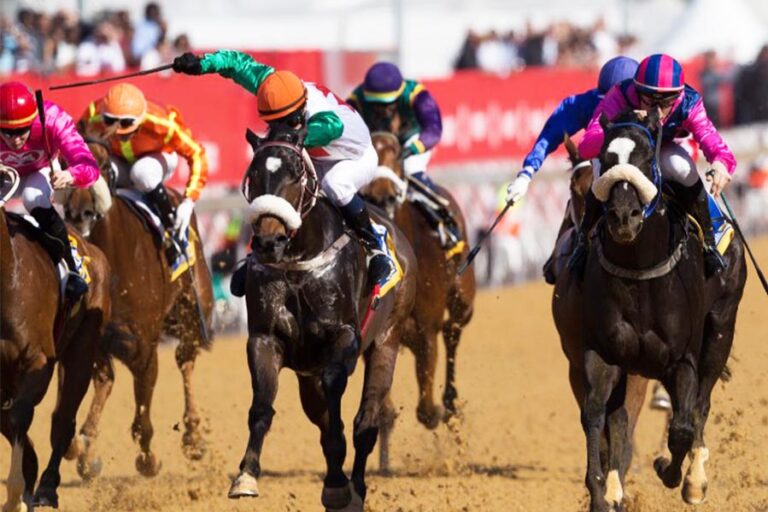
Horse racing events take place every day around the world, but some race days are more popular than others. The most popular will often attract audiences of people that is a mix of both experts and novices when it comes to betting on the great sport.
There are some huge racing events held annually in Africa which not only captivate the people that live in the country, but also those that live far and wide. The country with more race days and race events is South Africa.
These events are present in TwinSpires Racing for example and you can bet on them even if you have never stepped on this country.
In total, there are 28 Group 1s throughout the season, with prize money equating to just over $3 million. But, what are some of the biggest events that are staged in Africa annually?
Durban July Handicap
There isn’t a bigger race in Africa than the Durban July Handicap. As the name would suggest, the race takes place annually on the first Saturday in July, and has done since its inception in 1897. Greyville Racecourse plays host to the huge event, which sees horses aged three and older compete in a handicap race over a distance of 2200 meters. Typically there is a prize purse of R4.25 million, but that was reduced in 2021 due to the COVID pandemic.
The distance of the race has altered over its history, as it was first run over 1600 meters before being increased. It is one of the hardest races to win, which is evident by the fact that only five horses have managed to win it in back-to-back years.
The most recent horse to achieve this defeat was the perfectly named, Do It Again, who won his second race in 2019. Other horses to have achieved the feat include El Picha, Milesia Pride and Campanajo.
South African Derby
The Derby is so often the race that all fans want to watch, whether it is the Epsom Derby or Kentucky Derby. It is no different when it comes to the South African Derby, which is run in April. It has been an annual race on the South African calendar since 1907, as the field of horses aged three run over a distance of 2450 meters at Turffontein Racecourse in Johannesburg.
There have been some impressive winners of this race in the past, and there has also been international-bred success. US-bred Grey’s Inn won the race in 2004, while New Zealand-bred Timber Trader won in 2002. However, there hasn’t been a foreign-bred winner of the race since Silverpoint in 2005. Malmoos is the most recent winner of the South African Derby, having won the race by five and a quarter lengths from Pamushana’s Pride in 2021.
Cape Metropolitan
The Cape Metropolitan, is one of the most famous Grade1s that is run in South Africa every year. At present, it is called the Sun Met, and is run over a distance of 2,000 meters at Kenilworth Racecourse in Cape Town. The race was first introduced in 1883, and has gone on to become one of the most famous races on the calendar alongside the Summer Cup and Durban July Handicap.
The race offers a huge incentive to connections, as there is a massive purse of R5 million available should their horse finish in the money positions. Horse Chestnut was the most famous winner of this race, as the Hall of Famer claimed success in this race back in 1999 for trainer Mike de Kock. Pocket Power is one of the most successful horses in recent years, having won three times between 2007 and 2009. The most recent winner of the Cape Metropolitan was Rainbow Bridge, who won for trainer Eric Sands in 2021.
If you want to find other race events outside South Africa, there are a couple in countries like Mauritius. Check it out here.
Safaricom–Ethiopia commences telecom expansion

Safaricom Telecommunications Ethiopia, which won an operating license in Ethiopia in May 2021 has commenced works for telecom expansions in the national information and communication technology /ICT/ park; with expansions including site selections to establish towers for 5G trail.
Safaricom- Ethiopia is gearing to commercially launch its operation within a couple of months’ time with the company planning to provide 4G and 5G internet service. It is also said that by 2023 a low orbit satellite will be put in place to provide nationwide 4G coverage by the firm.
As part of is network expansion, Safaricom is working to building towers, fiber extensions, broad band connection and so on within the ICT park. “Besides network expansion, we are lobbying them to permanently build their office in the park and work as our strategic partners,” said Surafel Shimels, General Manager of ICT Park, adding, “They have visited the park and seen all of the options to invest in, we expect positive feedback, to this regard.”
As he said, Safaricom has completed its site selection and is prepping to plant its 5G network towers in the park.
Safaricom Ethiopia which was formed by the amalgamation of Safaricom, Sumitomo Corporation, CDC Group and Vodacom secured operational license from the government to officially do business in Ethiopia as a second telecom company after the state owned Ethio Telecom. To get the license it had to pay USD 850 million to the government and promised to invest up to USD 8.5 billion in the coming decade.
The consortium is now recruiting staff ahead of the operational launch of the business, which is to be called Safaricom Ethiopia. This further underlines Safaricom’s intentions after it recently revealed its plans to lease an office. Before the end of last year, Safaricom appointed eight middle level management staff for its Ethiopian operations as it seeks to build a pool of staff. The consortium is in its activity to lease and occupy an office building by the start of this year in Addis Ababa as base for its operation in Ethiopia. The firm also plans to use the same 07 mobile number prefix it deploys in Kenya when it launches commercial operations.
The private telecommunications entrant is working with the global telecom giant Nokia and with the Chinese global telecom giants Huawei for its infrastructure development for its operation in Ethiopia.
Ethio telcom is also building its head office in the park. On related news, Ethio telcom is also on its way to launch its 5G network for the first time in the country which will make Ethiopia an early adopter of 5G in Africa.
5G is set to be introduced to deal with the high volume of data transmission in dense urban networks in the country and will be upgraded to the existing 4G infrastructure which will help in user demand whilst solving data traffic.
Education ministry tables its first proclamation draft
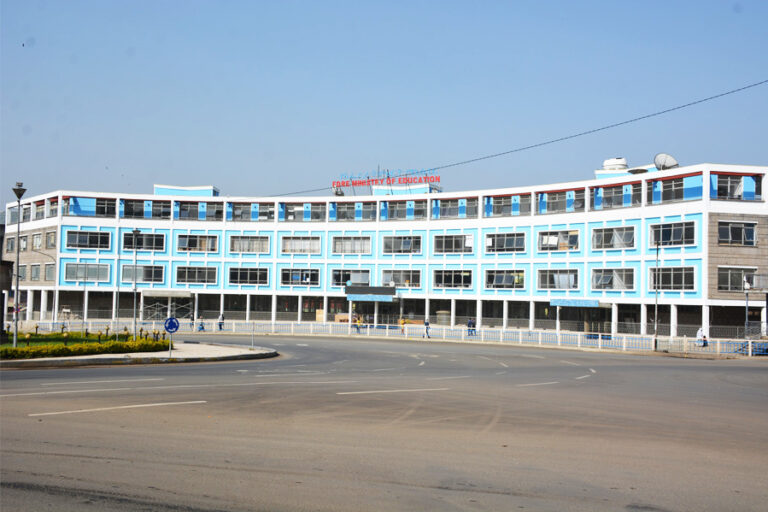
Ministry of Education tables a draft for education proclamation to the Council of Ministers, which is a first of its kind.
Despite public institutions financed by the federal government being established by the regulation of the Council of Ministers, the education ministry had no regulation or law enacted by the state which meant Ethiopia did not have an education proclamation.
“The absence of the proclamation has been blockading the ministry to expand its way and enhance quality of education, as well as issue directives,” Muluken Nigatu /PHD/ Director general of education quality assurance at the ministry stated.
Muluken further explained that the proclamation will help to guide the ministry to create an appropriate legal framework and autonomy that complies with the requirements of the state law and other federal minimum quality standards, which sets specific rights and duties of the Ministry of Education.
Passing due processes, the draft has been tabled to the Council of Ministers, and as he disclosed the proclamation is expected to be ratified within two months.
In related news, on Monday January 3, 2022, the House of Peoples Representatives’ Standing Committee on Public Expenditure, Administration and Regulatory Affairs discussed with the Ministry of Education on the licensing and supervision and qualification of private primary and secondary schools and performance report of private schools in Addis Ababa for the fiscal year 2020/21.
As the report shows, the sample take from both private and international schools shows that there is no teacher who takes professional qualification assessments. Moreover, there is no guideline for enrolment and licensing requirements for international and community schools, as well as directive to establish an educational institution and licensing in addition to renewal of private primary and secondary schools.
During the discussion, the Standing Committee advised the ministry to change ‘Licensing and Supervision of Private Educational Institutions No. 206’, which was approved by the Council of Ministers starting from1994/95, which has not been amended and made up-to-date.
Commenting on the issues, Muluken said the ministry is preparing a qualification frame work.
Also regarding on the quality of general education, Education Minister Berhanu Nega (Professor) said there are more than 47,000 schools in Ethiopia, adding that 90 percent of the schools in the country are underdeveloped.
According to Berhanu, there is a basic education problem in Ethiopia and as the Ministry of Education highlights, less than 20 percent of teachers in the country have passed the qualification assessment, while less than 90 percent of schools over the nation do not meet standards which is set by the ministry.
