

Amole payment platform comes up with MyAmole Marketplace- an online ecommerce solution connecting buyers and sellers, which will be launched early 2022.
“MyAmole Marketplace is a platform for numerous venders, promotes their products and services virtually on the MyAmole Marketplace platform. It is also an E- payment platform for both local and international customers,” said Biniyam Alemayehu, Channel Manager for Amole.
On the new ecommerce solution; supermarkets, mobile manufacturing companies, electronics manufacturing and importers companies, leather product manufacturing firms, traditional clothes producers, stationeries materials importers or manufacturing firms, beauty and personal care product producers or importers, hotels, resorts and guest house, airlines companies, bus and train transportation companies, delivery service companies, and online video game developer are said to be key partners (vendors).
“All venders have a portal for uploading pictures of products and managing it virtually. All venders get support from the MyAmole Marketplace platform for handling their virtual store, and customers can get products from various vendors from Ethiopia as well as Kenya and Dubai through web site and application (android and IOS) of MyAmole Marketplace,” said Biniyam.
Amole has partnered with PupaClic technologies based in Canada and India to develop MyAmole Marketplace. MyAmole Marketplace is working to integrate its system with different delivery companies which will be measured by Service Level Agreement (SLA) and level of service expected from them as well as penalties they agree regarding the services they should not provide for the customer.
DHL, Eshi Express Delivery, Zmall, Ethiopian Postal Service, UPS, Aramex and others are key logistics companies on the platform.
Consumers can get women’s fashion, girls’ fashion, men’s fashion, kids fashion, grocery & food, home & kitchen appliances, computers & accessory, electronics, art & crafts, beauty & personal care, books, sport tools & gears for outdoor recreation, music, CD & video and video game besides its tremendous product range.
Amole has made every possible attempt to customize the buyer experience by providing value added service for customers such as micro credit (buy now and pay later), micro insurance, booking flight, hotel, train and bus ticket services.
“MyAmole Marketplace minimizes problems merchants and consumers face during trading such as limited number of customers, high cost of promotion for the products and service, limitation of place and time,” explained Biniyam.
Addis Ababa city and surrounding areas is the primary target markets for Amole. Additionally neighboring African countries, Europe, North and South America, Middle East are the secondary target markets.
Amole is an Omni channel payment and commerce platform owned by Moneta Technologies and provided by Dashen Bank to which its customers use it to interact with the bank through various channels such as mobile, internet, USSD, all with the same username and password.
Currently, Amole has about 2.7 million customers, where about 20 percent of the users are expected to be customers to MyAmole Marketplace and about 1000 venders are expected to be members. More than 80 eco-system partners are integrated with the platform.
Additional to Amole, consumers can make payment through telebirr and MasterCard.
Solution oriented ecommerce platform to launch early 2022
REVIVING THE HOTEL INDUTRY
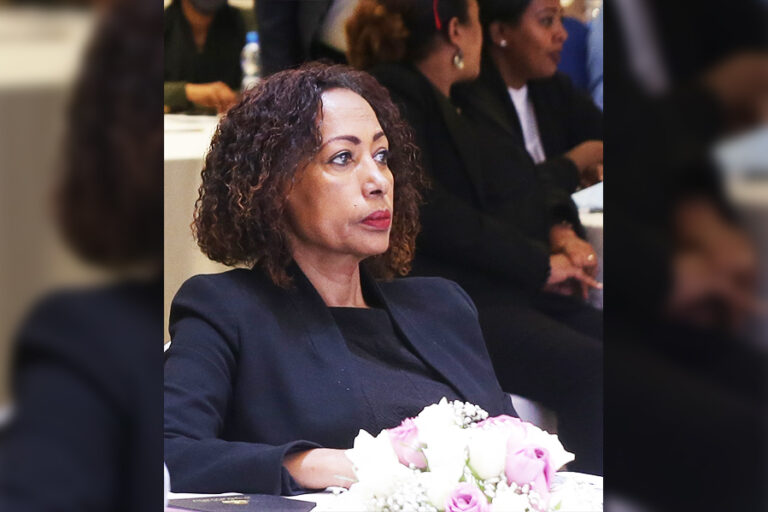
The hotel industry was rocked hard during the COVID pandemic and is still in its recovery stages. This coming Ethiopian Christmas holiday, this recovery is said to receive a boost from the Great Ethiopian Homecoming Challenge which aims to draw one million people. Early last week, Demeke Mekonnen, Deputy Prime Minister and Foreign Minister of Ethiopia, and Chair of the Committee for the challenge, noted the encouraging response by people to accept the challenge and the same sentiments were echoed by the committee that was established to facilitate the Great Ethiopian Homecoming Challenge. The committee announced that it has finalized preparations to welcome the massive influx of Ethiopians and friends of Ethiopia who are expected to take on the Great Homecoming Challenge.
In light of this positive turn for the hotel industry, Capital caught up with Aster Solomon, President of the Addis Ababa Hotel Owners Association- an association which has more than 176 active members, for insights on the hotel industry. Excerpts;
Capital: What is your assessment on the preparation of member hotels for the upcoming Ethiopian home coming challenge?
Aster Solomon: The Great Ethiopian Homecoming Challenge aims to draw one million people home ahead of the upcoming Christmas holiday. Our association has 176 member hotels. We are contacting and working with different stakeholders including the Ministry Culture and Tourism, airlines, hotel owners and tour operators committee that was established to facilitate the Great Ethiopian Homecoming Challenge to play our role in the effectiveness of the event.
Different private and government-owned hotels, have already announced discounts on their services to make the challenge attractive to all, and our member hotels have made discounts up to 30 percent on their part.
Most of the hotels are making themselves ready with different platforms, and are looking forward to the event with much pleasure. Additionally the Addis Ababa Tourism Bureau will also pay visits to our hotels to see the preparation.
Capital: What is your expectation from the event?
Aster: With the influx of this magnitude we have high expectations for the bounce back of the hotel industry within a short period. Following the global pandemic, the hotel industry was hard hit and the hotel occupancy rate in Addis Ababa and major regional towns had dropped to almost zero. Following the mass vaccination, the industry seemed to be slowly getting back on track but it took a blow from the political instability. So in this regard the mass exodus of people back to their homeland will create a rise in the industry and it will be a great result to achieve in my opinion.
Capital: Is there any activity you are doing regarding the closure of some hotels in relation to the current situation of the country?
Aster: We are keenly monitoring the situation, even though not deeply. We hope that quick solutions will be provided for the same.
Capital: What is your view on the current hotel industry?
Aster: With regards to what is impacting the sector, beside COVID-19, the instability of the country is having an unprecedented impact on the Ethiopian hotel industry.
Capital: It is said that the loan repayment period which the government gave at the time of the pandemic to support hotels is drawing to an end. What is your evaluation on this?
Aster: After the outbreak of the pandemic the hospitality industry players requested the government for a provocation package that can help them rescue their businesses and retain their staff at these trying times since travel restrictions, flight disruptions, social distancing and lockdown directives have brought down the local hospitality industry to its knees.
Therefore the government decided to support hotel owners and tour operators who sought government assistance to withstand the severe impacts of COVID-19 which brought the hospitality industry to a standstill.
The pandemic has taken a heavy toll on all sectors of the economy, particularly the hotel and tourism sectors. It can be recalled that with the exception of hotels that offered special services, some closed down a year ago, thus the government decided to provide loans for the hotel and tourism sector. Accordingly, the government has been able to lend 3.3 billion birr for six months, even though the hotels had requested 6.6 billion birr for one year.
Although the government’s move saved the sector at the time, the threat to the hotel sector remains unresolved unless the loan term is extended.
Hotels are still in danger if their repayment period is not extended as they already have loans for construction and other purposes other than the Pandemic Rehabilitation Loans.
Even if lenders understand the problem of hotels and want to extend the repayment period, they will not be able to do so without a directive from the National Bank of Ethiopia.
Capital: What will be the volume of effect if the government does not accept your request for loan extension?
Aster: As the hotel industry both here and globally continue to recover from the hard hitting pandemic, most if not all hotel industries are operating in nil profits with their revenues dwindling drastically. The hotels are not making profits at this difficult time and are thus not able to repay their loans which could increase the non-performing loan of banks which could result to the closure of hotels.
So it would be commendable if the banks can relieve them of loan repayment, reduce interest, and the government to provide assistance to the hospitality industry and failure to do so can prove catastrophic for the industry.
Capital: What do you expect from the government?
Aster: After doing the necessary assessments, the overall operation of the actors have written and submitted a letter to the National Bank of Ethiopia (NBE) that shows hotels are facing a national crisis. To this end we are yet to receive a response.
We have requested the government to avail loans, postpone loan repayment and tax due dates in order to keep the hotels afloat.
Commercial banks have understood the difficult situation that the hotel and tourism sector has found itself in. Likewise, the Addis Ababa City Tourism Bureau is also working to find a way to support us. Despite efforts by the association to contact the Governor of the National Bank, Yinager Dessie, our efforts have been unfruitful.
However, in my opinion I do believe that we will get a solution to our critical issues from the government sooner.
South Sudan artist pomotes women’s art

Abul Oyay Deng Ajak is an artist, a painter, a curator, who gravitated towards art from a young age.
She is not only committed to showcase her work but also that of other upcoming artists, especially women artists from across the region, in the world’s youngest nation.
“The interesting thing about art is that it’s a process. So, it’s not like one day I just woke up and became an artist. My father encouraged me to do something more general like a business, so I ended up doing International Business but also, on the other hand, he’s the same person who has always encouraged me to paint. He’s like ‘this is a talent but also have a course,’ so I think the person that really encouraged me a lot was him. Like, every time he travelled, he came back with brushes and paint and things like that and I appreciate that”, said Abul Oyay Deng, Painter, Curator and Gallery Owner.
Abul was born in Ethiopia in 1986 but when war erupted there, she was separated from her mother and came to Malakal in South Sudan with her paternal grandmother who was a big influence on her.
Women, therefore, are a constant theme in her body of work.
“I was raised by women, specially growing up, of course we know the story of South Sudan. All the men were in the battlefield. So, at the time my father was never with us, you know. It’s a subconscious thing. I’ve been raised by very strong women”, she says.
Abul attended university in London and the availability of art supplies fueled her passion to work harder on her talent.
Her first exhibition took place in Juba after South Sudan declared independence in 2011.
For the past seven years, Abul has transformed into a serious and commercially viable artist.
Curating other female artists is an issue close to her heart, though numbers remain low.
“Human beings are creative. Women are very creative, but I think when I came here there were very few of them. So far, I think there are five women artists that I curate here. Art in Sudan was generally looked at as a male thing. Spaces like this truly allow women to explore their talent” concludes Abul.
The artist also works as Director of Museums, Culture and National Heritage in the Office of the Vice President.
Notable events that defined Arts and Culture in 2021

By Kwabena Adu Gyamfi
2021 was greeted with many uncertainties, with many wondering how long coronavirus would continue to stay with us. In the midst of the uncertainties, news about the disappearance of 20-year-old Senegalese student Diary Sow broke.
Described as a punctual and serious student, the absence of Diary Sow after the Christmas holidays came as a worry to many around her.
Ten months later, Diary Sow published a novel about a young woman fleeing, in order to respond to criticism and reclaim her story.
In the same month, the world was hit by the sad news of the demise of black actor Cicely Tyson, icon for two generations of African-American actors and Broadway figure, who died on January 28.
After a year of absence, the International Animation Film Festival returned to Annecy, France. African animation was in the spotlight with retrospectives, on-site screenings and online conferences.
If you are a food lover who found yourself in Lyon in September then I guess you loved the Lyon food festival. Chefs from several African countries were invited to introduce the diversity and richness of African cuisines to Europeans.
Still in September Pianist Ray Lema paid tribute to one of the pillars of Congolese Rumba, Franco Luambo. Ray Lema accompanied by his eight musicians performed on the stage of the Musée des confluences.
In December, the Congolese rumba, got the oppourtunity to be listed on UNESCOs intangible heritage list.
2021 also marked the return of several African art works stolen by European countries during the colonial era. While Ethiopia presented in November its arts objects looted by British soldiers over 150 year ago, Benin welcomed nearly 30 royal treasures looted by France more than 130 years ago.
Abdulrazak Gurnah, a former refugee from Zanzibar received his nobel prize for literature. The writer is the first author of African origin to receive the distinctions in 2003.
A review of 2021 would not be complete without recognizing the fact that event organisers got the oppourtunity to organize face to face events after a year of going virtual due to Covid 19.
This time, the public was able to admire creative designs from Ghana, Benin, south Africa, Nigeria and other parts of the region.
Just when we thought the industry had had a good year with all the glitz, glam and exceptional exhibition of the African culture, the fashion industry was hit with a sad news in November.
A Ghanaian American fashion stylist, Virgil Abloh who was the artistic director for the men’s collection for the house of Louis Vuitton died at the age of 41 after battling cancer.
