

Purpose black Eth trading share company- a dynamic business established to offer an economic solution with an end-to-end product-to-consumer has come up with an additional unique franchise concept called “Qeleb Kegeberew Franchise.” Purpose black introduced the scheme on Saturday December 17, 2021 in a ceremony held at Alem cinema.
“The model is based on PBETH’s original Franchisee Shareholder Model (FSM) which is a special shareholding product offered by PBETH to potential individuals and/or business investors. The distinct FSM program provides an excellent opportunity for investors to invest in PBETH and receive maximum return as compared to the ordinary shareholding model,” said Fiseha Eshetu, /MD/ founder of the platform adding, “Through the regular shareholder model investors receive only dividends distributed annually as per the decision of the general assembly, whereas, in the PBETH’s Franchise Shareholder Model (FSM) investors receive additional regular income from the net profit of each franchise they invest through a 50% profit sharing arrangement from the net profit of the franchises they purchased. The FSM model is the first of its kind in the world which was launched to attract more investors by offering them huge benefits when they choose the FSM.”
Purpose black is a new initiative launched in May 2020 through the collaborative effort of more than 130 black expertise, Purpose Black was founded with a goal of helping black farmers to produce globally competitive products and get fair prices for their products, and has also aims of reducing youth unemployment, promoting diaspora investment, selling products at a fair price and stabilizing the consumer market by promotion of export and increase of foreign currency earnings. Furthermore, it is keen on facilitating agricultural technology transfer. Its initiative is to be a multibillion birr endeavor encompassing the construction of mega agro processing complex, and e-commerce marketplace, five hypermarkets, ten big supermarkets, a chain of more than 1000 retail and distribution stores all over Ethiopia.
The company has started selling its 100 million shares worth of 10 billion birr with each share costing 100 birr with the minimum share one can buy being 10 shares worth 1000 birr. It is also requirement to pay only 25 percent of the payment which is 250 birr for the minimum purchase and the rest can be paid in 2 years’ time interval. This of course is made in a way that makes the system accessible for all. So far the company has 1,498,663 shares which have been taken with a pledge of 149,855,804 in birr.
The company is selling shares through the 17 banks, financial institutions and telebirr which is also is one of the options alongside CBE birr and other digital wallets. Those who are abroad can get the share through a credit card from Abyssinia bank and commercial bank of Ethiopia. Similarly, depositing in swift accounts or money transfer platforms using the commercial bank are ways of purchasing the shares. For those who do not have bank access, they can get the share in Ethiopian embassies.
The first target is to mobilize capital and to this end, the platform is planning to raise about ten billion birr in capital through three ways; selling share locally, mobilizing the diaspora, and through propose black Africa which is targets to collect ten billion dollars to distribute all over the continent of which Ethiopia will benefit through the same.
For the new Franchise Shareholder Model (FSM) the founder explained that there are three that purpose black has provided. For instance, shares for farm land which is 100,000 birr per hectare, for two types of its retailer stores 2 million birr for type one retailer store and 3 million birr for type two retailer stores. The third which is in agro processing will go for 100,000 birr per share or $2000 for the diaspora.
The MD said that Purpose black has started its process to obtain 1000 hectares of farm land in Arbaminch town top this regard.
Purpose black avails attractive franchise scheme

CSO Council advise thoughtful action in current climate

The Ethiopian Civil Society Organizations Council’s Executive Committee requests the international Community, Government, CSOs, Stakeholders, Private Sector, Media and Citizens to be deliberate over the roles that they play with regards to the current situation of the country.
“The war that has been going on between TPLF and the Ethiopian Defense Force has resulted in adverse effects that should be addressed with utmost care and without delay. As a result of this war, lack of peace, instability, displacement of myriads of women and men, including children and the elderly, have been observed in the different regions of Ethiopia,” said the council in its statement.
“Since the war started, the international community has been taking wrong stands and measures that did not rationally take account of the realities which have already put the Country and the lives of its people at stake,” added the statement.
“Unnecessary threats of sanctions and embargoes have been directed on Ethiopia with the very aim of pressurizing the Government to stop the war and settle the dispute through negotiations, while no visible effort is seen to have been made to exert the same pressure on all the conflicting parties. However, the impositions have not brought about the desired result as they had planned them. As a result we call upon the international Communities and Countries to come one step forward to really understand the reality on the ground and refrain from taking unnecessary measures to jeopardize the lives of millions of Ethiopians,” the Council opined.
The Council appreciated regional organizations including the African Union for its endless efforts and contributions that it has been making to fairly address the current situations of the Country.
“Its efforts have brought about a change as AU has been discharging its duties in impartial manner and has continued to be committed to work hard to restore peace and stability in our Country to do more than ever to support the overall effort the Government is making to restore peace and stability in Ethiopia,” the Council remarked.
As the Council stated some present fake news with misleading information with the aim of damaging personalities, distorting facts, and spoiling the Country’s image since the very day the war started. “The behaviors of some international media have also been seen to be far from being observant of fair and ethical reporting whereby deliberate and unsubstantiated reporting have been observed,” the Council blasted.
“We denounce international and some local media which have been providing false information to our people and we urge all media, mainstream social media, to comply with journalism ethics to discharge their duties accurately, impartially, by being fair, accountable and responsible. We Ethiopians live together in harmony and support one another despite our creed, religion, culture and languages,” said the council in its statement adding its readiness to help the people who are in need. “We also would like to reiterate the importance of protecting our Country and its people from possible danger that is hovering over them.”
Africans show vaccination willingness despite low coverage
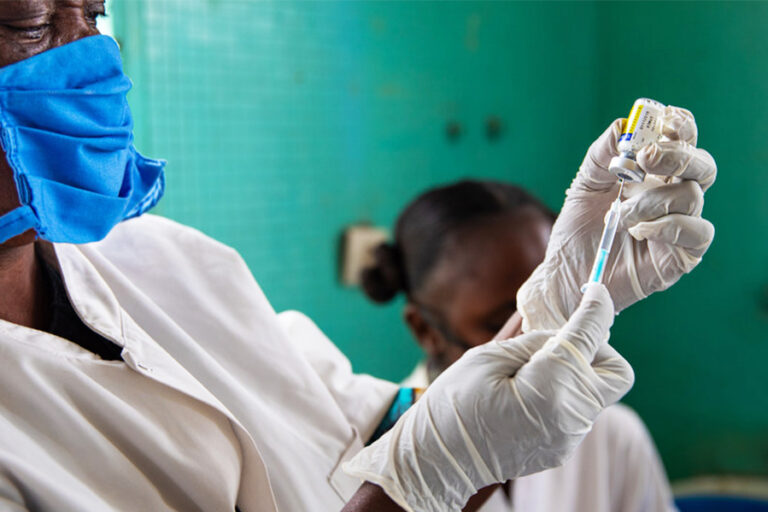
New report on COVID-19 in Africa shows widespread willingness to get vaccinated, underscoring need for consistent supply and additional logistical support.
As the Omicron variant dominates the COVID-19 news cycle, new research from the Partnership for Evidence-Based Response to COVID-19 (PERC) indicates that people in African Union Member States are overwhelmingly willing to get vaccinated. Across 19 countries, 78% of people surveyed by PERC indicated that they had been or were willing to get vaccinated.
However, as of November 2021, less than 7% of the African continent has been vaccinated. This gap between acceptance and coverage demonstrates a substantial unmet need and underscores the importance of consistent and predictable vaccine supply as well as increased support for vaccination programs in Africa.
“We must work urgently toward equitable access to safe and effective vaccines on the African continent,” said Dr. John Nkengasong, Director of the Africa Centres for Disease Control and Prevention. “The PERC data show that demand for vaccines is substantially higher than supply.”
At 78%, vaccine acceptance was higher than in the previous PERC survey fielded earlier this year (67%), which may indicate the success of risk communication campaigns.
Among the 20% of respondents who expressed vaccine hesitancy, the top reasons were: low risk perception (24%), not having enough information about vaccines (22%) and lack of trust in government (17%). The reasons for low risk perception are complex, but officials can take concrete action to address them. Offering more and better information to people about COVID-19 and vaccines through trusted sources, particularly health care providers, coupled with consistent and reliable vaccine supply, can further increase acceptance. Respondents’ top information sources included local health centers, television and radio.
A number of bottlenecks have contributed to the failure to achieve higher vaccination coverage. Unpredictable supply in terms of volume, timing and shelf life threatens countries’ ability to meet demand. When offered, vaccination is frequently inconvenient, requiring people to travel far distances or visit vaccination sites at inopportune times.
COVID-19 preventive measures remain crucial to mitigate the health impact of the virus. PERC researchers analyzed what influences support for and adherence to such measures and found that individual actions hand washing, mask-wearing and social distancing all garnered support from at least 90% of survey respondents. Such high support suggests that these key measures can continue to be effective strategies for reducing COVID-19 transmission.
Preventive measures restricting gathering or movement received less support. Unemployment and food insecurity were widespread among survey respondents and made adherence to restrictive community measures a challenge. PERC researchers concluded that such measures should be targeted to specific, high-risk populations as needed to minimize harm.
Income loss also may have had an adverse impact on access to essential health services. Cost and affordability were cited as the primary obstacles to receiving care. Declines in the number of health visits have likely contributed to declines across key health indicators. PERC researchers advocate for urgent investment to stabilize health systems and regain progress lost during the pandemic.
“The PERC data enable policymakers to both save lives and minimize impacts on livelihoods,” said Dr. Tom Frieden, President and CEO of Resolve to Save Lives, an initiative of Vital Strategies. “The global community has an opportunity to invest in health care workers and public health infrastructure to support vaccine delivery and COVID-19 care and prevention in the near term, and also repair and restore health service delivery disrupted by COVID-19 for the long term.”
PERC authors recommended global community should support AU Member States in supplying vaccines at a better coordinated and more systematic pace to allow broader, more effective and equitable distribution. COVID-19 preventive measures are critical to mitigate COVID-19 transmission, Ministries of Health have competing priorities-both maintaining longer-term investments in endemic diseases, such as HIV and tuberculosis, Strengthening health data systems to be better prepared for health threats is critical. The global community and national governments should invest-to the fullest extent possible-in public health infrastructure and social protection programs that build and maintain resilience,
PERC polled approximately 23,000 people across 19 African Union Member States; compiled social, economic and epidemiological data from a range of sources; and compared results from previous surveys conducted in February 2021 and August 2020.
Bunna bank records magnetic increase in customer base, profit hits new ceiling

Bunna Bank attracts over half a million new customers as its net profits rocket past the half a billion mark registering dominance in the financial space.
In the 2020/21 financial year that ended on June 30, 2021, the banks that is considered as a late comer compared with the financial firms that were formed about a quarter a century ago was able to attain massive success in terms of different banking activities and measurements.
For instance in the recently concluded financial year, its customers’ base has tremendously been boosted with new depositors being drawn to the company in multitudes of hundreds of thousands.
The annual report stated that during the financial year efforts were made to scale up the number of customers through various means.
The report indicated that the total number of customers who opened a new deposit account during the year in review stood at almost 580 thousand.
“The total outstanding deposit account for holders of the bank as a result has reached over 1.38 million as of June 30, showing a 71.5 percent increase in comparison to the previous year,” the annual report of Bunna disclosed.
The success registered on customers base has also reflected on the deposit mobilization that the bank attained from the financial year.
According to the annual report, as of June 30, 2021 the total deposit mobilization has reached a high of 20.46 billion birr resulting into an increase of 47.5 percent compared with the performance recorded on June 30, 2020.
“The net deposit increment performance was also higher than the new increment performance registered in the previous year by 3.3 billion birr or by more than 100 percent,” the bank board of directors’ report elaborated.
For the year, the performance of saving deposit was higher by 112 percent as compared with the performance registered a year before.
Most importantly the saving deposit has continued to lead the deposit portfolio and took almost 79 percent or 16.1 billion birr of the total deposit mobilization.
In its 12 years of operation, Bunna bank has been able to provide 18.3 billion birr in outstanding loans and advances for its customers up to its recent financial reporting period.
For the reporting year, an additional 6.7 billion birr loan and advances have been disbursed for partners working with the bank, while the outstanding amount was 11.6 billion birr a year ago.
In the year, the bank has generated 3.3 billion birr showing an increment of 51.5 percent compared with the preceding year.
The boost on deposit mobilization and customers’ base has also contributed to the hike of interest expense by over 356 million to reach 898 million birr from 542 million birr a year back.
One of the massive achievements registered for the year was the profit that the bank amassed.
According to the annual report, 937.4 million birr in profit before tax has been secured which is up by 355 million birr or 61 percent compared with the 2019/20 achievement.
For the year, Bunna’s profit after tax has extensively surpassed half a billion birr for the first time to stand at 671 million birr. A year ago the profit after tax was 440 million birr.
Similarly, the earnings per share have peaked to 29.3 percent from 22.5 percent from a year ago.
In his annual report address Mulugeta Alemayehu, President of Bunna Bank, said that the bank’s dividend to be paid has improved to 22.31 percent from last year’s 13.78 percent.
As of June 30, the bank’s total asset has increased by 37.6 percent to reach almost 26 billion birr from 19 billion birr a year ago.
As per the report, the bank’s total capital has reached 3.8 billion birr with the increment of 24 percent, while the paid up capital has increased by 16 percent to accomplish 2.51 billion birr.
On his annual report message, Sewale Abate, Board of Directors Chairperson said that the bank has been tirelessly working to access additional plot from the Addis Ababa City Administration which received a positive response.
“In addition to the 1043 square meters of land around Mexico Square it secured previously, the City Administration has given a green light to the bank for provision of another piece of land,” the Chairperson added.
