Saturday, October 24, 2026
Home Blog Page 2845

CYCLING: The wheels of change

0

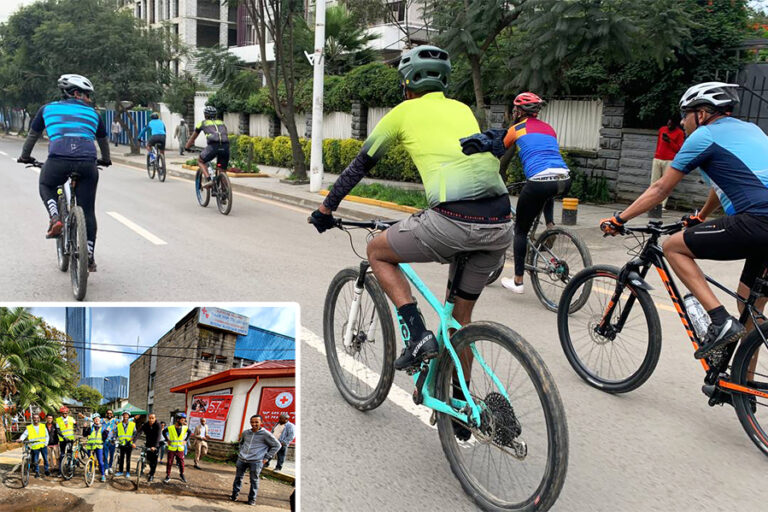
It is becoming a common occurrence to spot bike-riders cycle past on Sunday mornings across various streets in the capital, a scene that was once familiar with the athletics community.
With the number of riding enthusiasts growing by the weekend, Capital decided to reach out to the cyclist community with the perspective of understanding this enthusiastic sport in light of the much needed boost for non motorized transport in the country.
“On the weekends you would often find us peddling away along the streets with my friends,” Dawit Dagnew, founder of Addis Mountain Biking group narrates as he expresses how his current 77 member team has been expanding, more so after the pandemic.
“I started the group 5 years ago for the purpose of sport, with my friend. And now we have grown in number. The pandemic has also added to the number of cyclists in our group, since COVID-19 was a wake-up call for many to staying healthy and in maintaining a regular exercise routine,” Dawit elaborated.
Dawit and his group members go out riding every Sunday and often maintain contact through social media. “We usually prefer to cycle outside of the city, especially in places which we have neither seen, nor been to,” he said infusing cycling with the spirit of adventure.

In Ethiopia, cities and rural centers are characterized by widespread use of non-motorized modes. Walking is a dominant mode, particularly for low-income groups who travel mostly by foot. In spite of a dramatic increase in motorization in Addis Ababa, the largest share in the capital city among modes of transport still remains to be walking while private cars make up the smallest share.
Cycling has also brought together people from all walks of life leading to a community that has championed great causes as is the case for ‘Egre Menged’ co-founder Maren, a German cycling enthusiast who grew up in the cycling town of Münster, Germany together with Ephrem, her co-founder, who shares the same passion from his early years in Dire Dawa.
“As we enjoyed Sunday rides together, we came up with the idea of inviting more people for them to also enjoy the activity and healthy exercise,” recalls Maren as their community- based cycling group now seeks to promote sustainable/non-motorized mobility as well as develop a bicycle-friendly community and city.

Dawit Dagnew and Maren

“The longest tour we have ever taken is to Sebeta, south-west of Addis, which was 82 kilometers. But our intention is not to ride long, intense tours but rather doing 25-35km tours so that it is doable for the average cyclist and not only the experienced ones,” Maren said with reference to some of the longest intervals that her cycling group has taken thus far.
In most countries, Non-Motorised Transport (NMT) offers basic and affordable mobility, access to public transport, and health benefits. The situation in Ethiopia however is different in that it is difficult to afford a bicycle in addition to the cities and rural centers, neither being designed for walking nor cycling.
In spite of the widespread use of non-motorized modes, transport planning and the provision of infrastructure, Ethiopian cities have been largely car-centered, underestimating the importance of NMTs.
Moreover, traffic including careless motorized road users is among the challenges of riding bikes in Addis, and as Maren highlights, “Pedestrians and street vendors block the few cycle lanes. Furthermore, there are a small number of existing cycling lanes and the roads we have to use instead are often uneven and have dangerous holes.”
“Little street lighting and harassment especially to female riders are part of the hurdles we face as cyclists,” Maren explains.
In the late 90s, it was normal to see rental bicycles in villages across the country. The widespread availability of bicycles through small scale rental services found in cities across the country represented an opportunity to promote cycling and over the years it seemed to fade away as the price of bicycles in Ethiopia have continued to rise.
In spite of the widespread use of non-motorised modes, transport planning and the provision of infrastructure in Ethiopian cities have been largely car-centered with cyclists sharing travel lanes with motor vehicles; with traffic safety challenges being widespread. The lack of designated infrastructure for cycling has created significant safety issues and concerns on the part of users, which have contributed to experts suggesting for an improved transport system.
It is a widely agreed upon phenomenon that the convenience, comfort, and safety of walking and cycling reduces the demand for travel by personal motor vehicles, helping to alleviate the critical traffic challenges facing many cities. Greater emphasis on walking, cycling, and public transport in the planning, design, construction, and management of transport systems is needed to achieve a more equitable allocation of road space to which cities should provide safe, efficient, and accessible walking and cycling networks to improve mobility for all residents, whilst enhancing access to opportunities.
“Nowadays it’s difficult to ride bikes in the city, especially on main roads since people often have the notion that bikes cause traffic jams on roads,” Dawit says, adding, “even though there are bike lanes in different parts of the city, they are not fully functional.”
“Biking has helped us to explore more and so far we have done more than 300 trips. For us the longest trip has been from Addis Ababa to Weliso, which is a 130 km bike ride,” said Dawit, adding, “besides the distance trips, cycling helps us to promote a healthier lifestyle.”
The cycling community is more than just a sporting community and as Maren explains, “We love to visit and partner with local start-ups, micro-enterprises and community-based programs and promote them on our wide social media reach. We did an awareness bicycle ride ‘The Moving Smile Bike Ride’ for a local NGO to promote their activities. We also joined a tree planting event by the Rotary Family and our plan for 2015 (Ethiopian Calendar) is to provide free bicycle training for women in Addis.”
Non-motorised modes play a fundamental and unique role in the efficiency of transport systems, providing an affordable, low-carbon travel option. In order to improve the walking, and cycling environment, UN Environment and UN-Habitat appointed the Institute for Transportation and Development Policy (ITDP) to assist the Government of Ethiopia through the Ministry of Transport (MoT), Federal Transport Authority (FTA), Ethiopian Roads Authority (ERA), and Ministry of Urban Development and Construction (MUDC) in the preparation of the Non-Motorised Transport (NMT) Strategy 2020-2029 under the auspices of the “Share the Road” initiative.
Ethiopia’s Climate Resilient Transport Sector Strategy calls for an affordable, integrated, safe, responsive and sustainable transport system that enhances the environmental, economic, social and cultural well-being of Ethiopia’s population.
The Government of Ethiopia aims to reduce greenhouse gas emissions by 255 Mt CO2e or 64 percent, compared to business-as-usual emissions by 2030.The reduction includes 10 Mt CO2e from the transport sector. The promotion of NMT and efficient public transport are key means of mitigating greenhouse gas emissions and reducing energy use.
If the country’s history of producing world-class distance runners is anything to go by, we should expect to see more Ethiopian riders at the big races in the near future.

THE HUMAN SCALE

0

There is a very narrow spectrum within which the human animal can survive and flourish! This band of possibilities includes the physical as well as those considered non-physical. We can broadly define this limited domain of the human universe as the ‘human scale.’ The heuristic definition applies to the social as well as the private realms. Neglecting these natural limits has costs. As usual, the existing modern world system, propelled by blind greed, has been stretching this ‘human scale’ way beyond its natural boundaries, with attendant consequences!
General dissatisfaction with the so-called ‘modern work’ is widespread. Substance abuse is also rising; from the ‘chat’ and alcohol abuse here in Ethiopia, to pervasive use of ‘opioid’ in places like the USA, the situation seems to be more or less the same all over the world. Elevated mental illness within the OECD, probably due to mass psychosis (20% of medical patients are mentally afflicted in the USA) and a clear loss of gusto for life (procreation is stalled in the rich countries) are amongst the unintended consequences that came about as a result of persistent pushing of the limit, i.e., the natural ‘human scale’!
The current dominant institutions (some built throughout the ages) have lost touch with the human scale. Gigantic projects with little genuine value or benefit to humanity, particularly in the long run, are given undeserved importance by the modern world system. Megacities that are at best troubling are flaunted as if they were heaven on earth. What is the attraction of living in a city of 20 million people, where transportation, housing, even the mere act of breathing is a problem? Living in concrete jungles might signify material wealth to the zombified, but is not sapient, establishment/market propaganda aside. As complexity is an integral part of such modern existence, the slightest disturbance can spell disaster. Recall that in modern cities things are crucially interconnected. Each and everything depends on some other thing, which further depends on yet another thing, so on and so forth. For example, if there is no electricity, then there is no water, no lights, no telecommunication, (no Internet), no services, (including critical ones, like medical services, etc.) Why are humans creating such unsustainable systems, when they know these things ultimately invite massive collapse? Well, it is because of the ‘money god’!
Worshipping money/material stuff is the not so subtly established religion of the modern world system. The metaphysically inclined creeds of humanity come only next to this all-encompassing belief. The profit system has absolutely no respect to the inborn spiritual inclinations of the dominant species. From the rich Moslems of the oil kingdoms to the current entrepreneurial Buddhists of Asia as well as to the indigenous believers of South America and Africa, to say nothing about the high tech generation of the Western world, the overriding persuasion in the prevailing world of modern humans is; money, money and money! Accordingly, money is now the universally shared god of collective humanity. Economic growth, etc., are all stuff at the service of the greed god. Blind and obsessive acquisition hell bent on destroying the planet’s life support system is the commonly endorsed narrative of modernity. In a nutshell, this is the sanctioned religion of all the nation states of the modern world system. Superficial concern for the well-being of the planet, hence life itself; is not the principal concern of the prevailing profit system! Just look at the absence of sincerity on the part of the global politicos, when it comes to issues concerning the planet’s ecosystem!
The sheeple is constantly bombarded with phony narratives and entertainment so that it won’t seriously engage in the most important task in the world: to save humanity from its own self-inflicted destruction! Wars are promoted to benefit weapons manufacturers, including makers of weapons of mass destruction (biological, chemical, nuclear, electronics, etc.) The institutions of so-called learning, do not critique this insanity, but rather produce unthinking drones to be used as mere cogs in the giant destructive wheel. To recap; weapons of mass destruction that are flaunted as if they were miracles, (by the dominant interests) are items that are way beyond the human scale. Modern existence that is discouraging the perpetuation of life, because it is out of whack with the human scale, (in more ways than one) is a consequence of overshoot. Disrupted human scale!
Salvation to the planet as well as humanity (also other lives) lies in recognizing the inherent and almost relatively unchanging nature of the human animal, i.e., the human scale! Excessive greed must be tempered and tempered soon. To this end, the global commons must be respected and valorized. These include the atmosphere, the oceans, the planet’s landmasses and all the lives within them, etc. etc.! Human induced climate change is real. Unless we stop what we are currently doing and restrict ourselves to the human scale, changes that will come about might well be beyond our capacity to mitigate them!

HAPPY NEW YEAR FROM RWANDA WITH LOVE

0

Writing from Rwanda, in the clean green capital of Kigali, the land of way over one thousand hills, country of 13 million citizens…it is safe to say Ethiopia has a distant peaceful neighbor providing an example for the way forward. It is quite surreal to think that twenty-eight years ago this incredible nation suffered through one hundred days of an unimaginable genocide. In 2016 Kigali kicked of its Car Free Day encouraging residents to walk, jog, skate and ride bikes, unencumbered by traffic throughout the tree lined city. However, after walking 5K with the fifty-plus year old PrimaMed Technologies Managing Director, Martin Manzi and sons Lionel and Lior (too young to have experienced the scourge), it appeared the serene Sundays are also devoted to fostering social cohesion and public harmony. It is about continued healing, growth and development from and for the people. By the way did I mention we met the President, First Lady and partial cabinet on the walk?
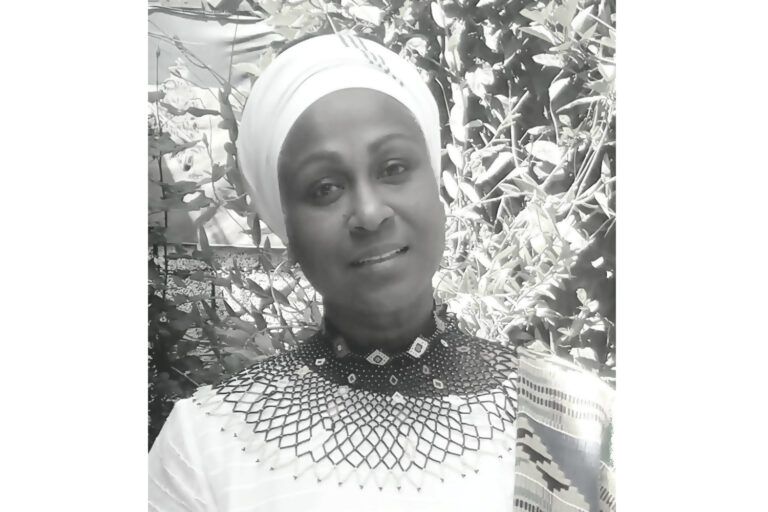
The African Diaspora is also finding refuge in Rwanda with people and projects popping up in the arts, health and entrepreneurism, to name a few of sectors. Seestah IMAHKÜS, known worldwide as Mama One Africa, whose ancestors were ripped away to America in the transatlantic slave trade, repatriated to Ghana in the 1990’s but has resided in Rwanda since 2019. The 81 year strong great-grandmother receives encouraging applause from passersby during for her weekly walks on the steep hills. In CNN Anderson Copper’s 2010 interview with Mama One Africa during President Barak Obama’s visit to the Cape Coast slave dungeons, reported, “…every time IMAHKÜS visits, she prays for the souls of those who died here and those who passed through (the dungeons) … it’s a painful pilgrimage but one that gives her strength…”. As she tries to heal centuries of pain, seemingly set in her very blood and bones, the people of Rwanda have given her a new perspective on healing through reconciliation. “Faces of Forgiveness” is her heartfelt project for survivors and their children. She quotes one of the participants who moved her to tears, “In order to move forward we have to forgive.” Her pilot program is focused on the textiles industry through building skills and capacity for economic empowerment.
The iDiaspora health initiative is also one to watch. UN International Organization for Migration in collaboration with the Ministry of Health led by Minister Dr. Daniel Ngamije states the “Diaspora Engagement in Health Sector Project…is identify(ing) and support(ing) qualified Rwandan medical professionals, residing in Europe who wish to … transfer their skills, knowledge, and technology to Rwanda’s health sector.” Gradian Health Systems, a non-profit medical tech company, is also adding to the effort through the provision of “…new anesthesia and oxygen therapy innovations developed based on the feedback of doctors across the continent,” according to Gradian CEO Lina Sayed. Gradian’s thirty plus energetic visionary, has earned the trust of the Rwanda health community who are beneficiaries of medical equipment, extensive bio-medical engineer training and a simulation lab at the University of Rwanda. “We have seen exceptional leadership on the African continent, especially during the last 2+ years of an ongoing global pandemic. We know that our greatest strength is the healthcare providers who have worked endlessly to provide high-quality care to patients.” The DC based Diaspora African Forum Foundation is helping to place Gradian on Ethiopia’s radar. Head of Mission Ambassador Ereika Bennett says, “DAF is committed to brain gain, reversing brain drain.” The University of Global Health Equity Rwanda (UGHE) also share Ethiopia’s vision. Dr. Abebe Bekele who heads Black Lion Hospital, serves as UGHE Deputy Vice Chancellor of Academic and Research Affaires, Dean of the School of Medicine and Professor of Surgery. This affiliation will benefit the road to recovery for Ethiopia in 2015. Dr. Abebe is an essential advisor the Ministry of Health, led by the dynamic forty plus Dr. Lia Tadesse GebreMedhin.
Finally, I couldn’t close without culture. The music, dance and fledgling fine art scene are simply incredible. Artist, Ishimwe Innocent’s paintings speak to the spirit and hope of the people with black silhouettes set against colorful wispy fresh strokes. But it was the internationally known gorillas of the Volcano National Park, an integral part of the culture and tourism sector, that were center stage. Twenty baby gorillas were named by famous folks worldwide including Senegal’s singer and former Minister of Culture, the great Yousou N’ Dor who graced the stage in a special gala hosted by Pan African President Paul Kagame. Amazing Kenya’s Sauti Sol and Rwandan phenomenon Ruti Joel also gave the audience a night to remember that made even the prolific Pres and First Lady Mrs. Jeanette Kagame take to the dance floor. All I could think of as I enjoyed every moment in Rwanda was how Ethiopia will continue to pray for peace, fight for justice and dance in celebration when our country has reconciled, healed and will reap the fruits of all the Ethiopians who have sacrificed life, limb and livelihood for a safe, clean, green and prosperous Ethiopia which WILL be a reality soon and very soon.

Dr. Desta Meghoo is a Jamaican born Creative Consultant, Curator and cultural promoter based in Ethiopia since 2005. She also serves as Liaison to the AU for the Ghana based, Diaspora African Forum.