

As part of its regular Price Watch Dialogue series, the African Centre for Statistics (ACS) at the Economic Commission for Africa (ECA) hosted, on 21 July, a policy dialogue on the impact of the Ukraine-Russia conflict on commodity and food prices in Africa.
In his welcoming remarks, Oliver Chinganya, ACS Director, stated “Africa, in the last two years, has been hit by exogenous shocks that undermine its dreams of prosperity. Interest rate hikes, increased borrowing costs, weakened currencies and tightening global financing conditions have had dire implications on the fiscal space of low and middle-income countries.”
Rising consumer prices, particularly rising food prices, are increasing inflationary pressures. Critical items like oils, fats and vegetables are up near 10% in Morocco, whilst the price of staple foods like cooking oil and wheat have risen by almost 50% in Kenya. Thus, to cope with market turbulence, nations have sought to pass on costs to consumers and seek external help. Increased food costs put vulnerable populations at increased risk of food insecurity.
Mitigating rising commodity prices in Africa

Africa’s drought reaches far beyond the Horn of Africa, says ForAfrika
Hundreds of thousands of people could die of starvation if the extent of Africa’s food security crisis is not recognised, says Isak Pretorius, CEO of the largest indigenous African non-governmental organisation, ForAfrika.
“The food crisis – and rising malnutrition – affecting our continent is real and pressing, and I urge people of conscience to rally behind the people of Africa,” he says.
In contrast to what is often reported, drought in Africa extends far beyond the Horn of Africa, and hundreds of thousands of people across Central and Southern Africa are at risk as a result of not enough food being produced in the region this year, says Killen Otieno, ForAfrika’s chief of operations.
Urgent aid is needed to prevent parts of the Horn of Africa region that encompasses Ethiopia, Eritrea, Somalia, Somaliland and Djibouti from sliding into famine, Otieno says. In addition, drought and heat stress are evident as far south as north-western Namibia, south-western Angola, northern and central Mozambique, Malawi and Madagascar.
Abel Fikadu
Name: Abel Fikadu
Education: 10+
Company name: Abel Beauty Salon
Title: Owner
Founded in: 2022
What it do: Hair style, make up and nail
Hq: Addis Ababa around Gergi
Number of Employees: 3
Startup capital: 220,000 birr
Current Capital: Growing
Reason for starting the Business: Financial freedom
Biggest perk of ownership: Doing my best to achieve my goals
Biggest strength: Satisfying my customers
Biggest challenge: Starting from scratch
Plan: To expand my business
First career: None
Most interested in meeting: Tewodros Kassahun
Most admired person: Experienced people
Stress reducer: Working
Favorite past time: Updating myself
Favorite book: Fikr Eske Mekabre
Favorite destination: Any green areas
Favorite automobile: Hyundai Elantra
Birth of the Majesty & The Movement Part II
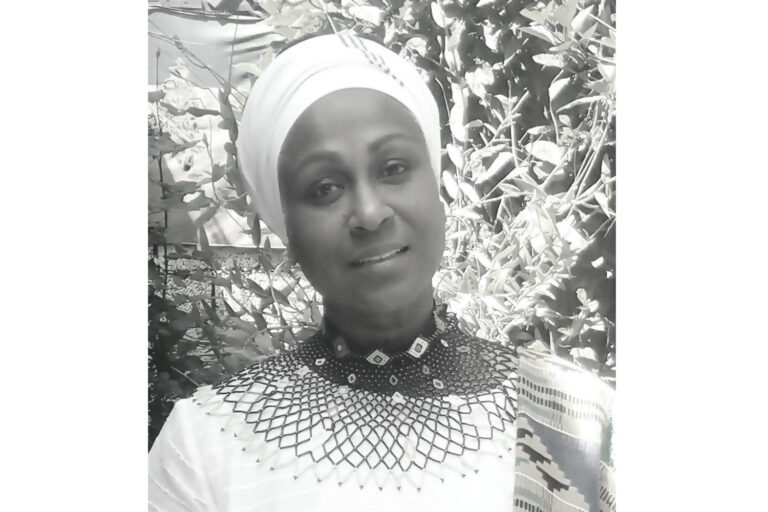
“Throughout history, it has been the inaction of those who could have acted; the indifference of those who should have known better; the silence of the voice of justice when it mattered most; that has made it possible for evil to triumph.” This quote by H.I.M. Emperor Haile Selassie I has been manifested in various forms by Rastafari over the decades. Be it bible prophesy or protest speech, turned into songs of liberation, the “peculiar people” represented the voice of the voiceless, the poor, the downtrodden, the dark(skinned). Ethiopia was the focal point of the Jamaican grown phenomenon, the continent, a source of strength against colonial forces. Rastafari defended their solemn duty to protect the Motherland from further aggression. However, open rejection of the government of England and all colonial powers, referred to as Babylon, led to arrests for sedition, confinement in mental hospitals and brutal beatings.
It’s interesting how things come full circle. Mantras, once considered utterances of the “mad Rastas”, now take center stage in youth led campaigns for Africa’s self-determination with slogans such as #NoMore and #HandsOff. Taxis, t-shirts and numerous banners echo the sounds of Rastafari chanted decades ago, such as excerpts from the following song;
Four Hundred Million Blackman
400 million Blackman wake up from your spell
See your programme stand before you like a mighty swell
Get your back bone to your brother neath the Red, Gold and Green
Ithiopia calls InI home
400 million Blackman stand up to your call
For a House divided gainst itself
Must surely fall
But inited (united) InI righted neath the Red, Gold and Green
Ithiopia calls InI home
Be not quick to take a title from another race
They are only camouflaging you before your face
Take your title from your Brother neath the Red, Gold and Green
Ithiopia calls InI home.
As Jamaica celebrates its 60th anniversary of independence from the British on August 6th, the island once against, now embraces Rastafari as an integral part of Jamaican contemporary culture. The contributions of the Ethio-named way of life continue influencing people worldwide and while reggae music is seen as one of the most prolific markers of the movement, there are other important influences. One is health and well-being, essential to the natural vegans often referred to as ital. Use of plants for nutrition and healing include cannabis, aloe vera and sea moss amongst others. The health food industry raked in $20B in 2020 and medical marijuana $32B. The other is clothing; with signature colors red, gold and green – taken from the Ethiopian flag. Multi-million-dollar French fashion house, Christian Dior, carried the John Galliano ‘Rasta Line’ while top sports outfitter, Adidas, sells the popular Rasta tracksuits and sneakers. Sadly, Rastas do not get any benefit from these mercantile efforts as the intellectual property is not protected. Imagine Rastafari, a legally recognized Ethiopian origin cultural group, bringing benefits to Ethiopia, generated from numerous enterprises due to the appropriation of mutual culture.
Women have also played an important role in the development of Rastafari with such stalwarts as Dr. Nana Rita Marley, a distinguished role model and mentor. Celebrating her 76th birthday, Bob Marley’s widow enjoyed her Royal Rootsy Rita style, honored in a Tuff Gong YouTube special drawing attention to her decades of numerous contributions in Jamaica and Africa. Scholarships, food, medical aid, elder and child care…the list goes on and includes an orphanage supported in Ethiopian over the years. The Marley Matriarch embarked on a great vision in 2005 that would help transform contemporary culture in Ethiopia. Over 100 registered international media outlets covered the landmark event; Pan African culture dominated the capital city; while messages of Marcus Garvey and familiar music of Bob Marley echoed throughout Addis. Nana Rita’s invitation from the Bob and Rita Marley Foundations led to a partnership with the African Union, whose then Chair, Alpha Omar Konare stated, Marley “…built a bridge between Africa and the diaspora. His message based on unity of Africa and his struggle to promote values such as freedom and justice is today duly reflected in the African Union.”
Mrs. Marley was permitted to host a banquet at the National Palace to bring attention to the need for a museum to memorialize the work and life of His Majesty. Today that vision of Ethiopia is becoming a reality through joint efforts of respective Ministries and international partners. The reggae queen would go on to take the Africa Unite message to South Africa and Ghana in following years, sowing seeds in agriculture, entrepreneurship, infrastructure and community services. One lesson the most famous Rastafari women promotes is the role of man and woman working together in equality to triumph over all challenges. Her lyrics say it all in the song The Beauty of God’s Plan.
She is the moon, he is the sun
Together they become as one
She is the warmth, he is the wind
So sweetly and completely true love begins
He plants the seed, she bears the fruit
The tree of life they share is good
She is a bird, he is the sky
He loves the space and she loves to fly
So it takes a woman and a man, ooh yes
To show the beauty of God’s plan
So it takes a woman and a man, ooh yes
To show the beauty of God’s plan…
She is the mirror of her man
Forever beside him she will stand
He is all she needs
He gives life to her dreams.
Dr. Desta Meghoo is a Jamaican born Creative Consultant, Curator and cultural promoter based in Ethiopia since 2005. She also serves as Liaison to the AU for the Ghana based, Diaspora African Forum.
