

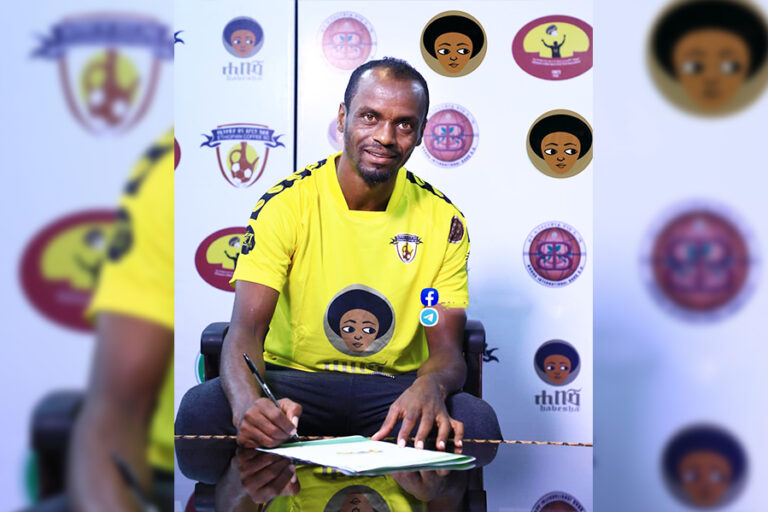
In his third and decisive season at popular side Ethiopia Bunna, Coach Kassaye Arage signed three players that took everyone by surprise, signing veteran fullback Seyoum Tesfaye and central defender Tewodros Bekele while handing a three year contract extension to Endale Debalke.
Famous for scoring goals from fullback position both for club and country, Seyoum Tesfaye had been one of the most influential players in helping Ethiopia return to African Cup of Nations after three decades. Though he was popular for leading by example, no one expected him to join Kassaye Arage past his prime time.
More than 15 years in the premier league, playing for Methara Suger, Nyala, Electric, Debit, AbaJifar and Mekele Ketema, Seyoum won two championship titles thus having an abundance of experience to share for the relatively younger squad of Ethiopia Bunna. But critics are in doubt whether Seyoum could get a regular place in the team.
The giant central defender Tewodros Bekele also joined Ethiopia Bunna in a three year contract. Ten years with Mekelakeya and Adama, signing Tewodros is considered a wise decision from Kassaye Arage who usually goes out of his way to look for very technical players.
Despite having a frustrating season last year, striker Endale Debalke also handed a three year contract extension. Sources claimed that the former Dedebit, Hadiya, AbaJifar and BaherDar striker had been on the verge of joining Adama in a two year contract.
Ethiopia Bunna signs Seyoum Tesfaye and Tewodros Bekele
Zeray joins Hawassa, Fasil takes over Adama, Mulugeta To Hadiya

Last season this time around was somehow quieter with just few Premier League clubs sacking their Coaches. The current season appeared a more bizarre merry-go-round than any other time for only two teams: premier league champions Fasil Ketema and runner-up Ethiopia Bunna that stick with their Coaches. With eleven of the 13 top flight clubs set to begin the 2021/22 season with a new man at the helm no one knows what will happen.
Back to the premier league after a play-off windfall Adama Ketema brought in former national team and St George assistant coach Fasil Tekalegn in a two year contract to replace the departing Zeray Mulu. Though Baherdar Ketema finished eighth in the table, fans appeared unhappy with the result thus Fasil left the club to reappear at Adama.
After half a season stint at Adama, Zeray Mulu left for Hawassa to take over the mantle from Mulugeta Meheret. The former champions signed Zeray for two years and handed him a free reign in signing anyone player to his liking.
Mulugeta left his boyhood side Hawassa to be in command of Hadiya-Hossana. Two years at Hawassa and finishing seventh in the table, many expected the humble guy was sure to stay with the former champions. But in search of a new challenge far from home Mulugeta signed with Hadiya the side who saw-off Ashenafi Bekele three weeks before the end of the season.
Straightforward message
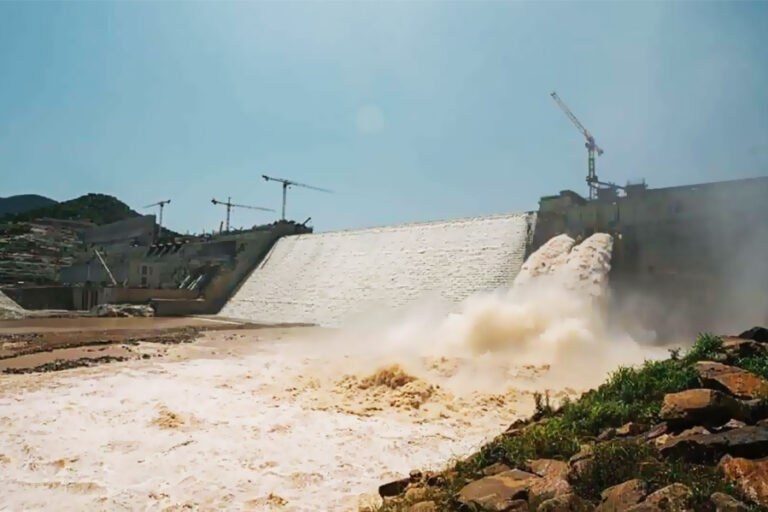
Last week I was very emotional to express my feelings concerning the measure taken by the United Nations Security Council (UNSC) regarding the issue of Grand Ethiopian Renaissance Dam (GERD). As far as I am concerned, the UNSC passed fair resolution that the issue of GERD on which Egypt and Ethiopia has long been at loggerhead should be directed to the right reconciliatory body, African Union (AU). This is surprising. Mind you, 11 independent states are said to be riparian countries of the Blue Nile River. If negotiation is thought (I believe so) to be the best solution, all these riparian countries will have to come to the discussion table. On the other way round, they should be given the chance to voice their views. The simple way to implement this is through their mutual representative, AU. There is an Amharic saying that goes like this… a fart, which is released in agreement will not have bad smell. Ethiopia has long been reiterating that the general agreement or discussion should be among the riparian countries. It is, however, unfortunate that Egypt needs to drag this African issue to the UNSC. Here Egypt has failed once again miserably. What the Ethiopian minister of Water and Irrigation Development, Engineer Sileshi Bekele stated last week at the UNSC meeting was that dealing with water development at this level is beyond the mandate of the Council.
Yes, my man… it is not the mandate of UNSC to deal with issues related to water development. After all, we are not building nuclear power. We are rather developing hydroelectric dam. …simple initiative taken to build waterfalls that is solely intended to hit the electric charging turbines. Can you hear that? There are many issues of fundamental importance, which the UNSC should deal with. Many such issues and disputes are pushing countries across the globe to the verge of conflicts and wars. Better for the UNSC to pock its nose on the belligerent Sudanese forces that trespassed on the territory of neighboring Ethiopia. Note that, this can easily ignite cross boarder conflicts in the Horn of Africa. …Better for UNSC to reprimand the Egyptian government that trots like truant mad dog to meddle with internal affairs of Ethiopia. By the way, what makes GERD special to bring its issue to UNSC? As the minister of Water and Irrigation Development said there are many hydraulic dams built in Europe, Africa, Asia and America… Why UNSC does not show the slightest interest to mediate possible disputes raised around these hydroelectric dams?
Ethiopia has made everything clear that her mere intention is harnessing its water resources in a bid to supply 65 million poor Ethiopians with electric power. This very day our compatriots numbering in millions are pushing on lives without electric power. Millions of Ethiopian women are collecting firewood for cooking their daily meals. Many hospitals, residential houses, mills, colleges, industrial parks are highly in need of sufficient and reliable electric power. Our capital city, Addis Ababa is getting power service on shift basis. Suffice is to say that Addis Abebans (metropolitans) pass several nights of a month in darkness. Hospitals are in problems to conduct surgeries due to lack of reliable electric power… We are not like Egyptians who have already fulfilled their electric power supply to 100 per cent.
As Engineer Sileshi says, GERD is under construction by the sweat, blood and tears of all Ethiopians. Our people in all walks of life have been involved to contribute money for the construction of this massive dam. GERD is a public project. What the people across the globe should know is that the World Bank refused to provide the necessary financial support to Ethiopia for the execution of such a development project. This means Ethiopians are not allowed to have their own dam that can bring electric power to their dark houses. We Ethiopians have been doomed to lead backward and wild lives in dark villages and cottages. We are expected to collect firewood from forests if we need to cook our meals… They need us to do this forever.
Let me put one questions to all people across the world in general and the Americans in particular. What will be the responses of USA if Mexico says it has the right to control and manage the Hoover Dam, which was built by USA on Colorado River that flows through Mexico? …Will that ever happen? Let’s say this happens. Then, will Americans accept that? No way! Then what makes ours special? Or … is it to mean that black Africans have not the right to do whatever they like with their own resources?
The minister of Water and Irrigation Development said that 85 percent of the Nile water comes from Ethiopia. Meaning… this ancient country has the right to harness its own river for the benefit of its poor people who are leading lives in darkness. Ethiopia has the desire to harness its potential hydropower and lift its people out of poverty. As the minister said, this country has no any intention to harm the lower riparian country. Prick up your ears and listen that we have the desire to live together in peace and cooperation.
Egyptians need to receive 40 billion cubic meters of the total 49 billion cubic meters water flow of the Blue Nile. This means Egyptians want to take over 86 per cent of the Nile water! What! They claim such amount of water is very essential for their agricultural production. The fact is that 97 per cent of the water Egypt gets comes from the Blue Nile with its source the highlands of Ethiopia. Egypt and Sudan takes 90 per cent of the water from the Nile. How? Yes, this was deliberately designed on a grant agreement mediated in 1929 by the colonial power, Great Britain. Listen… Ethiopia is not expected to be governed by this agreement written by the colonial master of Egypt and Sudan. No one can twist our hands to abide by this rusty rule or agreement. Do not expect us to respect such an agreement that violates the rights of other riparian countries. C’mon … is it not the natural rights of these riparian countries to harness the resource? Egypt and Sudan have selfishly stuck to the slovenly made treaties their colonial master had designed for them. Nevertheless, Ethiopia has reiterated that as an independent and sovereign country, it will never bow down to this draconian treaty.
My message is that this is the time for all Ethiopians to lift their heads and join forces in defending the honor and unity of their country. We all should know that the western world and the Arab League are working in concert against our interest. Let’s tell them boldly that there is no turning back. We will never flinch an inch! We know it is hard to win hearts and minds of some crocked officials of the government of Egypt and Sudan. Because they deliberately convinced themselves that the Nile River should remain forever as their personal property. They believe that no one, except Egypt and Sudan, should be allowed to ladle out a single drop of water.
Djibouti’s hidden rock art offers window to the past
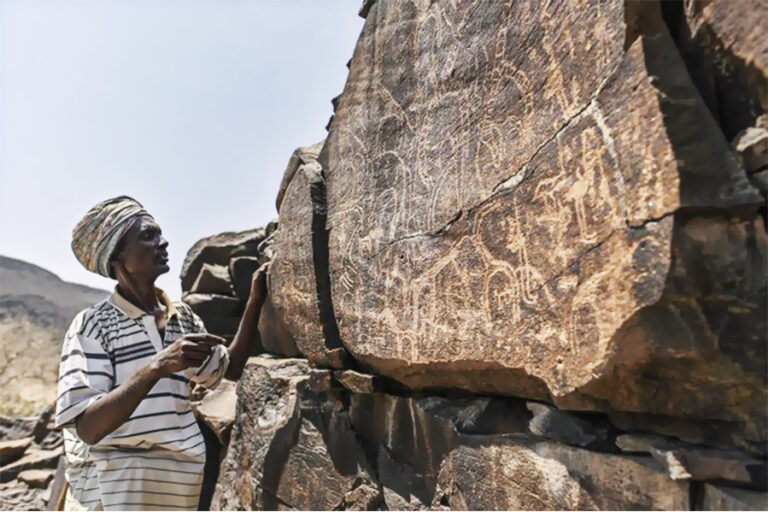
From a distance, the black cliffs appear featureless, scorched by a blazing desert sun. But up close, the basalt reveals engravings of giraffe, ostrich and antelope made 7,000 years ago.
These masterful works, etched onto stone in northern Djibouti, are among the most important examples of rock art in the Horn of Africa, a region rich in archaeological heritage and the birthplace of humanity.
Stretching three kilometers (almost two miles), some 900 panels at Abourma depict in wonderful relief prehistoric life in these parts, dramatic scenes of early man confronting wildlife, and droving cows.
But these centuries-old images, rendered by flint onto igneous rock, also offer a valuable record of a bygone era — and a land drastically reshaped by millennia of climate change.
The wildlife illustrated are still found today on Africa’s plains and grasslands, but not in Djibouti, a harsh desert landscape where water and greenery have been scarce for thousands of years.
“Today, Abourma is something of a cemetery because we don’t have these animals here anymore. At the time, they roamed here because Djibouti was covered in forest,” said Omar Mohamed Kamil, a young tour guide who takes visitors to Abourma.
“In Abourma…we are a little removed from civilization. We are in the prehistory, we are living in prehistory.”
This treasure trove lies a six-hour drive away from the capital, Djibouti City, then a further one hour on foot over a craggy expanse of boulders.
It would be all-but impossible to find were it not for Ibrahim Dabale Loubak, a camel breeder and Abourma’s custodian, who claims to “know every stone, every nook and cranny” of this rocky massif.
The 41-year-old is from the Afar community, a historically nomadic people who wandered the arid fringes of Djibouti, Eritrea and Ethiopia, and have known about the carvings for generations.
“Our grandfathers told our fathers and then our fathers told it to us,” said Loubak, a traditional turban and cloth skirt cladding his slim figure.
Despite this local wisdom and roughly 70 centuries of existence Abourma was not visited by archaeologists until 2005.
It was Loubak who guided the first French team to the site, trailed by a caravan of camels bringing food, sleeping quarters, and other essential equipment including a generator for the remote investigation.
Archaeologist Benoit Poisblaud, who was part of the team, still evokes with wonder the “extraordinary site,” not found anywhere else in the region that he studied as a 25-year-old researcher.
“Abourma is a continuity, over several millennia, of passages, engravings, made by very different people: hunters, pastoralists, and those after… Thousands upon thousands of representations,” he said.
The oldest carvings predate the birth of Christ by 5,000 years, while newer examples were painted around two millenia ago, he said.
Africa boasts a wealth of archaeological sites, but few, especially rock art, have been fully studied, said Emmanuel Ndiema, head of archaeology at the National Museums of Kenya in Nairobi.
“Up to now, as we speak, we still get reports about sites here in Kenya, not even elsewhere,” he said, estimating that just 10-20 percent of archaeological troves in sub-Saharan Africa had been properly researched.
This risks the universal value and preservation of these finds, experts say, which if nurtured could in time attract tourists and history buffs, generating much-needed government revenue.
However, greater visibility comes with its own potential cost for heritage.
Abourma, for example, receives so few visitors there are no fences, barricades or rules or any kind for those who make the journey to this vast, hidden-away expanse.
Loubak, however, is not too worried about threats to these millennia-old artworks, with eyes everywhere reporting the slightest disturbances or outsider presence.
“Nobody can come here without my knowledge,” he said.
(ARAB NEWS)
