

Tafoukt Theater on theatrical and artistic tour in Europe and Africa
With the support of the Ministry of Foreign Affairs, African Cooperation and Moroccans Residing Abroad – Department of Moroccans Residing Abroad, Tafoukt Creation Space will tour Spain, France, Italy and other countries Europeans during the month of June 2022 and in Senegal thereafter.
The Moroccan community will have an appointment with Amazigh theatrical performances (Aferziz), that is to say (Bitter Melon), produced as part of the support for the localization of theatrical troupes by the Moroccan Ministry of Culture. And in partnership with the Royal Institute of Amazigh Culture. At the same time, the Tafoukt Theater will present shows to the children of Moroccans around the world through the musical piece Argana operetta, followed by meetings with the children, in addition to presenting a variety of concerts, and the Tafoukt Creation space as part of social works on a special theatrical and musical program for the benefit of Moroccan prisoners in a penitentiary center, Ponent Lleida, Catalonia, Spain.
Thus, the public will have an appointment with the artists, performances and concerts of the Tafoukt Theater in Spain on June 03, 2022 at the Auditorium Tivoli in El Vendrell, on June 04, 2022 at the Civic Center of Torreforta in Tarragona, on June 05, 2022 at the Civic Center de Balafia in Lleida, and on June 07, 2022 at the Salle Théâtral de la prison de Ponent in Lleida, then in France on Saturday June 11 and Sunday June 12, 2022 in Paris, Saturday June 18, 2022 in Strasbourg, Sunday June 19, 2022 in Nancy , then in Italy on Friday June 24, 2022 in Verona, Saturday June 25, 2022 in Padua and Sunday June 26, 2022 in Bologna, The program will also include other offers in Luxembourg, Belgium, Germany and Switzerland, ongoing programming with a group of partners.
HOT MUSIC TABLE – MAY 2022
Digital technologies qualify green development!
By Chen Mingliang
Technological advancements have greatly been contributing to the betterment of human life. We can witness how building a carbon free economy, using advanced technologies, developing digital talent, and driving social sustainability are improving the quality of life. High-tech companies like Huawei are leading the charge to accelerate the journey toward digitalization, intelligent transformation, and low carbon emissions by increasing investment in talent, scientific research, and innovation to reshape its foundational technologies.
The journey of digitalization, intelligent transformation, and low carbon emissions enables the digital economy. A digital economy is, first and foremost, a green economy. Digital technologies qualify green development and play an indispensable role in addressing environmental challenges. Huawei focuses on leveraging its ICT strengths to enable the digital transformation of all industries and ultimately brings digital to every person, home, and organization for a fully connected, intelligent world.
A foundation for a digital economy is well-developed ICT technologies. ICT technologies directly create value and drive immense indirect value by transforming other industries. ICT technologies can help improve organizational and social productivity, leading to even greater social benefits as they see wider adoption in the industrial, agricultural, financial, and transportation sectors, among others. Through our ICT technologies, we are committed to minimizing our environmental impact in manufacturing, operations, and over the entire lifecycles of our products and services. Innovative products and solutions help industries reduce their energy consumption and emissions and contribute to the circular economy. We are exploring applications of 5G tailored for over 20 industries and creating a safe working environment for mines, steel mills, machine industries, precision manufacturing, and others.
When ICT technologies expand and the digital economy grows, cyber security related issues will be questioned. Cyber security and privacy protection are a top priority at our company, and we continue to invest and remain transparent in both areas. We have launched the HiSec 3.0 solution, which supports intelligent analysis, dynamic detection, all-round defense, and intrinsic trustworthiness. With this solution, we provide customers with accurate, fast, and stable security defenses and help them build a resilient security network.
Digital skills and literacy are essential to the development and sustainability of the digital economy and also for a better understanding and utilization of ICT technology. To assure the viability of digitalization, Huawei is cultivating the talent ecosystem by designing various corporate social responsibility activities.
Since 2008, Huawei has launched or sponsored multiple talent development programs and competitions at the global, regional, and country levels, including scholarship programs, Seeds for the Future, Huawei ICT Academy, Huawei Developers Training, Huawei Cloud Developer Institute, Women in Tech, and Technology for Education (e.g., DigiSchool, DigiTruck, and SmartBus). We have already invested more than US $150 million in these programs as part of our commitment to local ICT talent development, and 1.54 million people from over 150 countries have benefited from them.
Huawei in Ethiopia. “In Ethiopia for Ethiopia”
Thanks to the Ethiopian people’s support, Huawei has been rooted in Ethiopia for more than 22 years. These years, more than 3700 jobs are offered, and 70% of them are local employees, and served more than 64 million people to be connected. We have been working in the Ethiopian telecom market for the past 10 years along with our partners. On May 9th,2022, 5G was successfully launched by Ethio Telecom and Huawei is honored to be the strategic partner to provide the state-of-the-art 5G solution to all Ethiopian people.
And we work tirelessly to create more employment and boost the economies of countries and regions by hiring locally, investing locally, procuring locally, and establishing research facilities locally.
Huawei’s business in Ethiopia is built on the principle of “In Ethiopia for Ethiopia.” Our company was recognized as a Top Employer 2022 in Ethiopia and Northern Africa by the Top Employers Institute in January. In addition, the Ministry of Revenue awarded the gold taxpayers’ medal in 2020 and 2021. We are grateful for the support of people from all walks of life.
Rather than focusing on business, we are also committed to participating in a variety of corporate social responsibility (CSR) activities, such as the well-known seeds for the future program, which has been running since 2017, and the UNESCO-Huawei open school projects, which were launched last year. We are also working to develop ICT talent in Ethiopia. We launched a talent development program through our Huawei talent online program; an ICT training center was established at Addis Ababa University, in which we invested more than US $2 million, with a capacity to train 2,000 students over three years. In addition, we established 42 Huawei ICT Academies in 42 private and public universities. Every year, a handshaking forum is held with the goal of promoting jobs to graduate students and others. And we have a long-standing commitment to train and certify new graduates and equip them with the latest trends in the industry like Datacom, Artificial Intelligence, Storage, LTE, Bigdata, Wireless LAN and others.
We will contribute more to this inspiring and thriving country in the future.
Chen Mingliang is CEO of Huawei Technologies Ethiopia P.L.C.
Behaylu Asrat
Name: Behaylu Asrat
Education: BA in Business Administration
Company name: Queens Fashion
Title: Owner
Founded in: 2018
What it does: Selling women’s cloths
HQ: Addis Ababa around 22
Number of employees: 2
Startup Capital: 100,000 birr
Current Capital: Growing
Reasons for starting the business: Self sufficiency
Biggest perk of ownership: Falling and rising up again
Biggest strength: Passionate
Biggest challenging: Finding good quality product
Plan: To open branches
First career: Sales
Most interested in meeting: Ermias Amelga
Most admired person: My brother
Stress reducer: Praying
Favourite past time: Time with family
Favourite book: Bible
Favourite destination: France
Favourite automobile: Range Rover
SPACES SO SACRED…
Sacred spaces are generally interpreted religiously through architectural structures, some adorned with images reflecting hope, faith and relative canons. Other types of sacred spaces include marvels of Mother Earth such as mountains and rivers; both meant to create spiritual connections. Ethiopia has an abundance of monasteries combining man-made places for prayer and reflection with natural inspiring topography. Genete Mariam Rock Church and Lalibela are amongst sacred spaces nestled in nature. Carvings of myriad meskels adorn the churches while ancient plant and mineral based paintings, recounting significant religious moments, stand the test of time. The landscape is matched only by the soundscape of harmonious chanting priests and winds whistling through ancient trees. In West Africa, the Yoruba of Nigeria, an indigenous ethnic and religious group, is well known for their spiritual culture carried to the Diaspora during the Trans-Atlantic Slave trade. With millions of adherents, Yoruba is upheld by African descendants to date with majority numbers in Cuba and Brazil. Their cosmology connects a Supreme Being with orishas, deities, such as Yemoja the mother of all orishas. Her domain and sacred space is the water, while carefully beautified temples with fresh flowers host Yoruba ceremonies. Countless examples of African and international cultures share relationships of reverence for sacred spaces, aesthetically pleasing and spiritually fulfilling. Hence, society usually protects and preserves them.
The artists called to create such iconic spaces and symbols may never be known, but their aesthetic language left an indelible imprint. Contemporary Ethiopian artists are creating works of harmony and continuity of culture and spirituality, which in the future will tell generations about present day desires, trials, triumphs, prayers, hopes and dreams. In the article “Sacred Space and Contemporary Art” by Grete Refsum and published in ArtWay.eu, Refsum analyzes the Kunsten a vaere kirke, the foundation doctrine of the Norwegian Evangelical Lutheran Church which states,“Both [the arts and the Church] try to create a room for reflection about what it means to be human [ … ] whatever the point of reference… the task is to seek places for meeting in which we can collaborate in tracing the sketches to a meaning that has to be reconstructed again and again.”
While this theory appears to recognize the arts in relation to the church, what about spaces for art such as galleries and artists’ studios? May these too be sacred spaces? After all, these venues present art which evoke extraordinary experiences and emotions…introspection, examination, reflection, reconciliation. For the record some exhibitions are quite provocative and challenging, however it’s the space that comes into question, as there are unlimited and diverse artists. One place that held a level of reverence for the arts community was Nas Studio and Guarmayle Art Center in Piassa. It was a place where many came to connect, revere, reflect and find comfort in shared moments of enjoyment and enlightenment. After many efforts to transform and keep the space, in accordance with the city’s river plan, the world watched this week as the Center’s owner Mifta Zelleke and internationally renowned resident artists, Tamrat Gezaghen, Dawit Adinew and Leikun Nahusenay amongst others, scrambled to remove their art. Created on canvas, wood, stone and other materials found by the river running under the Ras Mekonnen bridge, social media shared the demolition of the 22 year-old art space. Thousands of viewers and comments expressing pain and sadness could not halt the process. We bid them farewell, at that location.
The Nyahbinghi Tabernacle, an iconic Rastafari sacred space, designed after the circular Ethiopian Orthodox Church, was built in Shashamene and inaugurated in 1992, one year after the Derg fell. The Majesty’s Centenary celebration, July 92,’ attracted hundreds to Shashamene while thousands have visited over the years. The Tabernacle was built through international efforts of Rastafari worldwide, Pan Africans and supporters. It was large enough to host hundreds with a compound decorated by images of His and Her Majesties, African leaders, Holy Bible verses and excerpts of The Majesty’s speeches. The tabernacle Headquarters is museum-like, depicting the history and goals of the Rastafari Movement, attracting tourists, journalists, researchers and more. Sadly, a major part of the tabernacle was demolished on May 28 due to an unsettled issue with local authorities regarding the master plan and Nyahbinghi House border. Real estate development and infrastructure are crucial for Ethiopia’s future and we can find ways to respect sacred spaces be they religious, natural and/or artistic. Social cohesion can be achieved through the recognition and usage of art and faith-based spaces are important tools for development, peace and security. “The ancient paintings that are still to be seen in the great monasteries and churches of Ethiopia…carvings…which have come down to us in the ruins of the ancient palaces bear witness to the fact that the fine arts had attained a comparatively high degree of development even in early times. […] Our admiration for the creator’s handiwork should not be limited to those things he has provided us with for our daily needs, but should include all that is good and beautiful. It is these tender feelings of deep and silent admiration evoked from our hearts by the beauties of creation that should find adequate expression in the fine arts.” HIM Emperor Haile Selassie I.
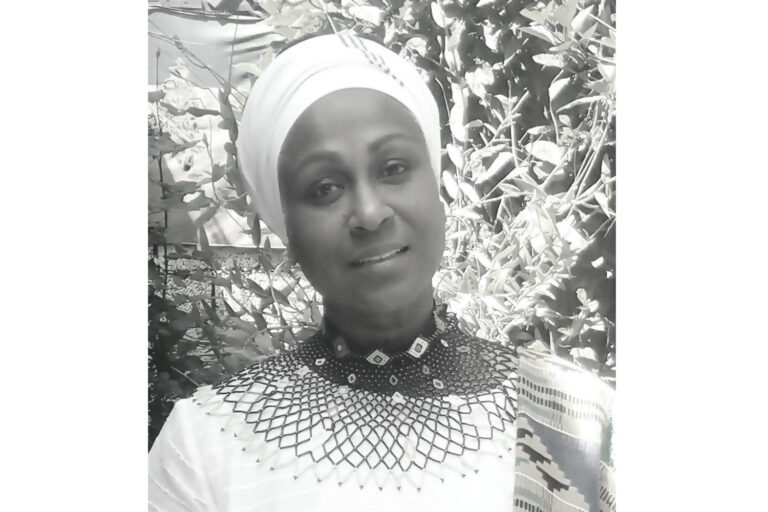
Dr. Desta Meghoo is a Jamaican born
Creative Consultant, Curator and cultural promoter based in Ethiopia since 2005. She also serves as Liaison to the AU for the Ghana based, Diaspora African Forum
