

Ethiopian Electric Power (EEP), which officially launched the first power generation from the national flagship project of the Grand Ethiopian Renaissance Dam (GERD), is under preparation to inaugurate Aysha Wind Farm II, located at the Ethio-Djibouti border.
Moges Mekonnen, Public Relation Head of EEP, said that the project which is located at Shenelle Woreda of Sitti Zone of Somali region has a capacity to generate 120 MW of power.
“New technologies and design that have never been seen in the first three wind farm projects in the country have been implemented. For instance each windmill and generator has a capacity to generate 2.5 MW at maximum which is higher than that of 1.5 MW at the other existing three farms,” he explained.
The wind speed per second at Aysha is very high compared with the other developed areas, due to that the design has been revised from the initial plan of installing 80 windmills to 48 windmills, whilst maintaining similar generation capacity.
“The project has 8 energy clusters that manage six windmills each. So far 32 of the 48 turbines have been fully completed, while the erection work only remains for 16 turbines,” the Public Relation Head revealed to Capital.
He said that by now the generation capacity for 80 MW is almost concluded and now the 16 turbines with a conbined generating capacity of 40 MW will go operational.
The EPC project is managed by the Chinese Dongfang Electricity and 85 percent of the USD 257.3 million worth project is covered by Exim Bank of China while the remainder is covered from the national coffer. Aysha is located about 700 km east of Addis Ababa and 173 km from the Dire Dawa.
The other operational wind farms are Ashegoda, Adama I and II, with a total installed capacity of 324 MW.
A week ago at the big event held at Guba, the first two turbines of GERD, which was being constructed on Abay River officially started the production of 375 MW of energy.
In related developments EEP is said that the compensation claim on the ongoing projects is affecting its activities.
Moges said that the compensation claim which is being requested by the community on some project areas is becoming very high and against the reality on ground.
“Sometimes compensation request are higher than the total project costs, which is totally unacceptable to be settled,” he said adding that such kind of issues have forced EEP to pause some projects.
He called on the public to understand the motive of the projects which primarily benefit the community who reside at the project areas.
Aysha Wind Farm to enter the national grid

Bid for 200,000 MT of sugar opens after delay
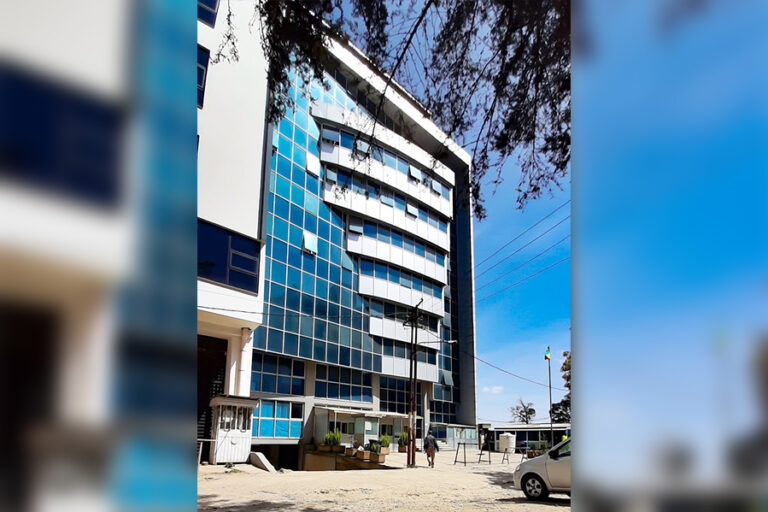
Finally the Ethiopia Sugar Corporation (ESC) has opened the 200,000 metric tons sugar bid which has drawn one new comer and two regular bidders.
The bidding process faced the hurdle of postponement twice. First was when the Ethiopian Shipping and Logistics Service Enterprises (ESLSE) failed to deliver the indicative prices for loading on time whilst the second instance was when the corporation gave bidders ample time for bidders to fuse their bid document with ESLSE’s rate.
The information Capital obtained indicated that the technical part of the bid was opened in the afternoon of Thursday February 24, at the Corp’s headquarters, located at the heart of the city around Kazanchis.
The common faces on such kinds of commodity bid in Ethiopia saw Sucden and ED & F Man participating in the bid, while SY General Trading Fzco – East African Djibouti Holding, made its debut by showing interest in the involvement of the latest sugar bid.
On its offer, Sucden has stated different loading ports in Asia including India, UAE and Thailand and Brazil. According to the information from reliable informants, the UK based commodity trading company ED & F Man indicated ports in Asia, though it did not attach the loading ports on its technical document.
The fresh face in the bid, SY General Trading Fzco indicated Santos Port, Brazil as its loading port.
Experts who closely followed the issue said that SY General Trading Fzco has a good stock in Brazil with highly competitive rates.
The company came up with its bid security from the Bank of Abyssinia; as opposed to ESC’s bid documents which stipulated Commercial Bank of Ethiopia for that role.
“If the bid committee approve the bid bond that is worth USD 35,000 for SY General Trading Fzco, it will be a good competitor on the bid,” an expert told Capital.
He added that the company has very cheap stock in Brazil which will make it competitive despite the logistics costs being high when compared with the Asian loading ports.
Agrocorp International which was awarded 200,000 metric tons in sugar bid with two different lots last year has not made an appearance on this year’s bid.
The firm has been able to supply the first lot of 100, 000 metric tons of the sweat, while the other was delayed by the corporation and finally annulled.
The country annually imports up to 350,000 metric tons of sugar to address the gap. ESC has targeted to produce 413, 000 metric tons in the current budget year.
In the budget year the corporation planned to supply about 720,000 metric tons of sugar for consumption.
The sugar demand has been growing from time to time and it is estimated that the country’s annual sugar demand caps at about 1.2 million metric tons. Thus the remaining gap is covered by other importers who have special permit from the government and those who have Franco-Valuta privileges.
Parliament approves National Dialogue Commissioners
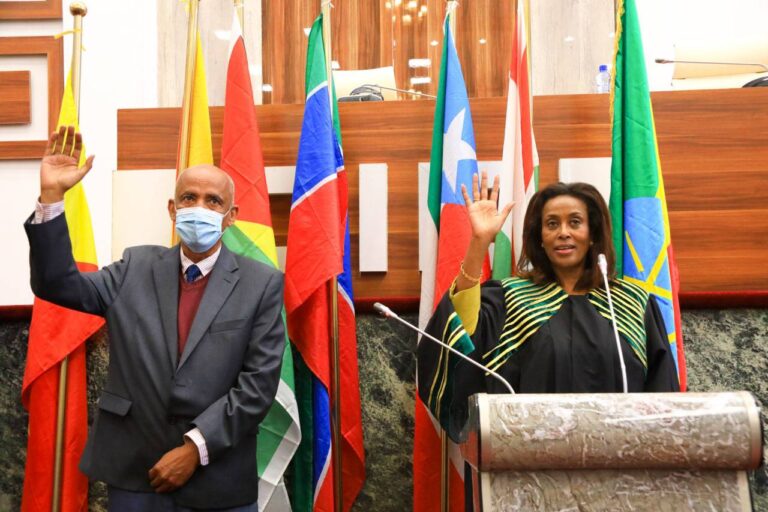
The 2nd extra-ordinary session of the House of Peoples’ Representatives (HoPR) held on Monday February 21 ratified the nomination of the National Dialogue Commissioner’s assignment.
On December 29, the HoPR approved the Proclamation No. 1265/2014 to establish the National Dialogue Commission. Following that, commissioners were selected by the people of Ethiopia with their appointments awaiting vetting and approval by the parliament. Religious elders, civic associations, leadership of the contesting political parties and public figures were said to be part of the whole process.
On January, the HoPR issued a shortlist of 42 people out of the 600 names that were nominated by the public. During the extra-ordinary session of the day, the HoPR approved the nomination of the aforementioned eleven nominees which was ratified by a majority vote and five abstains.
Professor Mesfin Araya, was then appointed as Commissioner Chairperson whilst Hirut Gebreselassie was given the Deputy Commissioner position.
Tegegnework Getu (PhD), Ambassador Ayrorit Mohammed (PhD), Blen Gebremedhin, Yonas Adaye (PhD), Zegeye Asfaw, Melaku Woldemariam, Ambassador Mohammed Dirir, Mulugeta Ago, Ambaye Ogatto (PhD) were also appointed as members of the commission.
The nationwide dialogue is said to bring together the various political interests in the country, in order to facilitate an all-inclusive national dialogue. The commission will be an impartial and independent organ of the Federal Government with its own legal personality and is to be accountable to the HoPR.
According to the proclamation, the term of the office is three years though if necessary the term may be extended by the HoPR. As experts suggest, the dialogue could take from three to five years.
The commission bears the responsibility to craft the agenda for the dialogue, organize the dialogues and facilitate deliberations and organize and convene dialogue forums at the federal and regional levels that would bring about national consensus with the participation of representatives of various segments of society drawn from the entire country after identifying and enabling participants to take part at a national dialogue conference in accordance with clear criteria and procedures.
As indicated on the draft, the Commission shall have eleven commissioners, appointed by the HoPR based upon nomination by the Prime Minister; with commissioners not having affiliations to any political party.
Commissioners are set to have immunity from criminal prosecution during the course of their service unless one is caught in flagrante delicto or one’s immunity is stripped by the HoPR.
Regarding the budget, the commission is said to get its budget from the government. Notwithstanding, the Commission may collect fund from other provision legal sources as well.
THE TECH OFFENSIVE

Modern life is unthinkable without technology. Technology is unthinkable without a thorough understanding of the basic sciences. Basic science is unthinkable without humanity’s passionate pursuit to understand creation/universe. Conclusion; it is inherent curiosity embedded in the human spirit that is at the root of it all! However, a problematic has arisen in late modernity. Technology, which is nothing more than the manipulation of nature, mostly to our temporal flimsy whims, has set up a formidable regime that is not always congruent to the essential needs (material or otherwise) of collective humanity. As the old man of wisdom once put it: ‘Our age is characterized by the perfection of means and the confusion of ends’, Albert Einstein!
According to the regime of technology, the purpose of society is no more humanity itself; rather it is to facilitate the reproductive process of incremental technology. Hardly a technology extinguishes itself by desire. It does so only when it becomes obsolete; in other words, it goes away when a more ‘efficient’ technology pushes it out. Here is what puzzles us: Why the human obsession with ‘tech for tech’s sake’? When investigating such important issues, one is forced to start from the basics. What kind of a society allows technique to take over our whole imagination? Technique was coined by the Jacques Ellul (French), one of the early articulators of the tech problematic; ‘The Technological Society’, 1954. Incidentally, Ellul, who remains one of the very few critical thinkers of the 20th century, met his wife while they were both demonstrating against fascist sympathizers of Ethiopia’s occupation. ‘Think globally, act locally’ is a phrase he coined and lived by, almost a century ago!
Why is technique undermining harmonious existence amongst the peoples of this planet? Why is the global sheeple a sucker for technique? Why is the whole organized humanity failing to interrogate the proliferation of technique, particularly those that are increasingly undermining life itself, not only that of humans? Ellul argued: ‘Technique, broadly conceived to include, not merely machines and other technical devices, but the whole complex of rationally ordered methods for making any human activity more efficient – has outgrown human control, even if we are able to govern individual technologies. This technical complex has taken on a life of its own, threatening human freedom and responsibility and suppressing the necessary conditions under which a solution to this predicament seems possible.’
The fact that the modern world system is organized around the core motive of profit has something to do with the unbridled ascendance of technique. In the ideology of the profit system, everything is secondary, including life! This can only sound strange to those uninitiated/unincorporated to modern existence! But the system has systemically done away with such societies. Even in remotest Africa, traditional gods are now replaced with the deity of unitary-monetary god. Ethiopia is one of the recent examples. This is one of the reasons why critical inquires are rendered experimentally futile. As we have been repeating ad nauseam, the greed system is not interested in life, hence, has been more than willing to facilitate the flourishing of technique, without any socially constructed restricting bounds! Otherwise, issues like climate change would have taken center stage. But according to the bible of the greed system, the economy has to remain sacrosanct. If truth be told, the very word ‘economy’ is intended to mislead. Will there be an economy if the species Homo sapiens was nonexistent?
Systemically muzzling discourse on technique is probably what led Theodore Kaczynski to take matters in his own hands. Ted, an American mathematical prodigy (the youngest Assistant Professor in UC-Berkeley’s history, at the age of 25) decided to raise awareness, by selectively and terrorist-ically, attacking some of the centers/individuals he deemed were active protagonist/prototypes of technique. Ted, commonly known as the ‘Unabomber’, is currently serving eight consecutive life sentences, without parole, in Colorado. He is 76 years old. After abandoning academia in 1971, Ted tried to live in harmony with nature in the wilderness of Montana. During these years, he concocted several homemade bombs and started sending them to individuals/institutions, to make his point, so to speak. Ted was finally found out by the authorities, after he forced the publication of his manifesto; ‘The Industrial Society and Its Future’ on the major US newspapers (NYT & WAPO). To be sure, Ted himself was a victim of a brutal psychological experiment (‘a purposely brutalizing psychological experiment’, according to insiders) enthusiastically conducted by the Frankenstein technicians when he was still a young student at Harvard. In 2005, Ted tried to donate two rare books to the African Studies Department of Northwestern, probably as a redeeming gesture, but the university rejected his offer. It was Northwestern University, which received his first mail bomb in 1978.
Without delving too much, we can mention some of the really thorny issues associated with technique. First, technique is diabolically incremental. But increased sophistication only results in a highly interdependent fragile setup, particularly in the realm of human societies. Secondly, it is blind about consequences. Whether non-renewable resources are available or not for its continuous reproduction, is not an issue as far as technique is concerned, to say nothing about impacts on the biosphere, etc. The third one is its obsession with irrational efficiency. Efficiency is a very relative concept, particularly as it applies to the domain of the natural. But to technique, efficiency is its very sustenance, as desired by its putative human handlers. If the creator/creation wanted us to be more efficient than we are today, may be we would have had ten eyes and twelve legs or a brain the size of the universe, etc., etc. Therefore, in nature, efficiency is a stupidly ridiculous idea, but technique is not worried about nature. Implanting chip in one’s body might be efficient, as far as technique/dominant interests are concerned. Such things, for instance, can control/facilitate the sheeple’s life! Cumulatively, the above factors create an environment where resilience is lost and is replaced by frightening fragility! Herein lies the main critique in regards to technique or the technosphere (a la Dimitry Orlov). Like it or not, technique/technosphere enabled collapse is almost inevitable!
Humanity might survive its own destructive technique if it starts to obey the ways of the natural. Perhaps nature mimicking is the only way out of the current morass of greed and destruction. Unfortunately, in late modernity, technique still reigns supreme!
