

What’s most remarkable about the concentration of economic power in the hands of a few corporate players in each industry is how little public angst it has generated, at least in the United States, over the course of the nineteenth and twentieth centuries. While the labor unions’ struggles against corporate power were bitterly fought, they never attracted a majority of the workforce to their cause. Although there have also been occasional populist uprisings challenging the unbridled corporate control exercised over the economic life of society, the most recent being the Occupy Movement, with its rallying cry of the 99 percent versus the 1 percent, such outbursts have generally been few and far between and led to only mild regulatory reforms that did little to curb the concentration of power.
To some extent, the criticism was muted because these large, vertically integrated corporate enterprises succeeded in bringing ever-cheaper products and services to the market, spawned millions of jobs, and improved the standard of living of working people throughout the industrial world. There is, however, an additional and more subtle factor at play that has proven to be every bit as effective in dampening potential public opposition. The First and Second Industrial Revolutions brought with them an all-encompassing world view that legitimized the economic system by suggesting that its workings are a reflection of the way nature itself is organized and, therefore, unimpeachable.
The practice of legitimizing economic paradigms by creating grand cosmological narratives to accompany them is an age-old practice. Contemporary historians point to St. Thomas Aquinas’s description of creation as a “Great Chain of Being” during the feudal era as a good example of the process of framing a cosmology that legitimizes the existing social order. Aquinas argued that the proper workings of nature depend on a labyrinth of obligations among God’s creatures. While each creature differs in intellect and capabilities, the diversity and inequality is essential to the orderly functioning of the overall system. If all creatures were equal, St. Thomas Aquinas reasoned, than they could not act for the advantage of others. By making each creature different, God established a hierarchy of obligations in nature that, if faithfully carried out, allowed the “Creation” to flourish.
St. Thomas Aquinas’s description of God’s creation bears a striking resemblance to the way feudal society was set up: everyone’s individual survival depended on them faithfully performing their duties within a rigidly defined social hierarchy. Serfs, knights, lords, and the pope were all unequal in degree and kind but obligated to serve others by the feudal bonds of fealty. The performance of their duties according to their place on the hierarchy paid homage to the perfection of God’s creation.
The late historian Robert Hoyt of the University of Minnesota summed up the mirror relationship between the organization of feudal society and the Great Chain of Being “the basic idea that the created universe was a hierarchy, in which all created beings were assigned a proper rank and station, was congenial with the feudal notion of status within the feudal hierarchy, where every member had his proper rank with its attendant rights and duties.”
The cosmology of the Protestant Reformation that accompanied the soft proto-industrial revolution of the late medieval era performed a similar legitimizing role. Martin Luther launched a frontal attack on the Church’s notion of the Great Chain of Being, arguing that it legitimized the corrupt hierarchal rule of the Pope and the Papal Administration over the lives of the faithful. The Protestant theologian replaced the Church’s feudal cosmology with a worldview centered on the personal relationship of each believer with Christ. The democratization of worship fit well with the new communication/energy matrix that was empowering the new burgher class.
Martin Luther accused the Pope of being the Antichrist and warned that the Catholic Church was neither God’s chosen emissary on Earth nor the anointed intermediary by which the faithful could communicate with the Lord. Nor could Church leaders legitimately claim the power to intercede with God on behalf of their parishioners and assure salvation in the next world.
Instead, Martin Luther called for the priesthood of all believers. He argued that each man and woman stands alone before God. Armed with the Bible, every Christian had a personal responsibility to interpret the word of God, without relying on Church authority to decipher the meaning of the text and assume the role of gatekeeper to heaven. Martin Luther’s admonition spawned the first mass-literacy campaign in world history, as converts to Protestantism quickly learned to read in order to interpret God’s word in the Bible.
Martin Luther also changed the rules for salvation. The Church had long taught that performing good works along with receiving the Church’s sacraments would help secure a place in heaven for believers. Martin Luther, by contrast, argued that one can’t win a place in heaven by racking up good works on Earth. Rather, according to Martin Luther, one’s ultimate fate is sealed at the very get-go, that every individual is either elected to salvation or damned at birth by God. But then the question is: how does one live with the terrible anxiety of not knowing what awaits him? Luther’s answer was that accepting one’s calling in life and performing one’s role fully and without a lapse might be a sign that one had been elected to salvation.
John Calvin went a step further, calling on his followers to continuously work at improving their lot in life as a sign of possible election. By contending that each individual was duty-bound to improve his or her calling, Protestant theologians unwittingly lent theological support to the new spirit of entrepreneurialism. Implicit was the assumption that bettering one’s economic lot was a reflection of one’s proper relationship with God and the natural order.
Although neither Martin Luther nor John Calvin had any intention of despiritualizing the faithful and creating “homo economicus”, eventually the idea of improving one’s calling became indistinguishable from improving one’s economic fortunes. The new emphasis on diligence, hard work, and frugality metamorphosed over the course of the sixteenth and seventeenth centuries into the more economically laden term of being “more productive.” Self-worth became less about being of good character in the eyes of God and more about being productive in the new market exchange economy.
In time, the idea of each person standing alone with their Lord began to take a back seat to the notion of each person standing alone in the marketplace. Self-worth was now to be measured by self-interest, which, in turn, was measured by the accumulation of property and wealth by cunning dealings in the new market economy. Max Weber referred to this process that created the new man and woman of the market as “the Protestant work ethic.”
The new commercial zeal spilled over, bringing increasing numbers of Catholics and others into the market fold. Where previously one’s place on the rungs of the Great Chain of Being that made up God’s creation had defined one’s life journey in the feudal era, the new autonomous individual of the soft market economy came to define his journey by the amassing of private property in the marketplace.
Human Nature in a Capitalist Perspective

ETHIO-DJIBOUTI RAILWAY
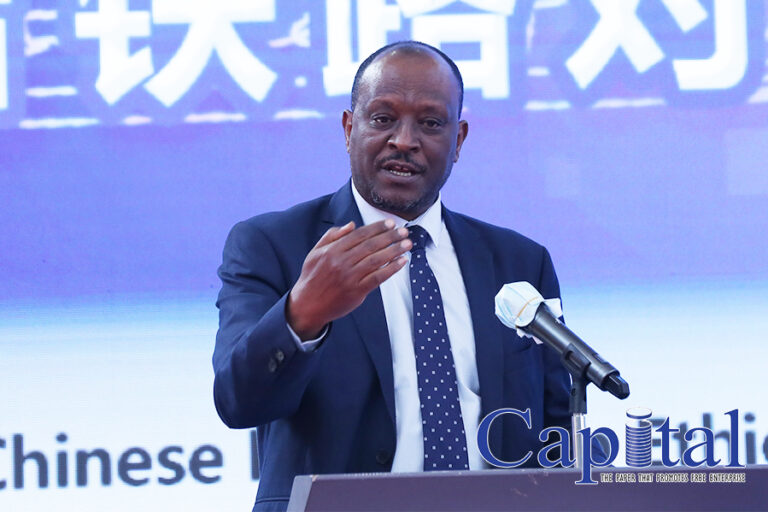
The first Ethio-Djibouti Railway was built in 1897–1917. The line when commissioned connected Addis Ababa to the Port of Djibouti in French Somaliland, providing landlocked Ethiopia with railway access to the sea. Over a century later, the railway has been replaced by the Addis Ababa–Djibouti Railway, an electrified standard gauge railway that was completed in 2017. To this regard the railway industry has been gaining traction as a preferred mode of transport within the country. The rail transport of goods now appears favorable when compared to the road transport – in terms of volume, costs, safety and speed of transportation for both imports and exports. In order to have a better understanding on the progresses made in this space, Capital caught up with Ethio-Djibouti Railway General Director Tilahun Sarka for an inside scoop of the railway sector. Excerpts;
Capital: What have been your successes in the last four years?
Tilahun Sarka: First and foremost the railway is a testimony to the China- Africa friendship which nurtures a win-win corporation between the two countries. The past four years has seen the railway playing an integral part in the transportation system as it targets to become front in line for the transportation of goods for people’s livelihoods. 90 percent of the railway plan is to transport export and import goods using the Djibouti port which is the main gate way of Ethiopian goods.
Before the operation of the new railway, containers were staying for 8 days at the port without payment or more with payments of demurrage. However, after the launching of the new electric railway we are able to transport our goods from the day it reaches Djibouti port by connecting it mainly with Modjo dry port, which is the main benefit using the train.
In doing so, the railway has cut the transportation time for freight goods from more than three days to less than 20 hours and has also reduced the cost by at least one-third.
In the past, for the old trains, lack of investment and theft had plagued the sector which led to the use of trucks when they were out of business for the transportation of imports and exports. The launching of the railway has been a boost to the transport sector since the start of its operation in 2018, we have been able to grow from transporting 1 million tons to two million tons to date, which is a year on year increase of 25 percent.
In the grand scheme of things, this may seem to not be a lot and that is why we are pushing to give railway transportation a priority because we have the capacity to increase. Nonetheless 25 percent increase is a healthy development as per our analysis.
So for the past 4 years the performance has been going from strength to strength, and the 2021 performance is better in particular. We are all working in concerted efforts to realize even greater performances are recorded in the years to come.
Capital: What makes it different from other modes of transportation? How can this mode of transport benefit the society?
Tilahun Sarka: In my opinion, this mode of transportation has an array of unique benefits. For transportation of goods, it is very secure and presents a space to handle huge amounts of cargo at one time whilst price incurred from the service is lower when compared to other modes. For example, using trains to transport goods cuts the cost of transportation by 30 percent.
Similarly for public transportation use, the train has a capacity to handle 2000 people at any given time providing affordable prices and comfortable service in the process. In this sense, i believe this mode of transports just about edges the other modes.
Capital: Addis Ababa Djibouti railway has launched a commuter train scheme. What led to the realization of this scheme?
Tilahun Sarka: Our stations on average are 45km apart. This means that the railway track as a result can connect one town from the other. So for the communities where the track passes, it plays a crucial role in connecting one community to the next logistically.
In order to develop a culture that embraces railway transportation as well as providing a cheaper means to arriving at various destinations we saw it best to introduce the commuter scheme.
We launched it considering the many resident settlements along the line that have not yet set up a railway station in order to allow them to enjoy the convenience of the railway transportation in addition to the existing 14 stations the railway has. Thus we have added 5 additional stations.
Akaki, Awash, Mulu, Afdem, and Erer are the new 5 stations which tally the number of stations to 19. Residents along the railway can take the commuter train from the 19 stations. Furthermore, the railway brings development in the areas along the rail line.
Now, the public can enjoy this service twice a week.
Capital: Vandalism, insecurity and theft have been noted as challenges for the railway sector. How are you coping with this?
Tilahun Sarka: The stated challenges of course are a huge hurdle for the sector. For example theft has been minimized over time however the challenge still remains. These challenges however cannot just be solved by punishments or penalties. We ought to approach them in a prudent manner. That is why we have rolled out the use of commuter trains in our line so as to create a sense of ownership. Moreover in this regard we are also creating awareness on the matter so as to strengthen public ownership.
Capital: Is there any update regarding the privatization?
Tilahun Sarka: European companies are in talks with the government regarding the privatization of Addis Ababa-Djibouti Railway.
The railway needs an additional investment of 800 million dollars to be fully operational and efficient according to the Ministry of Transport and Logistics.
We ourselves and the government have been encouraging the Chinese companies to have some amount of share on the railway but the companies are undecided on the matter. Of course the question arises on the financial capabilities since the value is worth 4 billion dollars, that being on the construction cost alone. Thus for privatization, a proper valuation assessment is needed.
Currently, the Chinese company -China Civil Engineering Construction Corporation (CCECC), is managing the railway. The government pays about 60 million dollars per year to the managing company which signed agreements for the next two years, having started in 2018. And in due course the local employees who have been trained will take over when the time comes.
The government plans to expand the Addis Ababa-Djibouti railway line to 4,000 km in the ten-year development plan through expanding the railway line and connecting it to other neighboring countries’ ports.
Capital: What is your view on the profitability of the railway?
Tilahun Sarka: In the past year our revenue was 1.8 billion birr, however, our expense was three fold of the stated number. Profit in the railway sector is not something that is always seen. Railways in some developed countries including China and Japan are said to be profitable. But this often takes years to realize returns in investments.
Nonetheless, in order to reel in profits we have to utilize the space where the line passes at various train stations. We can delve into new projects such as hotels and buildings which will act as secondary streams of income.
Hearkening Realities Art Exhibition by Dereje Shiferaw

Dereje Shiferaw born in Asmera in 1978, is a naturally gifted self-taught-painter who states, “…my combined love for art and nature…has found its way into my life…”. His exhibition HEARKENING REALITIES is a collection of new paintings which documents a range of social issues from miseducation to impact of war on children. Opening this weekend at Moa Anibessa Art Studio Gallery in Kazanches, Dereje’s newest works consist of acrylic on paper filled with a fresh bold graphic style. Where many artists are refining and defining, Dereje is emphasizing and challenging. His signature African subjects project lush illustrious lips with huge contorted hands accentuated with simple yet stylized nose and eyes which speak volumes. Funky and fresh, Dereje is unbridled by any academic pedagogy or formula; going freely where most formally taught artist dare to go.
HEARKENING REALITIES documents Dereje’s journey into a world where those without hearing use sign language to communicate. The expressive hand gestures, bright colors, subtle touches of nature create a story of confident and conscious people who are comfortable with their so-called “disability”. He also explores the miseducation of Africans, confined to Euro-centric education, now being challenged by a generation waking up to the realities of foreign “interests.” Dereje declares “Influenced by nature, human beings, social elements to questionable politics, culture, economic circumstance in Ethiopia, Africa and worldwide…I am motivated by it all. The Intriguing dialogue between the subject’s message and the viewer is compelling…physically and emotionally invested in the subject’s story, my aim is to capture the sprit, essence and heritage of my subject and use this as an opportunity for the world to peer into the lives and struggles of people whose stories are yet to be told…”. Dereje’s exhibition is open until March 13th, at Moa Anibessa, an art studio gallery offered to selected artists from Africa and the Diaspora by contemporary fine artist, Prince Merid Tafesse. To book an appointment please text or call 0911864677.
India Insight: Digital diplomacy builds bridges
By Una Galani
New Delhi’s digital diplomacy is making inroads. When India rolled out its online payments infrastructure to power real-time money transfers six years ago, it unwittingly laid the foundation for a technology-driven Belt and Road initiative. It gives Prime Minister Narendra Modi a more cost-efficient answer to China’s multi-trillion-dollar splurge on ports and pipelines in the intensifying battle for regional influence.
Modi is eager to export the system and other parts of India’s growing stack of digital public goods. Against that aim, plans announced last week for an entity backed by Nepal’s central bank to deploy India’s payments model is a significant development for the Himalayan nation sandwiched between two jostling giants. The rollout will happen in partnership with the international unit of the National Payments Corporation of India, an initiative from the Reserve Bank of India.
It sets up Nepal to replicate the success of its southernly neighbour’s booming digital economy, considered by venture capitalists as one of the world’s most sophisticated markets for financial technology. India’s interoperable “Unified Payments Interface” is an open set of specifications that speeds up the movement of cash, reduces the scope for dodging the taxman and makes it easier for startups to thrive. UPI underpins numerous money-sending applications. Among the biggest read more are Alphabet’s (GOOGL.O) G-Pay, Walmart’s (WMT.N) PhonePe and One97 Communications’ (PAYT.NS) Paytm. It is a leading payment option on everything from e-commerce to airline websites.
The system democratises payments by allowing labourers, young professionals, small shopkeepers and large merchants to transfer money through their smartphones at zero-cost to each other’s bank accounts in real-time. It uses a QR-code, an email-styled address or a phone number. UPI handled some 39 billion transactions amounting to $940 billion in 2021, equal to nearly a third of India’s GDP. The disarmingly simple design reduces the appeal of credit card companies MasterCard and Visa (V.N). And in India’s payments paradise there’s no duopoly as in China, where Ant and Tencent (0700.HK) dominate.
Nepal’s embrace adds to a growing list of endorsements. Encouraged by India’s rapid digital development, Google wrote to the U.S. Federal Reserve in 2019 recommending an open system “akin to UPI” for the central bank’s planned interbank real-time gross settlement service. Last year, another important and strategically placed Indian neighbour, Bhutan, opted to deploy UPI-specification QR codes, a potential precursor to its deeper adoption of India’s protocol. India also has a partnership with Singapore to accept UPI QR-based payments.
LUCRATIVE GROUND
Closing a soft infrastructure gap marks a stark contrast to China President Xi Jinping’s attempt to plug the hard infrastructure deficit stretching from Pakistan to Sri Lanka. His Belt and Road programme formally started in 2013. At its best, constructing transport corridors is a good way to make friends because such projects provide countries with highly desired funding, jobs, taxes and technical expertise. When it goes wrong, however, Beijing’s readiness to extend hefty loans on opaque terms can look like debt-trap diplomacy, even if it isn’t intended to be. On the other hand, India’s direct financial gain from sharing its technology will likely be limited to nominal fees.
Mirroring India’s success will have its own challenges, however. Governments need to accept their own UPI-like systems as a public good and ideally have them overseen by a neutral umbrella organisation with the full backing of the country’s central bank. NPCI, the overarching group in India for UPI and other payment services, is a not-for-profit whose growing base of shareholders include domestic lenders, foreign peers, fintech firms and international technology goliaths. As a result, NPCI reflects the payments community in India. Countries can develop new products and services themselves atop the digital rails without depending on India.
India’s tech achievements also extend beyond its payments system. “UPI is part of a larger fintech revolution that is delivering the last mile of state services to the people, and which the private sector has been able to use well”, says Manjeet Kripalani, executive director of Gateway House, a foreign policy think tank based in Mumbai. Another catalyst for India’s startup economy is its biometric identity system. Aadhaar, which covers some 1.3 billion people, helped hundreds of millions of individuals access bank accounts. Getting data security right is important, too.
Further out, there could be mutually beneficial returns for India and those that follow its technology lead. Global adoption of a UPI QR standard would support a long overdue revolution in driving down cross-border remittance fees. India has a strong incentive: It’s the world’s largest recipient of such inflows, receiving $87 billion in 2021, according to estimates from the Global Knowledge Partnership on Migration and Development, or KNOMAD. For countries like Nepal, for whom India is its top trade partner, overall remittance inflows are small in volume but amount to nearly 25% of GDP.
The costs for sending money across borders around the world is painfully high, averaging nearly 6.3% or nearly $13 for every $200 transferred, the typical remittance transaction size, per World Bank estimates. The percentage fee is less for higher amounts. UPI could drive the cost down closer to the pure foreign exchange margin, which ranges from 1.4% to 3%. Sending funds through digital services is already cheaper than using banks and money transfer operators. As China grapples with the economic and diplomatic constraints of its overseas public works projects, India’s digital nuts and bolts are building useful bridges.
CONTEXT NEWS
Nepal is adopting India’s interoperable real-time digital payments model, payment groups in both countries said in a joint statement on Feb. 17.
The move makes Nepal the first country outside India to fully embrace the “Unified Payments Interface”, the statement said. National Payments Corporation of India is partnering with an entity licenced by the central bank of Nepal for the initiative. In July, Bhutan became the first country to adopt UPI standards for its QR-code rollout.
UPI is an instant real-time payments system, allowing users to transfer money across multiple banks without disclosing bank account details. UPI handled digital payments worth $940 billion in 2021, equivalent to roughly 31% of India’s GDP.
