Wednesday, October 14, 2026
Home Blog Page 3047

GERD officially starts power production

0

The national flagship project of Ethiopia, the Grand Ethiopian Renaissance Dam /GERD/officially starts its power production with its two turbines, as of today February 20, 2022, in the presence of high level officials. In the past few weeks the two turbines completed test trials successfully and the power generated entered the national grid.
The dam in its pre power generation is expected to generate 730 MW by operating the first two turbines.
As officials from the Ministry of Water and Energy explained, the power production will cover 20 percent of the nation’s power demand.
The construction of the Dam is still ongoing starting from 2011.
Financed by local sources, the GERD will be capable of producing as much as 5,250 MW of electricity, ranking it as one of the world’s largest dams and by far Africa’s largest dam by electricity production. Currently the overall construction progress of the dam has now reached to 84.2 percent.
Ethiopia has made the second filling in the past rainy season. The country has made a stand on equitable water use on the Abay/Nile River.
The GERD is the source of an almost decade-long diplomatic standoff between Ethiopia and downstream nations Egypt and Sudan.
Despite the downstream countries mainly Egypt expressing its concern on its water flow, Ethiopia strongly reassured that the project would not have harm on others and the country does not have intention to affect others.
To tackle the concerns, the three countries, Ethiopia, Sudan and Egypt discussed for years, while the negotiation was interrupted majorly from reasons that mainly come from Egypt.
Ethiopia has also been facilitating comprehensive engagements to address the concerns of the riparian countries since the inception of the construction of the GERD.
After discussions on UN Security Council the three countries have come to the AU-led negotiations and perhaps the negotiations between Egypt, Sudan and Ethiopia are still suspended since Ethiopia completed the second filling of the GERD.
Ethiopia contributes more than 86 percent of water share for Abay.
With some cooperation and wisdom, it was initially possible that the ambitious GERD project could become both a great development project for the Ethiopian people and a model for cooperation between Ethiopia and its neighbors. Instead, the project has become a constant cause for conflict as the various actors vie for regional hegemony.

Policy tweaks surge the T-bill market

0

The policy shift on the Treasury bill (T-bills) market taken by the central bank is paying off exponentially as the outstanding amount spikes by almost four folds in the past fiscal year compared with the preceding year.
The annual report of the National Bank of Ethiopia (NBE) which assesses the economy of the country indicated that at the end of the 2020/21 fiscal year, the total outstanding T-bills amounted to 116.6 billion birr, which is north of 391 percent higher than the preceding fiscal year.
It is to be recalled that the central bank had changed its policy direction on the T-bills market and made it a biweekly trade which was to be driven by the market than the previous fixed interest rate.
In its annual report, NBE stated that the surge of the T-bills, which is one of the primary money markets, was mainly attributed to the policy change on the issuance of T-bills since December 2019.
The annual report of NBE stated that during 2020/21, the total T-bills offered to the T-bills auction market showed a 42.9 percent increment and reached 330.7 billion birr while demand for T-bills increased 17.1 percent to reach 284.8 billion birr.
This indicated that the market was undersubscribed by 45.9 billion birr (13.9 percent). Thus, the amount of T-bills sold during the fiscal year was 238.8 billion birr which was lower than the demand by 46 billion birr.
The 2019/20 total outstanding T-bills was 23.7 billion birr which is significantly lower than the past fiscal year amount.
“Commercial Banks’ participation in the T-bill auction market has shown significant improvement and accounted for 52.0 billion birr or 44.6 percent of the total outstanding T-Bills where that of non-bank institutions stood at 64.5 billion birr or 55.4 percent,” the annual report reads.
The average weighted yield of all types of T-bills increased to 7.97 percent from 4.54 percent during the review period. The highest yield was recorded for the 364-day T-bills and the lowest 28-day T-bills with a corresponding yield rate of 9.03 and 6.83 percent, respectively.
The annual report of NBE it has also shown that the total resources mobilized by the banking system in the form of deposit, borrowing, and loan collection went up 51.5 percent and reached 505.2 billion birr at the end of 2020/21, “partly bolstered by the NBE’s Legal Tender Protection Directive that restricts cash holding and cash withdrawals as well as the demonetization measure undertaken during the review fiscal year.”
As result, the total deposit liabilities of the banking system rose to 1.4 trillion birr, witnessing a 30.3 percent growth.
Of the total deposits, saving deposits accounted for 60.3 percent, demand deposits 32.4 percent, and time deposits 7.3 percent.
Saving deposits showed a 38.7 percent increment while demand and time deposits registered 23.4 percent and 3.9 percent growth.
“The share of private banks in total deposit mobilization increased to 45.7 percent from 42.6 percent last year due to their opening of 749 new branches. Meanwhile, Commercial Bank of Ethiopia alone mobilized 54.3 percent of the total deposits due to its extensive branch network,” explained the report.
It added that raising funds through borrowing remained insignificant as most of the banks were sufficiently liquid due to increased deposit mobilization and collection of loans, “their total outstanding borrowing reached 84.2 billion birr compared to 80.4 billion birr a year earlier due to higher borrowings by the Development Bank of Ethiopia.”
Of the total borrowing, domestic sources accounted for 81.3 percent and foreign sources 18.7 percent. Net borrowing stood at 3.7 billion birr of which 98.7 percent was from foreign, which is for public banks, and 1.3 percent from local sources.
Moreover, banks loan collection was 186 billion birr in 2020/21, showing only 1.5 percent increments. Of which private banks collected 65.8 percent of the total loan disbursed.

Counterfeit seeds threaten sector

0

A new report that is on its finalization to be released states that counterfeit seed is threatening the seed sector. The gap in demand and supply is stated as one of the major reasons for the vulnerability to counterfeit seeds.
The draft country report that was prepared by The African Seed Access Index (TASAI) and tabled for stakeholders for final consultation indicated that the counterfeit seed, which is also known as fake seed, threatens the seed sector in two important ways.
“First it reduces farmers’ confidence in the certified seed when farmers unknowingly plant inferior quality grain falsely labeled as certified seed,” it says, adding, “it threatens the successes of efforts to increase the adoption of improved varieties because farmers won’t be sure which seed is genuine.”
Maize and wheat are the dominant crops in terms of seed production in Ethiopia, accounting for 95 percent of combined sales (by volume) of the four crops.
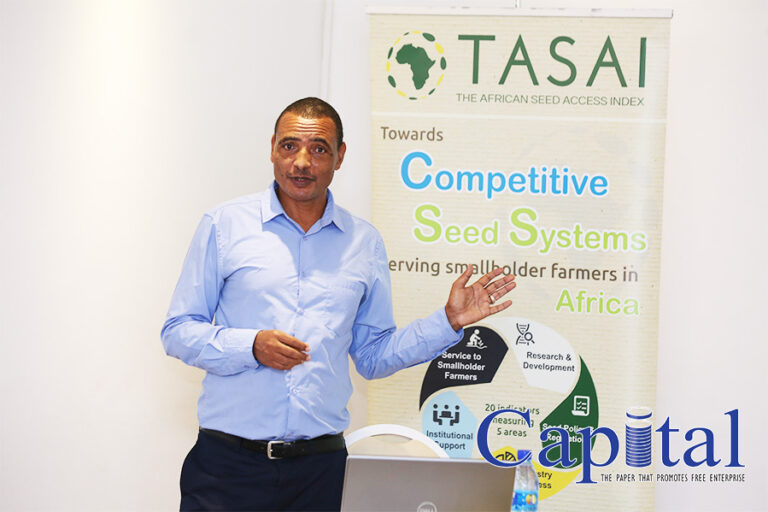
Mohammed Hassena, who is one of the lead researchers on the 2022 country report of TASAI, said that the case shall not be that much exaggerated since it is mainly seen on very few seeds mainly on maize seed.
The problem mainly occurs on maize, due to that grain to seed price ratio is from 1 to 3.5 for public varieties and at some private seed companies, it is one to 6.9, while the price ratio is not that high for others like wheat or teff.
“The illegal actors are mainly abusing the sector because there is a shortage of improved seed supply,” Mohammed said.
Commonly and frequently the case is seen in some known areas like Bure, east Wellega, Shashemene, or Alaba in the country.
“The limited capacity of regulatory bodies and knowledge gap of law enforcement instrument is the major challenge to tackle the problem,” Mohammed says, adding, “for the increment of access to the seed; expanding the number of seed producers, marketing and law enforcement must be tackled strongly.”
In its report, TASAI covered the seed sector of maize, wheat, teff, and sorghum.
The draft report shows that Ethiopia registered 54 active seed producers for the four crops in 2020: 27 private companies, four government parastatals, and 23 seed cooperatives. Most of these entities produced maize seed (34 producers) or wheat seed (27 producers).
The number of seed producers has increased for three crops except for sorghum between 2017 and 2020.
Improved seeds coverage for grain crops that includes pulses is about 20 percent on average of the demand. When it comes to maize quality seed, which is a hybrid seed, the coverage is about 55 percent of the demand.
TASAI’s survey identified that in 2020 seed companies sold 28,177 metric tons of maize seed, 41, 646 metric tons, 3, 069 metric tons, and 106 metric tons of wheat, teff and sorghum seeds respectively.
TASAI’s survey has slight changes like increased wheat and teff seed sales and reduction of maize compared with the data from the regulatory body due to different sampling and availability of relevant data.
The draft report added that for all crops, these were modest increases from seed sales recorded in 2016. For instance, seed sales for sorghum were 60 metric tons in 2016 that stood at 106 metric tons in 2020, and teff seed sales have reached 3,069 metric tons from 2,654 metric tons in 2016.
The draft report indicated that an increase in the number of varieties sold in a country often results in an increase in the choice of varieties available to farmers.
In 2020, 65 varieties of the four crops were sold to farmers: 28 wheat varieties, 24 maize varieties, 11 sorghum varieties and 10 teff varieties, “despite the high number of varieties released for the four crops, a small number of varieties dominate seed production on the country.”
In the case of maize, the top five varieties account for 87 percent of all maize seed production. For wheat and sorghum, the top five varieties account for 75 and 93 percent of seed production respectively, while the top four teff varieties account for 98 percent of all teff seed production.
“These findings imply that most of the varieties are not widely grown, despite the fact that Ethiopia has a wide range of agro-ecologies,” the report that is expected to be finalized very soon said.
From 2001 to 2020 a total of 258 varieties of the four crops were released wheat and maize took the lion share by 107 and 65 respectively.
Just in three years’ time up to 2020, 43 varieties were released that are also led by wheat seed.
TASAI is to promote the creation and maintenance of enabling environments for competitive seed systems serving smallholder farmers.  It is this enabling environment that TASAI seeks to measure, track, and compare across African countries. TASAI’s intended outcome is improved access to locally adapted, affordable, and the high-quality seed of improved varieties by smallholder farmers in Sub-Saharan Africa.

Low bid entry sees ESLSE putting a pin on truck procurement

0

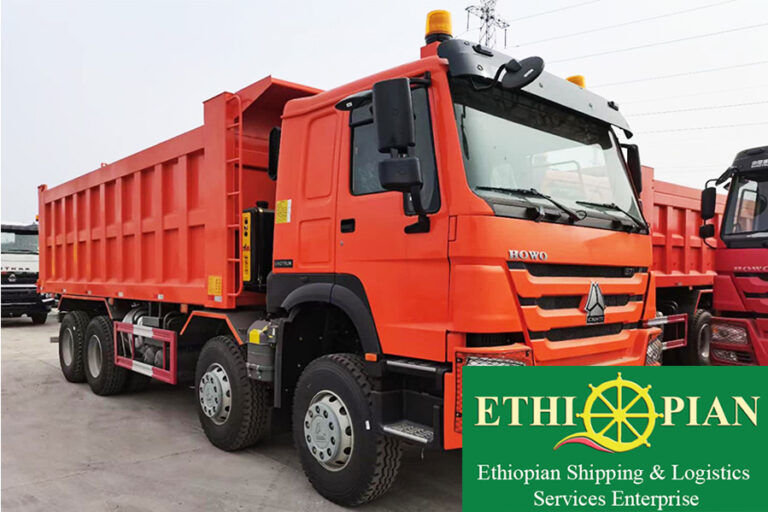
Ethiopian Shipping and Logistics Service Enterprises (ESLSE) annuls the bidding process to procure 150 heavy-duty trucks. The enterprise disclosed that the international bid will be refloated with some revisions in the bid document.
It is to be recalled that the logistics mammoth and multimodal monopoly invited international sellers to compete on the bid to supply 150 trucks for its cross-border operation.
A few weeks back, the enterprise stated that a technical evaluation had been undertaken before opening the financial offer. However last week ESLSE officials in a turn of events disclosed that the bidding process had been terminated owing to the low number of participating companies.
Wondimu Denbu, Deputy CEO for Corporate Service, told Capital that the enterprise was forced to stop the process because only one company submitted its bid documents to supply the trucks.
According to insights, the Chinese vehicle-manufacturing giant, Jinan Sinotruck Co. was the only company that came through with its offer.
Jinan Sinotruck Co, which is known for its heavy-duty trucks, Sinotrucks, was the company that won last year’s bid to supply 150 Sinotruck vehicles at the cost of 11 USD million.
Wondimu said that ESLSE will refloat the bid for another round, “if the coming bidding process will not be successful the enterprise will look for another alternative as per the country procurement rules.”
He said that the second-round bidding will take place with some revisions from the former bid document.
On the initiative embarked by the Ministry of Transport and Logistics that allowed 168 transport companies to import 3,200 general cargo trucks through a differed letter of credit (LC), ESLSE has engaged in the bidding process to buy its quota, 150 trucks. However, the actual demand of the enterprise is over 300 brand new trucks.
As per the differed LC scheme the enterprise has opened the LC by 30 percent of the procurement value and the balance will be paid in the coming two years’ time. The government has given the guarantee for the payment that will be settled in the timeframe given by the scheme.
Currently, 38 trucks that are directly bought from the Chinese manufacturer at the cost of the same winning price of last year’s bid are being transported to Djibouti. According to the country procurement rule, the enterprise has a right to conduct up to 25 percent additional direct purchase from the bid winning supplier, “that is the advantage we applied to procure additional 38 trucks, besides the 150 Sino trucks, which are already in the operation,” officials of ESLSE recently told Capital.
Currently, ESLSE has 450 operation heavy-duty trucks and the new coming 38 trucks will increase the number to 488.
About five years ago, 215 trucks were purchased from the French automotive company, Renault Trucks. As the norm of ESLSE, the new fleet will allow the enterprise to exclude the long-serving and economically inefficient trucks from its cross-border operation.