

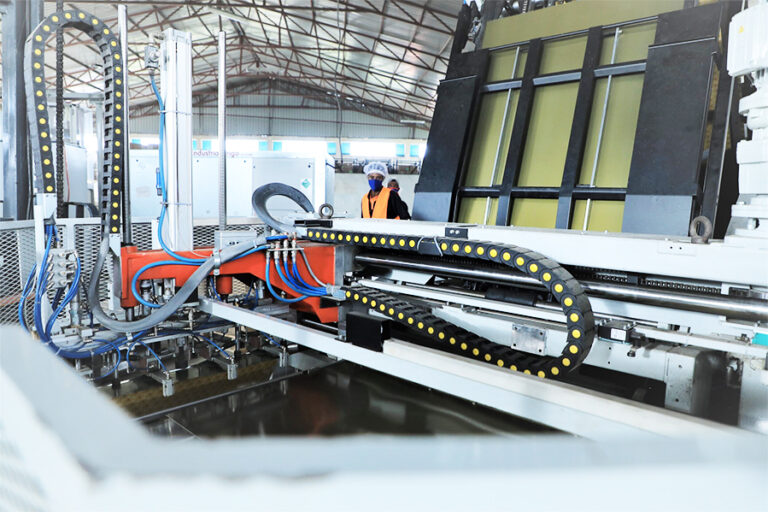
The destruction of Walia Crown Cork factory due to the conflict has caused shortage of crown corks among bottlers.
The crown cork located at Kombolcha city, is one of the victim areas of the conflict in the region, and according to Abayneh Abebe, Industry and Investment Office Head of Kombolcha town, the factory which is said to be the largest operating crown cork factory in the country has incurred damages of more than 30 million birr, especially on its printing machineries.
“The principal raw materials required and printing chemicals have to be imported,” said Abayneh, adding that even if the factory has re-started its operation, it will not be able to operate in its full capacity.
From information that Capital has gained, different bottlers are using substandard crown corks as a result of the damage in the factory. Large bottlers including BGI, Ambo water, and other are customers of Walia.
“The company is under proses to import the necessary machineries and to re-standardize its productions” said Abayneh.
The local demand for crown cork is met through both local production and import. At present, the major source of supply to the local market for crown cork is mainly import.
Walia Crown cork factory is one of the 26 companies under the TIRET corporate established with about 268 million birr investment. Established in 1995 as an endowment organization in the Amhara regional state with an initial capital of 20 million birr, TIRET’s companies now include Tikur Abay Transport, Ambasel Trading House, Bahir Dar and Kombolcha Textile Share Companies, Dashen Brewery and Gondar Malt Factory, among others.
The factory has created job opportunities for more than 80 residents in the town has a capacity to produce two billion crown corks per year. The unsatisfied demand for beverage bottle caps is projected to be 4,284 tons and 5,615 tons by the year 2025.
TPLF group plundered large amount of products and inputs and destroyed machinery in factories located in the industrial town. Militants of the terrorist group removed machineries from factories and deprived many industries in the town of production.
According to local officials, 200 local and foreign companies have invested in the industrial town, Kombolcha in several manufacturing and production areas that create jobs for more than 8,000 people.
The town administration is now conducting a survey and investigation to find out the extent of the damage and complete destruction on the factories as part of preparation for restoration works.
Damages result in beverage bottle caps gap
Castle group acquires Meta Abo brewery
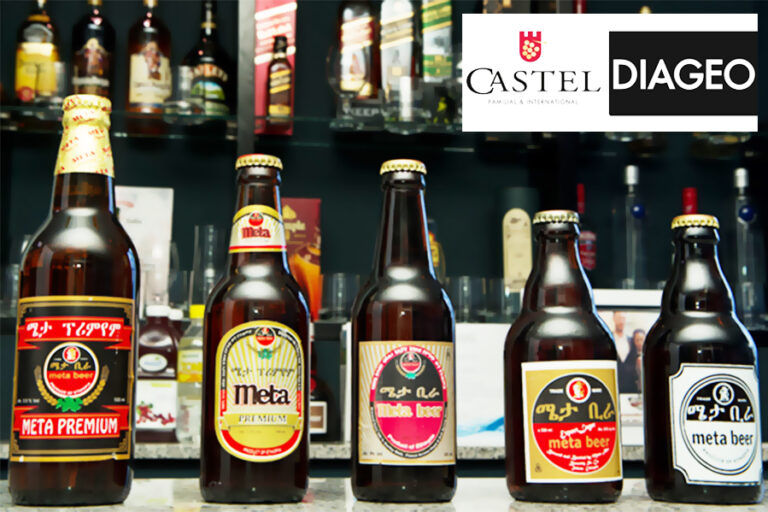
Castel group buys Diageo’s Meta Abo Brewery, with the transfer of the factory awaiting government approval.
The brewery which is based out of Sebeta, Oromia region has about 3.7 billion birr in government tax debt starting from 2017. According to sources that Capital spoke to who are close to the issue, the factory has been sold to Castel with negotiations considering the effect of the seizure of the factory by the government. However, the transaction cost is yet to be officially disclosed. The sale, which is subject to approval by the Ethiopian Competition Commission, is expected to be complete during the first quarter of 2022.
Meta Abo was sold to Diageo in 2012 after privatization at a price tag of 225 million dollars. After acquiring the factory in 2012, Diageo made 119 million dollars in investment for the expansion of the factory, and has since has pumped a total of 344 million dollars in investment throughout the years for its expansion with the aim of transforming the brewing industry in Ethiopia. The brewery also supported local communities through provision of clean water.
Meta Abo brewery was established by the Ethiopian government and Ethiopian private nationals in 1963 as a share company. Initially, the production capacity of the brewery was 50,000hl per annum, however, with Diageo’s investment, which was detailed back in 2015 saw the company re-launching the Meta brand.
Following the acquisition, Meta Abo joins BGI’s other five breweries i.e., St. George Brewery in Addis Ababa, Kombolcha Brewery, Hawassa Brewery, Zebidar Brewery and Maychew Northern Brewery with a combined production capacity of 3.6 million Hectoliters of beer annually.
The company also owns and manages the Castel Winery and vineyard located in the town of Zeway. Established in 2012, the winery produces 12,000 Hectoliters of different wine varieties annually under the brand names Acacia and Rift Valley. St George, Ethiopia’s oldest beer brand, was also bought by France’s Castel Group in 1998.
Ethiopia alternates to Kenya’s port to alleviate Djibouti dependency

Ethiopia plans to start using Port Lamu and Mombasa within a few months’ time as part of its increase of port proportion and alternative sea outlet.
“Ethiopia’s cost of land transport per kilometer is the cheapest when compared to neighboring countries. However the distance from port to destination areas is a challenge in staying competitive in the international market,” stated Dagmawit Moges, Minister of Transport and Logistics on her latest appearance at the Urban Infrastructure and Transport Standing Affairs Standing Committee of the parliament, adding that using alternative ports could solve this. “We have to stop depending on one port, as the country is big.”
According to Eng. Yehualashet Jemere Director General of Ethiopian Maritime Affairs Authority (EMAA), the ministry is preparing commandments on the utilization of port Mombasa to start operation with in short period of time, additional to having continued discussions with the government.
As Dagmawit said, Ethiopia will start using these ports within few months and it will be included in the performance of the budget year report.
Similarly, Ethiopia and Sudan have agreed to provide a plot for the port development. In addition to this Ethiopia has also been working with Kenya and Eritrea in developing port facilities.
According to the six month performance report of the transport and logistics ministry, for the first time the volume of Ethiopia cargo transaction through the Djibouti port has reduced to 83.9 percent in the past six month, that is the first half of the fiscal year.
“It is one success in our performance,” said the minister.
I previous years more than 98 percent of total import export trade of the country was through Djibouti main port.
Ethiopia managed 17 million metric tons of import export cargo in the last six month. Becoming operational just one year ago, Tadjoura port takes ten percent of cargo transaction or 731,338tons of cargo while Berbera port’s share increased to 5.9 percent.
As the minister said, minimizing logistic cost is one of the benefits of alternative ports. Ethiopia in the past six months has managed to save up to 535 million birr.
Ethiopia is one of the 16 land locked countries in Africa paying hundreds of millions of dollars annually for port service.
In the past Ethiopia had been using Eritrea’s port of Assab; the closest port to the country however that was closed after the two neighbors fought a two year long war in 1998 that killed an estimated 70,000 people.
Ethiopia, which is the biggest population without a sea outlet in the world, mainly uses ports in Djibouti which are connected by three roads and a railway network for cargo import. In the last twenty years Ethiopia had been using ports at Djibouti which has undertaken massive logistics developments to accommodate Ethiopia’s growing demand.
Ethiopia is currently looking for alternative sea ports in neighboring countries of Sudan, Kenya and Somalia to ease increasing dependency in Djibouti.
Ministry of Transport and Logistics expressed that ownership and management of seaport will be determined by the ten year transport plan. The transport sector development in general is expected to consume 3.2 trillion birr or USD 75 billion in the coming decade, while the sector that is mostly preserved for public and domestic investors will expand its playground to foreign investors in different schemes.
Bright Future in Agriculture wraps up annual review
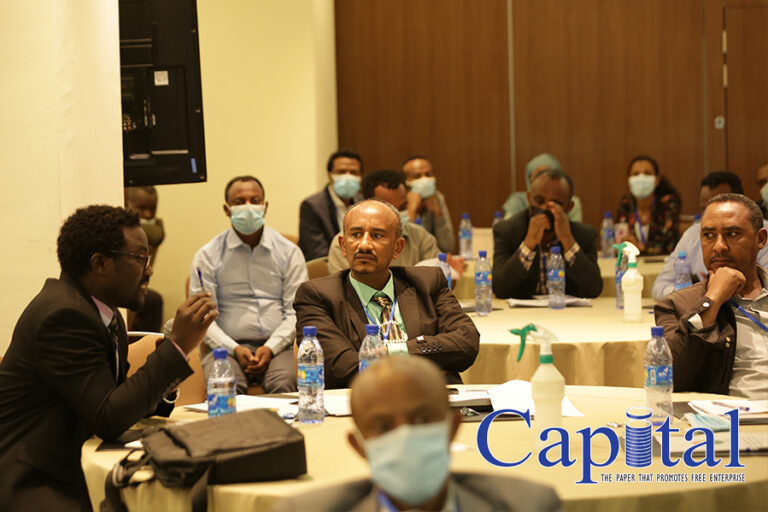
Bright Future in Agriculture has held its ‘Annual Review and Planning Event’ in the premises of Radisson blu Hotel starting from 26 to 27 January 2022.
The event enjoyed a high turnout, which included all of the relevant stakeholders from TVET colleges, partners and consortium members, governmental and nongovernmental organizations, international organizations and the private sector.
‘A wide range of capacity building activities have been carried out by Bright Future in Agriculture for agricultural TVETs. These efforts include the provision of a wide range of trainings and the identification of points for improvement,” said Solomon Mogus, Project Manager for Bright Future in Agriculture.

Bright Future in Agriculture is a three-year project (2019– 2021) that supports the Ethiopian agricultural technical and vocational education and training (TVET) sector. The project is funded by the Ministry of Foreign Affairs of the Netherlands and is managed by Nuffic as part of the Orange Knowledge Programme.
There are in total 12 beneficiary institutions in Ethiopia out of which the Federal TVET Institute and Arba Minch University are the lead partners. Maastricht School of Management from the Netherlands is the lead implementer and together with 8 consortium member institutions from the Netherlands, Ethiopia and South Africa partake as providers.
