Countryside trading
The electoral race: Enat Party
Elections in their true nature keep a democratic country functioning, as they give the people the right to select their own government. Choosing the right leadership is integral to the success and growth of any given country. With the 6th Ethiopian general elections fast approaching, Capital has organized a series of interviews with aspiring political parties, with topics that encompass their incoming policy plans with regards to important matters that are required for the progress of Ethiopia.
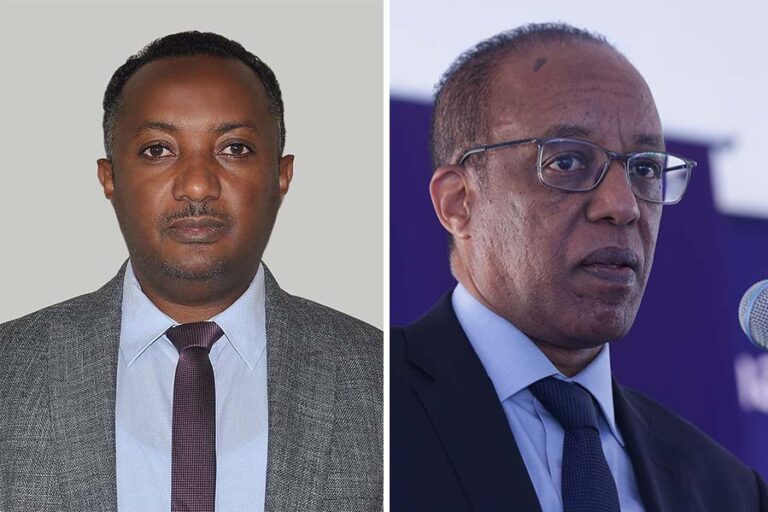
To this end, Capital drew links with Enat Party, through their acting President, Seife-Selassie Ayalew (PhD). The following are the party’s subsequent plans with respect to the key stone areas that require dire attention for a better Ethiopia. Excerpts;
Capital: What kind of policy plans does Enat party have towards developing education in Ethiopia?
Seife-Selassie Ayalew: For the past 30 years the education system of the country has been from the pan to the fire, which was damaged desperately. Despite the number of schools and education institutions increasing the quality of education has deteriorated. The promised works of increasing number of teachers, fulfilling equipment’s was forgotten and universities have been popping given the platform to become higher institutions without fulfilling the requirement set to qualify as higher education institution which downgrades the education system. Thus when students graduate they do not meet the needs of the demanding working world of this day and age.
To this respect, we are eager to create a quality education system which will go a long way in creating efficient and competent citizens starting from elementary to secondary school and we will build higher education institutions with quality education beyond just increasing the number.

The current education system of the country is totally copied from the western system, which forgets or neglects the local knowledge. Since our party follows a conservative social democracy system we will give great space for local culture, history and social system to be included in the education system.
Capital: What kind of policy does Enat Party have regarding job creation and minimizing unemployment rate?
Seife-Selassie Ayalew: Unemployment is a big challenge in the country, it is difficult for citizens to get job after graduation, which is resulting to social crisis but the bigger question still remains, how are we going to solve the problem?
It is difficult for government to give job for all of its citizens, however by creating conducive environment for private actors both local and foreigners those who can create more jobs in the country, the problem could be solved, such as supporting investments, funds and so on based on their business ideas.
Only allocating billions of revolving fund will result to waste unless we work in tandem with the private sector to be the engine of the economy.
Capital: What kind of policy framework do you have in store to support and improve the agriculture sector?
Seife-Selassie Ayalew: The agriculture sector is spoiled badly, even if about 80 percent of the population is dependent on agriculture sector, most of the farmers own small plots of land which is not convenient for modern and mechanized farming as well as for productivity. And also from that small land it will also be scattered for the family, which highlights the gravity of the situation.
For the last two or three decades there was high drought in the country, which was stressing the sector, and the country was receiving aid from others. Annually there are about 6 up to 7 million people in Ethiopia who need food aid which raises the question of is their sufficient supply of food for the long term sustainability?
The country has considerable wealth from its natural resources, but because of wrong policy surrounding the sector, it has been deadly damaged.
Enat Party has two measure extents to support the agriculture sector, the first is land reform. In terms of land reform Enat plans to make reform on land ownership which is from the government to the private sector, which needs constitutional reform. There will be three division of ownership, private, contract and governmental so this reform will help the farmer to expand its farming land, mechanized its farming system and increase productivity by working efficiently.
And the second measure is we will be using our resources to modernize and develop the sector and increase productivity. By modernizing irrigation systems, we are planning to decrease the agriculture sector which is dependent on rain fails. These could help us to increase productivity to three and four times in a year. As our party believes the question is beyond being food sufficient it is also feeding other since the country has enough resource.
Capital: What kind of policy does Enat Party have regarding decreasing inflation and building sustainable living standards?
Seife-Selassie Ayalew: Inflation in our country is circulation which needs to be controlled, as Enat party we are planning to take some listed measures such as Tax measures. We are planning to remove sure tax which is imposed on imported items which can have impact on the economy, The other measure is removing value added tax on basic commodities including food and cloths which can have some impact on improving living standard and creating a conducive environment for consumers.
The other measure will be giving additional salary for citizens; there will be 13 months of salary,
Income tax will be revised to increase disposable income of citizens which will be significant in terms of increasing income.
Capital: How will Enat Party tackle the foreign currency crunch that has proven to be a challenge for the country?
Seife-selassie Ayalew: There are two basic things we need to understand, the first is we need to generate foreign currency and the other is how; how are we going to increase our capacity to generate, the industry sector which should be leading to generate foreign currency.
So as an immediate solution we will fully apply Franco-Valuta to ease the surging cost of living in the country which currently the government announced that basic goods importers would be allowed to use.
This would help bridge the gap between the supply and demand of goods. The gap is blamed for the ever-increasing inflation; anyone who can get foreign currency can import items without any limitation.
The other measure is controlling the distribution of foreign currency, making it in the legal line.
Capital: What is the general economic policy of Enat Party?
Seife-selassie Ayalew: We plan to make the industry sector the lead to the economic development. We will; increase export in order to help generate foreign currency, create a participatory economic system, and be giving conducive environment for the private sector.
Residential houses to double
The number of residential houses in Ethiopia will be doubled in the coming 10 years.
Ministry of Urban Development and Construction (MoUDC) has revised the 16 years old housing policy and strategy to give more options for private sector involvement on the housing scheme.
The amended strategy for affordable housing schemes that has been sent to the Council of Minister for ratification has expanded the alternatives to 12.
MesfinAssefa, State Minister for urban development and housing at MoUDC, said that the coming of real estate proclamation that has currently been sent to the Council of Ministers is said take into the account of the revised housing strategy.
He said as per the new strategy that revises the 2005 document, the public with the private sector will be involved on housing scheme to expand for affordable housing. He added that as per MoUDC evaluation the interest of the private sector to engage on the housing scheme that is mainly dominate by the government in partnership with dwellers is very high.
“The government share on providing housing under the existing experience will be shrank and transfer for the direct involvement of the public and the private sector with different new technologies will embark,” he explained.
“Housing problems shall be significantly resolved when the strategy gets a green light by the top leadership and finalized to become effective,” he told Capital.
The strategy has added more alternatives from the previous eight housing scheme. “The drafted strategy has put 12 housing alternatives and mainly focuses on the private sector involvement in different arrangements,” Mesfin says, adding, “amending the strategy is crucial since the government could not continue as a major actor on the sector due to that mostly public private partnership (PPP) modalities, joint venture, real estate development, cooperatives and mixed use are the alternatives that is expected to magnify the involvement of the private sector and the general public in the sector development.”
Pre feasibility and feasibility study on six sites have already been conducted for PPP modalities in collaboration with Federal Housing Corporation.
For the real estate development and marketing proclamation the ministry have taken several years and discussed in detail with the public and relevant offices.
The strategy has also been assessing the source of fund. According to MoUDC as per the study conducted in this budget year there is one million residential house demands in the capital and which will be 4.4 million in the coming ten years across the country.
The government has targeted to attain at least 80 percent in this decade from the current about 60 percent.
Mesfin explained as per the projection every year 471,000 houses is supposed to be constructed including rural areas and in the coming 5 years, 486,000 every year in the second five year period, “the construction will be carried out by all partners including individual residents, developers or the government.”
In the coming ten year MoUDC targets to see the construction of 4.4 million houses in all over the country that will double the exit figure.
Ethiopia is the second most populous and the fifth least urbanized country in Africa. At present, 21 percent of Ethiopia’s of 112million residents live in urban areas (23.5 million people), according to the national definition, its significantly below the Sub Saharan average of 40.4 percent. There are over 950 towns and cities in the country.
According to figures from MoUDC, currently, in the country there are over four million houses in the country, but 30 percent are sub standard and 74 percent of them should need crucial renovation.
Realistic budgets only, urges MoF
Ministry of Finance (MoF) reveals to public institutions to be realistic on their budget proposal particularly on this critical time.
With the coming year 2021/22 budget period fast approaching, the relevant public offices are discussing with the responsible body to get their preferred amounts for their recurrent and capital budget for the operation that will be executed in the coming year.
On the discussion called by Revenue, Budget and Finance Standing Committee for the coming year budget inquiry of democratic institutions that are responsible for the House of Peoples’ Representatives, have gone on to defended their proposal. While some of them have not tabled their proposals for MoF as per the financial calendar.
Teferi Demeke, Director of Budget Preparation and Administration Directorate at MoF, at the inquiry session said that for coming year that will start on July 8, the budget would be more realistic since the country should have to undertake several priorities.
“Our resource is limited but the demand is very high like any other country. We have to harmonize the demand and the actual resource and give attention to priorities like poverty reduction sectors, which takes up to 70 percent of the annual budget,” the prominent budget experts explained on his response for the budget proposal that was tabled by democratic institutions.
“For the past several years the country revenue is affected in different reasons,” he reminded and adds, “The situation starting from 2016/17 that was hit with political instability reduced the country’s revenue generation which has now been stung some more by the COVID 19 effect. The planned expenses in public offices are supposed to roll to the next year’s budget for execution because of lack of resource, this time round.”
He said the law enforcement for this year has also come up with expenses and humanitarian aid which has also increased unlike other periods.
“The coming year’s budget is compounding with the past years financial burden. We have to see the situation seriously and to be realistic to accelerate the accomplishment of ongoing commitments and focus on developmental projects.”
Teferi explained that the resource envelop is regulated under a single coffer for 190 public bodies due to that any institutions whether they are responsible for the federal government or the parliament are supposed to table their proposal on time.
The budget is regulated by macro economic and fiscal framework and public bodies are supposed to consider the country’s resources.
At the budget inquiry Ethiopian Human Rights Commission, Federal Ethics and Anti-Corruption Commission, National Electoral Board of Ethiopia, and Secretariat of the House of Peoples’ Representatives have defended their budget proposals.
The Ethiopian Human Rights Commission has requested 211.6 million birr for the 2014 (EC) budget, while the budget projection given by the MoF is 103 million birr. The Federal Ethics and Anti-Corruption Commission requested 300.8 million birr that surpassed by 191.2 million birr compared with MoF maximum limit.
The Secretariat of the House of Peoples’ Representatives requested 442.2 million birr and MoF estimate to be 337.9 million birr.
NEBE is expected to receive a budget ceiling of 92 million birr from its demand of 192 million birr.
Teferi supported some of the democratic institutions demand but suggested some others to match with MoF’s projection and said that institutions should carry out their work efficiently and budgeting, taking into account the country’s economic potential.
He urged institutions to reconsider as they have made exaggerated budget requests and to provide adequate documentation and explanation if there is any work that requires more than the budget allocated.
Teferi also said that there is a delay on some institutions to come up with their proposal on financial calendar that may affect the process. “The draft budget proposal for the 2021/22 supposed to be tabled for the Council of Ministers (CoM) by the third week of May as per the calendar,” he insisted the democratic institutions to hurry on their preparation.
As per the financial calendars, MoF would send maximum budget limitation proposal by February 8 for all public institutions and public institutions should come up with their proposal by 45 days based on the limitation given by MoF and it finalize the drafting of the coming year budget bill within 60 days and sent to CoM by the third week of May and the council evaluate it within two weeks and send it to parliament for further evaluation and ratification.
Teferi told Capital that their office would give its entire effort to table the proposal on time for the higher body.
Yayesh Tesfahunegne, Chairperson of the Standing Committee, told Capital that through the Office of House Speaker, the democratic institutions have informed to accomplish their preparation on time.
Ombudsman and the Office of Federal Attorney General are also responsible for the parliament.
NEBE and Ombudsman are democratic institutions that have not filed their proposal for MoF, while they sent to Parliament.