

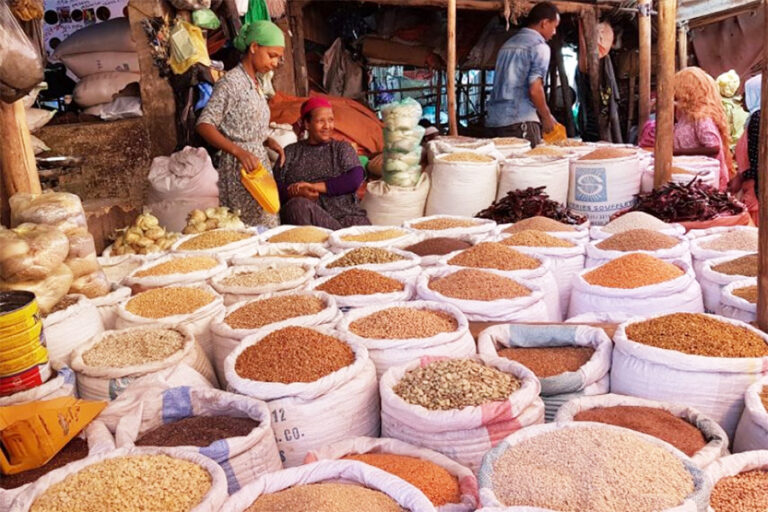
The November general year on year inflation rate hits 33 percent as the month-on-month food inflation rate for the same month decreased by 1.8 percentage point compared to the preceding month of October 2021.
During a similar period, the non-food inflation rate increased by 1.0 percent. Historical long-term seasonal inflation trend shows that food prices during the next 3-months of harvest period is expected to decline.
The country level overall inflation rate rose by 25.5 percent in November 2021 as compared to a similar period a year ago. Food inflation increased by 30.1 percent as compared last year same period, Non-food inflation rate increased by 19.4 percent in November 2021 as compared to the one observed in November 2020.
In comparison to last month’s country level general inflation, November 2021 has showed a decline of 0.6 percentage points while the food inflation declined by 1.7 percent as compared to the preceding month of October 2021. During the same period, non-food inflation showed 1.0 percent increase.
Last month, the general inflation rate recorded was 34.2 percent while the food inflation was 40.7 percent with non-food inflation being 25.3 percent in October 2021.
As the report said, the November 2021 General year-on-year inflation has increased by 33.0 percent as compared to the one observed in November 2020. The year-on-year food inflation has increased by 38.9 percent in November 2021 as compared to the one observed in November 2020.
In the current month as the report shows; cereals, vegetables and pulses showed a decline in most case, rice, teff, wheat, barely, maize and sorghum showed a decline in their prices. Meat, milk, cheese and eggs, and spices (mainly salt and pepper), cooking oil and butter prices slightly declined in the current month.
Besides as the report indicates, coffee beans and non-alcoholic beverages prices have also increased during the current month.
The Non-Food inflation showed an increase which stood at 25.2 percent in November 2021 as compared to the one observed in November 2020. The rise in non-food Inflation was mainly due to rise in the prices of alcohol and tobacco, stimulants (chat), clothing and footwear, housing repair and maintenance (house rent, cement and corrugated iron sheets), and energy (firewood and charcoal), furniture and home furnishings, medical care and jewelry (gold).
In November, region wise, Addis Ababa city, Amhara, Oromia and SNNP showed a declining price situation than the other regions.
This increase in the General Consumer Price Index is attributed to the rise observed in the indices of Food and Non-alcoholic beverages 38.9 percent, Alcoholic Beverages and Tobacco by 29.5 percent, Clothing and Footwear by 25.5 percent, House Rent, Construction Materials, Water and Fuel and Power by 18.5 percent, Furniture, Furnishings, Household Equipment and Operation by 42.8 percent, Health 50.9 percent, Transport 23.3 percent, communication by 16.0 percent, Recreation and Culture by 44.1 percent, Education by 27.1 percent, Restaurant and Hotels 24.0 percent and Miscellaneous Goods by 24.6 percent.
As the agency report indicates, most of the components of Food index showed increase as compared to similar month last year. Bread and Cereals , Meat (27.5 percent), Fish and Seafood by (28.2 percent), Milk, Cheese and Eggs (30.9 percent), Oil and Fats (85.0 percent), Fruits by (39.6 percent), Vegetables and Pulses, Potatoes and Tubers by (26.5 percent), Sugar, Honey and Chocolate declined by (22.4 percent), Other Food Products and spices by (37.2 percent) and Non-Alcoholic beverages and Coffee by 45.8 percent.
General inflation up 33% from last year
WHITE SWANS & WHITE ELEPHANTS
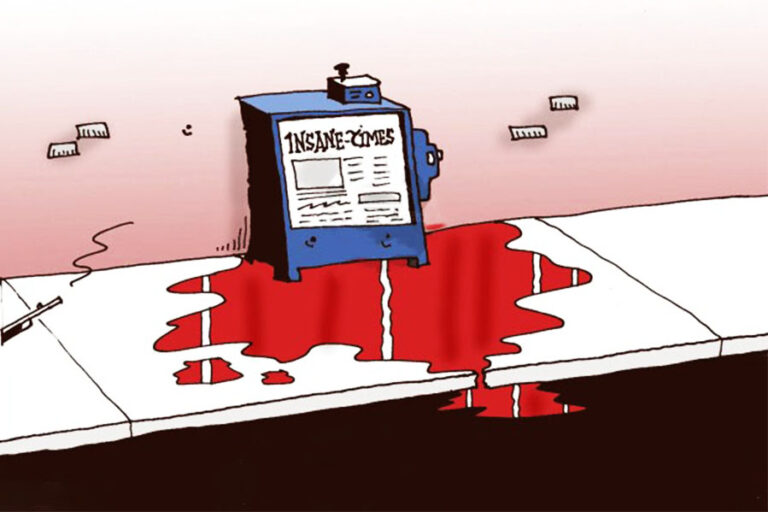
About a decade ago the idea of encountering a ‘black swan’ was again brought to mainstream discourse by Nassim Nicholas Taleb’s bestseller, the ‘Black Swan’. This time around however, the black swan notion was employed to illuminate unexpected scenarios that can come about from within or from without the human collective. Taleb used an analogy from the old zoologists of the 18th century. At the time, the fixation within the community of ornithologist was; ‘all swans are white’! The intent of Taleb’s ‘Black Swan’s’ was to shake up established routines. As a player in the securities market, his interests were mostly focused on such matters as; survivorship bias, blindness to randomness, fat tails etc.!
Most of the strategies currently employed in the financial markets have innate pitfalls. They have tendencies to follow what others are doing, the ‘herd mentality’. In addition, these models rely on abstruse mathematical derivations with dubious results/values. To start with, mathematics cannot really be trusted in the feeble world of humanity. Yet, econometrics insists that it is better positioned to understand what is going on in the real world of exchanges; commodity, financial, labor, etc. We beg to differ! To those who are befuddled with this, we suggest listening to those who actually know what they are talking about. ‘As far as the laws of mathematics refer to reality, they are not certain; as far as they are certain they do not refer to reality’ Albert Einstein. The shortcoming of economics is not limited to the excessive utilization analytical methods and brute quantification. On this point Taleb has something to add. ‘Taleb has called for cancellation of the Nobel Prize in Economics, saying that the damage from economic theories can be devastating. He opposes top-down knowledge as an academic illusion.’ To be sure, Alfred Nobel did not bestow a Prize for economics. It was the Bank of Sweden in 1968, who took it on its own, to concoct an annual prize in economics, bearing the name ‘Nobel’. What bankers do to look respectable!
One must clarify the ‘Black Swan’ animal before the establishment completely abuses it, like the above story of ‘Economics Nobel’. For example, the current Covid-19 pandemic is not a black swan event according to Taleb. This is because it has been anticipated by many long before its actual occurrence. Just because the MSM (Main Stream Media) and establishment pundits are not interested in issues, it doesn’t mean things have not been studied or anticipated. For instance, there are plenty of Yemeni children who are currently dying because of the ongoing war of aggression. Yet, the MSM is not interested in covering such cases, while fully engaged in massive propaganda campaigns about all and sundry! There are plenty of laboratories in the world that are fully engaged in the research and production of bio-weaponry. They employ thousands of scientists whose main occupation is to come up with man-made pestilences/WMD. Almost all of these pestilences are intended to do considerable damage to some (ethnic specific) or even all of the human species! So if an incident involving a bioweapon happens, either by accident or by design, can one honestly claim it to be a black swan event? To those familiar with the workings of the existing world order, projects of these nature are a dime a dozen. The nuclear weapons program of the USA, reinvigorated by the Nobel Peace Prize winning president, Barack Obama, is a case in point. Incidentally and like many other international treaties, the USA has also withdrawn from the bioweapon treaty, which it signed in 1972. Humanity cannot remain naïve to the potential consequences of such ongoing evil projects.
In the business world, white elephants are defined as those capital wasting useless investments or mal-investments. We cite some examples from the real estate industry. There are about 90 million vacant housing units in China all brand new and still waiting for occupancy, in a country that is now undergoing depopulation! There are many brand new ‘ghost cities’ in China that await massive residents who will be eager to engage in the business of family formation. There are about 30 million residential units unused in the USA. Even though many such properties in the world do not earn incomes commensurate with their asset prices or even their initial investment costs, they continue to significantly appreciate in value, albeit vacantly. If these assets are seriously devalued, there might be a top down revolution, this time to be led, paradoxically (don’t laugh) by the upper classes (asset owning classes) of the world system! Even the African cities (Nairobi, etc.,) are full of such white elephants; after all, we Africans do not make our own policies, but only follow, rather blindly, what is ordered by the masters of the world system!
White elephants can easily give rise to white swans, trivially. For example, there is now an impending catastrophe of sand shortage all over the world. It is already studied and is sufficiently anticipated. Can the climax of this disaster be labeled a black swan event? There are plenty of other mal-investments on the planet, primarily caused by the global fiat currency system. The overextended industry of travel and tourism, which is now the largest industry in the world, has become an epitome of mal-investment. From Miami Beach to Mombasa Beach the number of white elephants (hotels, condos, guest houses, airbnb, etc.) are so mindboggling, one might be forced to doze into the world of pink elephants! Since investment capital can be had for a whistle in a fiat system (so long as one is connected), every Tom, Tori and Tinny can become a respected investor, by the measure of crony capitalism, compliment of the bankster-cum-state cabals. The built-in inflation of the global system discourages savings and keeps the sheeple (human mass) pedaling on a fixed bicycle or running on a conveyor belt of real estate investment. What the ongoing depression will bring to inflated asset prices (everything bubble; such as the global real estate, securities, etc.), is something that remains to be seen.
Coffee price peaks 10-year highs, supply dips

Global coffee price recorded highs for the first time in ten years as the supply of the bean drops.
Since the production of Brazil coffee is affected on environmental issues and lagging logistics the price of coffee has continued to climb in several months, while the second month, which is November, of the 2021/22 coffee year, the price has continued with its highs according to the monthly price indication of International Coffee Organization (ICO).
The reporter stated that the supply of export coffee of Brazil, the biggest player on the sector, has significantly shrunk.
“Exports of all forms of coffee in October 2021 totaled 9.68 million bags (one bag being 60 kilograms), down 4.4 percent as compared to 10.13 million bags in October 2020. In terms of regional performance during the first month, which is October, of coffee year 2021/22, exports of South America decreased by 20.6 percent to 4.94 million bags as compared to 6.22 million bags in October 2020/21,” ICO said.
“Exports by Brazil decreased sharply at 23.8 percent to 3.43 million bags from 4.50 million bags in 2020/21,” it added.
ICO indicated that in November 2021, coffee prices reached new multi-year highs, as the monthly average of the ICO composite indicator price was 195.17 US cents/ lb (pound), an increase of 7.5 percent as compared to 181.57 US cents/lb in October 2021. (One pound is about 0.45 kilogram).
These price levels during coffee year 2021/22 mark a significant and steady recovery from the low levels experienced over the four preceding coffee years.
As coffee prices continued to increase, intra-day volatility in November 2021 of the ICO composite indicator price increased by 1.2 percentage points to 9.5 percent in November 2021.
The report said that despite the South American export showing reduction, other sources supply has shown increment in the month of October.
“Exports of Asia and Oceania over the first month of coffee year 2021/22 increased by 25.8 percent from 2.49 million bags to 3.13 million bags in October 2021/22. Central America and Mexico shipments during the first month of coffee year 2021/22 increased by 35.0 percent to 0.53 million bags, as compared to 0.40 million bags over the same period during coffee year 2020/21,” the monthly report explained.
Similarly Africa recorded an increase in export by 5.1 percent to 1.1 million bags in October 2021 as compared to 1.0 million bags in October 2020.
Ethiopia, origin of coffee and the biggest Arabica exporter in Africa has been reported that in the first four months of the budget year that started on July 8, the volume and the value of coffee export has climbed not only compared with the preceding year but from the projection to attain.
ICO said that since November 2020, where the ICO Composite Indicator was priced at 109.70 US cents/lb, an increase of 77.9 percent has been recorded. Moreover, the average price of November 2021 is the 10-years high since it was 193.90 US cents/lb in October 2011. The monthly average for September 2011 was 213.04 US cents/lb, “the steady upward trend observed since the start of coffee year 2020/21 shows how the recovery of coffee prices, after four consecutive years of low-price levels, reflects a dramatic change in overall market conditions.”
Addis named among top cities with good quality drinking water
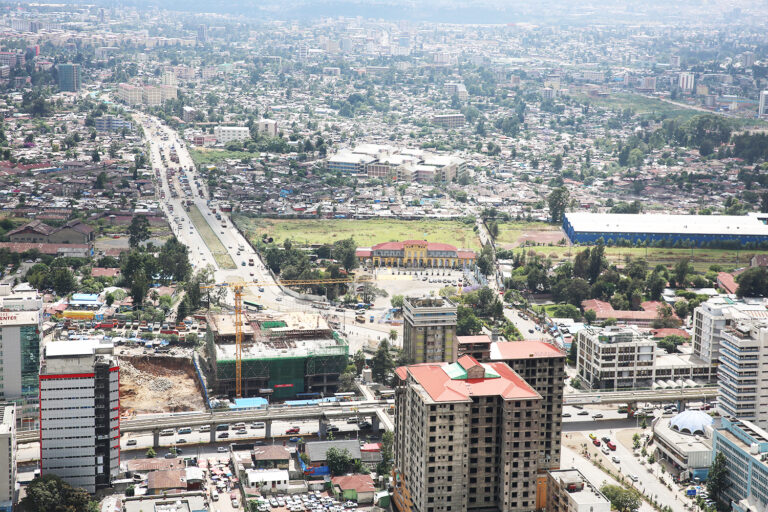
A new report reveals that Addis Ababa’s water is one of the best standards even when compared with some cities in the developed world.
The report that was conducted by the Economist Impact said that the capital city’s tap water is suitable for drink.
At the inception the report entitled: ‘The 2021 City Water Optimisation Index’ said that this report investigates the state of water optimisation at the city level and presents the findings of the new City Water Optimisation Index, which can help decision-makers assess their current performance across a range of operational, regulatory and policy domains.
The index assess the availability, reliability and sustainability of water and sanitation services in 51 cities around the word and it said that these cities each face unique water challenges influenced by geography, climate and socio political factors, among others.
The index, which is the first edition, put Los Angeles first as it received the highest overall score in the Index, followed closely by Melbourne, “although the highest overall scorers were largely high-income cities, several low-income and upper-middle-income cities performed well in the individual category scores, particularly in reliability (Dakar and Mombasa) and accessibility (Marrakech),” disclosed the report.
The index said that reliability and accessibility were the two categories in which cities performed best, scoring an average of 72 (out of 100) and 74 respectively. But for sustainability, the average score dropped to 58.
It said that cities measured in the index scored highly on water quality metrics across the board: in 42 out of 51 cities, over 80 percent of treated drinking water meets or exceeds WHO quality standards.
It elaborated that high-income cities score consistently highly on quality metrics; “however, some lower-income cities performed strongly as well, demonstrating that income is not a prerequisite for delivering good quality drinking water to end-users.”
It included Addis Ababa as one of the low incomes cites with good quality drink water for its users.
It read, “This includes Addis Ababa, Dushanbe and Mombasa, all of which have an annual GDP per head of less than USD 5,000, and all meet WHO standards for near-100 percent of their drinking water.”
About the survey, the index explained that in addition to conducting daily manual water quality tests throughout Addis Ababa’s distribution network, the city’s water utility, the Addis Ababa Water and Sewerage Authority, is working with researchers to pilot innovative portable water testing technology in the city, “the new technology is cheaper and more portable than conventional equipment, enabling rapid water quality testing in hard-to-reach areas.”
In addition to bolstering Addis Ababa’s monitoring capabilities, the project has proved the feasibility of near real-time water quality surveillance using this technology and demonstrated its potential applicability for other cities with limited resources.
The index was developed based on a targeted literature review of critical current concepts, best practices and policy themes of urban-level water management, as well as in consultation with water experts from across the globe.
The index framework consists of 47 quantitative and qualitative indicators that assess the extent to which urban water systems feature the necessary policies, infrastructure and systems to optimise their water supply, distribution and treatment networks.
Five cities have been included from Sub Saharan countries including Addis Ababa, Accra and Mombasa.
