Al Jazeera English launches Africa Direct, a distinctive series of compelling and immersive short documentaries produced and directed by all-African filmmaking talent.
The films open an authentic window onto a range of ordinary and extraordinary African lives, to present nuanced and complex perspectives of this diverse and multifaceted continent. The stories give voice to African storytellers, who have so often been drowned out or overwhelmed by outsider mediation. The series comprises around 30 short documentaries, curated into half hour episodes. The first tranche of six half hours starts airing on Al Jazeera English from 30 November 2021 until 4 January 2022, featuring the first 14 short films from 11 countries. These slice-of-life stories each centre around a main character who articulates their own narrative, without reporters or other mediators. Simply put: Africa Direct is African stories, told by African storytellers about African lives – for audiences across the continent and around the world.
What’s on Offer?
These character-led films are traditional and modern, poignant and flamboyant, with people who are surviving or thriving, poor or powerful. At the heart of each film is a story which makes us think, feel and connect.
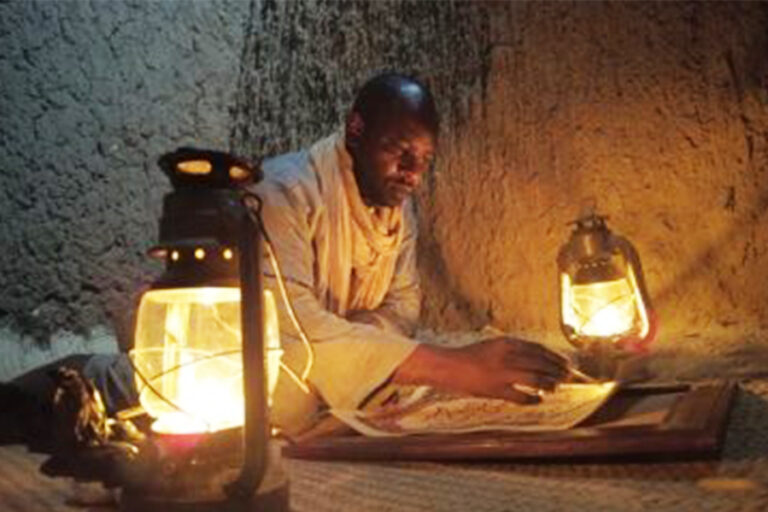
Traditional knowledge is uncovered as we witness the ancient arts of parchment book-making in the Ethiopian mountains in The Bookmaker, directed by Girum Berehanetsehay; and of calligraphy in Timbuktu as a man restores ancient manuscripts in Beïrey-Hou: Desert Libraries by Andrey S. Diarra (Mali); tension between old and modern ways features in In The Aluminium Villageby Onésiphore M. Adonai (Benin) where we meet an engaging young man who must straddle the old ways of his village and his youthful aspirations.
The lives and vocations of African women are explored in On the White Nile by filmmaker Akuol de Mabior, where we are transported into the world of a spirited South Sudanese fisherwoman and boat captain; in The Young Cyclist by Yuhi Amuli, a young Rwandan former hawker becomes a female bicycle taxi-driver and then a competitive cyclist; in Joan Kabugu’s Throttle Queens (Kenya), we meet a women’s motorcycling club and witness how their love of riding brings them exhilaration, freedom, adventure and a sense of control over their lives; and in Amelia Umuhire’s Settling (Rwanda) a professor of architecture inspires her students to take a people-centred approach to the city’s ‘informal housing’ challenges.
Celebrating Africa’s flair for creativity and the unusual, we meet a dancing deputy mayor who officiates at wedding ceremonies in Happiness, a joyful film by Valaire Fossi (Cameroon); while in The Cave, directed by El Kheyer Zidani (Algeria), a puppeteer and artist prepares a new show in a remote town, where he and his father share the joys of theatre, music and storytelling; in Colours Are Alive Here by Seydou Mukali (Kenya), a rising star and fashion designer in Kibera, Nairobi’s large urban slum, invites you in to his bustling life as he surrounds himself with creativity, design and artists.
In bold attempts to make a difference, we meet a man who has nurtured baobab trees from tiny seeds to an expansive forest for the past 47 years, providing a lifeline and legacy for his village, in The Man who Plants Baobabs (Burkina Faso) by Michel K Zongo.
Filmmaker Oumar Ba’s Kalanda: A Wrestler’s Dream (Senegal) tells the story of a young man determined to make it to the main wrestling arena; and in Diggers and Merchants, by Nelson Makengo (DRC) we meet a manual digger who has worked the copper quarries around his village for years – all he and his peers want is a fair chance to make a living and be respected.
“Documentary storytelling is a hugely influential medium in terms of perceptions of places, people and their power,” says Ingrid Falck, Manager of Documentaries at Al Jazeera English, who conceived and commissioned the series. “We have long championed the idea that those who know their stories best should own them in the media, claim their storytelling space. We have huge audiences across the continent and show a lot of great Africa-centred content – but the western gaze still casts a long shadow over Africa in a lot of other international media. Africa Direct is a celebration of African documentary talent and of local stories. I’m deeply grateful to the superb pan-African teams and filmmakers who’ve delivered these stunning, immersive and thought-provoking short documentaries, for our global viewers.”
Al Jazeera partnered with Big World Cinema for this project: it is entirely based within Africa. The team includes Executive Producer Steven Markovitz (SA), Series Producers Angele Diabang (Senegal) and Brian Tilley (SA).
“We received over 300 proposals from 31 countries,” says Executive Producer Steven Markovitz of Big World Cinema. “It was an extraordinary experience reading and assessing the wide range of stories from across the continent.”
A compelling and immersive series of short documentaries by all-African filmmaking talent to be launched by Al Jazeera English
The Case for a Second Nobel Prize
By Markos Retta
“We make war that we may live in peace.” Aristotle
Just why can’t a Nobel Peace Prize winner go to war when his country is attacked by mercenaries?
In this piece I will make the case that Nobel or not one should fight to defend one’s country and that one could even win a second Nobel for it.
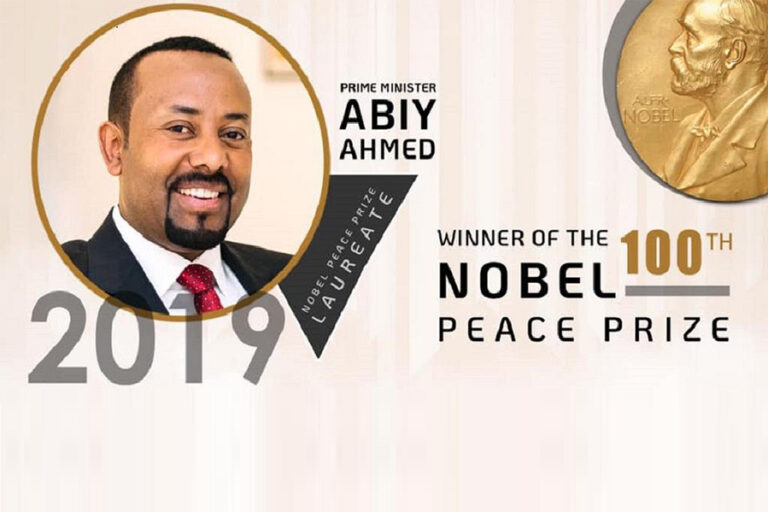
We recall that the Norwegian Nobel Prize Committee awarded PM Abiy the 2019 Nobel Peace Prize in recognition of the following:
His efforts to achieve peace and international cooperation, and in particular for his decisive initiative to resolve the border conflict with neighboring Eritrea;
The important reforms PM Abiy introduced in Ethiopia that stirred hope in the hearts of many citizens from the granting of amnesty to thousands of political prisoners to legalizing outlawed opposition groups; and
To encourage the PM to keep his pledge to strengthen democracy by holding free and fair elections.
He had already accomplished the first two when he was awarded the Nobel Prize, while the third was in a process. But he kept his promise by staging the first-ever democratic elections in the history of the country. No consolidated democracy could rouse its citizens to get out on election day by the millions to cast the ballot and, what’s unheard of, to take a pair of seedlings each to plant at home. A contrast? Donald Trump is still crying of a stolen election. It could not be more peaceful; and surely it vindicated the choice of the Nobel Committee before its critics who’d cried ‘it was too early’.
The Committee believed that,
“The Nobel Peace Prize will strengthen PM Abiy in his important work for peace and reconciliation. Ethiopia is Africa’s second most populous country and has East Africa’s largest economy. A peaceful, stable and successful Ethiopia will have many positive side-effects and will help to strengthen fraternity among nations and peoples in the region.”
PM Abiy worked to bring peace between Eritrea and Ethiopia, Kenya and Somalia, Djibouti and Eritrea, as well as within the Sudan, among others.
He was more than a worthy recipient even by the standard set by none other than Alfred Nobel himself, who stated in his will that the worthy recipient of the peace prize should work to bring about fraternity among nations.
Of course, his resolve to keep bullets out of the political sphere was there from his inauguration. This was not lost on the Committee, which in its citation in praise of Abiy not only recognized this, but also noted that, “Peace does not arise from the actions of one party alone. When PM Abiy reached out his hand, President Afewerki grasped it…”
Well, by contrast, when PM Abiy extended his hand calling for peace, the TPLF sent biting bullets. TPLF attacked the Ethiopian army and bragged about the swiftness of its sword. Those who pick the sword shall perish by the sword, says the Lord. PM Abiy responded more swiftly and more responsibly. But he never lost sight of his commitment to peace, even during his law enforcement campaign.
He was patient, principled and responsible. Long before they started the war he almost begged them to come to their senses, even as they reviled and ridiculed him. Likewise, in the course of the war, he tried to give a chance to as many lives as he could save.
He always kept an eye to the distinction between the Junta and the people it claimed to represent. And He never wanted to imitate his enemies. He did his best to spare as many civilian lives as he could, especially, during the battle to take the regional capital Mekele.
He was left with no choice but to fight back, to go to war albeit to ensure the reign of peace, which one cannot attain otherwise. The Nobel Committee cannot find PM Abiy guilty of any broken promises. In fact, the Committee had taken account of the nay sayers, those who might have thought that the 2019 prize was “being awarded too early”. And it clearly stated its position: “The Norwegian Nobel Committee believes it is now that Abiy Ahmed’s efforts deserve recognition and need encouragement.”
It was very wise of the Committee to see through all the confusion and rightly weigh the worth of the their candidate.
By contrast, several Western nations and media which were quick to approve the Nobel Committee’s choice and showered praises on Abiy have now stood up against him and launched a campaign to save TPLF, the self-declared enemy of peace. One would wonder why. May be some of them had thought they had Abiy in their pocket by awarding him the Nobel Prize. They were wrong. He knew he’d earned the Nobel Peace Prize and that he should continue his work to bring lasting peace in Ethiopia and the Horn of Africa region. He could not do that if he agreed to become a puppet, anyone’s puppet.
How dare he chose to go his own way, to become an authentic laureate of peace and also an independent leader presiding over an independent country? In truth, if he could not be both he could not be either. Thus, he got himself lots of enemies, whose foul mouths and pens spit calumny to the delight of their benefactors. He knew he could dismiss the libelous narratives they weaved just to win their bread.
Lately, stories on PM Abiy and his decision to go the battlefront have been characterized by a contrast of war and peace. Capturing the trend, one referred to him as “the Nobel Peace Prize winner who refuses to give peace a chance.” Actually, he is the Nobel Peace Prize winner who has refused to give the warmongers another chance.
For all the coordinated attempts to tarnish his image by false narratives, there is no denying that PM Abiy has managed to abort the evil dreams of the TPLF leadership. He decisively responded to their first act of war, deflating the bravado and aura of legitimacy around the puppet Junta and putting it where it belonged in the woods of banditry.
You may find it quite hard to believe, but many a Western nation and media have some interesting traits to share with the TPLF, including cruelty and a gift for lies. Both aim for the same goal and use the same means: The goal is power re-grabbing, Junta style, while the means is sacrificing the people of Ethiopia to use the bodies of its dead and the misery of the living to push humanitarian crisis stories.
Nevertheless, PM Abiy now stands not just a worthy Nobel Laureate but also Ethiopia’s most valuable leader of all-time. For, Abiy has managed to do what has never been done by any Ethiopian leader in our latest history: He has reasserted Ethiopia’s independence. We cherish Abiy’s reclaiming of Ethiopia’s policy independence and his ensuring of freedom, independence and self-rule for all Ethiopians, to charter our own destiny.
Malcolm X has rightly said, “You can’t separate peace from freedom because no one can be at peace unless he has his freedom.”
That he stood up for freedom and peace makes him the worthiest recipient of the Nobel Prize whom the Nobel Peace Prize Committee should be proud of. And the war waged on his army and his campaign to punish the guilty demonstrates the Committee’s insight mentioned above, that it takes two to Tango, that, “Peace does not arise from the actions of one party alone.”
Ironically, the Biden Admin and EU have stood up in support of the TPLF precisely because Abiy did what the Nobel Prize Committee had encouraged him to do: Work to build democracy and a peaceful, stable East African region.
Therefore, given Abiy’s achievements and his continued fight for peace against an anti-peace alliance between local and international forces, he now stands not just a worthy laureate but also a strong candidate for a second Nobel Peace Prize.