


Oromia Bank rebrands with excellence in mind

Oromia International Bank rebrands itself to ‘Oromia Bank’ changing its trade mark as well as its name. The bank reveal its updated name and new trade mark on Thursday December 2, 2021at Sheraton Addis luxury hotel with the presence of senior government officials including Yinager Desse, governor of the National Bank of Ethiopia, Shimels Abdissa President of Oromia Region, Adanech Abebie Mayor of Addis Ababa as well as chairman and president of the bank.
The bank has been using its name and trade mark for the last 13 years ever since its establishment in 2008. The bank took the past 20 months in re-branding its traditional logo to the new one which imitates a picture of a horse, and the bank’s president, Teferi Mekonnen, described the logo as an image that “represents all,” as the bank strives to reach upward in promise, outward in friendship, and forward in confidence.
“The update was necessitated mainly for economical and global reasons and to keep pace with the current level of development and changing competition,” said Teferi on the inauguration ceremony. “Making the logo and trade mark more attractive and simple is also a reason behind the newly-to-be- unveiled adjustments. We focus on operational excellence and ground of typical sparkling culture of identity for reputation through which the bank is well known by others,” he added.
Including introducing Interest Free Banking-Financing (IFBF), the first of its kind to be launched by a private bank in Ethiopia, Oromia bank ticked out in full gear introducing new bank products to reach the unbanked society. Currently, the bank has more than 270 branches over the country including the capital.
“We are committed in providing a full-fledged and best quality commercial banking services within the pertinent regulatory requirement with due diligence to sustainable business while empowering the missing middle and discharging social responsibility by engaging highly qualified, skilled, motivated and disciplined employees and state-of-the- art information technology,” the president explained.
NBE amends forex allocation priorities
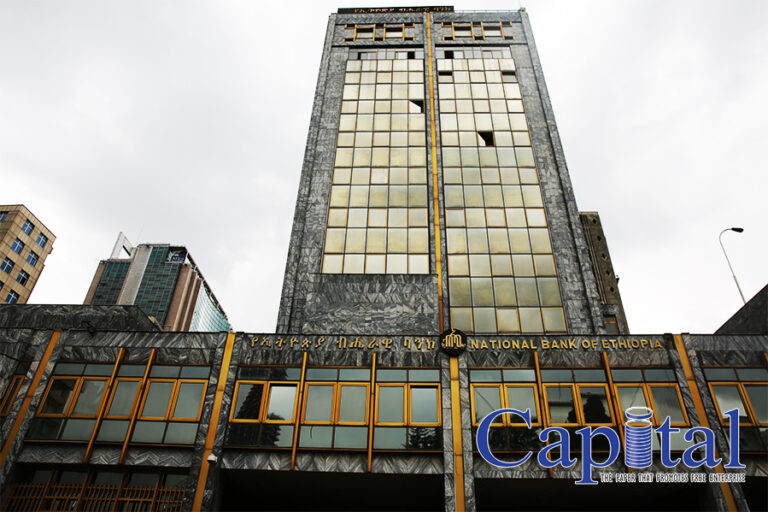
The National Bank of Ethiopia (NBE) amends ‘transparency in foreign currency allocation and foreign exchange management directives’ to increase the foreign currency allocation for first priority import items that adds some more import commodities.
The foreign exchange bureau has been included on those items that shall serve on demand.
The ‘transparency in foreign currency allocation and foreign exchange management directives No. FXD/77/2021 that replaced directives No. FXD/67/2020, which was emplaced a year ago, has included input for manufacturing industry of edible oil and liquefied petroleum gas (LPG) as part of the first priority for the allocation of foreign currency at banks.
In the past, the transparency in foreign currency allocation and foreign exchange management directive had been amended several times since the first one was issued in 2016 which placed medicine, input for manufacturing of pharmaceuticals and laboratory reagents in first list.
The newly amended directive included the import of edible oil input to be included under the number two classification of the first priority import items.
Currently, huge edible oil pressers have been setup in different part of the country which will halt the import of refined oil. For a huge capacity to be established here, industrialists argued they were unable to manage the operation as per their capacity due to lack of hard currency. To provide a solution for this, NBE stepped to facilitate hard currency for oil industries in the past months, and to this end he new directive shall help industries to get hard currency regularly to import mainly crude oil.
Ethiopia allocates over half billion dollars for the import of cooking oil per annum, while the government is tirelessly working to replace by local production.
Similarly LPG has got special attention to be part of the first priority commodity to get hard currency from banks under the third classification following edible oil. In the previous directive, LPG with motor oil and lubricants was at the top on third priority items to get foreign currency.
Now it has shifted to first priority. Experts in the industry told Capital that LPG shortage in the market has pushed the government to include it in the product of first priority. It is recalled that the government is importing petroleum, while LPG was drawn by the private sector.
The current and former directives about foreign currency allocation stated that the foreign currency allocation for imports of items listed on the first, second and third priorities shall have at least 50 percent of the total foreign currency allocation of all import of goods and services in any time.
However; according to the new directive of NBE, the share of first priority import item portion from the 50 percent has increased to 15 percent from the previous 10 percent. It said that the 50 percent allocated for essential goods mentioned under three priority steps shall be distributed 15 percent for first priority, 45 percent for second priority, which is included input for agriculture and manufacturing sectors, and 40 percent for third priority.
The third priority that includes several essential items and services hard currency share has reduced from 45 percent to 40 percent on the new directive.
Under the article, the items listed are exempted from registration procedure of essential items and shall be served on demand forex request for all transaction included.
The directive became effective as of December 1, 2021. Before this, FXD/67/2020 was in effect for almost 14 months.
