Thursday, April 9, 2026
Home Blog Page 3133

Construction contractors remain riddled

0

NBE suspends 8 banks from issuing bank guarantees

National Bank of Ethiopia (NBE) suspends about 8 banks from issuing bank guarantees for construction companies. Meanwhile, the Construction Contractors Association of Ethiopia (CCAE) has expressed its frustration stating that the government is not responding to the claim regarding challenges that the construction industry is facing.
In the press conference held on Wednesday March 17, leaders of the association said that they are forced to inform the situation to the media since the government is not responding to their frequent ask of intervention in order to solve the problems in their industry.
They said that for the last couple of months CCAE has written letters to get solution on the areas including price escalation, financial transaction and restriction on some banks to issue guarantee for bid and projects.
“We had written letters for relevant offices like the Ministry of Trade and Industry, NBE and others but they did not give us any response,” they claimed.
They said that since January, NBE has suspended about eight banks from issuing bid guarantee and advance payment bank guarantee and performance bondfor projects.
“Because of the decision of NBE, contractors are unable to use their collaterals that are already controlled by the suspended banks,” Yusuf Mohammed, member of Board of Directors of CCAE, said.
According to the information Capital obtained from the financial sector actors, NBE suspended some banks from issuing the banks guarantee since they reached at the maximum limit.
However the contractors’ association leaders argued that the central bank decision is made at the cost of contractors.
“We don’t have any role on the activity of banks but our asset has been frozen at a single bank because of the decision of NBE,” he claimed.
“Based on the measure of NBE, contractors shall not participate on bid that requires bid guarantee bond besides accessing advance payment guarantee,” Girma Habtemariam, President of CCAE said.
The association leadership indicated that the crunch occurrence was as a result of the Central Banks decision, which they believe is not the proper response to the issue.
Various types of guarantees provided in favor of a customer who owes bid bond, performance bond, advance payment or customs bond guarantees.
They have also indicated that the decision of NBE that limits the cash on hand, cash withdrawal and weekly transaction restriction have affected the construction industry.
Girma said that despite the NBE directives giving some space for such kind of businesses on the ground the situation remains different.
He claimed that banks are using this special treatment for some of their customers including contractors to access cash but it is not for all construction actors. “There are 22,000 contractors in the country but all of them have not benefited from the cash withdrawal,” he added.
Banks that have been suspended for further issuing of letters are both the youngest and those which have huge capital capacity.
Price hike
The association leaders have also complained cement price has artificially hiked and disappeared from the market. They said that the product is available in the black market with higher pricing but they are access from proper normal market remains scattered as if the products are not in produce.
Contractors have forced to buy cement on higher price to continue projects. “Now contractors needs price adjustment because of the price hike not only for cement but also other construction materials like rebar,”Girma said.
Seyoum Dawed, member of the board, said that the government should give proper attention for the sector and make available required finance including foreign currency to accelerate the production and availability of cement and other building materials that is boosting the economic growth of the country.
He said that because of not allocating hard currency for the sector material shortage, project delay is occurring.
“Because of the hard currency challenge most of finishing works, which mainly needs imported materials, is delaying and buildings are seen stranded without finishing,” Girma added.
Regarding the cement problem the association has written a letter for Ministry of Trade and Industry to come up with solution, while the case is not yet solved they said.
The association has also requested for adjustment that occurred on price escalation on the sector.
“We are not highly concerned that the problem might be escalated and layoff huge number of youths from work,” Zeleke Redi, one of the leaders of the association, said.
He claimed that the disappearance of cement is illegal involvement that shall be solved in collaboration with relevant bodies.

Oil companies get fund to cover financial cost

0

Ministry of Trade and Industry (MoTI) approves extra sum of price adjustment for fuel companies for the compensation that occurred in relation with new payment modality, while the adjustment will be covered from petroleum stabilization fund rather than the public.
On the letter that MoTI issued on Wednesday March 17 and sent to Ethiopian Petroleum Supply Enterprise (EPSE), it stated that the enterprise and Ministry of Finance informed MoTI that the cost compensation that related to the new cash based payment modality for oil companies needs further adjustment.
It reminded that on February 22, EPSE had written a letter to MoTI that indicated the tariff adjustment with regards to the implantation of the payment modality. Further the letter of MoTI that was signed by Eshete Asfaw, State Minister of MoTI, added that the tariff adjustment was applied as of March 6 and the additional cost was covered by the public.
For instance four cents have been adjusted on benzene product which was covered by the consumers.
However, as per the clarification, the enterprise secured from Commercial Bank of Ethiopia a bank guarantee arrangement that considers which companies shall access finance to undertake the new modality. Moreover, the financing cost shall be calculated by 90 days rather than the previous one year that EPSE had calculated for the new tariff adjustment.
Since the new clarification, the tariff adjustment shall have additional costs; for instance it will be increased by 13.74 cents per liter for benzene and reached 17.74 in total with the previous adjustment that was four cents.
As per the new revision, MoTI has directed EPSE to revise the tariff for the sake of the benefit of companies which are supposed to cover their cost that occurred due to the new payment arrangement.
However, in this case MoTI has announced that the additional new cost for instance 13.74 cents for benzene per liter will be covered by the petroleum stabilization fund.
Eshete told Capital that this time the government has decided to cover the additional cost from the fund rather than impose on the public.
The letter said that the revised rate will be applied as of March 24 and compensate the cost of companies that paid from March 10 to 22 with the new rate.
Due to different reasons the government has decided to undertake a new path on the oil supply into advance payment. Under the new scheme oil companies shall be involved on cash base trade with EPSE. The new scheme has commenced by 10 percent cash payment or bank guarantee.
The information Capital obtained indicated that starting from this week, companies which are about 36, are already signing the new contract arrangement with EPSE under the new arrangement.

Unexpected incidents leave trucks stranded in Djibouti

0

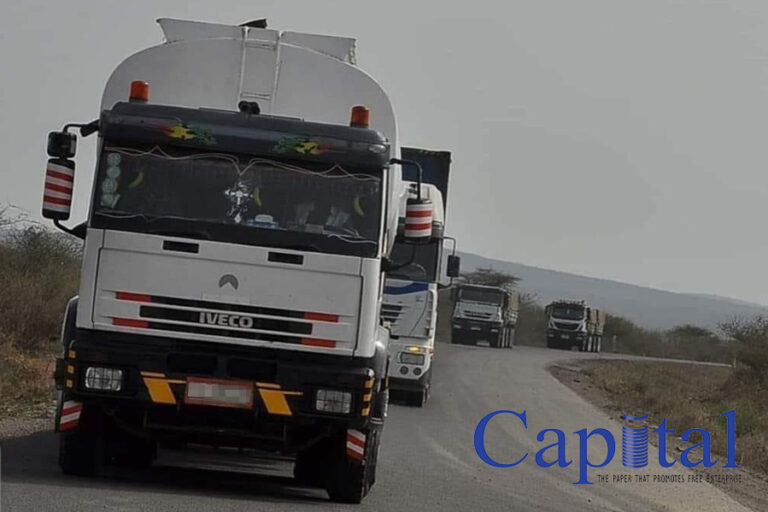
Two unforeseen incidents temporarily delay the flow of trucks that carried Ethiopian import cargos from Djibouti in the past one week, Capital learnt.
The information that Capital obtained from truck companies’ agents indicated that in the week, trucks have been stranded for days since the Djibouti Bureau of Ethiopian Customs Commission temporarily halted issuing a permit that required entering into Ethiopia.
One of the truck companies’ head told Capital that his company, which manage some of the trucks have faced delay for about four days due to the customs permit issue.
He said that it is a common occurrence for a delay of one or two days in Djibouti due to different reason that may not directly be related with customs issue, “But the current case is different and the delay has extended,” he expressed.
Agents told Capital that they have been informed by their representatives regarding the issues and was linked to the internet connection termination at the branch office.
Aliyi Abdella, Head of Djibouti Bureau of Ethiopian Customs Commission, confirmed the said problem had occurred in Djibouti which led trucks to be delayed for days.
Aliyi told Capital from Djibouti that the incident which transpired was unforeseen since the technical difficulty was in relation with the telecom service termination at his office.
“On Saturday March 13, in the afternoon, internet has been down for half day which has affected our activity but it was since then reconnected on Sunday,” he said.
According to Aliyi, he was informed by Djibouti Telecom that the problem had occurred on technical issues. “They know that our service is supposed to be active throughout the year for 24 hours a day but it was a technical problem that occurred on the internet connection to which they apologized for the interruption,” he said, adding that the problem extended for half day because the incident occurred on the weekend when some offices were not active when the incident transpired.
He declined for the rumor that the termination occurred in relation with unsettled bill. “Our telecom service is unlimited and the bill is paid at the beginning of the budget year for every year for the sake of uninterrupted operations on such kind of external issues,” he added.
The customs branch is open for 24 hours seven days a week to provide service for trucks that require getting a permit to transport the cargo to the country.
Mule Abdissa, Bureau Head of Ethiopian Customs Commission, told Capital another system interruption had occurred on Tuesday March 16 which affected the custom’s activity all over its branches.
“Tuesday’s incident occurred in relation to power interruption at the central network server of Ethiopian Customs Commission which affected the branches of the commission not only in Ethiopia but also in Djibouti,” Mule explained.
He said that the problem was resolved in the evening of the same day.
Aliyi has also given a confirmation that their activity in Tuesday had been affected because of the problem that occurred at the centre in Addis Ababa.
He said that his office in collaboration with Djibouti Customs is working day and night to accelerate the logistics activity and in transporting cargos to Ethiopia.
He reminded that meanwhile Friday and Saturday are a weekend at Ethiopia’s major logistics outlets; relevant logistics offices and ports in Djibouti are working in the weekends unlike other activities.
“Other regular offices like telecom may be closed on the weekend but the ports and other logistics offices are not closed all over the week,” he added.
According to the branch head, Djibouti Bureau is issuing a permit on average within five minutes time and drivers shall get service anytime in a day but mainly they are coming up to 10 p.m.
“From time to time we have accelerating our operations and up to 1,000 permits a day are given for cargos transported to Ethiopia,” he added.
Almost all of Ethiopian cargos loaded on vessels are transporting to the country via Djibouti that is connected on three roads networks and railway as well. Most of the ports in Djibouti are modern and some of them are recently built.

Ministry targets to increase oxygen production following concerns

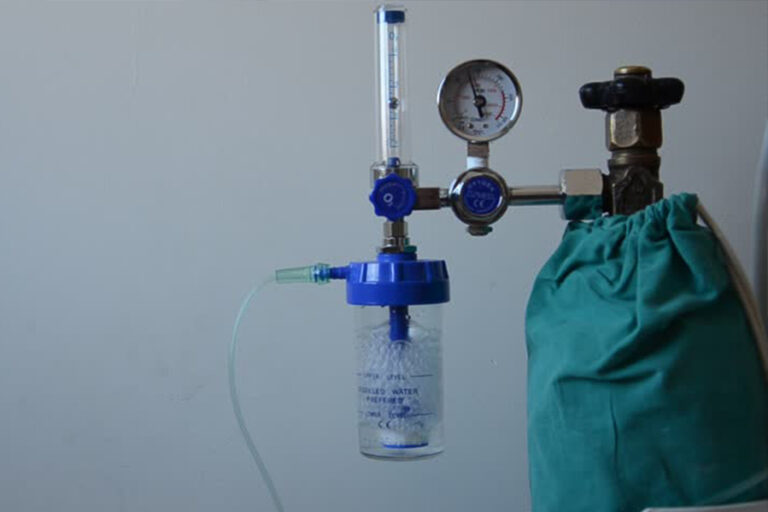
Shortage of respiratory equipment has become a major concern following the increasing number of people entering the intensive care units whilst to this end the ministry is planning to increase the country’s oxygen production capacity by 81 percent by building an oxygen plant in order to combat the problem.
In related news, the country is under process to receive the second phases of 4 million doses of AstraZeneca vaccine from the COVAX facility in the coming weeks.
“In recent times critical patients of COVID have dramatically increased. Shortage of rooms for critical patients, respiratory equipment and oxygen has become a challenge,” said Lia Tadesse, Minister of Health on a media briefing on Tuesday 16th of March 2021. She warned that COVID-19 infections continue to rise rapidly in the country due to slack precautions among the public.
“The increasing number of people admitted to incentive care units has resulted to shortage of respiratory equipment in the center,” said Wuletaw Chane /MD/ head of the Millennium hall COVID center. As he said, as of the last Thursday there were about 250 patients in the center who were in need of oxygen but only 75 percent of them were able to get oxygen due to the shortage.
Similarly, in combating the pandemic, the Ministry of Health on Saturday, March 13, 2021 had launched nationwide vaccination in the nick of time as the spread of the pandemic has reached 20 percent contamination, which is worse than ever.
Currently, the country has a capacity to produce 1,800 metric cube of oxygen per hour, and the ministry is targeting to raise this production capacity to 3267 metric cube of oxygen per hour.
Due to the increasing number of the cases UK, and Oman has banned travelers from Ethiopia and on similar lines, previously, China had restricted travelers to stay 7 days at Ethiopian skylight hotel before traveling to China.