

The only postal service provider in the country, Ethiopian Postal Service Enterprise (Ethiopost), has started its process to establish its own bank and a mobile money service. The bank is expected to have all kinds of banking services including digital finance and seeks to boost non-cash payments in the country.
The service provider is geared to have its own financial institution operated by the post office by providing customers with access of banking service, including direct deposit, cards, and online bill payments.
According to sources from Ethiopost, the enterprise has started its process to engage in the sector in accordance with the National Bank of Ethiopia’s regulation and guidelines. Last year, Ethiopia’s Central Bank issued regulations allowing non-banks to offer basic financial services, potentially opening the door for companies mulling a play in the wireless market by adding mobile money to their portfolios.
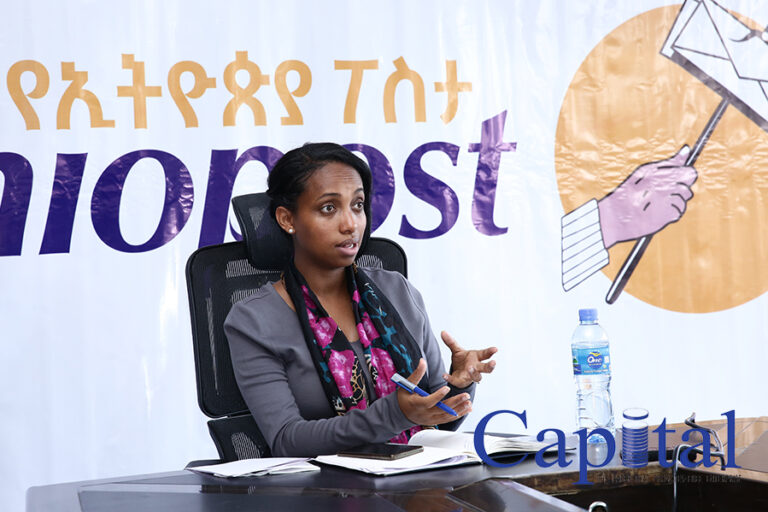
The CEO of the Ethiopian Postal Service Enterprise, Hanna Arayaselassie, said the enterprise is focusing on updating itself by providing a wide range of E-commerce and various financial services.
“We want to engage in E-commerce and support the nationwide vision of creating and expanding a digital economy. Ethiopost is ideally suited to make this reality through its extensive network of branches and years of experience in the logistic sector,” stated Hanna.
According to the CEO, Ethiopost has been through a series of losses over the past years as result of low staff motive and capability, poor customer service, weak marketing and traditional and outdated processes and services. This has rendered the enterprise to become uncompetitive in service provision as well as hindered its financial standing.
Starting from last year May, Ethiopost has been under reform, to secure firm financial standing in order to engage in new services including E-commerce and logistical financial services that offer competitive services as well as enhance the image of the service provider.
Accordingly, the enterprise is waiting for the government’s support to make sure Ethiopost continues providing this service whilst remaining competitive. “We have submitted our interest to the Ministry of Finance to make the financial standing of the enterprise stronger,” the CEO pointed out.
In the last six months of the current budget year, the service provider has earned 230 million birr in revenue from its service which enabled it to meet 91 percent of its plan. The number has shown 10 percent increase when compared with last year same period due to extensive cost reduction efforts.
During the stated time post, Ethiopost has handled more than 4 million in total mail traffic across its letter post, parcel post and EMS service. The EMS service took the lion share in terms of revenue contribution while the letter post accounted for the largest number of traffic.
In addition to its services, Ethiopost is planning to start giving door-to-door service for individual customers of which currently the service provider is giving door-to-door services to various government and non-governmental offices.
In addition to its classic mail service, complimentary services such as passenger post bus services, logistic and moving services, financial services and goods distribution has collectively contributed to 10 percent of the total revenue. According to Hanna, even if currently cross country service of the post bus has been stopped there are plans to restart the operation.
Given the rich history of the service provider that spans 127 years with close to 900 branches throughout the country, the CEO acknowledged that Ethiopost has not been profitable for a while as is expected. However, she echoed that the recent reform since last May that aims to modernize its work as well as optimize its operation and quality of service is the right step in terms of moving the enterprise forward.
As the CEO highlights, in order to enhance its capacity, Ethiopost is optimizing its resource and producers by automated system of IFRS and ERP. “These methods could help us know and manage the overall resource thus aiding to minimize cost whilst increasing revenue,” she remarked.
The IFRS implementation is expected to be completed towards the end of the current budget year, which was started four years back, according to Hanna.
Ethiopost gears to diversify in to the financial industry
Amending the riddled procurement proclamation
The highly anticipated draft procurement proclamation amendment has been tabled to the council of Ministers for review before being sent to parliament for ratification. The customs tariff book is under revision, while the duty free scheme is expected to come up with new arrangements.
The new proclamation that will revise the 2009 ‘Procurement and Property Administration Proclamation649/2009’ is expected to stiff the procurement process for the federal government.
The draft proclamation is stated as one of the major roll outs of the reformist government which is applied to improve the economic condition of the country.
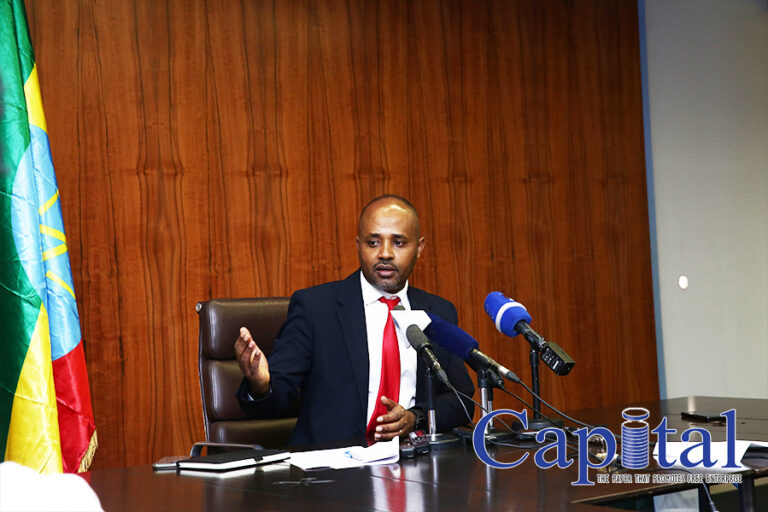
Eyob Tekalegn, State Minister of Finance (MoF), said that the draft proclamation is one of the highly expected laws to be improved before the end of the current parliamentary period.
He said that the existing proclamation has gaps that take unnecessary time on the procurement process and shall therefore be improved in the coming amendment.
He said that the public procurement system is riddled with serious problem. “To tell you the truth it has failed,” he remarked.
He explained that the procurement scheme always takes a long period with a focus on proforma, not considering value for money alongside other massive problems.
“Based on that, we have revised the proclamation and sent it to the Council for review in the coming two weeks, which will then face ratification by parliament,” Eyob added.
The procurement process for instance since last budget year was highlighted by failure. The Public Procurement and Property Disposal Service procurement’s attempt to buy wheat on behalf of different government bodies had failed for different reasons that led to experts on the sector to critic the government rules and directives.
Eyob accepted these claims and he emphasized that it will be solved on the upcoming revised law.
He said that the minimal bid security amount had allowed anybody to try their best to participate on the bid and this is supposed to be improved. “For instance on the wheat procurement, which is close to a billion dollar procurement per year, any small company was participating on the bid. The problem is the amount of bid security, which is very small,” he explained.
He added that the bid security will be one of the area to face revision on the upcoming law, “When you come up with such huge value of procurement you have to make sure that capable bidders participated in the process.”
According to the State Minister, a plausible solution should be to up a put high bid bond amount, select proper time for any given product procurement and other practices when implementing the process.
He said generally that in the new proclamation holistic changes will be put in place. “For instance public enterprises procurement process will be improved. For the small equipment procurement enterprises should not engage on 4 months process. The new proclamation will give some mandates to cut the unnecessary procurement process.”
The 2010 public procurement directive article 16 sub articel16.2 stated that the amount of bid security a public body may require shall be in the range of 0.5% to 2% of the total estimated contract price, which the public body has to fix and indicate in the invitation to bid and the bidding document.
“However, the bid security to be fixed by the Public Body shall not exceed 500,000 birr,” it added.
On the bid security for the procurement of the 100,000 metric tons of wheat, the bid security was not higher than 100,000 birr, which companies who are familiar with Ethiopian wheat supply criticized stating that it is very small compared with the value of the grain.
They said that due to the smaller security amount, untested new participates were involved on the bid process which led to bidders’ winning the bid but consequently failed to supply the product. “This has happened for the past one and half years,” experts argued stating that the government had waited until now to change it because it was not mentioned on the proclamation.
“It shall be corrected by amending the directive,” they said. Eyob to this end said that the relevant body has understood the situation that transpired in the recent past and the government is now working to cut the source of the problem.
human trafficking in the country
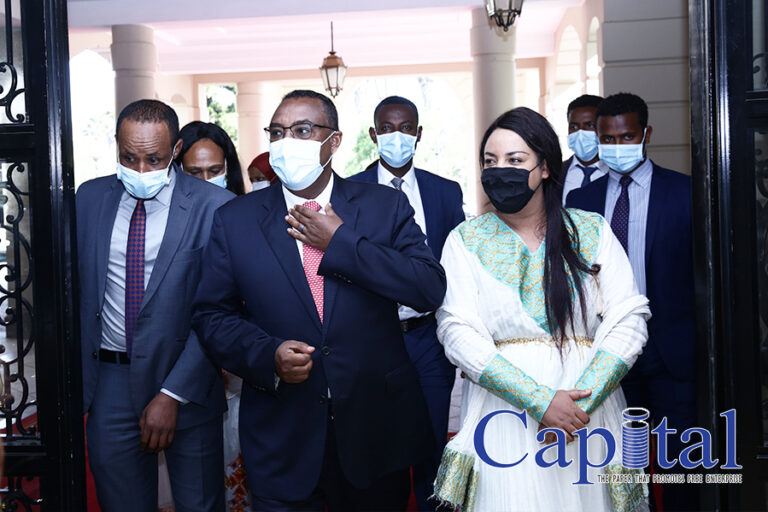
Deputy Prime Minister and Foreign Minister Demeke Mekonnen called for community based efforts to address human trafficking in the country.
Addressing participants of a national forum to tackle human trafficking and smuggling, Demeke stressed the need to wide-ranging participatory action to tackle human smuggling emphasizing need to consolidate community based preventive activities.
A public mobilization forum focused at seeking possible mechanism to fight human trafficking and smuggling was conducted at the Sheraton Hotel on Wednesday March 3, in the presence of Ergogie Tesfaye Minister of Labour and Social Affairs, high ranking government officials and other stakeholders.

COVID vaccines to be rolled out in two weeks’ time
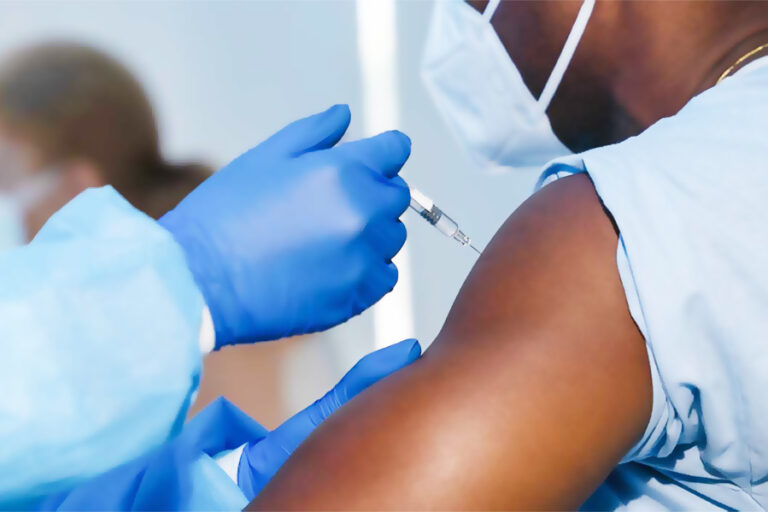
High gov’t officials will be the first to get vaccine
High government officials are said to be the first to take COVID-19 vaccine in Ethiopia to be a role model for the rest of the society when the Ministry of Health plans to start the vaccination in two weeks’ time.The country will receive the vaccine made by AstraZeneca – a British–Swedish multinational pharmaceutical and Biopharmaceutical Company with its headquarters in Cambridge, England.
On Sunday March 7, 2021, the Ministry Of Health has received its 2.2 million doses of the first international deliveries of COVID-19 vaccine through the COVAX Facilityfrom the 7.6 million doses of vaccine. The vaccine was shipped by Ethiopian airlines. The Ministry Of Health is preparing to receive its entire first quota of 7.6 million doses until the end of April. Even though the quota was said to be nine million doses as reports shows, the number has decreased to 7.6 million doses, however, as Seharela Abdulahi, state minister of health told to Capital, based on the availability of the COVAX facility there could be a reduction of the number but it is still not confirmed.
As Seharela stated, high ranking government officials will be the first to take the vaccine to be role models to the society, that is, “to clear up the rumors on the vaccine.”Theother front runners set to receive the jab are: Health workers, transporters, people with underlying health conditions like lung or heart disease conditions, diabetes or conditions that affect their immune system and elders more than 65 years of age. Plus, as she stated organizers of the coming election will also be on the forefront to receive the jab.
As she said the vaccination will be start in two weeks, and the ministry has completed all of its preparation including share of regions based on their cases.
On matters financing, the financial sources are set to include local and international donors, multilateral agencies, and the private sector that are merging their efforts alongside the government to combat the pandemic at its tracks. AsSeharela expressed to capital,theHealth Ministry on Tuesday stated thatthe country will need 13 billion birr ($328 million) for vaccines and related expenses, which will be covered by the government and international donations.
According to Eyob Tekalegn, Minister of Finance, the government has completed its resource mobilization which could help the vaccination of 30 percent of the population. Furthermore, the ministry has also given all of its support to the Ministry of Health to receive the first batch of the vaccine.
The government on its end is keen to vaccinate at least 20 percent of its population until the end of this year, 2021.
Ethiopia has so far reported 162,954 infections with 2,394 deaths. Over the recent times number of new cases seems to be rising which is of great concern to the country in terms of dishing out the vaccine on time.
Furthermore, the Government in its efforts to rally out the pandemic is actively engaged in a unique global alliance representing more than two-thirds of the world. The alliance includes the World Health Organization (WHO), the Coalition for Epidemic Preparedness Innovations (CEPI), Global Alliance for Vaccines and Immunization (GAVI), the Gates Foundation, and 191 countries to raise financial support for accelerated research and development, production, and globally-equitable access to COVID-19 vaccines. Ethiopia is also part of COVAX AMC, a grouping of 92 low and middle income countries, seeking financial assistance to procure COVID-19 vaccines, accessories and help in delivery.
Initiatives led by the World Health Organization (WHO) for equitable global access to the COVID-19 vaccines, to ensure that developing nations get vaccines equitably in terms both of access and cost show that it has allocated a total of 337 million doses of vaccines for poorer countries so far and will aim to deliver these in the first half of 2021. More than 180 countries are involved in COVAX, among them, 92 are low- and middle-income countries.
On a continental scale, On January 19 2021, the Africa CDC, through the Africa Medical Supplies Platform (AMSP), announced the commencement of a COVID-19 vaccines pre-order program for all African Union member states.The African CDC said the African Import-Export Bank will facilitate payments by providing advance procurement commitment guarantees of up to $2 billion to the manufacturers on behalf of member states.
For AZ/SII indicative distribution, delivery has begun as of late February, subject to WHO Emergency Use Listing Procedure /EUL/, manufacturing supply capacity and completion of pre-requisites, as outlined in the related caveats section. This is in line with the Facility targets to reach at least 3% population coverage in all countries in the first half of the year, enough to protect the most vulnerable groups such as health care workers.
