

Aimed to stabilize the high rocketing inflation in the city, three different schemes started to be applied by different organizations including the city administration.
The scheme called Sunday market started last Sunday October 31, 2021 by the Addis Ababa City Administration has facilitated the market to be directly from the manufacturer to consumer.
On Monday November 1, 2021 Black Purpose Ethiopia which is a dynamic business established to offer an economic solution with an end-to-end product-to-consumer, officially started selling its products directly from the farmer to the consumer using trucks named “Qeleb Kegeberew”.
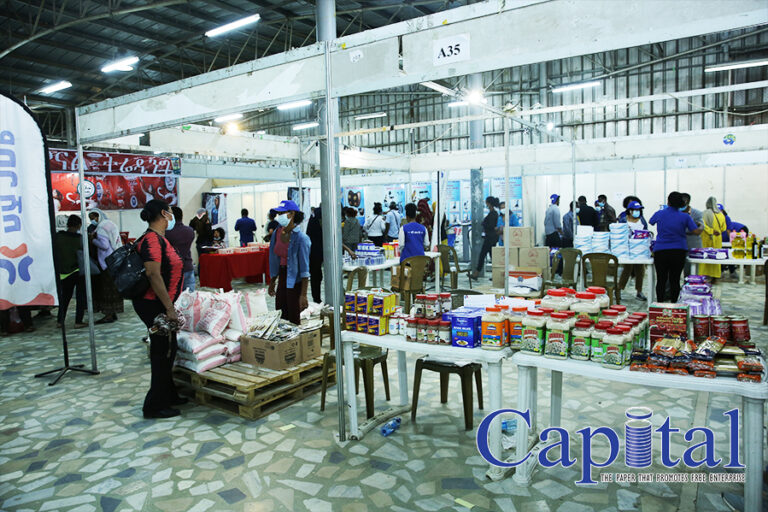
Additionally, on Wednesday, Jorka events opened a bazaar named “Asbeza Bazaar” which stays for five days and continued to be held every two month for a year. As the organizers said the consumers get different products with 30 percent discount from the market. All the three organizations has partnered with manufacturers and cooperatives to provide products with low price to stabilizing the market for the end consumers.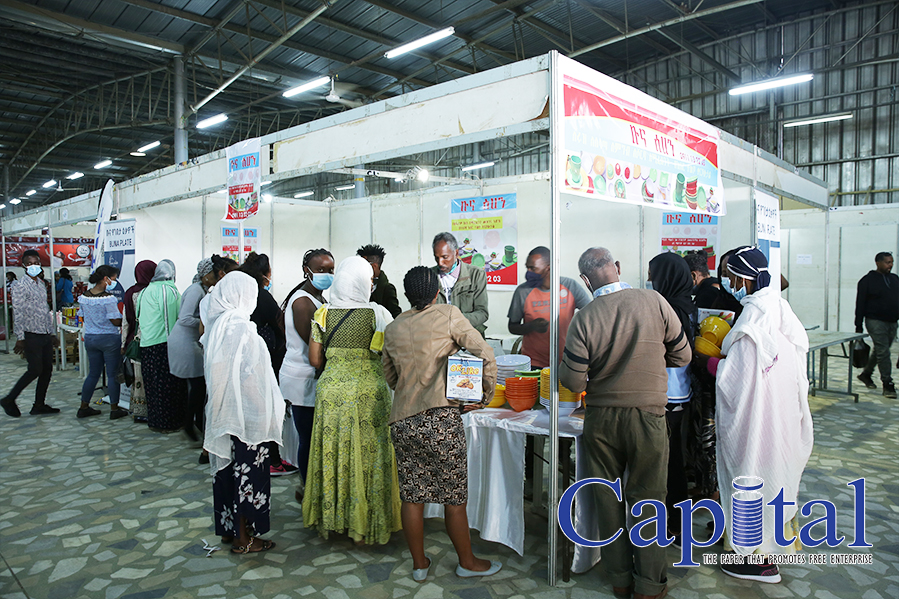
The city administration has started Sunday market on 5 selected areas Jemo Condominium, in front of Kaliti transport Station, Megenagna Bole Sub-City Headquarters, Mexico (Total gas station), and Piassa.
Food and related product producers and importers will supply their products at factory prices in the bazaar, Oil, Teff, Pasta, Flour, Garlic, Eggs, from manufacturers will be available at discounted prices.
These schemes in the city are said to be the beginning of a long way to reduce the cost of living and the bad market chain.
Addis Ababa City Administration Trade Bureau stated that the five selected areas of the city where the Sunday Market happens will expand to 20 areas around the city.
These products have seen a slight reduction in prices from the regular market and that there are efforts being made to reduce prices by up to 50 percent from the market price.
The continued increase in the price of food items in the market has contributed to an increase in the rate of inflation. On the food-items, even if the government is working aggressively on the domestic production of items such Teff and wheat, the market is going up day by day.
According to the latest report of the Central Statistics Agency the September 2021 Country Level Consumer Price Index has increased by 34.8 percent.
The year-on-year food inflation increased by 42.0 percent in September 2021 as compared to the September 2020.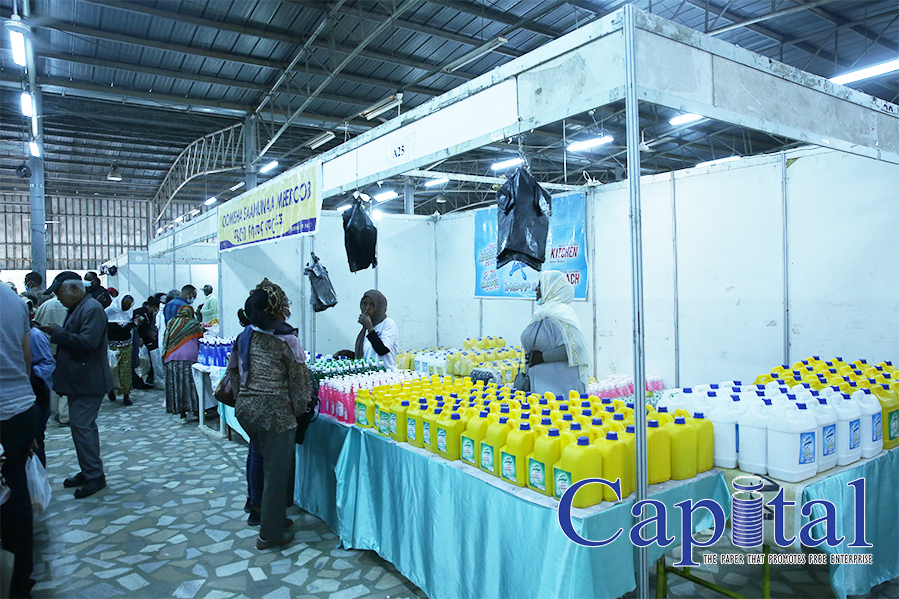
Government, private sector trying to control inflation with bazar, Sunday market
Addis hosts World Leather Congress
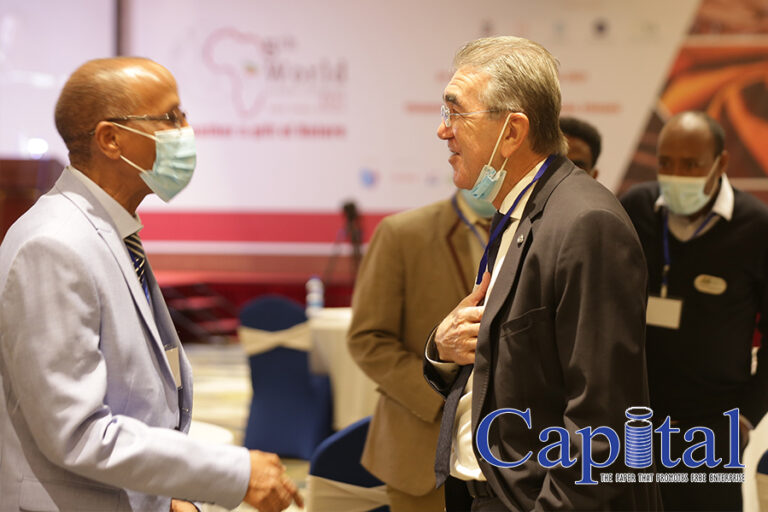
The World Leather Congress (WLC) that gathers global players and scholars on the leather sector was held for the first time in Africa at Ethiopian Skylight Hotel in Addis Ababa.
The hybrid event was organized by the International Council of Tanners (ICT) and Africa Leather and Leather Products Institute (ALLPI) in partnership of Ministry of Industry, under the theme ‘Leather – a Gift of Nature’.
The 5th WLC is followed by the XXXVI International Union of Leather Technologists and Chemists Societies Congress that was conducted for three days starting from November 3 – 5, and exploring the theme of ‘Greening the Leather Value Chain’.
Mekonnen Hailemariam (Prof), Advisor for the Executive Director of ALLPI, said that the global event is crucial for Africa and Ethiopia to show their potential on the leather sector.
“Different research papers on the sector have been presented by experts gathered from the world through webinar and physical attendance. Challenges on the leather industry was also assessed and discussed,” he said.
He said that the event will help Ethiopia to promote its leather potential for global players.
“The event creates an opportunity to link Africans to show their potential. The two events have shown directions for possible solutions to alleviate challenges on the leather sector,” Ghebregziabher Gebremedhin, Acting Executive Director of ALLPI, told media.
The Acting Executive Director said that Africa has abundant potential of cattle, sheep and goat, “despite the availability of this sustainable and renewable resource however the gap between the resource and availability production and trade are tremendous.”
He said ALLPI seeks to transform the continent’s leather sector from production and export of raw or semi processed hide and skins to production and export of finished products and enhance the leather sector trade integration regionally and globally.
Kerry Senior, Secretary of ICT, said that COVID 19 has significantly affected the leather industry by remembering by large the sector’s global enduring of significant pressure that imposed different actors, new techs and interest group in recent years.
ALLPI is an intergovernmental organization established through a Charter signed by 17 heads of state of COMESA countries in 1990. Its mandate was to facilitate the development of the leather sector in the region prior to its rebranding.
ICT was established in 1926, to establish a uniform international contract for the buying and selling of hides, skins and leather in order to facilitate, regulate and promote international trade in the sector.
WLC that is held every two years first happened in 2011 at Rio de Janeiro, while the past three events were conducted in Milan, Shanghai, and New York.
The week has also seen another international event on the leather sector. The All Africa Leather Fair (AALF) that started on November 6 to 9 is showing leather, accessories, components, footwear, leather goods, automotive and furniture in the sector. The 12th All-African Leather Fair gathers over 150 international manufactures and exporters from 20 countries show casing their products and innovations.
WFP, UNHCR, ARRA appeal for funding to avoid ration cuts to over 700,000 refugees in Ethiopia

The United Nations World Food Programme (WFP), the UN Refugee Agency (UNHCR), and ARRA, the National Agency for Refugee and Returnee Affairs, appealed for US$68 million to avoid food ration cuts for over 700,000 refugees in Ethiopia.
The agencies warned of growing risks including increased malnutrition and anemia, stunted child growth, deterioration of the health status due to susceptibility to diseases/infection and a myriad of protection risks further compounded by the COVID 19 pandemic.
Funding shortages will force ration cuts of up to 60 percent of people’s required daily intake, meaning some 710,000 refugees impacted by the cuts will only receive 1,262 kilocalories per person/day. The cuts, starting in November, will impact all refugees living in camps in Gambella, Afar, Shire, Melkadida, Assosa and Jijiga in Ethiopia.
The ration cuts are a last resort to avert a complete break in food supplies across the country. However, even with this reduction, if WFP doesn’t receive an additional funding it will completely run out of food for refugees by January 2022.
“We are appealing to our donors to quickly come to the aid of the refugees, who solely rely on WFP food and cash transfers for survival,” said Steven Were Omamo, WFP’s Country Representative and Country Director for Ethiopia.
“Sadly, prolonged ration cuts affect the refugees’ nutrition and health. The immediate priority for us all must be to restore assistance to at least minimum levels for refugees, many of whom lost the lifeline of remittances due to the global impact of COVID-19.” said Omamo.
If there is an immediate response from donors, however, WFP would be able to buy food available in the region and quickly transport to meet the refugees’ urgent dietary needs and avert the ration cuts. WFP would also be able to transfer cash to refugees immediately so they can buy the food they need from local markets and meet their urgent dietary needs.
“We are grateful to donors for continuing to provide funding to meet the food and non-food needs of refugees”, said UNHCR’s Representative in Ethiopia, Mamadou Dian Balde. “However, the lack of funding to sustain food assistance will greatly undermine the overall protection needs of the refugee population in Ethiopia, with negative effects to the peaceful coexistence between refugees and hosting communities, and plausibly reverse the gains made in reduction of malnutrition.”
UNHCR, WFP and ARRA continue to prioritize the food needs of refugees, in accordance with their Tripartite Memorandum of Understanding, and have established effective food assistance identification systems through the biometric verification, which ensures accountability and entitlement of the food and cash assistance to refugees on a monthly basis. UNHCR is calling on all partners to increase efforts to address the medium- to long-term food needs of refugees, in line with the Government of Ethiopia’s 2019 Refugee Proclamation, and the commitments contained in the Global Compact on Refugees (GCR) and its Comprehensive Refugee Response Framework (CRRF). “We must all do more, in support of refugees and their host populations”, said Balde.
At present Ethiopia provides protection to more than 800,000 refugees, the majority of whom are from South Sudan, Somalia and Eritrea. Of these refugees, 710,000 are fully dependent on the food assistance.
ARRA, the government refugee agency, is distributing the food both in kind and in cash in a more accountable and transparent manner. The refugees’ full profile is registered in the level three registration, and assistance distribution is based on the biometric database. ARRA will continue to ensure asylum-seekers and refugees have access to level three registration to meet their protection and assistance needs.
ARRA, WFP and UNHCR continue to count on the donor community for the extended funding support for the refugees in the principle of shared responsibility to implement basic humanitarian life-saving activities.
“ARRA strongly appeals to the donor community to extend their generous hands to the refugees, in the principle of shared responsibility before the refugees impacted seriously by continuing cut off from the recommended minimum food basket,” said Eyob Awoke deputy director of ARRA.
WFP also provides specialized fortified foods to young children, and pregnant women and nursing mothers, to stave off malnutrition. As an additional measure to avoid a pipeline break – nutrition support will be limited to only children under two years of age (instead of the current under five years old) as well as pregnant and breastfeeding women.
The triple burden of food insecurity, under nutrition and micronutrient deficiencies is expected to worsen, behind the background of the already high global acute malnutrition (GAM) rates in 16 of the 24 (2/3) refugee camps. In 19 of the 24 camps anemia levels are above the UNHCR standard (of <20% for children 6-59 months of age).
UNHCR, WFP and ARRA are jointly implementing the ration cuts and have begun to work together on sensitising the refugee leaders and refugees in the camps of the changes in their entitlements.
East Africa’s economic outlook bullish despite Covid-19 setback, AfDB report projects

East Africa’s economic growth is expected to recover to an average of 4.1% in 2021, up from 0.4% posted in 2020, according to the African Development Bank’s latest economic outlook report for the region. In 2022, average growth is projected to hit 4.9%.
The flagship report, launched on 28 October, reviews the socio-economic performance of 13 countries: Burundi, Comoros, Djibouti, Eritrea, Ethiopia, Kenya, Rwanda, Seychelles, Somalia, South Sudan, Sudan, Tanzania, and Uganda.
According to the report’s findings, Covid-19 containment measures and global supply and demand disruptions hit businesses and livelihoods hard and increased poverty, while political fragility in some countries and limited economic diversification in others were significant impediments to growth.
The report, themed Debt Dynamics in East Africa: The Path to Post-Covid Recovery, notes that the rapid recovery of the region is being driven by sustained public spending on infrastructure, improved performance of the agricultural sector, and deepening regional economic integration.
According to the report, while East Africa is undergoing a shift toward a more service-oriented economy, some countries are experiencing deindustrialization.
To accelerate recovery and build post-Covid-19 resilience, the report recommends that countries accelerate structural transformation through digitalization, industrialization, economic diversification and consolidation of peace, security, and stability.
In his keynote address at the launch, Somali Finance Minister Abdirahman Dualeh Beileh warned the pandemic could continue to impede progress toward inclusive growth.
“The contraction of economic activities, increase in fiscal deficits due to high public spending to respond to the Covid-19 pandemic amidst reduced public revenues, and exchange rate depreciation following reduced income from commodity exports, created fiscal and debt distress risks in the region in 2020,” Beileh said.
The outlook report projects a full recovery from 2023, due to the increased roll-out of vaccines, recovery in the global economy, rising commodity prices, and growing economic diversification in the region.
“A mix of policy interventions is needed to accelerate East Africa’s economic recovery and build post-Covid-19 resilience. These include scaling up vaccinations, designing and implementing economic stimulus packages and stabilizing public debt by dealing with debt related to state enterprises, among others,” said Nnenna Nwabufo, the African Development Bank’s Director General for East Africa.
She noted that the region’s resilience in 2020 was due to relatively higher economic diversification and governments’ swift policy responses to counter the pandemic’s impacts.
Still, Marcellin Ndong Ntah, a lead economist at the African Development Bank, warned that the risks to the region’s positive outlook remain substantial due to the uncertainties surrounding the longevity and severity of the pandemic, the slow uptake of vaccines, rising global oil prices for the non-oil exporting countries in the region, the slow pace of structural transformation, conflicts and civil unrest, and weather-related shocks and locust invasions in the region.
Emmanuel Pinto Moreira, Director of the Bank’s Country Economics Department, said many East African economies continue to need short-term debt relief and emergency external financing from multilateral lenders. He added that many had received budget support under the Bank’s Covid-19 Response Facility, and emergency financing from the International Monetary Fund.
Economic experts attending the launch called for better economic governance, notably clearing domestic arrears, improving debt management and transparency, and dealing with debt related to state-owned enterprises.
“For countries with substantial external financing risks, innovative financing instruments like non-debt equity, risk-sharing with the private sector, including through collateralization and increasing foreign investor participation in local-currency debt markets, should be explored to diversify the sources of development finance,” said Edward Sennoga, lead economist at the Bank. This, he added, will insulate the region’s economies from global volatility shocks.
Louis Kasekende, Executive Director of the Macroeconomic and Financial Management Institute of Eastern and Southern Africa, pointed out that policies to diversify public financing sources, improve public revenue mobilization and prioritize infrastructure investments will be critical to ensure debt sustainability. “Public debt, if used correctly, can help boost essential services, leading to improved economic growth,” he said.
