


The emergence of tourism in Space

With space tourism now a reality, will civilians travel to space, and when? Last June, billionaires Jeff Bezos and Richard Branson each took a suborbital flight in their respective supersonic rockets, launching a new era of space travel, where a ticket to space is available to anyone who can afford it.
It’s been a momentous month for space-faring billionaires. On July 11, British entrepreneur Sir Richard Branson’s Unity “rocket-plane” flew him and five fellow passengers about 85 kilometers above Earth. And this week, Amazon founder Jeff Bezos’ New Shepard capsule reached an altitude of 106km, carrying Bezos, his brother, and the oldest and youngest people ever to reach such a height. Passengers on both flights experienced several minutes of weightlessness and took in breathtaking views of our beautiful and fragile Earth.
Both flights created an avalanche of media coverage and brand recognition for Branson’s Virgin Galactic and Bezos’s Blue Origin. There is renewed anticipation of a lucrative commercial space tourism industry that could eventually see thousands of paying passengers journey into space.
This year marks 60 years since Soviet cosmonaut Yuri Gagarin became the first human in space. Since then, almost 600 trained astronauts have gone into outer space, but very few people have become space tourists. The first, US engineer Dennis Tito, paid a reported US$20 million to spend six days orbiting Earth in the Russian section of the International Space Station in April 2001, after three months’ training at Russia’s Star City complex. He was followed by a handful of other very wealthy “orbital tourists”, most recently Cirque de Soleil founder Guy Laliberté in 2009, whose ticket reportedly cost US$35 million.
On July 20, the anniversary of the moon landing, Jeff Bezos is setting off on his very own quick trip into space, eight days after Richard Branson and a few months before Elon Musk. This band of billionaires is supposed to be just the beginning of the space tourism. Branson’s company, Virgin Galactic, has already sold 600 trips to the edge of space at a cost of $250,000, according to reports.
From a journalistic perspective, one could leave it at the level of the newsworthy, report on the progress of private space travel and log rocket launches in ever shorter succession: The birth of an all-inclusive tourism of a different kind. Or one could set genre-specific accents. The tabloids could write about three rich boys, their childhood dreams and Star Trek fantasies.
Dieter Schnaas, Chief reporter and author at the German business magazine “WirtschaftsWoche” stressed that finer newspapers’ feature pages could darkly recall the fate of Icarus and measure the fine line between cockiness and foolhardiness. Or they could tell a story of aviation’s decline, from the heroic explorations of the Lilienthals, Gagarins and Armstrongs to the ready-made adventures of the “Bezos” and “Bransons” – with a view from the panorama window.
According to Dieter Schnaas, Business editors, for their part, could retell the history of the transatlantic flight. Their narrative would range from the first crossing (1919) to the exclusive premiere flight of Lufthansa’s “Super Constellation” (1955) to the 300-euro offers for everyone.
Theirs would be a history of the successive cheapening, marketization and democratization of technology. Future section editors could ask: Will half of humanity possibly fly to Mars in 2121, just as half of humanity flies to New York today (at least used to)? One would perhaps like to read some of this. Instead, we have been served up a steady diet about the “commercialization of space travel,” “billionaire madness” and the like.
Some observers don’t even seem to know what to find more obscene. Should it be the ticket price? Or the testosterone levels of three aging white men? Their because-I-can mentality or the damage to the world’s climate? The pointlessness of their space excursions? In short, three boys hanging out their private parts in symbolic form, to see who can go the furthest?
Here is one crucial question. How much is $250,000 these days? What if, as Alexei Bayer, Senior Editor at The New York Times suggest, we go at it in a sociologically colder and economically more sober manner? Let’s consider the ticket price, for example. So what about paying $250,000 for a few minutes of weightlessness and an astronaut’s view?
Yes, that’s a lot of money. Of course, that amount is downright cheap – if and when you consider that a private trip into space seemed unaffordable, even impossible, just ten years ago. Perhaps most significantly, how much money is that really, when a small 38-square-meter apartment in Cologne costs about the same nowadays?
Back in 1933, the often visionary French sociologist Georges Bataille published a short text entitled “The Notion of Expenditure”. He pointed to “the principle of loss” as the primary driver of every economic culture. Luxury, mourning ceremonies, magnificent buildings, games, wars and cults, according to Bataille, are not subject to considerations of utility. They simply have their basis in loss, i.e., “their purpose in themselves.”
Bataille highlights that competitions can often involve “insane sums…wagered in the form of bets.” In indigenous cultures, costly gifts and offerings stand at the beginning of all economy. Because they include an obligation to give in return, Bataille argues that the process of exchange “has its basis in a process of squandering, from which a process of acquisition then develops.”
In a free society, these issues should be discussed and criticized – just as Bezos should be criticized for shortchanging his employees, or Musk when he goes crazy on Twitter again, or Branson when he reaches for his smartphone in his tax haven to plead with the British government. Depending on your perspective, the three billionaires can be criticized for their irrational expenditure of resources, their testosterone and their excess energy.
But, in the end, who knows? Their space adventurism may be actually based on a business model. It may even end up serving science, at least in the case of Musk. Instead of reveling in being hyper-judgmental, we should leave room to consider the possibilities.
THE VEGETABLE GAP
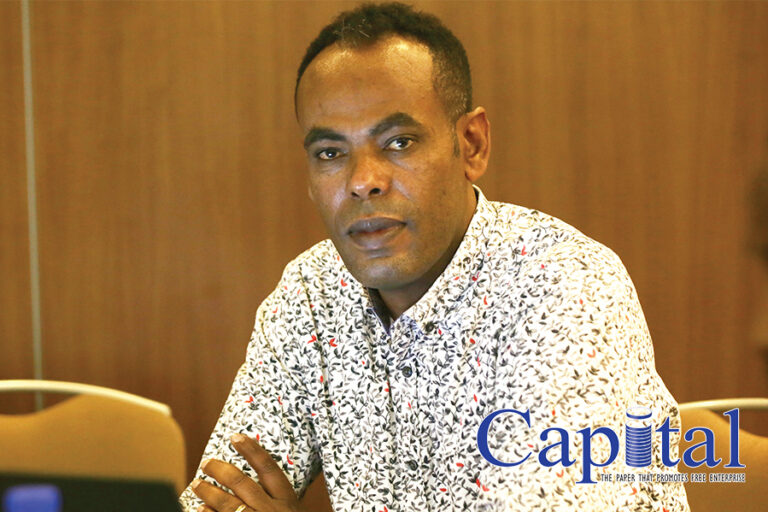
Consuming fruit and vegetables as part of the daily diet ensures an adequate intake of most micronutrients, dietary fiber, and essential non-nutrient substances, and can help prevent major non-communicable diseases (NCD) such as heart disease and obesity. Despite the rich benefits, vegetable consumption in sub-Saharan Africa is the lowest of any region in the world. To bridge the ‘vegetable gap’ people need opportunities to produce and market vegetables to generate income and contribute to an accessible, affordable supply of nutritious food.
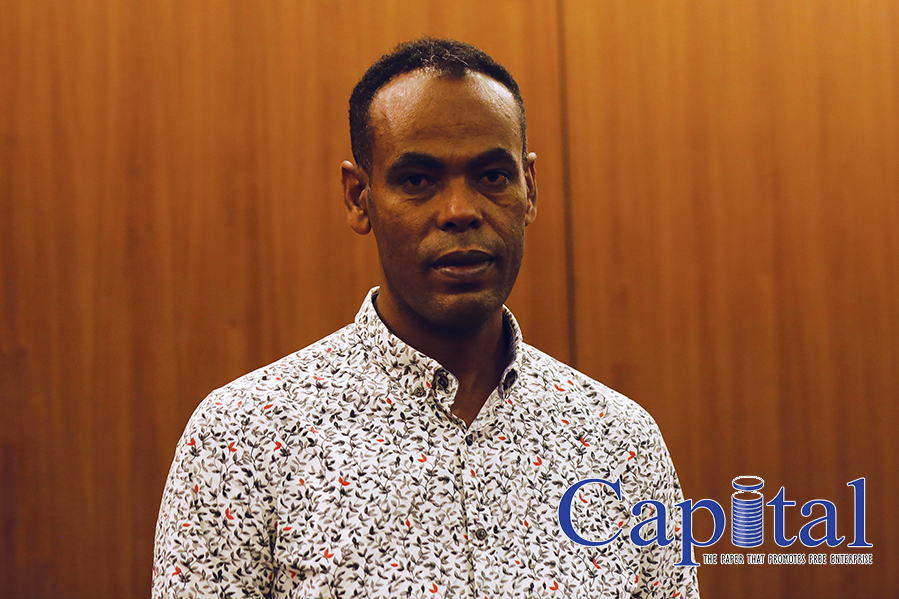
In order to bridge this gap, over the years, the World Vegetable Center has been conducting research, building networks, and carrying out training and promotion activities to raise awareness of the role of vegetables for improved health and global poverty alleviation. For a better understanding of World Vegetable Center’s projects in Ethiopia, Capital drew links with Wubetu Bihon (PhD), who is a Scientist for plant health and liaison officer for the center, here in Ethiopia. Excerpts;
Capital: Tell us about the ‘Veggies 4 Planet & People (V4P&P)’ project?
Webetu Bihon: The project was launched by the World Vegetable Center in collaboration with SNV Netherlands Development Organization, IKEA Foundation and the Ministry of Agriculture. ‘Veggies 4 Planet & People (V4P&P)’, is a five-year( 1 July 2020- 30 June 2025), €6M project that aims to establish 200 vegetable business networks (120 in Kenya, 80 in Ethiopia) to engage an estimated 4000 women and youth in market activities designed to improve their livelihoods and diets.
The initiative will also work with policy makers and implementers to facilitate an enabling environment for vegetable business networks. As a result, this project is of paramount importance in reducing poverty and in booming the country’s economy.
Capital: How many participant farmers are there?
Webetu Bihon: Currently we have 31 vegetable business networks and each has about 30 members which will increase to 900 members.
Capital: The project started in February, how is the progress thus far?
Webetu Bihon: In the first few months we gave training for the farmers, on the production months based on the country season of June and July. They have planted their produce, and currently the plants are growing and are expected to get in the market soon.
So far the progress has shown it is healthier and better than the old process, but it is still too early to give a full detailed progress. We have started the project in three places, namely: Welmera, Ejere and Weliso. We have arranged farmers in each place with vegetable business network under one lead farmer and we have also prepared learning plots, on different issues including using organic bio pesticides, water management and so on.
So far it is great as it has helped to minimize cost. It has gone a long way in helping farmers to have a better understanding about chemicals and has aided in minimize using chemicals whilst still having good production. Overall, we are working to expand the project in the overall community.
Capital: Does the project create conflict from chemical users or companies?
Webetu Bihon: Yes it creates conflicting issues from chemical companies but not from users. The issue is when the farmers using natural fertilizer get less-price than the chemical users. However it has positive acceptance among the users that are in need of non-chemical plants, but still we need to work in the promotion of such products and expand it over the country.
Capital: What kind of changes does the project make in farmers’ lives?
Webetu Bihon: Vegetable diversity in the market and also in our food consumption is small. One of the fears is non-organic pesticide, which affects the overall production of vegetables and market price for farmers. Using organic pesticides can increase their production and their income.
In order for organic fertilizers to work, the soil has to first break them down. This means that both the soil and the plants in it get the nutrition they need when they need it. Synthetic fertilizers, although speedy, often over-feed the plant, do nothing for the soil, and can damage plants by burning them.
Organics are just as easy to apply as their synthetic, non-organic counterparts. Organic materials and fertilizers improve the soil texture, allowing it to hold water longer, and increase the bacterial and fungal activity in the soil.
We are introducing farmers to start using organic fertilizers and non-chemical bio pesticides in order to increase their production and protect their soil. The acceptance among the farmers has so far been good.
Capital: What are the challenges in the vegetable sector?
Webetu Bihon: Even though through time we are seeing changes in the agriculture sector, yet the vegetable sector is backward than others. One of the problems here is there is huge gap in the system, for example, finding best seeding companies is a challenge in that: they are not strong; they lack enough knowledge about the seed itself. This is because there is a systematic obstacle, finding land access to irrigation, lack of rules to import seed as we need foreign currency. Similarly, the registration process is cumbersome and there is lack of an international seeding company in Ethiopia.
The other thing is finding eco-friendly bio pesticide. There is a lack of a system to import and distribute in the market yet you can simply import chemicals which are harmful to the environment. It is difficult to find inputs to use as organic pesticide.
Furthermore, the policy and overall system should be looked into, which the Ministry of Agriculture is working on at the moment.
Capital: What should be done as a solution?
Webetu Bihon: The first thing we need to do is make soft policies, some of the systems are complicated. We have to provide seeds for the farmers and train them on using their best seed as business by reproducing seeds.
Introducing and promoting the production of local eco-friendly pesticides using local plants, is also a great solution.
Besides increasing capacity on seed agents, we also ought to plan to work and support these agents.
Capital: How do you assess government’s support on the sector?
Webetu Bihon: I think it is getting better from time to time. There is a horticulture division in the Ministry of Agriculture led by the state minister, and they are doing a lot, in that regard. There is focus on the commercialization, but still the system needs to be faster and there is room for growth.
