Friday, October 9, 2026
Home Blog Page 3188

WATER RESOURCES

0

Sustainable management of water resources and access to safe water and sanitation are essential for unlocking economic growth and productivity, and provide significant leverage for existing investments in health and education. The United Nations General Assembly also advocates for this through its Sustainable Development Goal number 6, which states “Ensure availability and sustainable management of water and sanitation for all.”
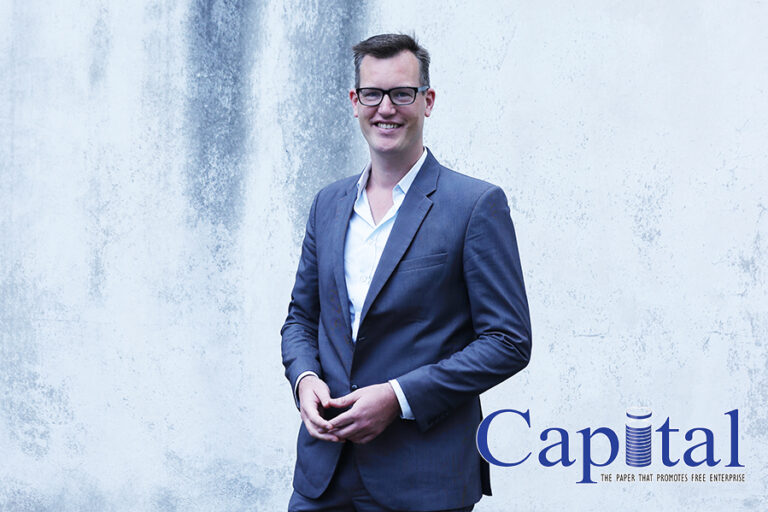
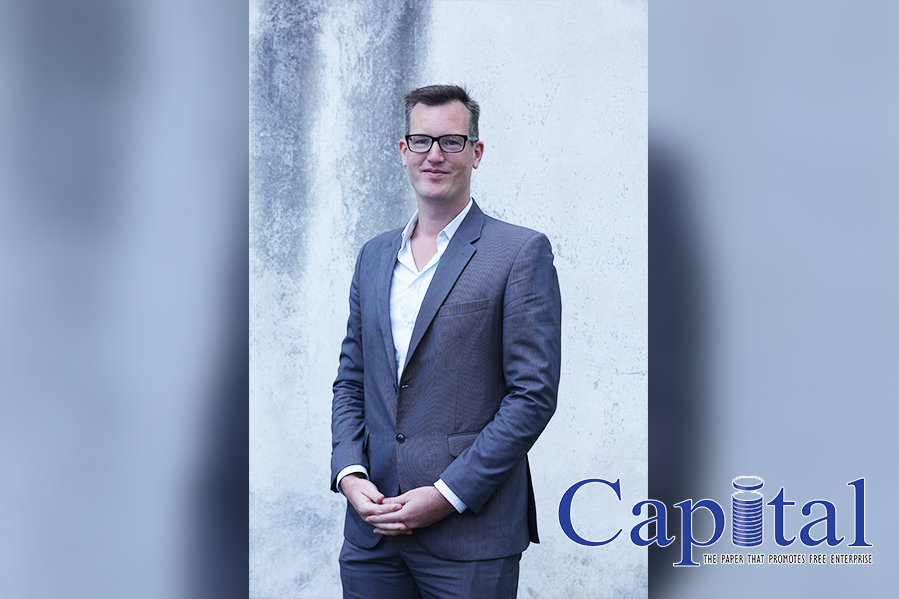
Here in Ethiopia, the Embassy of the Netherlands has been pivotal in the front of sustainable management of water resources with its various development cooperation strategies on water and connected sustainable development. Within the embassy, Jelmer van Veen – First Secretary Water, has been building the portfolio of projects for water with a strong focus on Integrated Water Resource Management. Jelmer who has a Bachelors and Masters in Science in International Land and Water management from Wageningen University sees it as his key task to bring coherence and focus to the Dutch water-related activities in Ethiopia and aims to advance Integrated Water Resource Management in Ethiopia and support Dutch expertise in the WASH sector as well. Jelmer who also holds a B.A in Music (Classical piano) in his free time is a pianist for several jazz ensembles in Addis. Capital sat down with the Jelmer, for insights on the water resource management scene in Ethiopia. Excerpts;


Capital: What does it take to maintain and ensure clean rivers and cities at large?

Jelmer van Veen: Ensuring clean rivers in the city is not an easy task and cannot be achieved by one organization or individual alone. At first glance it can seem like a daunting and completely overwhelming task. There is only one way to face this challenge: head on, while embracing the complexity of the issue and with a radically inclusive mindset. Each stakeholder is indispensable. NGOs, government, research institutions, industry, communities, everyone has a role to play. In the Netherlands we have developed a so-called Dutch Diamond approach, where each of the corners of the diamond represent a different group of stakeholders that are all relying on each other and benefiting from the joint approach. Each member has their own interests but also brings their own expertise to the table. It can be a tedious process, but there is no other way, there are no short cuts. I think a priority should be to raise awareness at this time and to promote the use of waste water treatments for industry. We consider rivers to be the lifelines of our cities.

Capital: Apart from co-organizing this river cleaning campaign, could you please elaborate on how the Netherlands is supporting Ethiopia in addressing water quality issues?

Jelmer van Veen: The Netherlands is known internationally for its advanced water management and works together with partners worldwide in situations where there’s either too much, too little or too dirty water. Very recently, for example, the Embassy of the Kingdom of The Netherlands initiated the IWRM 4 WASH project that aims to protect the drinking water supply for the city of Addis Ababa in collaboration with Vitens Evides International, The Addis Ababa Water and Sewerage Authority and the Water Bureau of Oromia. We have previously supported the establishment of some water quality testing laboratories, and are currently working with the Water and Land Resource Centre of Addis Ababa University in a watershed near Lake Tana where we execute scientific monitoring of ground and surface water quality to address a range of biodiversity and development challenges.

Capital: How can urban areas tackle the growing need for water?

Jelmer van Veen: We have to look at the whole system, from source to tap and back. At the source, acting with a sound understanding of groundwater dynamics, and maintenance for the reservoirs will increase the robustness of the system as a whole. Water conservation measures can increase the overall availability of water at the source. Then the efficiency of the conveyance system has to be improved as well to reduce water losses in leaking pipes. The water usage has to be looked at critically as well.
(Photo: Anteneh Aklilu)

Wasteful use should be discouraged by intelligent tariffing systems that impose higher charges on excessive use to increase overall efficiency. Adopting sanitation systems that place minimal demands on water supply is another option that can make a big difference. Intelligent choices between allocations of water from inefficient, low-value usage to higher-value, higher-efficiency uses will have to be made as well. It requires political choices and good enforcement. And finally the treatment of our wastewater has to be facilitated as well, since wastewater might sounds like the end of our story, but it is the beginning of the story for downstream users.

Capital: Water management in urban areas is complicated, particularly in big cities in developing countries. Why is that so?

Jelmer van Veen: Water management is complicated all over the world, but what people tend to forget is that water management is less about managing water than it is about managing people. Water is often considered as a public good. Polluting it can be beneficial for one individual, while the burden is spread over a larger group of people and the environment. In Hardin’s Tragedy of the Commons, it is beautifully explained that if one individual will benefit from using a common resource at the expense of the group it will lead to a rapid deterioration of the common good. When there is unrestricted access, people act according to their own self-interest and, contrary to the common good of all users, cause depletion and deterioration of the resource through their own uncoordinated action.
We have to disincentivize this kind of free-rider behavior by establishing and enforcing regulations and social incentives that reward good behavior and punish bad behavior. These incentives are often not in place, so that people don’t feel the negative consequence of their own action.

Capital: Can you give us an example of where learning impacts the recycling process and access to quality and quantity of water?

Jelmer van Veen: Learning about the issues, getting aware of them is the first step towards a solution. There are still quite some people that don’t think that throwing your waste in the river is a problem. It can even feel like a solution to them. People who are aware of this can start to get united with initiatives that aim to prevent pollution.

Capital: What is the current thinking on the sustainable management of water resources?

Jelmer van Ve   en: I think that more and more people start acknowledging that water management should not be rigid. What works today might not work in 5 years. Adaptive water management is a concept that embraces the versatility of issues that put pressure on the resource. It acknowledges that certain flexibility in your management approach is needed to be able to adequately address the challenges of the future. In this rapidly changing world, where competing claims on water are already causing serious conflicts, we have to be willing to adapt our approach to accommodate for a changing reality. Sometimes we also have to accept that in certain situations, we have to accept imperfections in the system since we can’t make everybody happy.

Capital: What are the challenges in managing water resources in an integrated fashion?

Jelmer van Veen: Cleaning up a river, as we did on Saturday the 25th of September, in celebration of both World Clean- Up day and World Rivers Day, not only supports our ambition for a cleaner environment, but also supports our vision to recognize all different Values of Water. One of the challenges in managing water in an integrated fashion is that it means something different to everybody. We need to recognize the different Values of Water. Not only economic and environmental values, but you can think of cultural values and religious values as well for example. Cleaning it, makes sense financially, because of the economic value of the river for the city. There are obvious benefits like reduced environmental damage and lower health expenditure but there are unexpected financial benefits too: In the Netherlands we found out that property that is located close to a river (once it is clean) will sometimes double in value if the environment becomes more attractive. Those hidden benefits should be accounted for too! But cleaning the river might for example also restore a religious experience that people might have in relation to the river, or it might bring back the opportunity to practice certain cultural traditions. Al these different values of water have to be recognized.

Capital: How can Ethiopia maximize benefits of Rivers Abay, Awash, and other rivers it has?

Jelmer van Veen: Ethiopia has a large untapped potential in developing its water resources. I think that by recognizing the different values that these rivers have and represent to different people, Ethiopia can make large strides towards maximizing the benefits of the rivers it has and share those benefits equitably.

Capital: What contribution can the private sector make to sustainable water management?

Jelmer van Veen: Some private sector parties have already shown a great commitment. I know of some companies that do more than the government requires from them. It basically revolves around what message you want your brand to convey. Business that pollutes the environment should become a thing of the past. Nowadays some private sector parties are shying away from publicity because they know what they’re doing is not right. We need more transparency to expose these issues and start a Constructive dialogue.

Capital: What are the next generation jobs in water and sanitation?

Jelmer van Veen: Data collection and information management will become key in the water sector in Ethiopia. We can only manage what we can measure, so we have to invest in data collection for better water management. Automatization and smart IT solutions can expedite data management and help to feed decision support tools for smart water management. I think those are the jobs that will turn out to be very important in the coming few years.

ESTABLISHING ENDURING STATE LEADERSHIP

0

Enduring leadership cannot flourish if entrusted only to one particular agency; political party, parochial group, (ethnic or otherwise) class, etc. The classical state organs, comprising of the legislature, executive and judiciary are no longer functioning well, anywhere! This is primarily due to the dominance of transnational capital in global social existence. The dominance of international/monopoly capital has rendered western democracy a mere tool to its accumulation agenda operating at the global scale! As a result, the multiparty system of the west lost its critical function, namely, the potential to bring about policy change, economic or otherwise, to entrenched programs. The manifestation of this dominant global regime (transnational capital) in the political systems of countries in the peripheries/semi-peripheries has now taken a strange protracted twist!
Governments in the peripheries or semi-peripheries willing to facilitate private accumulation are clearly supported by the dominant global regime. Any government unwilling to obey this commandment of capital is bound to be destabilized, even removed from power (regime change). This is the basic foundation of the prevailing global political economy. What we are witnessing today is a result of this continuous and subversive interference and manipulation. In light of all the various problems countries in the peripheries/semi-peripheries are facing, there is a need to reexamine their critical institutions with a view to replacing them with more enduring peoples’ institutions, so that there will be no room for flippant political parties (at the service of transnational capital) bent on undermining the sheeple’s basic and lasting interests/welfare! Like everywhere in the world, the state organs in Africa are also classically/formally constituted, nonetheless, these are now proving increasingly inadequate, particularly in keeping the peace, because of their shortcomings in the critical areas of economic and political governance.
We believe the time has come to seriously interrogate the traditional state-government structure/system vis-à-vis arising problems, particularly in the context of diverse and diversely oriented humanity. It seems there is a need to establish credible leadership whose core values are independently institutionalized, outside the ambit of the ever-changing governments (not necessarily the state). In this regard, we might need to strengthen the institution of the ‘state’. The state, besides its traditional organs, might be appended with such new institutions as ‘council of elders’ or ‘council of conscience’ or ‘Council of the wise’, etc., (but not the usual ‘council of state,’ of the mostly ‘socialist’ genre). Its constitution, its members (numbers, types, etc.), its election/appointment/selection, etc. are issues that need to be hammered out by the people in their subsequent and transparent deliberations facilitated by activist intellectuals, civil society organizations, etc. Nevertheless, its core functions can be broadly outlined. For instance, it has to serve as a mediator between elected governments and the people. Besides doing what the current ‘head of state’ is obligated to do it has to also oversee the various ombudsman (including one for the media) along with the anti-corruption authority/movement. Otherwise, how is one to regulate the proper functioning of the various executive organs if the anti-corruption agency itself is reporting to the executive or even to the legislature? Aspects of the judiciary, like the ‘court of cassation’, must also be under this entity. In a situation where the ruling party directly controls both the legislature and the executive and indirectly the judiciary, governance can easily be cartelized!
It is imperative that we look for useable and practical solutions that will help us solve our concrete and potential problems rather than blindly and rigidly adhere to established but hardly effective institutions of classic state structures. In our case, as mentioned above, we believe the existing set up of the ‘institution of head of state’ is not adequate, as it assigns mostly a ceremonial role to the post, as a one man/person operation, to say nothing about the very system of election. When a single party dominates the parliament, chooses the president and is also the executive, to say nothing about its undue influence on the judiciary, the tendency is not to listen to outside voices, including the sheeples’! Such a state is a democracy only in name while it functions as a totalitarian one! To some extent, this is also what prevails in the USA. The two parties dominate all state functions. There is hardly any other political entity that is allowed to present alternative views to the American sheeple. Since the two parties represent capital and certainly not the people/labor, they are only two sides of the same species. In these countries, it is usually less than 50% of the electorates that actually votes. Even here meaningful change is necessary. Just look how frightened the ‘deep state’ has become, due to the emergence of a candidate that is not vetted by it!
Deep inside, the sheeple (in the rich countries) has concluded that a large majority of the professional politicos are seeking offices only to benefit themselves, at its expense. When such perception reaches a certain critical level, democracy becomes only a tool for politicos to secure parasitic interests. On the other hand, simmering frustration of the dormant sheeple can suddenly erupt and morph into insurrections.

Safaricom shortlists Huawei, Nokia for infrastructure development

0

Safaricom Telecommunications Ethiopia Plc, shortlists two global telecom giants for its infrastructure development for its operation in Ethiopia.
Reliable sources told Capital that the company that was formed by African, Europe and Asian companies has shortlisted Nokia and Huawei to setup its infrastructure in the country.
Safaricom Ethiopia that was formed by the amalgamation of Safaricom, Sumitomo Corporation, CDC Group and Vodacom has secured operational license from the government early June officially to do business in Ethiopia as a second telecom company after the state owned Ethio Telecom.
To get the license it has paid USD 850 million to the government and promised to invest up to USD 8.5 billion in the coming decade including the license fee, which is a huge sum for the FDI history in the country to flow from a single business.
According to sources, the company has shortlisted Nokia Corporation a Finnish multinational telecommunications, information technology, and consumer electronics company; and Huawei Technologies of Chinese multinational technology corporation for the infrastructure development that it aspires to realize in the coming period.
The company has already disclosed that it will launch the operation in the first half of mid 2022.
Both companies are not new for similar activity in Ethiopia. For instance the Finnish company was engaged for the second massive mobile network development project in the country that ended early 2000s and other IT projects. Similarly the Chinese company, which is leading the global telecom network development with Nokia, is engaged on the massive mobile network expansion with ZTE of China in the fourth and last phase of major mobile network sector development. It has also recently concluded the national 4G network expansion and network upgrading for Ethio Telecom.
Anwar Soussa, CEO of Safaricom Ethiopia, recently said that the company is now starting engagements with Ethio Telecom, which is expected to provide the infrastructure for the new telecom operator. According to experts on the sector however despite having access to infrastructure from Ethio Telecom, the company needs its own facilities to attain its goal in terms of service and quality.
The company has announced that over USD 300 million will be invested every year for infrastructure and technology development for the coming ten year.
On their press briefing Peter Ndegwa, Chief Executive Officer of Safaricom Plc and Soussa stated that the company has stated that it is ordering equipment and looking for the technology that it will use, while regarding finance it is engaging with undisclosed different financers including development partners for its investment in Ethiopia.
It is recalled that the telecom investment secured a promise from America’s sovereign wealth fund US International Development Finance Corporation to fund for its activity in Ethiopia on the aim to encourage using non-Chinese technologies.
But in the recent past the US recalled its initial green light for the finance in related with its controversial interest regarding law enforcement mission that the Ethiopian government is taking on the terrorist group, TPLF, who attacked the northern command of National Defense Force on November 3, 2020 evening.
Since then the company stated that it would look at alternatives to accelerate its plan to Ethiopia, which is the last biggest market for the telecom industry opened for competition.
Ethiopia has announced that the opening up of the telecom sector is part of its digital strategy that is expected to create conducive environment in all aspects in the economy and social arena.
In related with the Request For Proposals (RFP) for its second new full-service telecommunications license (License B) in Ethiopia that was issued mid this week, Balcha Reba, Director General Ethiopian Communications Authority (ECA), said, “The goal of liberalizing our telecoms sector has always been to drive competition and attract greater private sector investment as a key part of Ethiopia’s digital transformation. Following our successful first license issuance earlier this year to one of the world’s largest international telecoms consortia, we have continued with our mission and now want to encourage more telecoms operators, of all sizes, to be part of this exciting opportunity.”
“The ECA remains committed to fulfilling Ethiopia’s telecommunications sector reform and this second license issuance is another opportunity for another telecoms operator to join Ethiopia’s fast growing economy next year,” he added.
On its statement, the authority stated that ECA is well-positioned to deliver a process that is both transparent and fair and continues to manage the license issuance process, which will be taking place in parallel with the partial privatization of Ethio Telecom, which is part of the reform on the telecom sector.
At the end of the licensing process, there will be three operators with licenses to deliver high-quality telecommunications services in Ethiopia: Ethio Telecom, Safaricom Telecommunications Ethiopia and the new License B holder. Bidders have until December 20, 2021 to respond to the RFP, which includes investment considerations, tender regulations, and full details of the license to be awarded. “Opening Ethiopia’s telecommunications market to greater competition will maximize the opportunities presented by the digital economy: reliable and accessible communications for the Ethiopian people leading to improved quality of life, improved connectivity to support rapid economic transformation and growth, job opportunities as a result of having best in class tech, and both local and inward investment,” ECA’s statement concluded.

Delayed regions finally cast ballot

0

On Thursday September 30, 2021the National Electoral Board of Ethiopia held the 6th national election in three regions where elections had been delayed.
The vote took place in the Somali region, where registration irregularities delayed voting and Harari, where registration issues and a legal dispute caused delays and the Southern Nations, Nationalities, and Peoples’ Region (SNNPR), where ballot and security issues delayed polls.
A total of 7.6 million people have taken part in the election from the three regions with 47 constituencies for the house of people representative seats and 105 for regional council. About 20 political parties and 2569 observers had participated in the election.
The Chairman of the National Electoral Board of Ethiopia, Birtukan Mideksa, said an overall peaceful election was held with certain complaints submitted to the Board by civil society organizations.
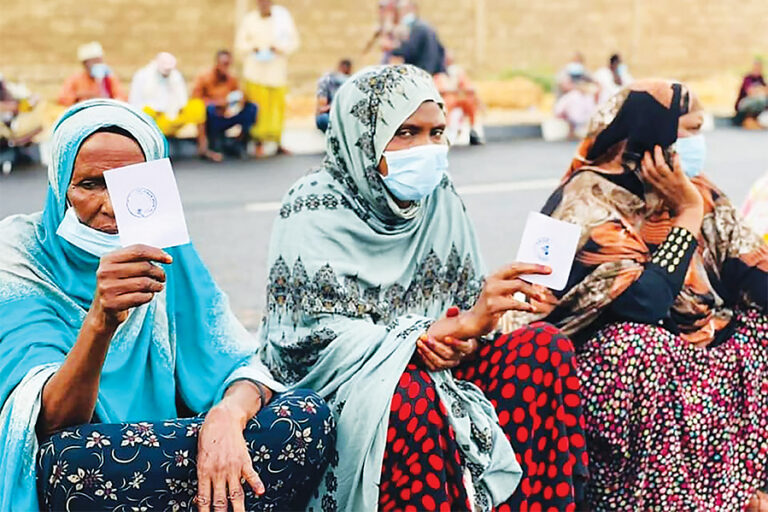
Pictured above are people lining to cast their ballot in Somali Regional State.