

Ethio telecom announced that it has the necessary preparation to start deploying 5G networks in the country with in short period of time before 2022 which was planned at the beginning of the current budget year.
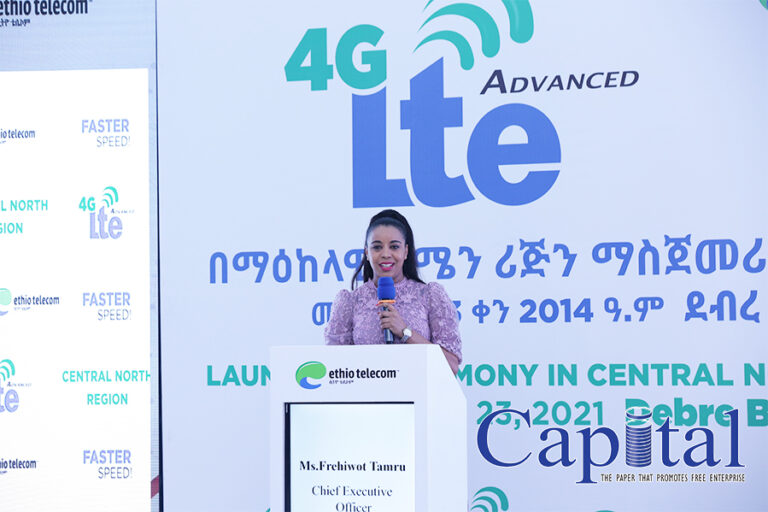
“Ethio telecom is undergoing network infrastructure and system enhancements to pilot 5G networks soon and we’ve made some of our networks ready for 5G,” said the CEO, Firehiwot Tamiru speaking at the launching of 4G LTE Advanced network in Debre Berhan.
Following its strategic plan to expand 4G LTE service in various cities of the country where there is high data usage, Ethio telecom has launched 4G LTE Advanced mobile internet service on 23 September 2021 in the Central North Region in the towns of Debre Berhan, Fiche, Shewa Robit, Sululta, Sheno, Sendafa, Gerba Guracha and Legetafo towns where high mobile data traffic has been observed.
Ethio telecom has so far expanded its 4G LTE service in 86 towns of 15 regions across the country and in Addis Ababa. Before the end of the year, Ethio Telecom is planning to reach out additional 106 towns with its advanced network.
The CEO highlighted that Ethio telecom has reformulated its three year plan with view to modernize services and enhance customer’s experience.
So far 69 million devices are connected to the network, 42 percent of them are smart phones which are capable to use advanced 4G, and in the Central North Region 34 percent of the whole customers have 4G enabled devices.
“Among the major strategic initiative, it is planning and accordingly, we will be launching similar services in other parts of the country, for which preparation works are underway,” said the CEO.
Beside its network expansion, Ethio telecom has also registered more than 9 million customers with its newly launched mobile money system, Telebirr. The system which has accounted about 4 months is operating certain new services payments including DSTV Ethiopia, websprix, Addis Ababa city traffics management agency, Zmall and others including contributions for the Ethiopian renaissance dam . The system has integrated its services with 8 banks including the commercial bank as well expecting to start international remittance service soon.
5G on the horizon as Central North Region receives 4G LTE advanced
EDISON Alliance members commit to improving 1 Billion lives through affordable digital access to healthcare, finance and education by 2025
The EDISON Alliance aims to improve the lives of 1 billion people through the 1 Billion Lives Challenge by increasing affordable digital access to healthcare, finance and education by 2025. Although 85% of the world’s population lives in areas covered by 4G, only half are online. Cost, not coverage, is the critical barrier to connectivity. In low-income countries, home to 650 million people, mobile broadband is 18 times more expensive than in developed countries, as a proportion of average income.
Derek O’Halloran, Head of the Platform for Shaping the Future of Digital Economy and New Value Creation at the World Economic Forum, said: “Most of the world’s population live within the coverage of broadband infrastructure. However, the lack of relevant, affordable services means that still 47% of people cannot participate and do not benefit from the internet. This challenge is about more than infrastructure – it is about the collaboration and investment needed across different industries, governments and civil society to bring safe, meaningful services to people’s lives. Today we launch the 1 Billion Lives Challenge to catalyse the commitments and silo-breaking partnerships needed to make this happen.”
The COVID-19 pandemic has demonstrated how critical it is to access healthcare, education and financial services online. Yet, deep inequalities persist in the affordability of digital access between least-developed and most-developed countries. The data clearly demonstrate the need for quick and decisive mobilization of resources and commitments to closing the digital divide. With focused resources and a coordinated response, the 1 Billion Lives Challenge aims to drive change and harness businesses, organizations and governments together to reimagine a digitally inclusive future.
“As we emerge from the COVID19 pandemic, it’s never been clearer that digital accessibility, affordability and usability are critical to participate in everything from education and banking to receiving basic healthcare,” said Hans Vestberg, Chairman and CEO, Verizon. “Through the EDISON Alliance, we aim to create a more digitally inclusive world by connecting 1 Billion Lives to this fundamental core of our society.”
By spotlighting and accelerating concrete commitments, the 1 Billion Lives Challenge aims to:
- Accelerate the delivery of digital services for unserved and underserved populations
- Inspire more public commitments to digital inclusion
- Demonstrate that universal digital inclusion is an achievable goal
- Support Alliance organizations in the achievement of their digital inclusion goals
- Develop global relationships and sustainable, scalable models for further impact to 2030
The three sectors of health, finance and education are key areas of focus for the EDISON Alliance. Two billion people still lack access to healthcare, 1.7 billion remain unbanked and 265 million children have no access to education. Enhancing internet access to this enormous unserved population will help ensure they are not left behind in realizing their basic rights.
“The EDISON Alliance’s 1 Billion Lives Challenge seeks to embed digital inclusion into the design of policies, infrastructure, and services to address the disproportionate impact that exclusion from the digital economy has on women and other underserved populations,” said Paula Ingabire, Minister for ICT and Innovation, Rwanda.
The Alliance supplies ongoing guidance and research on leading best practices to empower policy-makers and relevant stakeholders with mechanisms to make informed decisions and pioneer innovative ways of financing digital inclusion. These tools are key enablers to help achieve the 1 Billion Lives Challenge and include the “Shared Principles for an Inclusive Financial System, the Guidebook for Digital Inclusion Bond Financing and the EDISON Navigator”, an online tool currently being designed to provide users easy access to curated information on best practices and lessons learned in digital inclusion approaches.
The 1 Billion Lives Challenge brings together leaders of global businesses, international organizations and governments who have pledged to improve a quantified number of lives through digitally inclusive services.
Ethiopia and OCP signed joint development agreement for Dire Dawa Fertilizer project
Governments, private and public stakeholders across the African continent are working tirelessly in order to find tailored solutions to their agricultural and industrial challenges. Back in November 2016, the Government of Ethiopia and OCP S.A. laid down the general principles of their intended cooperation by way of a framework cooperation agreement to establish an integrated fertilizer complex in Dire Dawa, using local resources, Ethiopian gas and Moroccan phosphoric acid.
Continuous governmental support for agriculture and its weight on the economy has been reflected in a steady increase of fertilizer use primarily Urea and NPS+, which consumption is expected to continue to grow significantly in the next decade. As from 2022, fertilizer imports in Ethiopia will represent USD 1 billion, and could potentially reach USD 2 billion in 2030.
Therefore, the establishment of a local fertilizer production plant would yield significant synergies. The project will require an initial estimated investment of approximately USD 2.4 billion during the first phase to develop a 2.5 million ton fertilizer production unit, combining Urea and NPK/NPS products, and which could reach a production capacity of 3.8 million tons per year, for a total investment of up to USD 3.7 billion during the second phase.
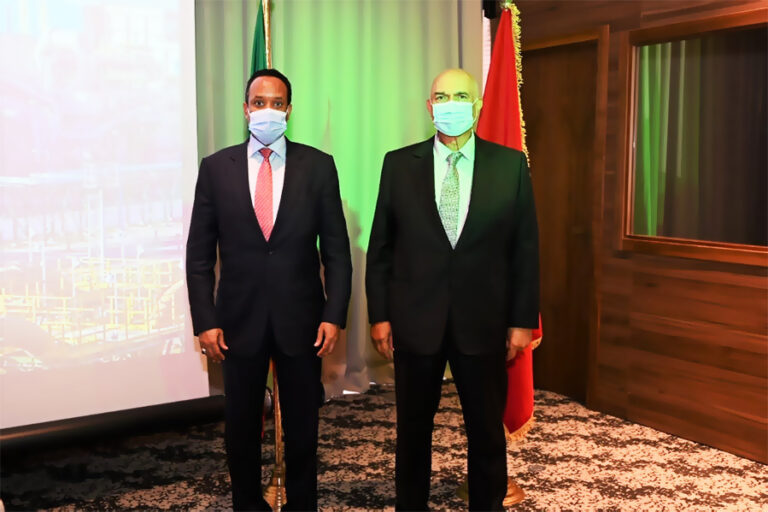
It is be noted that the Feasibility, Conceptual, Environmental and Social Impact Assessment and Hydro & Geotechnical studies have been finalized. Last week a major millstone have been completed after the visit of a high level delegation to OCP Group headquarter, led by Minister of Finance, Ahmed Shide accompanied by officials from the Ethiopian Chemical Industry Corporation (CIC), the Ethiopian Agricultural Businesses Corporation (EABC) and the Ethiopian Mineral, Petroleum and Biofuel Corporation (EMPBC). The stakeholders decided to execute a Joint Development Agreement to establish an Ethiopian joint venture company for the implementation of the project.
Unlocking travel in Africa
Full implementation of realizing the Single African Air Transport Market (SAATM) across the continent would generate significant economic benefits for Ethiopia by creating 21,000 new jobs and adding USD 81.8 million to the GDP, states the International Air transport Association /IATA/.
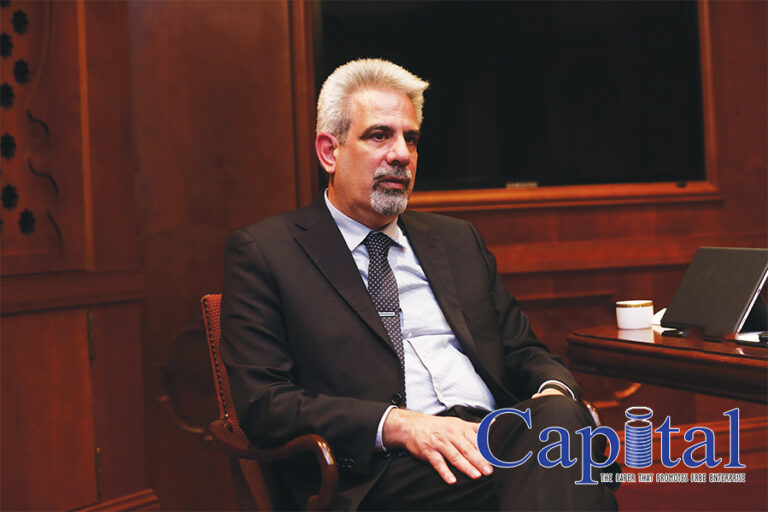
“SAATM is the solution to unlocking travel within the African continent and in the post-pandemic it will provide an even more important economic boost to the continent,” said Kamil Alawadhi, IATA’s Regional Vice President for Africa and Middle East during his visit to Ethiopia. Kamil also added that the air liberalization allows new carrier to enter the market and existing carriers to better respond to demand, resulting in lower fares for passengers. Moreover, this will enhance air connectivity and more travellers will be able to access air service.
During his three days stay, the vice president visited Ethiopian airlines – seeing its day to day activities, met with the management team of Ethiopian airlines and with the ministry of finance and the ministry of transport.
“We congratulate Ethiopia for the positive steps it has taken to promote travel and air service connectivity throughout the pandemic. This includes accepting vaccinated travellers without restrictions, managing the cost of PCR testing to ensure it is affordable and implementing a testing regime which accepts both PCR and rapid antigen tests. These measures should put Ethiopia on a faster track to recovery, not just for air transport but across the economy,” said Kamil.
Even though Ethiopia is performing above the African continent’s average demand for air transport services and has made progress in the recovery, IATA) called on the government of Ethiopia to continue its focus on maintaining efficient air connectivity amid the COVID-19 crisis. “This will place Ethiopia in a strong position to weather the crisis and speed up the eventual industry and economic recovery,” said the vice president.
According to the assessment of IATA, allowing the full liberalization of all inter Africa air market could increase the overall GDP by 0.09 present /81.8 million dollars/, increasing the traffic by 42 per cent.
According to IATA, passenger traffic to, from and within Ethiopia in June 2021 was 30% less than in June 2019, a significant improvement on the 47% drop for January 2021 compared to January 2019. Ethiopia’s June performance was well ahead of the -66.6% (compared to 2019) recorded for the African continent. Passenger demand however is expected to recover to pre-COVID levels by 2023 stated the association.
As part of its key priorities to support and sustain a recovery, IATA argues to strength: Digitalization of health certificates to avoid queuing and crowding airports, and equitable distribution of COVID-19 vaccines.
“Nations, governments, politicians, and business must cooperate through COVAX so that everyone gets access to the vaccines they require, no matter where they are,” said Alawadhi.
Besides that, the vice president argues for the ‘Releasing of Blocked Funds’ for better growth of the aviation industry, “Approximately $59 million (as of August) in airline funds are being blocked from repatriation in Ethiopia,” said Alawadhi, adding, “Resolving this quickly is critical for airlines to continue providing connectivity needed to sustain jobs and energize economies as they recover from COVID-19.”
Apart from the lack of equitable distribution and vaccination rates across Africa, the continent and its people are vulnerable and the economic recovery from COVID-19 is at risk. Moreover, with more countries lifting travel restrictions for those vaccinated, the freedom of movement will be limited until vaccines are universally available. With less than 1% of Ethiopia’s population fully vaccinated, the challenge is particularly acute.
