Wednesday, May 13, 2026
Home Blog Page 3229

Kassmasse

0

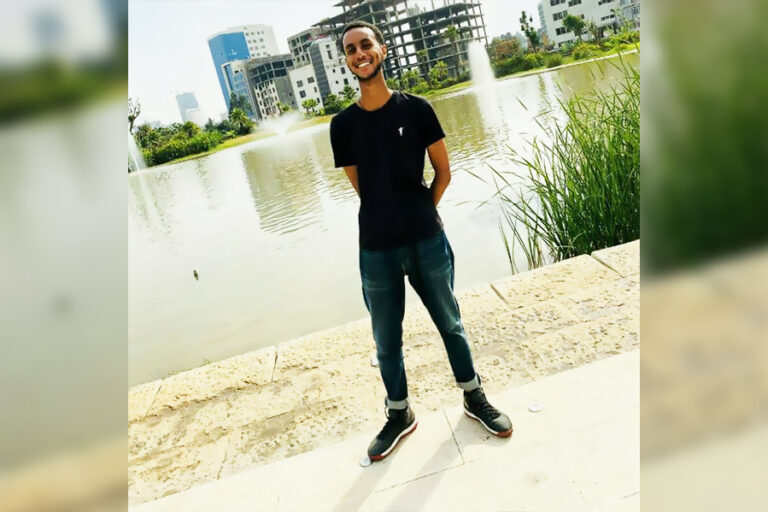
Kassmasse is one of the most promising up and coming artists residing in Addis Ababa. He fuses the Ethiopian Ambassel and Tizita sounds with international rhythms to create a one of the kind new genre that he likes to call ANSAR. He talked to Capital about his new music. Excerpts;

Capital: The release of your first EP has gained much traction, kindly, tell us about yourself?
Kassmasse: My stage name is Kassmasse whereas my official name is Fikru Sema and I would describe myself as a passionate artist. From an education standpoint, I am an alumni of St. Joseph School and Addis Ababa University School of Commerce where I undertook a degree in marketing. It has now been a little over three years since I finished schooling and I have currently embarked on my musical career.
Although new to the scene for many and much so to the music industry I would like to iterate that being an artist is not something entirely new for me. To me art is a form of expression and I am also a graffiti artist. With my graffiti, I normally love drawing letters and currently, with my music I tend to believe that I am putting life into the words that I could however not do so whilst drawing art on walls. With regards to my music gaining traction, I am incredibly humbled that my music has been received nicely as I seek to impact the world positively through this art form.

Capital: Your music style is quite unique. Which music Genre would you classify it to be?
Kassmasse: I would describe my style or genre of music as “Antsar” (meaning perspective). What I mean by Ansar is it depicts the music from the surrounding. I believe people are used to pop, RnB, Reggae, Hip Hop, Jazz and so on. However, for me a hint or a music from all of them combined with old and current music brings with it a sweet spot of music which was initially untapped. Ansar / Perspective/, for me is quite literally viewing and listening to the music through the eyes or tone of the musician. For me I have tapped into how music was composed by musicians who were trailblazers for us in the past and also combined it with the current flow of music with my own perspective of how I view the world and the current situations around it. In this sense, I believe we have formed a new genre of music that is limitless so to speak. I view our production team and I as the founders of such type of music or sound and I hope many will follow suit as they embody their own perspective.

Capital: What went into the branding of your EP cover and particularly into naming the cover as ‘Maleda?’
Kassmasse: A lot of instruments came into play for the fruition of my first EP. In the release of anything in this world it is best practice to have thorough preparation. In carefully curating this genre of music, I prepared seven tracks of which one of the track features Uno and Yizet on the track ‘wibet.’ In terms of branding and giving a title for my first debut, I tried to visualize a new dawn. As you know ‘Maleda’ is an Amharic word that translates to ‘early in the morning’ or at the crack of dawn. I believe to each and every human in this world we need to own success through seizing the moment at its earliest, which is at dawn. Dawn in itself present something new, therefore in the hustles and bustles of life I believe it should dawn on us how important it is to seize what is ours. Whether it’s the youth who aspire to be something in life or even the older generation who want to build a legacy. I hope this EP will enable them to get this jolt of confidence to go on and seize the moment at its earliest.

Capital: You seem to have come out of the blue and all of a sudden become a huge and promising sensation to the music industry. Before your come up were you involved in the industry behind the scenes? How was the marketing strategy like on your first release?
Kassmasse: Prior to my come up I was not fully present in the music industry in that I was not releasing songs. But at heart I have always been an artist. It might seem like an overnight come up of success but throughout my work after school despite not having been active in the music scene I had always envisioned this. To be fruitful in anything you have to surround yourselves with friends who are in that field.
I am privileged to have surrounded myself with a creative team of individuals such as Maranata Tegengne who is my video director and the likes of Guta Wakuma my producer at Choo Choo promotions. They all collectively aided in my success, not forgetting Uno and mix master Kenny Allen and all those who took part in the integral promotion of the EP.
Prior to this I was also not fully immersed in social media. As you know in this time’s social media is an important role in terms of pushing your music. I have now fully embarrassed this and am currently active in social media because it’s a necessity in our age that aids us to engage in fans.
Releasing the music and promoting it is quite hectic but with the aid of my wonderful colleagues and streaming platforms it has been made easier. You can now find my EP in streaming platforms such as apple music, spotify, sound cloud, amazon music.

Capital: How would you describe music?
Kassmasse: Everyone has their own version of what music is to them and for me having started as writing graffiti letters I believe it’s an expression of words that come to life through singing. I also refer to music as ‘she’. Just like a female companion I believe music completes me therefore I am keen to gird her and protect her because in return she/ music/ protects me.

Capital: This being you first debut in the form of an EP, is there a full album coming out soon? What should we be expecting?
Kassmasse: Well this being my debut I tried to cover different styles of music so as to receive feedback. So far most of it is resoundingly positive as it is a new style. This is important while going forward to make an album because you know what your audience is interested in. An album needs to stay thematic. This means that an album should revolve around a specific theme. With regards to the album drop I cannot name the specific date because it’s exclusive. However, fans should know that I will drop an album in the coming months and hopefully it will be received well. The ‘maleda’ EP which was released on New Year’s Eve, should be a symbol of what is to come this New Year and I hope to empower the generation in the months to come.

Capital: Is there anything else you would like to add?
Kassmasse: I would like to thank all the people who played an integral role to the success of the EP. Moreover I would like to thank my fans for their support. For my fans, they should know that I and my team are strongly working to uplift them and their joy and happiness hopefully will be the result of my music both now and for years to come. I am hopeful and full of gratitude.

DEM AH GOH TIYAD FI SI MI FACE

This weekend reggae lovers around the world will gather, as they do annually, to celebrate the birth of one of the most well-known artists in the world, Robert “Bob” Nesta Marley baptized Berhane Selassie in the Ethiopian Tewahedo Orthodox church. His music moved millions across generations, continents, social and economic stratospheres and any other demographic imaginable. “Songs of Freedom,” one of his best-selling compilations produced decades after his death, is a title that may best sum up his body of works. Profound lyrics, driving drum and bass reggae rhythms, bubbling organ chords with the swaying I-Three providing harmonies fed many artist, activist and freedom fighters. A recipient of the 1978 United Nations Peace Medal of the Third World, the Jamaican born singer encouraged Africans to “…never give up the fight…” while warning those trying to stop progress that he will ever be present. The lyrics in his song “Bad Card” best sums up Bob’s stance.

“You a-go tiyad fi si mi face
Cyan’t get me out of the race
Oh, man, you said I’m in your place
And then you draw bad card…
Propaganda spreading over my name
Say you want to bring another life to shame
Oh, man, you just a-playing a game
And then you draw bad card…”

Loosely translated or analyzed Marley assures that his face will be forever present despite attempts to deny, demonize, or dismiss him and his calls to action. Some may say it was prophetic. Though he passed at the early age of 36, merchandise globally with the Reggae King’s image combined with his scores of spitting image children, grandchildren and great grandchildren is remarkable. His heirs don’t just look like him but are also active in the arts, fashion, business and more perpetuating his legacy of love. The Marley charitable organizations seeded by his wife Nana Rita Marley, baptized Ganette Mariam, include the Bob Marley Foundation and Rita Marley Foundation which contribute to a host of development initiatives in Jamaica and Africa. Bob and Rita’s first-born child, Cedella Marley O.D. is fruit from the tree, an accomplished multi-media artist and CEO of Tuff Gong International. Walking in her parent’s footsteps, advancing incredible social entrepreneurial initiatives, she was recently awarded the “The Chancellor’s Award For Excellence in Global Leadership” by American Foundation University of West Indies. And yes, she looks like her dad. The African Union (AU) Deputy Chairperson, Kwesi Quartey, long-time Marley fan and friend of Nana Adobea Rita Marley said, “Those who live in the hearts of the people never die. Robert Nesta Kwabena Marley still lives…Jah Live…Rasta never die!!!”
It is so fitting that the AU Heads of State will also be virtually gathering to decide on major matters from Covid19 vaccines to the African Free Continental Trade Agreement during the
“Year of Arts, Culture and Heritage”. Most of these concerns are not new, and Marley did not have a corner on musical messages confronting the everyday people’s concerns. Nigeria’s Fela, Sonny Okosuns and Burna Boy; South Africa’s Miriam Makeba, Hugh Masakela and Yvonne Chaka Chaka amongst many others have kept the will of the people flowing through melodies that also eased the pressure, be it political or otherwise. The AU has made a commitment to further Africa’s development through the creative industry. Partner, the United States Mission to the AU (USAU) may now firm up its stated affiliation, “USAU’s relationship with the AU is based upon historical ties and shared culture between Africa and the U.S., increasing coordination due to globalization, and a deep appreciation of the strategic significance of the African continent.” Culture is everything.
The promotion of African art, culture and heritage is just as important as the need for protection however. Case in point, French owned mega fashion house Louis Vuitton, recently advertised its $1,340.00 “Jamaica Stripe” pullover said to have been “inspired by the Caribbean island’s national flag.” Being born in Jamaica I know the flag of the island is 2 black and 2 green intersecting triangles with a broad gold X bordering both in the middle. Being Rastafari I know the historic Ethiopian flag we have popularized world-wide is green, gold and red with the Lion of Judah in the middle. Well, the LV sweater has the colors, in order, of the latter. The Jamaican incubated Rastafari Movement has done such a great job promoting the banner that many think it is indeed the national flag of Jamaica. This is not the first time we have had such issues. Christian Dior and other major labels have come under fire propelling the discourse over cultural appreciation verus cultural appropriation. Let us hope that the AU, civil society organizations and most of all African Creatives will take the opportunity to pursue issues of Intellectual Property Rights Protection for African goods, historic icons and contemporary creations alike, as the road to Africa economic recovery and stimulation through intra-Africa trade must surely address the promotion, preservation and protection of heritage, equally.
Finally, this weekend, Merid Tafesse, moved by Marley during his days as a student at Addis Ababa University School of Fine Art and Design, now Alle School of Fine Art, will open “DIFFERENT STROKES FOR DIFFERENT FOLKS” fine art exhibition. Merid’s oil paintings literally and figuratively reflect the title of show. His masterful brush strokes in all shades of earth tones accented with pops of reds and golds fill his Moa Anibessa Studio Gallery in Kazanches. Viewers can check out Merid Tafesse on facebook for more information or SMS 0927357957 or 0911864677 for an appointment to ensure a safe socially distanced masked visit.

Dr. Desta Meghoo is a Jamaican born
Creative Consultant, Curator and cultural promoter based in Ethiopia since 2005. She also serves as Liaison to the AU for the Ghana based, Diaspora African Forum

Bullying Ethiopia into “Failed Statehood”: A dangerous, but futile adventure

0

By the Queen of Sheba

Since the conflict in Tigray broke out some three months ago, a globally orchestrated assault on Ethiopia has escalated at unprecedented scale. And yet, what triggered the conflict was beyond any doubt—as explicitly acknowledged by both victorious and vanquished forces alike.
The Ethiopian Federal Forces of the Northern Command were callously and cowardly massacred by TPLF cabal forces while in their sleep. The Government, like any other in the world should do, first contained the attack, reorganized its bloodied forces and repulsed and crashed the putsch in one of the shortest such military actions in the world.
The Ethiopian government decisively crashed the mutiny with such bravery and efficiency that it has garnered respect and recognition from all those who know, abundantly well, the bloated TPLF forces and their incessant bravado of fake glory, the unbearably treacherous terrain of the region, and their wicked cruelty.
While the government decisively won on the battlefield and commendably guaranteed the integrity of the country, it has however not matched the orchestrated assault largely fanned in the cyberspace, as I observed in “Victory in the Battlefield, Defeat in the Cyberspace: Ethiopia’s Agonizing Reality”.
One should pose a pertinent question. What would have been the outcome of the conflict had the TPLF cabal succeeded, even barely, in its mutinous and “thunderous” insurrection? One need not be an arm-chair analyst or a student of political science or a conflict entrepreneur to intimate plausible scenarios.
Without too much into it, the army would split into different groups along ethnic lines fighting against each other for dominance. The distended special forces and militias of the respective regions would embolden into action to seize disputed areas, in the process triggering a civil war. Occasional ethnic and religious conflicts, whose ominous signs are already evident, would have simply engulfed the whole country. This would then open the flood gates of killings, sufferings, internal displacement and migration to neighboring countries and beyond in the scale Africa may have never seen before.
Oh, yes Ethiopia, the towering anchor of the Horn, which shares borders with more than half-a-dozen states, claims over 115 million people. To put things in perspective, this would be South Africa, Kenya, Eritrea, Djibouti, Mauritius, Namibia, and Lesotho all put together!
Let me provide a recent unfortunate account. The assassination of a popular Oromo singer in July last year, triggered an instant craze of mass killings of civilians and wanton destruction of property in just a few hours. The attacks, which killed over 160 and wounded and maimed several hundred more, had both an ethnic and religious slant. Only the federal army could quell the scary uprising that nearly ripped the country apart.
The world must celebrate the demise of the cabal force, and express gratitude to the Ethiopian government for efficiently executing and quickly wrapping up major operations of the conflict with limited casualties and destruction. Or else, it could have had to deal with millions and millions of Ethiopian refugees drowning neighboring states and more creating havoc at a global scale.
Good riddance TPLF!
An Avalanche of Attack: Wither “International Community”
The European Union
One of the earliest critiques of the government incredibly while it was still in the midst of putting down the putsch is the European Union. The Union first threatened and then later announced the halting of funds due to Ethiopia.
Accordingly, it has “postponed almost 90 million euros in budget support payments to Ethiopia over the bloc’s concerns of the Tigray crisis”.
The United States
The United States came out forcefully denouncing the attack on the Federal Forces through its former Secretary of State. Similar remarks were expressed by former Assistant Secretary of State for African Affairs, though other contrary views from different power centers there were made.
There are however visible concerns that the new US government might put undue pressure on the government. Already the new Secretary of State and the new US Ambassador to the United Nations have thrown some unduly critical words largely an outcome of distorted information orchestrated by cabal forces and their paid operatives.
The UNHCR
The UNHCR, the global feeder of faulty and fabricated story on the Tigray conflict, has played a sinister role in incriminating the Ethiopian government since the beginning of the conflict. Even after apologizing for its actions, the institution which was a subject of two of my earlier articles, “Dispensing Culpability: UNHCR’s Glaring Double Standard” and “The UN: What is an Apology Worth After Inflicting a Massive Injury?” has actually did not fully cease from attacking the government openly and covertly, which some observers attribute to disproportionate representation of cabal sympathizers in the organization.
The United Nations
There were also reports that the UN was considering to call Ethiopia on the conflict in Tigray earlier on. This, according to some reports, never materialized on the objections of the Chinese government. My other piece “The Rude Outlaw: The UN Staff or the Ethiopian Army?” also attempted to highlight the situation.
And yet, this so called “international community” which enabled, propped up and financed the TPLF cabal during its nearly 30 years of brutal rein turned a blind eye when it massacred 400 men in Agnwak and 196 men, women and children in Addis Ababa; disgracefully stole elections in broad day light and declared 100 percent victory; violently suppressed any semblance of opposition; tortured, maimed and assassinated, declared and potential, political opponents; and more.
One could add the recent heinous crimes to this ugly list: the barbaric My-Kadra massacre of over a thousand civilians, virtually all Amharas, as established by Amnesty International as potential war crime; the crashing of surrendered soldiers with heavy trucks and slaughtering them as they fled; the slicing of throats and cutting of breasts of surrendered soldiers and civilians; the desecration of dead bodies of combatants and civilians; the destruction of roads, air fields, communication; the looting and raiding of schools, offices, hospitals and banks; and more.
The Misfortune of Hypocrisy: Washington vs. Tigray
It is truly tragic that facts are increasingly and brutally smothered by fiction, and truth by lies. Those who have big megaphones and cry foul at their own sins and transgressions get their way big time. Ethiopia’s current situation is a case in point.
It is deeply disturbing, and dizzyingly worrying that such “credible” and “established” media outlets as the BBC, Reuters, Aljazeera, and New York Times are taken for a ride by infiltrated operatives and reckless and negligent reporters. In its latest blatant attack on Prime Minister Dr. Abiy Ahmed, the Washington Post wrote “FIFTEEN MONTHS ago, Ethiopian Prime Minister Abiy Ahmed was awarded the Nobel Peace Prize for ending his country’s conflict with neighboring Eritrea. Now, he may be perpetrating grave crimes against humanity.”
When such a deserving leader is scrambling to contain an insurrection of colossal implications—with a potential to disintegrate the country and create massive havoc in the Horn and beyond—such an allegation is no more than a cheap shot. The hypocritical self-serving Western media which unanimously condemned the recent Washington insurrection in the “strongest terms possible” now willfully accuse Abiy for having done the same, for a much worse action.
A nota bene to those fiction writers and peddlers. Those Washington hooligan insurrectionists only attacked a “civilian” institution; the Tigray thugs cowardly attacked the “indomitable” armed forces by slaughtering them in their sleeps. They must realize that, what is good for the goose is good for the gander. If Abiy was looking for a revenge and intended to “perpetrating grave crimes against humanity”, he need not unleash it on the humble Tigrayan civilians.
As a matter of fact, the action of the army and the government in handling and looking after its surrendered and captured combatants, as witnessed in massaging their fatigued bodies and washing their flimsy feet is not only exemplary to the world, but is biblical.
In Conclusion
It is astounding that a government which has done so much in such a short period of time while being challenged from multiple fronts, both internally and externally, is suddenly a subject of orchestrated attack largely for neutralizing a serious threat of the country, the Horn, Africa and the world as a whole. Those who in the past play-acted censuring, condemning, and even briefly sanctioning this mutinous cabal are suddenly in the folly of subverting it.
A government which deserves support and praise is now facing a massive, orchestrated and unjust attack. This needs to be dealt with systematically and strategically with the urgency it deserves.
Finally, there may be real and potential “failed” states in Africa, and elsewhere. Ethiopia will not be one by its sheer power of enduring gallantry, fierce independence, unshakeable faith and the Grace of God.
Adwa is my witness.

The Queen of Sheba may be reached at QueenOfSheba2020@outlook.com | @TheQueenofSheb5

MICRO INSURING FARMERS

0

It is often joked that, ‘You do not need a miracle, just have insurance.’ However, insurance covers remain elusive for many as a result of financial strains in life. This is more-so an uphill ask for smallholder farmers whose income fluctuates with the adverse effects of climate change. Trying to close this elusive gap is one, Rose Goslinga, a micro insurer and advocate for creating insurance for small-scale farmers in Africa and Asia. She leads Pula, a company that is radically restructuring agricultural insurance as Co-CEO.
Since its founding in 2015, Pula has been a great catalyst for micro insurance to stallholder farmers. The firm uses insurance and digital products to help smallholder farmers endure climate risks, improve their farming practices, and bolster their incomes over time. Over the period of its existence, 4.3 million smallholder farmers have been reached with insurance products which stretch to 12 countries in both Africa and Asia in partnership with 26 distribution partners across; Governments, input providers and credit lenders.
Rose Goslinga having grown up in Tanzania holds an MSc in Political Economy of Development from the University of London where she graduated with first class honours and a BSc in Business and Economics. Over the past decade, Rose has been part of teams pioneering the agriculture insurance, first with the award winning program ‘Kilimo Salama’- of the Syngenta Foundation for suitable Agriculture and now with Pula, an award winning Insure Tech. She has worked across East Africa at different capacities and at Pula she leads a team that develops and implements data driven financial solutions that assists millions of small-scale farmers across Africa and Asia, safeguarding their crop and allowing farmers to invest in their farms through financial tools that take advantage of the rising use of mobile technology.
Rose’s work in agriculture insurance has been recognized through several international awards, including the Financial Times/IFC Award for Sustainable Finance, Insure Tech 3.0, and the Singapore Fintech Festival. Furthermore, she is a Rainer Arnhold Fellow and Social Innovation Fellow from Poptech and a TED speaker, where she seeds innovation worth spreading.
Capital linked with this energetic social entrepreneur for a microscopic understanding of what her firm does to protect smallholder farmers. Excerpts;


Capital: You specialize in digital and agricultural insurance to de-risk millions of smallholder farmers across Africa. Can you tell us how this works?
Rose Goslinga: Pula an insure tech startup, provides small scale farmers with agricultural insurance to help manage the risk of enduring extreme conditions, pests and diseases. Pula works by sending enumerators to farms to get a representative sample in an area during the beginning of the farming season and harvest period to help gauge the potential of the season’s harvest. Pula’s business model helps insurance companies better understand the risks of small scale farming.
With an average premium subscription of $4 for small-scale farmers in Africa, Pula actually markets the insurance product to governments, NGOs, Banks, Solar companies and off takers rather than directly to farmers.
During the planting season, we send agronomy advice and tips to the insured farmers on better farming tips and also early warnings.

Capital: You recently closed a $6 million Series A fundraise; how can this help your operation?
Rose Goslinga: Yes, we are grateful for the Series A investments from our new Investors Tlcom and Women’s world banking. From this, we will be able to use the funds to expand our footprint in Africa and Asia plus also develop new Insurance products.

Capital: You operate in Ethiopia, can you tell us about the operation in Ethiopia and how it is helping small scale farmers?
Rose Goslinga: We have been able to work in Ethiopia with our partners Mercy Corps, Farm Africa and Nyala to provide to 12,906 pastoralists a takaful livestock insurance cover using an innovative distribution channel and we will continue to assist farmers with strong insurance covers both now and for years to come.

Capital: Insuring farmers is a risky business, how are you coping with climate change?
Rose Goslinga: Climate change is a big threat to smallholder farmers but with Pula, we can be able to offer a safety nest to cushion the impact of climatic change such as drought, floods, cyclone etc. Just the same way there is an increase in road accident, having insurance gives you peace of mind to go on the road because your vehicle is secured. Pula is here to give our farmers the peace of mind needed.

Capital: What are your future plans for African farmers?
Rose Goslinga: Our plan is to continue working with more governments, Mobile operators, development partners and various aggregators so that we can increase distribution of our Area Yield insurance and livestock Insurance so that smallholder farmers can have peace of mind to invest more finances and energy into their farms.
We also believe that we can maximize on the accelerated mobile penetration in Africa by working with Telco’s to offer more agronomical advise and alerts to the millions of smallholder farmers to help increase their productivity.

Capital: You are also looking to expand to Asia, can you elaborate on this?
Rose Goslinga: Pula will be expanding to Asia, targeting smallholder farmers as it has in Africa, with a focus on Philippines, Thailand, Turkey, and Pakistan. What we’ve realized is that African solutions are in no way inferior to Asian, European solutions.