

BetKing Ethiopian premier league season has returned to the usual 16 teams’ format after a single season with three less sides. In place of the three clubs from Tigray, the relegated sides returned after a one round play-off tournament.
Back to the 16 teams’ format following the promotion of Addis Ababa, Arbaminch and Mekelakeya, the league committee announced that the new season would kick-off in the second week of October.
Following the promotion of Mekelakeya and Addis Ababa Ketema the Capital City boasts four top tier clubs including veterans St George and Ethiopia Bunna. Southern region dominates the show featuring five teams: former twice champions Hawassa, Hadiya-Hossana, WolaytaSodo, Arbaminch and Wolkite. Premier league defending champions Fasil Ketema and (The Blue Waves) Bahirdar are the prides of Amhara region.
Three clubs represent Oromia for the second season in a row. Thanks to the second chance of staying at the upper tier, former champions Jimma AbaJifar and Adama Ketema are once again in the big show along with Sebeta Ketema that finished fifth in the previous season. All the three sides appointed new Coaches (Ashenafi Bekele, Fasil Tekalegn and Zelalem) respectively, therefore in a strong build-up for the new season.
Premier league twice champion Gebremedin Haile at the helm of Sidama Bunna is the flagship of the newly founded Sidama Region while “The Oranges” Diredawa Ketema once again the only representative of Eastern Ethiopia Football.
BetKing Ethiopian Premier League is back to 16 clubs
Swimming Against the Current of Weaponized Humanitarianism: Politicization of Humanitarian Concerns in Ethiopia’s Tigray Conflict

Since the onset of the conflict in Tigray on November 3, 2020, Western political elites and media giants like The New York Times, Economist, CNN, and BBC have adamantly expressed buyer’s remorse over the Nobel Peace Prize winner that went to war. No such reaction, however, over the much-petitioned humanitarian-ceasefire-turned-offensive in Tigray that subsequently displaced over 200,000 people in the neighboring Amhara region and over 100,000 in Afar region. After a concerted pressure campaign on Ethiopia’s Federal Government to cease its Law and Order operations in search of two dozen members of the TPLF armed rebel group, the Federal Government succumbed to these pressures, stating that a pause in hostilities will also allow the resumption of agricultural activities in Tigray- Ethiopia’s most food-insecure region. The global media, however, was quick to label the withdrawal of federal troops as a decisive military victory on the part of the TPLF; a true David and Goliath story.
The sudden, yet marked, shift from humanitarian outcries to zero-sum conflict rhetoric is not limited to Western media giants. The United States, and its European counterparts, have stayed largely silent as the TPLF declared its military gains on its march to Addis Ababa. The group’s spokesperson, Getachew Reda, even stated the group’s determination “to go to hell and back to disintegrate Ethiopia.” Even with TPLFs overt war-mongering and thoroughly documented war crimes, the United States and Europe cannot bring themselves to renounce their old regional ally. The United States has, instead, further inflamed ethnic tension by flippantly calling for the return of bitterly contested lands that have caused residents, and the wider Amhara region, to raise up arms.
By advocating for the proverbial “national dialogue” during an election year, pushing for condemnation of Ethiopian forces in the court of public opinion, even the desperate, albeit outrageous, EU envoy’s claims of an unnamed senior government official personally expressing genocidal intention, the US and EU continue to undermine Ethiopians leadership and its institutions so as to impose their own will. With over 38 million people voting in what is widely lauded as Ethiopia’s most democratic election yet, why is the United States reluctant to acknowledge Ethiopia’s relatively successful elections? Why is it, instead, calling for a national-level political dialogue? The US does not acknowledge the success of the elections- nor congratulate the incumbent Abiy- because doing so would undercut its publicly held stance that a transitional government based on “national dialogue” is a better alternative to an elected one.
Though the seemingly symbiotic relationship between the US and EU political interests and the skewed global media coverage of the Tigray conflict merits closer attention, very few of the aforementioned media outlets dare to host or feature Ethiopian voices with legitimate criticisms of the government. They, instead, feature armed rebel leaders such as Jal Merro and Getachew Reda, grossly misrepresenting Ethiopia’s political landscape. With an international chorus calling for an “all-inclusive national dialogue” spearheaded by the US, is it a mere coincidence that reputed media houses give a platform to armed ethnic insurgents and their cause? There seems to be deafening silence from the state and non-state actors who pushed for a humanitarian ceasefire regarding the widely reported child-soldiers of Tigray who were presented as “highly motivated young recruits.”
What is most extraordinary, however, is the parallel realities of unmitigated hunger and destitution in Tigray AND improved relief activities and TPLFs speedy advance to Addis Ababa. The US first broke its silence since the unilateral ceasefire to raise concerns over the treatment of Eritrean refugees by “TPLF allied forces.” However, there is yet to be a thorough condemnation of the TPLF for its escalation of violence, obstruction of aid, and egregious human rights abuses in Tigray, and in neighboring Amhara and Afar regions.
Among the US and TPLF’s shared talking points is the need for a humanitarian corridor, i.e. along the Ethio-Sudanese border. The Ethiopian government, and the wider public, dismisses this demand as an obvious security threat to Ethiopia who has been fighting Sudanese trained and armed ethnic militia in the country’s western-most region of Benishangul-Gumuz. In addition to the national security implications of an Ethio-Sudanese “humanitarian corridor,” the TPLF built its military momentum and ultimately toppled the Derg regime, through arms- smuggling and sales via Sudan propped as relief supply. According to the BBC’s retrospective reporting of the massive humanitarian relief campaign in Northern Ethiopia, Gebremedhin Araya, an ex-senior member of the TPLF elucidates on how he posed as a Sudanese grain merchant in a scheme to buy nearly $100 million worth of weapons. Owing to its past success with a steady inflow of arms from unsuspecting humanitarian pockets and the covert support of the US and UK, the TPLF seems intent on redeploying the same strategy thirty years later.
From the destruction of the historic Tekeze bridge to the blockade of the Afar-Tigray route, humanitarian organizations and global leaders seem less concerned about TPLF’s strategy of obstruction of access roads into Tigray, but rather a Sudanese “corridor” to best facilitate aid. To further blur the lines between political and humanitarian ends, USAID Administrator Samantha Power, taking on Jeffrey Feltman’s role as Envoy to the Horn of Africa, is traveling to Ethiopia “for a fresh diplomatic push by President Joe Biden’s Administration […].” In addition to granting the usual carte-blanche to TPLF escalation, the United States has deemed the Federal Government’s unilateral ceasefire and subsequent withdrawal to be a blockade- i.e. so long as there is no Ethio-Sudan corridor. United States Ambassador to Ethiopia, Linda Thomas-Greenfield, openly placed all blame at the feet of Ethiopia’s Federal Government in her interventionist Security Council plea in early July. From acknowledgment of atrocities, lootings, and killings of aid workers, the US Ambassador is- without a doubt- demanding complete capitulation of Ethiopia’s leadership.
Ethiopian officials, as well as the local media, have recently become vocal about the frequent political attacks, disguised as humanitarian concerns, on the Ethiopian State. Martin Griffiths, the new UN Relief Chief labeled the Ethiopian government’s legitimate concerns of bias in reporting as unconstructive, stating “ they need to be backed up by evidence if there is any and, frankly, it’s dangerous.” The evidence implicating the Ethiopian government’s alleged blockade of aid routes, however, is yet to surface.
One might say: heavier scrutiny should be on the Government of Ethiopia and it should always be held to a higher standard; this would have been a fair criticism. However, the United States, the European Union, and UN high officials are grooming the TPLF as an equal stakeholder and worthy negotiating party- but with none of the accountability. Without a burden of responsibility or accountability mechanisms, the TPLF has used its undue legitimacy from the West to normalize its transgressions: mass executions of government collaborators, recruitment of child soldiers, expansion of conflict zones. It is not the West’s unyielding accusations and undue pressure on the government of Ethiopia that makes its partisanship so evident, it is their blatant disregard for TPLFs crimes- who they insist is a legitimate administrator of Tigray.
Similar to the Ethiopian politicians, the Ethiopian public is convinced of a bias in reporting and blame attribution aimed to weaken national cohesion and collective security. It is neither dangerous nor is it off-limits to decry the disparity in reporting and blame attribution. The US, EU, and UN agency officials should pause their blanket demonization of Ethiopian officials as opposed to addressing the legitimate concerns of Ethiopians. At the very least, these same officials should cease legitimizing the claims of one party over the other’s as “humanitarian concerns.”
Bethlehem is an International Relations expert based in Addis Ababa. Johns Hopkins University SAIS, M.A.
33 local short films set to compete in Australia’s FOA

For the 13th round of the Australian short film festival ‘Focus On Ability /FOA/’, 33 Local Short films are going to compete in Australia for the award category of “best short film”, “best short documentary” and “people choice awards.”
“With a detailed assessment of film makers, personal consultation and mentoring on how to produce an international level short film and submission, 33 Local short films represented Ethiopia to compete in Sydney Australia with other international films from 21 countries,” said Mikiyas Mulugeta executive director of Ethiopian branch of Focus On Ability.
As he said, the Ethiopian entries are 5 Short documentaries and 28 Short films that focus on the lives and challenges of disabled characters. Of those 28 Short films, 2 of them are animations, which have a significant gesture on the growth of Ethiopian Audio-Visual industry.
Organized in Sydney, Australia, the festival has a wide range of compensations for the film makers like prize money, educational opportunities and certificate. This could be a prominent gesture for their profile of a film career.
In 2009, CEO of NOVA Employment Martin Wren began the festival with a belief in the ability of people with disability, and the goal of bringing that belief to the world through the medium of film. The festival asks film makers to focus on ability of people with a disability by sharing the story to the world.
Currently, the voting is open for the International finalists until August 16. There are 97 films from 21 different countries in total.
Also Focus on Ability Ethiopia Film Festival will be hailed on October, 2021, founded by head quarter of Focus on Ability team and assisted by Mikiyas for the wide range of advantages to different focus groups.
Mikiyas had participated in the 2020 “Focus on ability film festival” and won the International competition on FOA “People Choice Awards”.
Since then, he has become a country manager and executive director of Focus on Ability Ethiopia short film festival under the international organization of the focus on ability.
Eventually, Focus on Ability Ethiopia had been assigned by the international group to organize local short films in Ethiopia that focuses on the lives of the disabled to participate on this festival.
Dubai is building an art collection without buying any art
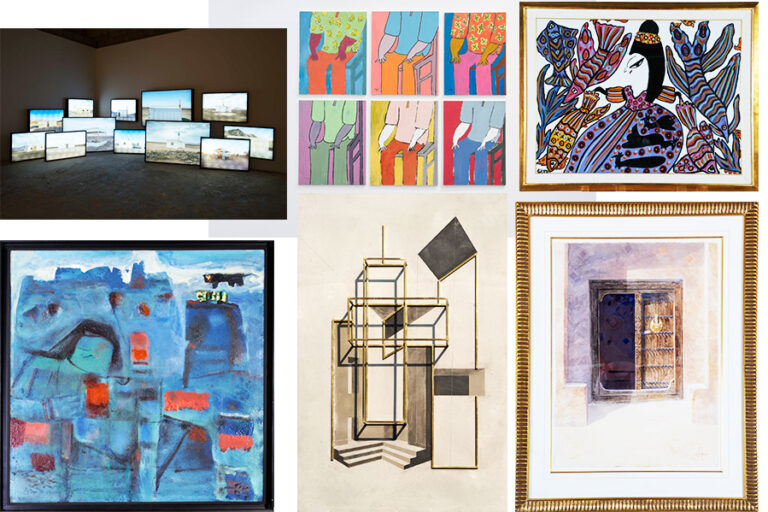
Positioned between Africa, Europe and Asia, Dubai is open to artistic and cultural influences from around the world. This has led to a vibrant, emerging local arts scene.
Until recently, this scene has been led by private galleries showing local artists, but now the Dubai government is building its first institutional art collection from scratch — and there’s a twist.
Dubai won’t be buying any art it will be borrowing it. National art collections and museums were popularized in Europe during the 18th and late 19th century, and typically, these collections are built over long periods of time by purchasing or being gifted works. But Dubai aims to fast-track the process.
The initiative was developed by Dubai Culture & Arts Authority and Art Dubai and will include a digital museum, as well as annual physical exhibitions of selected works — the first of which will be held at Dubai’s Etihad museum later in the year.
The idea is to foster a collective culture and create a canon of art history that has not been present in the Middle East, according to Art Dubai — without having to rely on government funding.
“Dubai Collection is the first initiative of its kind globally,” said Benedetta Ghione, Art Dubai’s executive director. “Patrons (contributors) are invited to lend their works to the Dubai Collection for a period of 10 years, while remaining legal owners of their pieces.” However, the physical artworks will only be loaned for the times they are on display.
A new model
So far, 87 works have been selected as part of the first curation process. Most are from Emirati artists or artists from the wider Arab world. Ghione says a curation committee, made up of experts, selects which artworks are chosen to best represent the art of the region.
The collection includes work from Emirati artists such as abstract painter Abdul Qadar Al Rais, who is known for combining geometric shapes with Arabic calligraphy, and conceptual artist Mohamed Ahmed Ibrahim.
“Dubai collection will build a comprehensive database of artworks, artists and art collectors, as well as help document what is still a relatively young contemporary art scene,” said Muna Al Gurg, chair of Dubai Collection’s curatorial committee.
Al Gurg believes that by borrowing artworks, Dubai will be able to develop a collection faster than by buying them.
“Creating a national collection is often a lengthy process of navigating an ever-changing art market and diplomatic negotiations with stakeholders … but through our loan-based model we expect to be able to develop several exhibition concepts in the first few years within launching the initiative,” said Al Gurg.
She adds that having temporary exhibitions, rather than a permanent display, can be an inspiring way to show a collection. “At this stage in the development of the initiative, we see the temporary exhibition as the preferred format for engaging the public in person,” she said.
Janet Rady, a specialist in modern and contemporary Middle Eastern art, says the Dubai collection is likely a response to others in the region, such as Qatar, Saudi Arabia and Abu Dhabi, promoting art from a government level.
While Dubai is home to nonprofit Jameel Arts Center, as well as commercial galleries, such as those in art hub Alserkal Avenue, the city lacks institutional collections.
“It’s a nascent art scene, it’s still quite private,” said Rady. “There’s no real museum as such that’s open permanently to show modern and contemporary Arab art so in that sense, I think it’s definitely filling a gap. It’s perfectly standard in the market to validate your works by having them shown in a museum.”
A digital museum
Part of the Dubai Collection initiative is a digital museum, which will allow more people to see the art, and will include educational materials.
Rady says the digital museum could help provide international exposure. “One of the problems is the visibility of the Middle Eastern art world to people outside the Middle East,” she said, adding the collection could encourage young people to get into the arts.
Al Gurg adds that while the digital museum is an important element of the collection, artworks usually have the most impact when viewed in person.
“Although Dubai’s art scene seems relatively young, its vibrant, multicultural and innovative nature very much reflects the spirit and identity of its home,” said Al Gurg. “Looking further ahead, we hope to further grow the Dubai Collection with the aim of highlighting even more artists and stories.”
Stephanie Bailey, CNN
